As South Korea Merges Education Offices, a Fight Over Funding Reveals the Stakes for Rural Schools and Regional Equity
A bureaucratic merger with real consequences for families
In South Korea, where education is often treated not just as a public service but as a defining national priority, even a technical-looking change in school administration can quickly become a debate about fairness, opportunity and the future of entire communities. That is the backdrop to a new dispute in the country’s southwest, where education officials are preparing for the launch of an integrated education office linking the neighboring jurisdictions of Gwangju and South Jeolla, also known as Jeonnam.
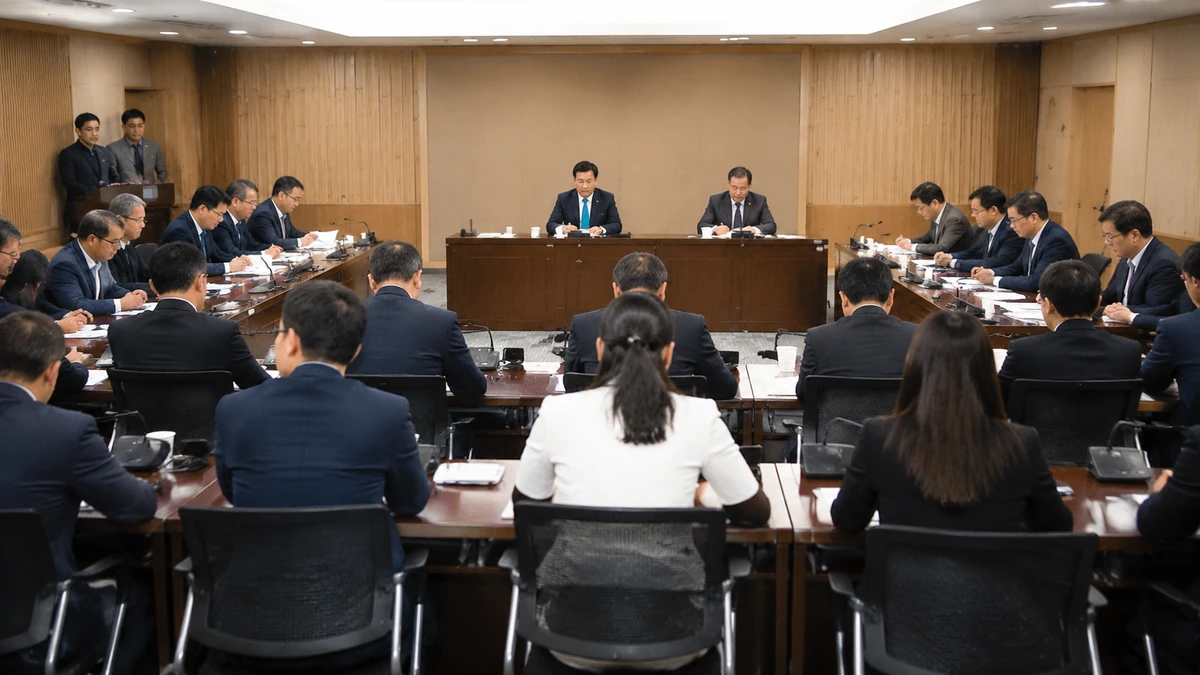
Kim Dae-jung, the superintendent-elect overseeing education in the region, on Monday urged Education Minister Choi Kyo-jin to make one point unmistakably clear in a special law governing the integration: The legislation, he said, must explicitly spell out the legal basis for financial support to the new office. The request came at a policy briefing held at the South Jeolla education office, where officials from the national Education Ministry and the local education administrations reviewed preparations for the launch.
At first glance, the dispute may sound like the kind of procedural fight that rarely travels beyond government buildings. But in South Korea, where school systems are deeply tied to regional development, demographic decline and fierce competition over educational opportunity, the question of whether funding guarantees are written into law can determine whether a reform works in practice or falters the moment it reaches classrooms.
For American readers, one rough comparison might be a state-level school district consolidation debate, except with higher political stakes and a stronger central government role. Imagine if lawmakers were combining overlapping education bureaucracies across a metropolitan area and a surrounding rural region, while parents and educators worried not just about efficiency but about whether small-town schools would lose teachers, resources and political voice once the merger was complete. That is essentially the terrain of this debate in South Korea.
Kim’s point was straightforward: A merger on paper is not enough. If the government wants an integrated education office to reduce regional gaps and build what officials often call the foundation for “future education,” then the financial rules supporting that system must be secure before the new structure begins operating. Otherwise, the reform risks becoming an administrative slogan rather than a durable public institution.
Why the funding clause matters so much
The core of Kim’s request is that the special law governing the integrated education office include a clear legal basis for education finance. In practical terms, that means funding support would not be left to shifting administrative interpretations, annual political bargaining or vague promises from Seoul. Instead, it would be anchored in statute, giving local officials a more predictable framework for budgeting and planning.
That predictability matters because education systems do not run on one-time announcements. They run on recurring costs: teacher salaries, transportation, digital systems, school maintenance, special education support, after-school programs and staffing for remote communities. If an integrated office launches without a clear funding framework, the danger is not simply abstract uncertainty. Schools may face interruptions in programs, delays in hiring, confusion over budget authority and uneven implementation from one area to another.
Kim has cast the issue not as a narrow demand for more money but as a tool for narrowing education gaps. That distinction matters. South Korean policymakers, like their counterparts in the United States, often speak about efficiency when proposing administrative reform. But efficiency alone does not answer the bigger question: efficient for whom? If a merger streamlines back-office functions but leaves smaller or poorer communities with fewer resources, then the reform may look tidy on paper while deepening inequality in practice.
In South Korea, regional education disparities have become increasingly sensitive as the country confronts low birthrates, urban concentration and a widening divide between major cities and outlying provinces. Parents in Seoul and other large cities typically have easier access to private tutoring, specialized schools and extracurricular opportunities. Rural and coastal communities face different realities, including smaller student populations, aging populations and a shrinking tax base. A financial support clause, in that context, is not just an accounting detail. It is a statement about whether the state is willing to compensate for structural disadvantages rather than simply organize around them.
Kim also linked the request to building a stable foundation for future-oriented education. In South Korean policy language, “future education” generally refers to efforts such as digital learning infrastructure, updated curricula, new technology in classrooms and broader attempts to prepare students for an economy shaped by artificial intelligence and demographic change. Those ambitions require long-term investment. Without clear legal guarantees, local school systems may find themselves trying to modernize while still uncertain about the basics of financial support.
The rural school question at the center of the debate
Just as important as the funding issue is a second request Kim raised: a special exception guaranteeing teacher staffing levels for rural and fishing-village schools after the integration takes effect. For many American readers, this may be the most recognizable part of the story. Debates over how to staff schools in low-population areas are not unique to South Korea. In the United States, rural districts have long argued that formulas based mainly on enrollment can underestimate what it actually takes to run a viable school when students are spread across long distances and schools serve as anchors for community life.
The same logic applies in South Korea’s nonurban regions. A system that calculates teacher allocation primarily by student head count may look neutral, but neutrality in formula design can still produce unequal outcomes. A small rural school may enroll fewer students than an urban one, yet face higher transportation burdens, more multigrade instruction, greater difficulty recruiting staff and a broader role as a local institution. In many communities, the school is not just where children learn. It is a civic center, a cultural hub and, in some cases, one of the last functioning public institutions in an area threatened by population loss.
That is why Kim’s request for a teacher quota exception carries significance beyond labor management. It is an attempt to keep the merger from becoming an exercise in rule-by-average. Consolidation often brings pressure to standardize, and standardization tends to reward places that already fit the norm. Outlying regions, by definition, do not. Unless legal safeguards are built in, the specific needs of rural, mountain, farming and fishing communities can disappear inside a larger bureaucratic structure designed for administrative uniformity.
South Korea has spent years grappling with what officials and scholars often describe as “regional extinction,” the fear that some communities may effectively wither as younger residents leave for larger cities and births continue to fall. Schools are central to that conversation. When a community loses teachers, sees grades merged, or fears eventual closure, the result is not only educational disruption. It can accelerate the sense that families have little reason to stay. In that sense, debates over staffing formulas become debates over regional survival.
Kim’s position suggests that if integration is going to proceed, it must do more than reduce overlap between institutions. It must prove that a larger administrative system can still recognize unequal conditions on the ground. For rural educators and parents, that is likely to be the true test of whether this reform offers support or simply centralizes decision-making farther away.
How South Korea’s education system shapes the politics of this fight
To understand why this story matters in South Korea, it helps to understand the country’s education culture. Education there carries extraordinary social weight. Families routinely invest significant time, emotion and money in their children’s academic futures. The private tutoring industry, known as “hagwon” culture, is so extensive that it has become a shorthand for the intensity of South Korea’s educational competition. Test scores and school access can shape college admissions, job prospects and social mobility in ways many Americans would recognize from their own high-pressure admissions debates, but often with even greater social concentration.
Within that environment, public education administration matters enormously. Local education offices are not minor bureaucracies. They oversee budgeting, staffing, policy implementation, student services and school operations across their jurisdictions. Changes to those offices therefore carry consequences that ripple quickly through schools, teachers and families.
The integration now under discussion involves a complicated set of tasks, not simply a ceremonial reorganization. Officials at the policy briefing reviewed progress across organizational design, personnel, finance, information systems and local regulations. Each of those categories may sound technical, but each affects daily school life. Change the organization, and lines of authority shift. Change personnel rules, and hiring and assignment processes shift. Change the finance framework, and schools may face uncertainty about program continuity. If information systems are not synchronized, administrative work can grind to a halt. If local regulations are not revised in time, confusion can emerge over who has what authority.
This is where the story stops being merely about lawmaking and becomes about implementation risk. Anyone who has watched a large institution roll out a merger knows that the most significant failures are often not ideological but operational. Payroll systems fail to align. Rules conflict. Staff roles remain unclear. People on the front lines spend weeks improvising. In education, those frictions do not stay in the back office for long. They eventually show up in missed services, delayed decisions and added burdens on teachers and principals already juggling full workloads.
Kim acknowledged the urgency when he said the launch is now only about a month away and that preparations must proceed without disruption in order to minimize confusion in the field and improve administrative efficiency. That timeline is a reminder that the legal questions are not theoretical. If core issues such as fiscal support and teacher staffing protections are not settled clearly enough, uncertainty could spill directly into the opening phase of the integrated office.
Efficiency vs. equity is a familiar policy dilemma
What makes this story resonate beyond South Korea is that it reflects a policy tension seen in many democracies: the conflict, or at least the uneasy balance, between efficiency and equity. Governments consolidate agencies because duplication is costly, coordination is difficult and bureaucratic fragmentation can slow decision-making. Those are real concerns. But reforms designed to simplify administration often meet resistance from communities that fear simplification will erase local needs.
In the United States, similar arguments surface in school district consolidations, hospital mergers, postal service restructuring and debates over whether countywide or statewide systems can adequately reflect local realities. Proponents of consolidation typically stress cost savings, streamlined governance and consistency in service delivery. Critics ask whether supposedly equal systems end up privileging already advantaged populations by treating unlike conditions as if they were the same.
That is effectively what is being argued in South Korea now. Supporters of the integrated education office can point to the benefits of a more coordinated administrative structure between adjacent regions with intertwined interests. But Kim’s intervention insists that successful integration cannot be measured only by whether boxes on an organization chart are combined. It must also be measured by whether children in rural communities, coastal towns and less affluent areas continue to receive a fair chance.
His request to write the funding basis directly into the special law reflects a particular concern familiar to policy veterans everywhere: what is not secured in statute can become vulnerable later. Political leaders may support a reform during its launch, only for budget priorities to shift after headlines fade. By locking in the legal foundation for support now, Kim appears to be trying to future-proof the integrated office against the instability that often follows ambitious institutional change.
The same principle applies to teacher staffing. If special regional conditions are acknowledged only informally, they may be easy to ignore under fiscal pressure. If they are recognized in law, local schools gain a stronger claim to continuity. In that sense, the debate is not merely over the amount of support, but over whether support is discretionary or guaranteed.
What the next month could mean for schools on the ground
As the launch date approaches, the immediate question is whether policymakers can reduce the gap between the vision of integration and the mechanics needed to sustain it. Officials at the briefing reportedly reviewed the integration’s progress in detail, a sign that the central government and both local education offices understand the complexity of the task. But the closer the start date comes, the less room there is for ambiguity.
For schools, “confusion in the field,” the phrase Kim used, can mean very concrete things. It can mean uncertainty about who approves spending, how staffing requests are processed, which office handles disputes, what data system teachers must use, or how existing regional programs will continue under a new structure. In a high-performing education system, those details matter precisely because schools are expected to operate with precision and speed. Small administrative disruptions can create disproportionate stress.
There is also a political dimension. If the integrated office begins its work under a cloud of uncertainty, critics of the reform will have early evidence to argue that the state prioritized structural symbolism over educational stability. If, however, lawmakers and administrators can establish clear legal backing for finance and staffing exceptions before or during the transition, the merger may stand a better chance of being seen as responsive rather than merely managerial.
For global observers, this story offers a useful window into contemporary South Korea beyond the cultural exports that dominate international attention. American audiences often encounter South Korea through K-pop, Oscar-winning films, hit television dramas and advanced consumer technology. Those are real and important parts of the country’s global image. But stories like this one show another side of South Korea: a society wrestling in highly practical terms with aging, regional inequality, public administration and the challenge of designing systems that remain fair as demographics change.
In that respect, the dispute over an integrated education office is not a niche regional footnote. It is part of a larger question confronting many advanced economies: When population patterns shift and governments pursue consolidation, how do they preserve equal opportunity for people who live far from the biggest cities? South Korea’s answer, at least in this moment, may depend on whether its lawmakers are willing to treat funding guarantees and rural staffing protections not as optional add-ons, but as the core conditions that make educational integration meaningful.
A test of whether reform can serve more than the average case
Kim’s requests point to a deeper principle that extends well beyond one law or one region. Policy can be designed for the average case, or it can be designed for the full range of lived realities it is meant to govern. Integrated systems are often sold on the promise that they will reduce waste and improve coordination. But systems become legitimate, especially in education, only when people believe they can still see themselves inside them.
That is why this debate has drawn attention as more than a budget tussle. The legal basis for financial support and the special treatment for rural teacher quotas are, in effect, tools for ensuring that integration does not become synonymous with neglect of the periphery. The challenge facing South Korean officials now is to prove that a larger, more efficient administrative model can also be a more equitable one.
Whether they succeed will matter to students in isolated towns, teachers in small schools, parents anxious about what the merger will mean and communities already sensitive to being left behind by national trends. It will also matter symbolically. In an era when governments across the world promise smarter, leaner public administration, South Korea’s education merger could become a case study in the old but unresolved question at the heart of public policy: not whether a system can be streamlined, but whether it can be streamlined without losing sight of those who need public institutions the most.
For now, with the launch only weeks away, Kim’s message is clear. If the integrated education office is meant to support students rather than simply rearrange bureaucracy, then the law must say so plainly — in money, in staffing rules and in enforceable commitments that outlast the political moment.
Comments
Post a Comment