As South Korea’s Summer Travel Season Begins, Daegu Orders Fire Safety Checks at 155 Airports, Terminals and Hotels
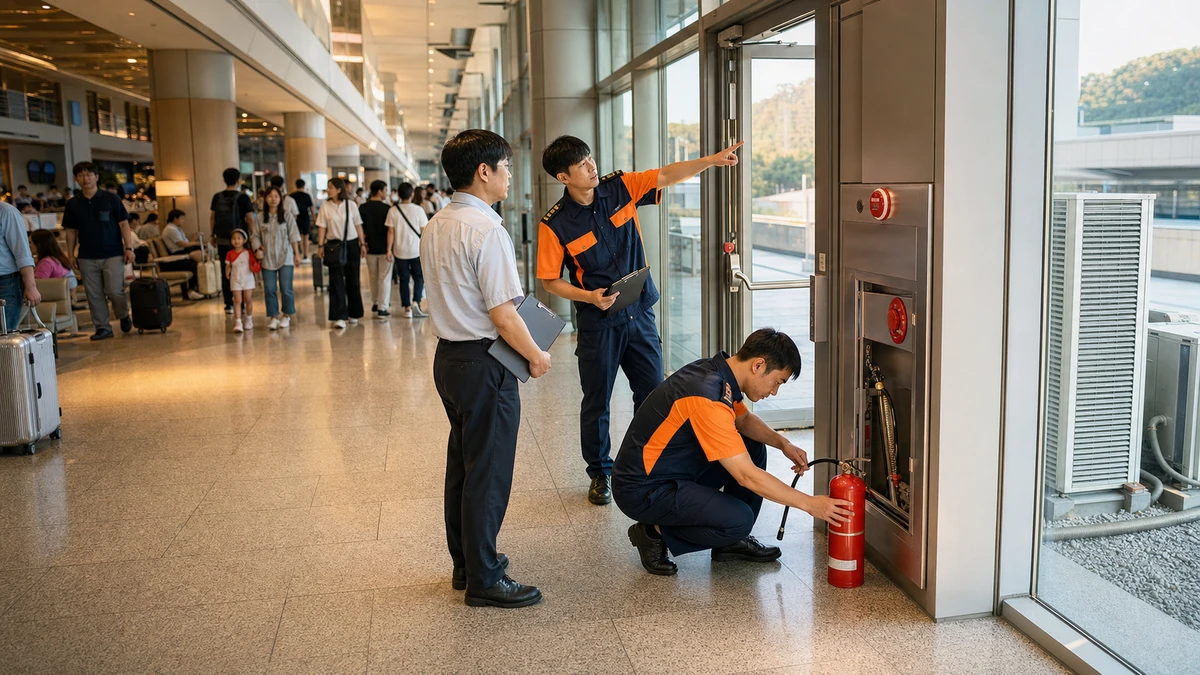
A summer travel surge brings a quieter kind of preparation
As South Korea heads into its peak summer vacation season, officials in the southeastern city of Daegu are focusing on something visitors may never notice if all goes well: the condition of emergency exits, fire prevention systems and cooling equipment in the places travelers depend on most. The Daegu Fire and Disaster Headquarters said it will spend the month of July conducting fire prevention inspections at 155 high-traffic facilities, including airports, bus terminals and lodging sites, ahead of the heavy summer travel period.
On its face, the announcement is a routine public safety measure. But it also offers a revealing look at how South Korean cities prepare for seasonal travel spikes and how local governments are trying to reassure both domestic and international visitors that the basics of travel infrastructure are being watched closely. For American readers more familiar with summer safety campaigns tied to airports, hotels and holiday driving, Daegu’s move will sound familiar: before the crowds arrive, check the systems that people rely on when they are far from home.
That matters in a country where summer travel is intense, concentrated and closely tied to school breaks, office vacation schedules and humid weather that sends people moving constantly between outdoor streets and heavily air-conditioned indoor spaces. In South Korea, as in much of East Asia, major transit hubs and lodging facilities can see sharp bursts of seasonal demand. A city like Daegu, which serves as a gateway to the country’s southeast, becomes more than a destination in itself. It becomes a transfer point, a first impression and, for some travelers, an overnight stop that shapes how safe and organized the city feels.
Officials said the inspections will include surprise checks to see whether evacuation routes and fire protection facilities are blocked by stored items. They also plan on-site administrative guidance by fire agency leaders and public education campaigns aimed at preventing fires involving outdoor air-conditioning units. In practical terms, that means inspectors are looking not just at whether safety equipment exists on paper, but whether people can actually use it in a real emergency.
The story may lack the glamour of a new festival, a headline K-pop event or a tourism campaign built around food and nightlife. But for cities hoping to build repeat tourism, invisible competence matters. Travelers remember whether getting from the airport to a hotel felt orderly, whether lodging seemed professionally run and whether public spaces projected confidence rather than chaos. Daegu’s July campaign is a reminder that tourism is not only about what visitors see. It is also about what local governments prevent from going wrong.
Why Daegu is paying attention now
The timing is not accidental. South Korea’s summer vacation season, often referred to simply as the summer holiday period, tends to bring a noticeable rise in movement through airports, train stations, bus terminals and accommodations. Families travel during school breaks. Office workers take clustered vacation time. Domestic tourists head to beaches, mountain areas and regional cities. International visitors, meanwhile, continue to expand beyond Seoul and Busan as interest in Korean food, regional culture and so-called second-tier cities grows.
Daegu has long been known within South Korea for its hot summers, a point of local identity that is sometimes joked about nationally. In that sense, fire and cooling equipment are not separate issues. They are linked. A city facing sweltering seasonal temperatures depends heavily on air-conditioning in hotels, transit hubs, cafes and shopping areas to keep daily life and tourism functioning smoothly. But the more cooling equipment is used, the more strain is placed on electrical systems and exterior units, particularly during heat waves and periods of continuous operation.
That helps explain why the Daegu Fire and Disaster Headquarters tied this year’s inspection push to broader fire statistics. Citing national fire agency data, officials said that over the past five years, fires caused by electrical factors such as overheating in cooling devices accounted for 38.8% of 29,651 summer fire incidents nationwide, the largest share among identified causes. In Daegu itself, officials said there were 26 cooling-equipment fires last year, double the number recorded in 2021.
For an American audience, the logic is easy to recognize. When extreme heat drives up power use, aging or poorly maintained equipment can become a public hazard. In the United States, fire departments routinely issue warnings during heat waves about overloaded circuits, extension cords and HVAC systems under stress. Daegu’s campaign reflects a similar concern, but in a denser urban environment where large numbers of people may be moving through shared commercial buildings and transportation facilities in a compressed period.
The city’s choice of targets also reflects how travel actually works. A visitor does not experience a destination in isolated pieces. A traveler arrives at an airport, boards a bus or other transit connection, checks into a hotel, visits indoor attractions, returns late at night and repeats the cycle the next day. If any one of those links is poorly managed, the sense of comfort can quickly unravel. By focusing on airports, terminals and lodging facilities together, Daegu is effectively treating tourism safety as a connected chain rather than a series of separate buildings.
The places under review are the ones travelers use first
The 155 facilities named for inspection are not random buildings. They represent the most practical and high-stakes parts of a visitor’s journey through the city: transportation gateways and temporary living spaces. These are the settings where fatigue, unfamiliarity and crowds can combine to make emergencies more dangerous.
Airports and terminals serve as a traveler’s first and last contact with a city. For foreign visitors in particular, these spaces do more than move people from point A to point B. They shape whether the city feels legible. Is signage clear? Are exits open? Do staff appear prepared? Are shared spaces maintained? When people are carrying luggage, managing children, dealing with language barriers or rushing to connections, even a modest disruption can become serious if basic safety measures fail.
Lodging facilities carry a different kind of responsibility. In a hotel, inn or guesthouse, visitors are asleep, showering, charging phones, running air-conditioning and often unfamiliar with the layout. Unlike in a museum or store, people may not have immediate awareness of where stairwells, fire doors or emergency instructions are located. In South Korea, lodging options also span a wide range, from major business hotels to smaller motels and local accommodations that may serve tourists, families and short-stay guests. A fire prevention campaign that includes these sites is as much about standardizing expectations as it is about responding to a specific threat.
Daegu officials said part of the inspection effort will involve unannounced checks to identify whether objects have been left in front of evacuation and fire-protection facilities. That may sound mundane, but it gets at one of the most common and consequential failures in building safety: exits that exist in theory but are obstructed in practice. In many countries, including the United States, some of the worst outcomes in commercial fires have involved blocked pathways, locked doors or poorly maintained safety systems. The lesson is old and universal. A safe building is not defined only by what was installed when it opened. It is defined by daily management.
The surprise-inspection element is especially notable. Pre-scheduled visits can encourage cosmetic compliance, with managers cleaning up visible issues shortly before officials arrive. Unannounced checks, by contrast, give regulators a better sense of how a facility is being operated on an ordinary day. For visitors, that distinction matters. What counts is not whether a hotel can prepare for an inspection. It is whether it is consistently safe at 11 p.m. on a crowded weekend when guests are tired and air-conditioners are running nonstop.
What this says about South Korea’s approach to public safety
South Korea’s modern public safety culture has been shaped by several high-profile disasters over the years, and local authorities are acutely aware that failures in oversight can quickly become matters of national scrutiny. That history has created a strong administrative instinct toward visible preemption: inspect before the rush, issue guidance before temperatures peak, remind businesses of their responsibilities before a problem turns into a headline.
For American readers, one cultural point may be helpful. South Korean local governments often place heavy emphasis on organized, seasonal campaigns tied to holidays, weather patterns or recurring public concerns. These campaigns can involve inspections, public messaging, visits by agency heads and targeted enforcement. What might look bureaucratic from the outside is also a recognizable style of governance: highly scheduled, publicly announced and designed to show that authorities are actively managing risks before they escalate.
That is part of what is happening in Daegu. The fire headquarters said fire agency leaders will provide on-site administrative guidance, a phrase that can sound stiff in translation but in practice means officials will visit facilities, reinforce standards and push operators to correct weak points. This is not only about punitive enforcement. It is also about signaling priorities to managers who oversee the spaces travelers use every day. In a hospitality and transit environment, where maintenance routines can vary from site to site, direct visits from public safety leadership serve as a reminder that compliance is not optional.
The public education component involving outdoor air-conditioning units is also telling. In many buildings, those units are easy to overlook because they sit outside and largely out of sight. Yet in a city known for intense summer heat, they are under constant strain. Fire prevention messaging aimed at those systems suggests officials are trying to reach both facility managers and the broader public with a simple point: comfort and risk can come from the same machine.
That kind of messaging fits the broader Korean urban experience. Much of daily life in summer happens across a network of indoor refuges from the heat: subway stations, department stores, cafes, hotels, office towers and convenience stores. To international fans of Korean culture, those spaces may be associated with leisure, food and the visual polish of contemporary city life. But from a governance standpoint, they are also infrastructure. A successful travel season depends not just on attractions but on whether these ordinary systems remain safe under pressure.
For foreign travelers, the message is reassurance, not alarm
There is an important distinction in how this news is likely to be read inside and outside South Korea. For local audiences, the announcement is a standard seasonal safety measure tied to known summer risks. For foreign audiences encountering Daegu through translated headlines, there is a risk that words like “fire” and “inspection” can sound reactive or ominous. The more accurate reading is the opposite: officials are publicizing a preventive effort before peak travel intensifies.
That matters because Daegu is not always the first Korean city international tourists can locate on a map. Seoul dominates global attention, while Busan is often familiar because of its beaches, port identity and film festival. Daegu tends to enter foreign itineraries through business travel, regional exploration, food trips or travel deeper into the country’s southeast. For those visitors, practical questions often matter more than branding campaigns: How easy is it to move around? Are transportation links reliable? Does the city feel well managed? Can I stay somewhere comfortably during the hottest part of the year?
This inspection campaign speaks directly to those concerns. Airports, terminals and lodging sites are the places where unfamiliar travelers are most dependent on local systems working properly. A city that publicly checks those spaces before the rush is signaling seriousness about visitor welfare. That may not be the kind of story that drives social media buzz, but it contributes to the trust that underlies tourism.
It is also a reminder that a city’s reputation is built on more than landmarks. Travelers may come for Korean barbecue, baseball, shopping, nearby historic sites or the broader appeal of South Korea’s global cultural rise. But they judge the whole trip through lived details: whether the room felt secure, whether the transit hub seemed orderly, whether there was a general sense that somebody was minding the store. The most successful travel destinations are often the ones where visitors do not have to think much about safety because the systems around them are clearly functioning.
From that perspective, Daegu’s campaign sends a broader message that will make sense to anyone who has traveled during a summer rush in the United States. Before the crowds come, cities check the escalators, inspect the exits, warn people about heat, remind building managers of the rules and try to reduce preventable failures. Good tourism policy is often invisible. Its success is measured by the absence of disruption.
The hidden infrastructure behind a smooth summer trip
There is a tendency in travel coverage, especially in the age of viral destination marketing, to focus almost entirely on what is photogenic: neighborhoods, restaurants, festivals, scenic walks and “must-see” attractions. But any city hoping to compete for repeat visitors has to get the unglamorous pieces right. Fire safety, evacuation planning and equipment maintenance are part of what makes a destination usable, not just attractive.
That is especially true in South Korea, where visitors often encounter cities through a blend of efficiency and density that can feel strikingly seamless when systems are working. Buses arrive frequently. Trains connect regions quickly. Hotels turn over guests at a fast pace. Interior spaces offer relief from heat and humidity. The smoother that experience feels, the easier it is to forget how much behind-the-scenes management is required to sustain it.
Daegu’s monthlong inspection effort makes that hidden work visible, at least briefly. By checking 155 high-use facilities during July, officials are trying to tighten the city’s operational baseline at exactly the moment when demand is rising. The emphasis on blocked evacuation areas and fire-prevention systems suggests that managers are being reminded to pay attention not only to technology but also to housekeeping and discipline. Safety failures often do not begin with dramatic malfunctions. They begin with corners cut, hallways used for storage and maintenance postponed for another week.
The campaign also underscores a basic truth about tourism that applies far beyond South Korea. Visitors experience a city as a chain of dependencies. They depend on transportation staff, hotel operators, maintenance crews, inspectors and public officials they will never meet. Most of the time, the better those people do their jobs, the less travelers notice them. That invisibility is not a sign that the work is unimportant. It is evidence that the system is doing what it is supposed to do.
In that sense, Daegu’s fire prevention checks are a useful case study in how cities prepare for the pressures of modern tourism. Not with spectacle, but with inspection. Not with slogans, but with routine enforcement. And not in response to a known crisis, but in anticipation of predictable seasonal strain.
A practical lesson for a tourism era shaped by trust
As more international visitors look beyond South Korea’s best-known destinations, local cities are under growing pressure to prove they can offer not only interesting experiences but dependable infrastructure. Daegu’s July inspections may not become a major international story, but they point to something increasingly important in a competitive tourism market: trust is part of the product.
For officials, that trust is built through preventive management. For businesses, it depends on keeping exits clear, equipment maintained and rules followed even when nobody is watching. For travelers, it shows up as something less tangible but instantly recognizable: the feeling that a city is prepared.
That may be the clearest takeaway from Daegu’s announcement. Summer tourism is often sold through images of fun and freedom, but it works best when supported by discipline. People can enjoy a city more fully when airports, terminals and lodging sites are not just convenient, but safe. In a season when cooling systems run harder, crowds grow thicker and travel speeds up, public confidence rests on the small things being handled correctly.
Daegu’s inspection campaign is, in the end, a story about those small things. The traveler arriving from abroad may never see the inspector checking an exit route or the official reminding a hotel manager about fire doors or the warning campaign focused on air-conditioning units. But those quiet acts of preparation shape the trip all the same. In a tourism economy increasingly defined by comfort, reliability and word-of-mouth trust, that kind of invisible readiness is not a side issue. It is part of the destination itself.
Comments
Post a Comment