A regional merger with national implications
South Korea is set to unveil an unusually ambitious experiment in local government: the launch of the new Jeonnam-Gwangju Integrated Special City, a merged regional authority that local leaders are presenting not simply as a bureaucratic reshuffle, but as a new growth model for the country. The formal debut is scheduled for midnight on July 1, and later that evening thousands of residents, political leaders, labor representatives and business figures are expected to gather in Gwangju for a public celebration linking the new government structure to another priority that resonates far beyond the Korean Peninsula: semiconductors.
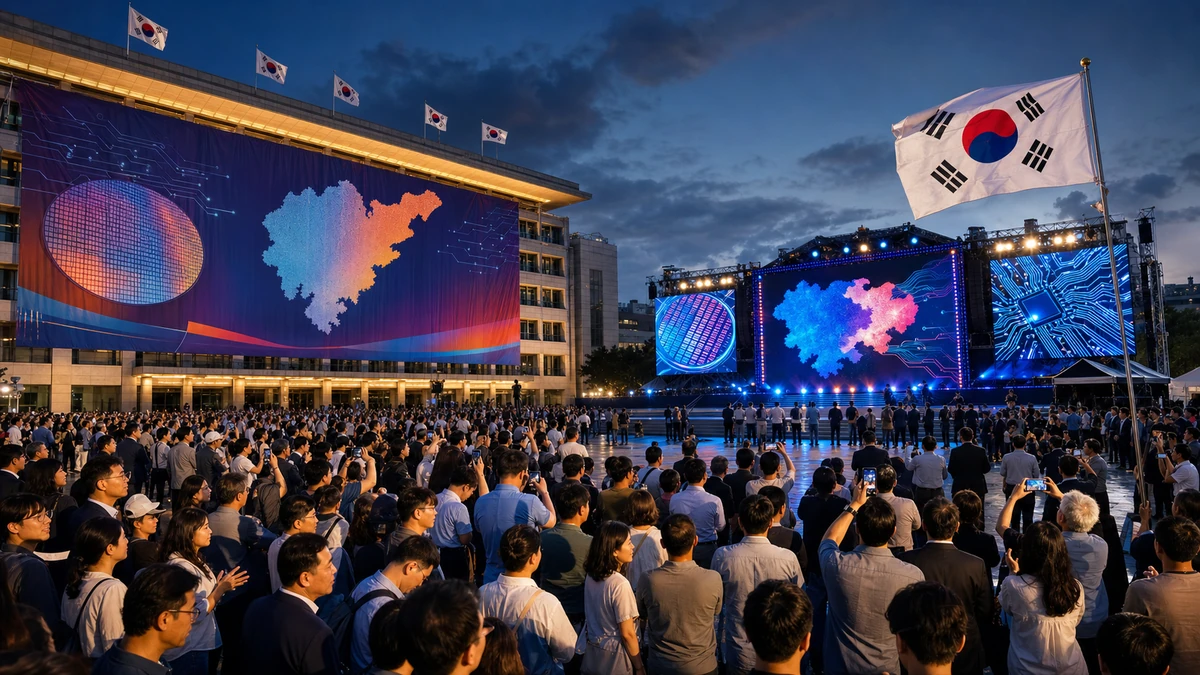
The event, scheduled for 7 p.m. in Gwangju’s 5·18 Democracy Square, is being framed as both a civic launch and an economic statement. Organizers say the gathering will commemorate the birth of what they describe as South Korea’s first metropolitan-level integrated autonomous government and mark a major semiconductor investment expected to help define the new city-region’s future. The theme of the event, roughly translated as “The Power of Integration! A Great National Transformation Opened by Semiconductors,” captures the message local officials want to send: that political consolidation and industrial policy can reinforce each other.
For American readers, the easiest analogy may be to imagine if a major U.S. city and the broader state or county region surrounding it tried to align governance, development strategy and branding under one umbrella, then used a public event to tell residents and investors that a new era had begun. That comparison is imperfect; South Korea’s administrative structure is different, and its local governments operate in a much more centralized national system than U.S. states do. Still, the underlying logic is familiar. Regional leaders are trying to solve a common problem: how to compete for talent, capital and jobs in a world where city limits matter less than the broader economic ecosystem around them.
The news comes at a moment when semiconductors have become shorthand for strategic power. In Washington, chip factories are tied to national security and supply-chain resilience. In South Korea, they are also tied to regional survival. Outside the Seoul metropolitan area, local governments have spent years searching for ways to slow population decline, create higher-paying jobs and keep younger residents from leaving. By combining an administrative merger with a major chip-sector investment announcement, officials in southwestern Korea are signaling that they see governance reform and industrial strategy as parts of the same story.
Why Gwangju and South Jeolla are joining forces
The new entity brings together Gwangju, a major city in southwestern South Korea, and South Jeolla Province, known in Korean as Jeonnam. Gwangju is best known internationally for the 1980 pro-democracy uprising in which civilians rose against military rule, an episode that remains one of the most important chapters in modern Korean political history. South Jeolla, by contrast, includes a wider network of smaller cities, rural communities, industrial sites and coastal areas. The relationship between the two has long reflected a challenge familiar in many countries: the city and the surrounding region are economically intertwined, but often administered separately.
Supporters of the merger argue that the old arrangement made it harder to plan transportation, public services, land use and industrial development on a scale that matched how people actually live and work. In practical terms, many residents move across these boundaries for jobs, school, health care and commerce. The combined government is meant to reflect that reality. Rather than treat the city core and nearby province as separate actors competing for investment, the new structure is being promoted as a unified platform able to market itself more aggressively and make decisions more efficiently.
That idea is especially important in South Korea, where regional inequality has become a persistent concern. Seoul and its surrounding metropolitan area dominate the country’s economy, population and corporate concentration to such a degree that local leaders elsewhere often speak in urgent terms about the need for “balanced national development.” That phrase has deep political meaning in Korea. It refers not just to fairness, but to a long-running policy goal of preventing the capital region from pulling too far ahead of the rest of the country.
Officials backing the new special city appear to be making a broader argument: if regional governments remain fragmented, they risk falling behind in the competition for high-value industries. If they integrate, they can present a stronger case to companies, workers and the central government. The fact that organizers call this the country’s first metropolitan administrative integration gives it the air of a pilot project, one that could be watched closely by other Korean regions wondering whether similar mergers might help them remain competitive.
There is also a branding component. Names matter in economic development, whether the place is the Research Triangle in North Carolina, Silicon Valley in California, or the Texas Triangle. “Jeonnam-Gwangju Integrated Special City” is not as sleek as those labels, but it serves a purpose. It tells domestic and international audiences that the city and province want to be understood as one strategic unit. In that sense, the name itself is part of the policy.
Why semiconductors are at the center of the message
If the administrative merger explains the political side of the story, semiconductors explain the economic side. Chips are one of South Korea’s signature industries, central to exports, industrial policy and the country’s standing in the global technology economy. To many Americans, semiconductors may evoke Intel, Nvidia, Taiwan’s TSMC or the Biden-era CHIPS and Science Act. In South Korea, the sector similarly carries weight far beyond factory floors. It is associated with advanced manufacturing, geopolitical leverage and national prestige.
What is notable here is not merely that the region is welcoming semiconductor investment, but that local leaders are using the investment to define the identity of the newly merged government from day one. In effect, they are trying to say that this is not a ceremonial redrawing of lines on a map. It is a bid to build an industrial future. The program for the July 1 event includes a report on the status of semiconductor investment, an explanation of next steps and the launch of a semiconductor strategy committee for the new special city. That sequence suggests officials want to reassure residents that this is more than a splashy announcement.
The emphasis also reflects how regional development is increasingly tied to a few highly competitive sectors. In many countries, local leaders once pinned hopes on generic business parks, tourism or downtown revitalization. Those tools still matter, but today’s industrial policy often revolves around attracting or supporting specific ecosystems: electric vehicles, batteries, biotech, AI data centers or semiconductor fabrication and packaging. In South Korea, where manufacturing remains a pillar of the economy, semiconductors represent the gold standard.
Still, the industry comes with challenges. Chip projects require enormous capital, specialized infrastructure, reliable power, water access, supply-chain networks and a technically trained workforce. They also raise questions about how broadly the benefits will be shared. Will new investment create long-term local jobs or mainly reward outside contractors and large firms? Will smaller businesses be able to plug into the supply chain? Will educational institutions adjust quickly enough to prepare workers? These are the kinds of questions that often follow major industrial announcements in the United States, and they are relevant in South Korea as well.
By making the semiconductor strategy part of a citizen event rather than only a closed-door briefing, organizers seem to be trying to translate corporate investment into everyday civic language. The message is that chips are not just for executives, engineers or export statistics. They are supposed to matter to families deciding whether to stay in the region, to young people considering where to build a career and to workers evaluating whether industrial growth will improve wages and job quality.
Why the ceremony’s location matters
One of the most meaningful details in the event plans is the venue: 5·18 Democracy Square in Gwangju. That choice gives the ceremony symbolic depth that extends well beyond municipal administration. For many Koreans, Gwangju is inseparable from the 1980 democratic uprising, when residents protested military rule and were met with violent suppression. In Korean public life, references to “May 18” are not historical footnotes; they invoke sacrifice, democratization and the idea that civic legitimacy comes from the people.
Holding the launch celebration in that square, rather than in a government office building or hotel ballroom, suggests an effort to root the new special city in public memory and citizen participation. It says, in effect, that the new government wants to be born in a civic space rather than a purely bureaucratic one. For an American audience, a loose comparison might be a major public announcement staged in a place tied to civil rights, labor history or democratic protest, where the setting itself carries moral and political meaning.
That symbolism is reinforced by another image described in local reporting: a large banner welcoming semiconductor investment hanging at the South Jeolla provincial government complex in Muan on the eve of the launch. The contrast is striking. On one side is the administrative seat, where the machinery of government is visible. On the other is a public square associated with democratic memory. Together, those sites illustrate what local leaders appear to want the merger to represent: an institutional change that is also meant to feel socially shared and publicly owned.
The ceremony’s structure further underscores that point. The first half is expected to include a pre-event performance, opening declaration, a formal salute, a report tracing how the launch was prepared, congratulatory remarks and an inaugural speech by Mayor-elect Min Hyung-bae, who will lead the new special city. That order matters. A process report is not always riveting stagecraft, but it serves a purpose. It tells residents that the merger did not happen overnight and was not merely announced from above. In a democratic society, procedural legitimacy matters almost as much as the policy itself.
In that sense, the event is designed to do several things at once: celebrate, explain, legitimize and persuade. It is part launch, part political education and part investment roadshow. That hybrid quality may strike Americans as unusual, but it fits South Korea’s tradition of high-stakes public mobilization around national and regional development goals.
Labor, business and citizens share the stage
Another striking feature of the planned program is who will be there. Organizers say the event will bring together the mayor-elect, business leaders, labor representatives and ordinary residents. The second half of the program, focused on welcoming semiconductor investment, will include a declaration from a citizen-led preparatory body supporting the success of the semiconductor industry and a joint labor-management cooperation statement involving Korea’s two major labor federations: the Federation of Korean Trade Unions, known as the FKTU, and the Korean Confederation of Trade Unions, or KCTU.
For readers outside Korea, that is significant. The two labor groups do not always move in lockstep. They represent different traditions and often take different approaches to labor politics. Their participation in the same cooperative declaration sends a symbolic message that the region wants industrial growth to be seen not as a top-down corporate project but as a shared social undertaking. Whether that consensus holds over time is another question, but as political theater and public messaging, it is powerful.
In the United States, politicians frequently talk about bringing labor and management to the same table when announcing large manufacturing projects, especially in politically sensitive sectors. South Korea’s version of that script carries its own history. Labor movements there have long been deeply intertwined with democratization, social justice and debates over economic fairness. As a result, a labor endorsement, or at least labor participation, often gives public projects greater legitimacy.
The emphasis on citizen involvement also reflects a broader reality. Industrial investment is never just about GDP. It changes neighborhoods, transportation patterns, housing demand, environmental risks and expectations for schools and training programs. In smaller or mid-sized regions, one major industrial push can alter how people imagine the future of the place they live. That is why the local framing matters so much here. Officials are not only saying that semiconductor investment will boost the economy. They are trying to present it as the foundation for a new civic identity.
That ambition can be appealing, but it also creates pressure. Residents will expect not only jobs, but visible improvements in public services, mobility and everyday quality of life. If the merger is sold as a reset, citizens will judge it against real experiences: whether government becomes easier to navigate, whether opportunities are more evenly distributed and whether the benefits of investment reach beyond headlines and ceremonial banners.
A test case for South Korea’s regional future
The broader significance of the Jeonnam-Gwangju launch is that it could become a test case for how South Korea responds to long-term regional strain. The country faces a cluster of challenges familiar to many developed economies: aging populations, low birth rates, intense competition for high-value industries and a capital city region that continues to dominate jobs and investment. In that environment, local governments are under pressure to become larger, smarter and more strategic.
The new special city appears to be one answer to that problem. Instead of treating municipal boundaries as fixed political facts, it treats them as variables that can be reworked to fit economic geography. Instead of presenting administrative reform as a technocratic necessity, it ties reform to a narrative of industrial transformation. And instead of unveiling the project in a dry policy memo, it stages it as a public ritual in one of Korea’s most historically resonant civic spaces.
Whether that model succeeds will depend on more than symbolism. Administrative integration can streamline decision-making, but it can also generate friction over representation, budget priorities and local identity. Economic development campaigns can create excitement, but they also require patient execution, infrastructure investment and accountability. Semiconductor strategies can attract headlines, but they must eventually produce contracts, workers, supply chains and sustained demand.
For now, though, the launch offers a revealing snapshot of how Korean regional politics is evolving. This is a country that has often moved quickly when national priorities align, whether in infrastructure, education, manufacturing or digital technology. The Jeonnam-Gwangju project suggests that local governments are trying to borrow that same strategic mindset. The proposition is straightforward: scale up governance, lock in advanced industry and tell a convincing story about why people should believe the region’s best days are ahead rather than behind it.
That story may resonate beyond Korea. Around the world, regional leaders are grappling with a similar challenge: how to persuade residents that structural change can still lead to shared prosperity. In that sense, what happens in Gwangju on July 1 is not just a local celebration. It is a public argument about what regional reinvention should look like in the age of supply-chain politics and technology competition.
On paper, the ingredients are impressive: a first-of-its-kind administrative merger, a strategic industry at the heart of national economic policy, labor participation, civic symbolism and a clear effort to connect policy to public identity. The harder part begins after the music stops and the speeches end. If the new special city can turn those promises into visible gains, it may become a model for other Korean regions. If not, it risks becoming another reminder that branding alone cannot overcome the structural obstacles facing places outside a dominant capital region.
Either way, the launch marks a notable moment in South Korea’s evolving regional story. A new government unit is being born not in isolation, but in the context of a global chip race and a domestic push for more balanced development. The real question is whether integration can become more than a slogan and whether semiconductors can become more than a symbol. On July 1, local leaders in southwestern Korea will ask the public to believe that both are possible.
Comments
Post a Comment