At South Korea’s KAIST, a New Mental Health Center Signals a Broader Shift for Campuses in the AI Era
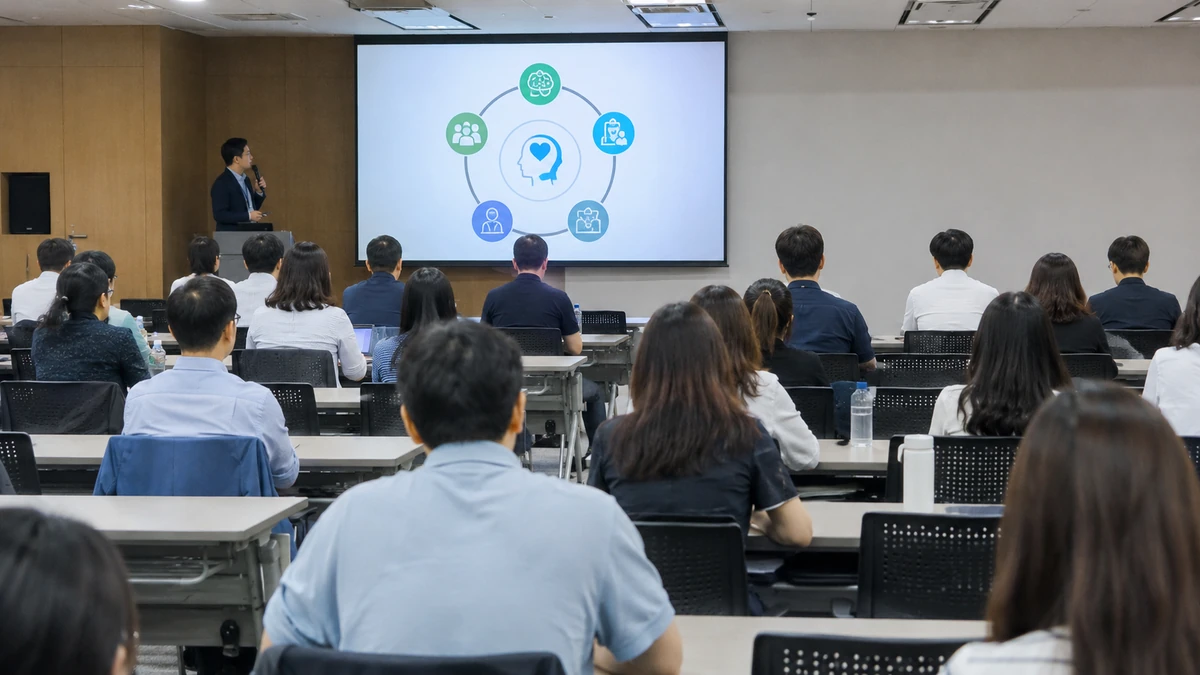
A leading Korean science university is rethinking how mental health care works
One of South Korea’s top science and engineering universities is launching a new, more centralized approach to mental health support, a move that reflects a wider question facing colleges around the world: In an age of high pressure, digital tools and artificial intelligence, what should accessible, human-centered mental health care actually look like?
KAIST, the Korea Advanced Institute of Science and Technology, said this week it is operating a new “Mind Care & Growth Center” designed to bring together several services that had previously been scattered across campus. According to the university, the center will integrate psychological counseling, psychiatric care and crisis response under one organizational structure, while also linking those services to research in digital mental health.
That may sound like an administrative change, but on college campuses, structure matters. Students or staff who are struggling often do not arrive with a clear diagnosis or a neat sense of which office they should contact first. They may know only that something feels wrong: sleep is collapsing, panic is growing, motivation is fading, or a crisis is beginning to take shape. In those moments, the difference between “start here” and “figure out which door to knock on” can be significant.
For American readers, a useful comparison might be the difference between a campus where counseling, disability support, urgent psychiatric referrals and student crisis intervention all operate as separate islands, versus one where those functions are organized more like a connected care system. Many U.S. colleges have spent the last decade trying to build that kind of coordination, especially after the pandemic intensified student stress and exposed the limitations of fragmented care. KAIST’s new center suggests a similar institutional rethink is underway in South Korea, too.
The announcement also carries symbolic weight because KAIST is not just any university. Often described as South Korea’s answer to MIT or Caltech, KAIST is one of the country’s flagship research institutions, known for training elite scientists, engineers and technology leaders. When a place like that says mental health support needs to be reorganized, expanded and tied directly to research on digital care, it sends a message well beyond one campus.
Why this matters in South Korea
To understand why this news stands out, it helps to understand the pressure-cooker environment many South Korean students grow up in. South Korea is widely admired for its educational attainment, technological sophistication and economic rise. But that success has come with an intense culture of competition, especially around schooling, exams and career outcomes. Students often spend years in highly structured academic routines, and entry into elite universities can feel life-defining in a way many Americans would associate with the most selective Ivy League admissions culture, only scaled across society.
That pressure does not disappear once students enter college. At research universities such as KAIST, academic expectations remain high, and students may face additional burdens tied to lab work, uncertain career paths, social isolation or the stress of living away from home. Graduate students and researchers face their own strains, including publication pressure, project deadlines and the emotional wear that can come with life in high-performance institutions.
Mental health has also historically carried stigma in South Korea, as it has in many countries. While public discussion has expanded considerably in recent years, seeking psychiatric care or even counseling can still feel daunting. For some people, the barrier is cultural, tied to concerns about shame, privacy or being seen as unable to cope. For others, the barrier is practical: If services are spread across multiple offices, figuring out where to begin can feel overwhelming, especially for someone already in distress.
That is part of what makes KAIST’s emphasis on integration notable. The university is not simply adding another counseling office or rebranding a wellness program. It says it has expanded and reorganized an existing counseling center into a broader system that combines counseling, medical treatment and crisis support. In plain terms, the goal appears to be reducing the friction between recognizing a problem and getting the right level of help.
In the United States, college leaders have wrestled with the same problem. A student may first present with academic burnout, but what they actually need is urgent psychiatric evaluation. Another may seek help for anxiety but later require ongoing therapy, medication management or emergency intervention. If each step requires a new intake process and a different office, people can fall through the cracks. KAIST’s redesign appears intended to close some of those gaps before they become dangerous.
From scattered services to a single entry point
The core word in KAIST’s announcement is integration. Instead of maintaining mental health support as a collection of separate functions, the university is consolidating counseling, psychiatric care and crisis support into one center. That kind of “one front door” model is important because people in distress are often not in a position to sort out the mental health equivalent of a bureaucratic flowchart.
Imagine a college sophomore in the middle of finals who has not slept properly in days, has stopped eating regularly and is beginning to feel hopeless. Or a doctoral student whose stress has escalated into panic attacks but who is unsure whether what they are experiencing is serious enough for medical attention. In both cases, a fragmented system creates an additional burden: first identify the nature of your problem, then identify the right office, then hope the referrals line up. A more integrated system reverses that logic. Start in one place, and the institution helps route you.
That may sound obvious, but it represents a shift in how universities think about care. Instead of treating counseling as a stand-alone service, the KAIST model suggests mental health support should function more like a continuum. A person may begin with emotional support, move into clinical treatment if needed, and receive crisis assistance without having to re-explain their situation at every stage. For universities, that kind of continuity is often the difference between a support network that exists on paper and one that people actually use.
KAIST also said the new center grew out of an expanded and reorganized version of its previous counseling center. That detail matters because it suggests the university is building on an existing base rather than creating a flashy but disconnected initiative. In health care and education alike, sustainable reform often depends less on creating entirely new institutions than on making the existing ones work better together.
For Korean readers, and for international observers familiar with campus mental health struggles, the significance is practical rather than rhetorical. A streamlined system can lower the threshold for asking for help. It can also make early intervention more likely. In mental health care, timing matters. Problems caught early may be easier to treat, less disruptive academically and less likely to escalate into crises.
More than counseling: KAIST is linking care to research
What makes the new center especially interesting is that KAIST is not framing it only as a service office. The university says the center will also connect with research in digital mental health, with participation from experts in fields including artificial intelligence, brain science, design, the humanities and social sciences, mathematics and computer science.
That multidisciplinary approach is striking, but it also makes sense. Mental health is not just a medical issue. It is also a design problem, a communication problem, a social problem and, increasingly, a technology problem. People do not merely need care in theory; they need care that is easy to find, psychologically safe to access and genuinely helpful in the context of their daily lives.
A student may avoid a service because the booking process is confusing. Another may abandon an app because it feels robotic or culturally tone-deaf. A third may never seek help because they worry about stigma, privacy or whether their feelings are “serious enough.” Those are not issues that psychiatry alone can solve. They require thinking about user experience, language, social norms and trust.
That is where KAIST’s mix of disciplines becomes meaningful. Artificial intelligence and computer science can help build tools that make screening, scheduling or self-monitoring more accessible. Brain science can deepen understanding of how mental distress presents and changes. Design can shape whether a service feels welcoming or alienating. Humanities and social science research can address stigma, ethics, communication and the cultural meanings attached to care.
American universities have increasingly moved in this direction as well, especially in public health and behavioral science initiatives that combine clinical expertise with data science and digital platforms. But the promise of these efforts depends on whether research feeds back into real service improvements. KAIST says it wants the center to study digital mental health and use that research to continuously upgrade mental health services. That creates a loop: research informs care, care generates new questions, and services improve over time.
If that loop works, it could become one of the center’s most important features. Too often, universities excel either at research or at service delivery, but not both at once. In practice, that can mean cutting-edge studies that never meaningfully improve everyday care, or care systems that struggle to evolve because they are disconnected from innovation. KAIST appears to be trying to bridge that gap.
The AI question: access, convenience and the need for guardrails
The timing of the announcement is not accidental. Around the world, generative AI is moving rapidly into everyday life. People use chatbots to organize thoughts, draft messages, track moods, ask questions and, increasingly, talk through emotional struggles. In the mental health space, that has fueled both optimism and concern.
On one hand, digital tools can lower barriers. Someone who feels too embarrassed to seek counseling may start by journaling in an app. Someone who cannot get an immediate appointment may use a digital tool to monitor stress levels, recognize patterns or receive basic coping prompts. On crowded campuses, where demand for counseling often outpaces available appointments, these tools can seem especially appealing.
On the other hand, convenience is not the same thing as care. A chatbot may provide comfort without understanding risk. It may reinforce dependency, give overly generic advice or miss signs that a person needs urgent human intervention. In medicine and mental health alike, one of the biggest questions of the AI era is not whether people will use these tools. They already are. The question is what kind of structure, oversight and accountability will surround that use.
That concern surfaced in related Korean research released the same day by Korea University Anam Hospital, which reported findings from a joint study involving psychiatrists. According to the summary, South Korean mental health specialists saw potential for generative AI to help with patients’ self-management, but they also expressed concern about overreliance and the possibility that such tools could undermine trust in physicians’ diagnoses. The survey, conducted among members of the Korean Neuropsychiatric Association, analyzed meaningful open-ended responses from 311 doctors out of 408 surveyed.
That tension is familiar in the United States as well. Universities, hospitals and startups are all exploring AI-enabled mental health tools, but clinicians and ethicists continue to warn that emotional support cannot simply be automated away. If a digital platform encourages users to disclose deeply personal information, who is responsible for privacy? If a tool is positioned as an early intervention resource, what happens when it fails to detect a crisis? If students start trusting a chatbot more than a therapist, is the tool helping close a care gap, or creating a new one?
KAIST’s approach, at least as described so far, is notable because it does not present technology as a stand-alone solution. Instead, it places digital mental health inside a broader ecosystem of counseling, treatment and crisis support. That matters. For all the excitement around AI, mental health remains an area where human judgment, relational trust and professional responsibility are not optional extras. They are the foundation.
Why universities are becoming frontline mental health institutions
Colleges today are not just places of learning. They are living environments where academic pressure, identity formation, financial stress, social change and health needs all collide. That has pushed universities into a role they may not have fully anticipated decades ago: de facto frontline institutions for mental health.
In the United States, that shift has been visible for years. Campus counseling centers report long waitlists. Administrators debate leave-of-absence policies, emergency intervention procedures and how much responsibility a university should bear when a student is in distress. Faculty are often asked to spot warning signs they were never formally trained to handle. Residence staff, advisers and peers become informal first responders.
South Korean campuses face their own versions of those pressures, though the cultural context differs. Academic competition is intense, and social expectations around success can weigh heavily. Students at elite institutions may feel they have little room to fail, and that perceived lack of room can be psychologically punishing. In that environment, mental health support cannot be treated only as something that activates after a breakdown. It has to exist as part of everyday campus life.
That helps explain another interesting aspect of KAIST’s naming choice: “Mind Care & Growth Center.” In English, the phrase “growth” may sound like wellness branding, but it points to an idea that is increasingly common in mental health policy: support is not only about reducing symptoms. It is also about helping people build sustainable ways of living, studying and working.
In Korean settings, naming can carry particular social meaning. A label that sounds purely clinical may discourage some people from seeking help because it implies illness or deficiency. A name that emphasizes care and growth can signal a broader, less stigmatized approach. Of course, branding alone does not guarantee effective care. What matters is whether people can access timely counseling, competent treatment and crisis support when they need it. But language can shape the emotional threshold for walking through the door.
That is true in America, too. Many colleges now talk about well-being, resilience or student support rather than relying only on psychiatric terminology. The best versions of those efforts do not trivialize serious illness; instead, they create more entry points into care. KAIST’s framing appears to work in that same direction.
A human-centered message from a technology powerhouse
There is a final reason this story stands out. KAIST is one of South Korea’s premier technology institutions, the kind of place outsiders might expect to embrace a tech-first answer to nearly every problem. Yet the structure it is highlighting is not “AI replaces counselors.” It is integration, continuity and multidisciplinary design in service of human care.
That is a meaningful distinction. In debates about AI, institutions often swing between hype and fear. Either technology is treated as a cure-all, or it is cast as a threat to authentic human connection. The more realistic path is usually in between: use technology where it meaningfully expands access or improves coordination, but embed it in systems where trained people remain responsible for judgment, treatment and crisis response.
KAIST’s announcement suggests an awareness of that balance. By bringing together AI, computing, brain science, design and the humanities alongside counseling and psychiatric care, the university is acknowledging that mental health services cannot be optimized only for efficiency. They also have to be legible, trustworthy and responsive to the ways people actually experience distress.
That message may resonate far beyond South Korea. Around the world, universities, employers and health systems are trying to answer the same set of questions. How do you make mental health support easier to access without flattening it into an app? How do you use digital tools without losing the human accountability that real care requires? How do you build systems that recognize crises early rather than waiting until people are already in free fall?
KAIST has not solved those questions simply by opening a new center. The real test will come in its operation: whether students and staff use it, whether services become easier to navigate, whether research actually improves care, and whether technology remains a tool rather than the star of the show. But as an institutional signal, the move is significant.
It says that in one of Asia’s most technologically advanced academic environments, the future of mental health is not being framed as a choice between innovation and empathy. Instead, the ambition is to build a system where innovation supports empathy, and where help begins with something simple but often elusive on modern campuses: one place to turn, and a better chance of being understood.
Comments
Post a Comment