Netflix’s ‘True Education’ Debuts at No. 1 Among Non-English Shows, Signaling Korean Drama’s Expanding Global Reach
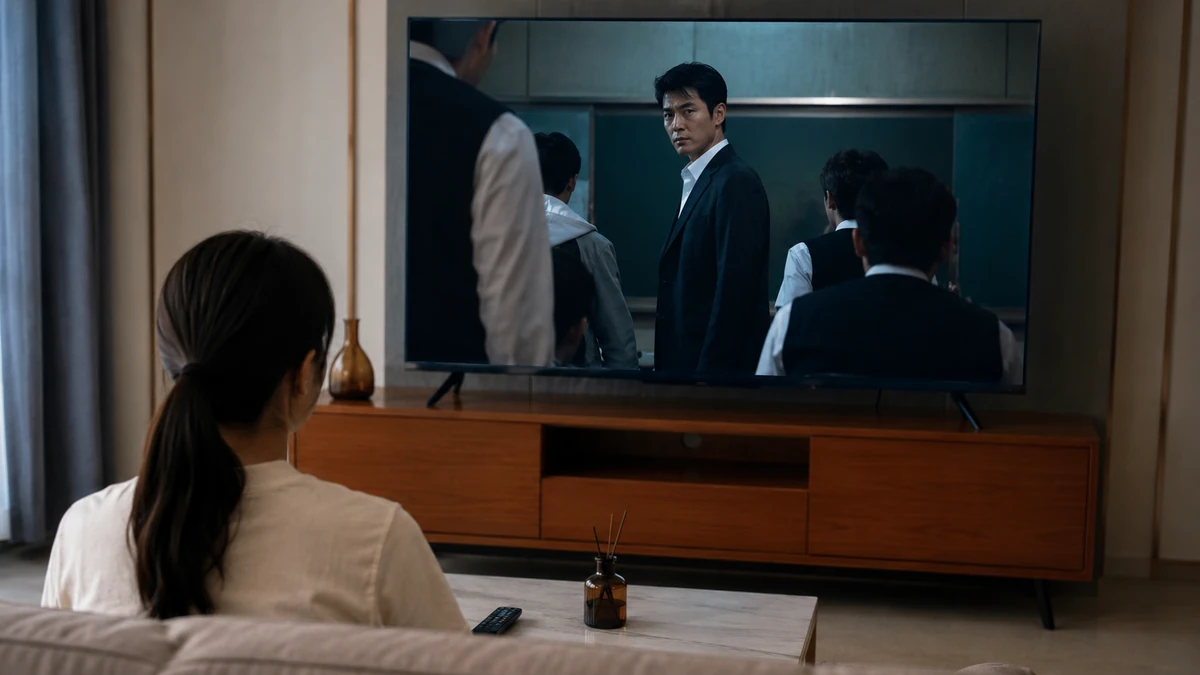
A Korean school drama breaks through on the global chart
Netflix’s latest Korean drama, “True Education,” has shot to the top of the platform’s non-English TV rankings less than a week after its release, a sign that South Korean storytelling continues to travel far beyond the audience that once defined the “K-wave.”
According to Netflix’s official Tudum rankings, the series logged 6.4 million views for the week of Aug. 1 through Aug. 7 and landed at No. 1 among non-English shows worldwide. The drama premiered Aug. 5, meaning it reached the top spot almost immediately after becoming available to subscribers.
For American readers who may not follow Korean entertainment closely, that kind of opening is notable not simply because another Korean title performed well on Netflix. It matters because it shows how quickly a new South Korean series can now move from domestic conversation to global visibility, even when its subject is not an obvious crossover genre like zombie horror, romantic comedy or survival thriller.
“True Education” is built around an especially local premise: turmoil inside South Korea’s schools and the idea that public education has become strained by conflict among students, teachers and parents. Yet its early numbers suggest viewers in many parts of the world were willing to click on a drama rooted in a very specific national debate. In the streaming era, that may be the most important development of all. Korean television is no longer succeeding abroad only when it offers universally familiar hooks. It is increasingly finding viewers even when it begins with deeply Korean institutions, controversies and social anxieties.
That trajectory says something larger about Netflix, about global viewing habits and about the place South Korean drama now occupies in international pop culture. Once treated in the United States as a niche import favored by devoted fans, K-dramas have become a routine part of the global entertainment pipeline. “True Education” appears to be the latest example of that shift — and an especially telling one because of what kind of story it is trying to tell.
What the numbers say — and why the spread matters
The most eye-catching figure attached to “True Education” is its 6.4 million views. Netflix calculates that metric by dividing total watch time by a title’s running time, a method the company uses to estimate how many complete viewings a show effectively generated. In other words, this is not just a measure of buzz on social media or curiosity-driven sampling. It is a sign of actual consumption at meaningful scale.
The series also appeared in the Top 10 in 48 countries, including South Korea, the Philippines, Singapore, Turkey, Argentina and Egypt, according to Tudum. That range matters. A show can sometimes rise on Netflix because it is overwhelmingly popular in one major market or because a preexisting fandom rallies around it in a handful of territories. But a Top 10 footprint spread across Asia, the Middle East and Latin America suggests something broader: the premise was legible to viewers across multiple cultural and linguistic regions.
For U.S. readers, a useful comparison may be the way a domestic show can break out on streaming not because every viewer relates directly to its setting, but because the emotional stakes are instantly recognizable. A series about a specific American institution — say, a Southern high school football program, a New York police precinct or a Rust Belt factory town — can connect internationally when the underlying conflict is familiar enough. “True Education” appears to be doing something similar from the opposite direction. Its setting is intensely Korean, but the basic tension is easier to grasp than it may first appear: What happens when the adults in charge of schools seem to lose authority, and what does a society think education is supposed to protect?
That helps explain why the distribution of its success may be more revealing than the headline ranking itself. The show is not just drawing interest in neighboring markets or in places with especially strong Korean pop culture fan bases. It is surfacing in a wide mix of countries, suggesting that audiences are increasingly willing to treat Korean dramas not as foreign “specialty viewing,” but simply as another part of the mainstream menu.
In practical terms, that means the subtitle barrier matters less than it once did. For years, non-English series in the U.S. were often framed as exceptions — prestige titles people discovered through critics or film festivals. Netflix and other streamers have changed that. The platform environment encourages impulsive viewing, fast recommendation loops and worldwide discovery at nearly the same moment. If a title has a compelling hook, it no longer needs to wait for formal cultural translation. The audience often does that work in real time.
A very Korean story with a broadly understood anxiety
At the center of “True Education” is a fictional government-style body called the Teacher Rights Protection Bureau, created to defend school order and protect the educational environment as it deteriorates under pressure from students, teachers and parents who cross boundaries. Even in summary form, the premise is blunt and confrontational. It points to a social system under strain and to a public sense that ordinary authority has broken down.
That setup reflects a real debate in South Korea. In recent years, questions about teachers’ authority, parents’ influence and the emotional burden placed on educators have emerged as serious social concerns. South Korea’s school system is often discussed internationally in terms of academic pressure, long study hours and intense competition, but that is only part of the picture. Beneath the familiar stereotype of high-achieving students lies a more complicated argument about classroom power, institutional trust and what schools owe both children and adults.
American readers may recognize parts of that discussion, even if the Korean context is different. In the United States, schools have also become flashpoints for wider social conflict, with disputes over discipline, curriculum, parental involvement and the role of teachers taking on political and cultural weight well beyond the classroom. The details are not the same, and it would be simplistic to treat South Korea’s education debate as a mirror image of America’s. But the emotional architecture is familiar: schools are where a society works out its deepest disagreements about authority, fairness, responsibility and the future.
That is likely one reason the drama’s premise can travel. A classroom is not just a classroom in storytelling terms. It is a miniature social order. When that order appears to be collapsing, viewers do not need expert knowledge of Korean education policy to understand the stakes. They only need to understand the feeling that a public institution people depend on is no longer functioning as it should.
The creators, according to Korean reporting, have emphasized the meaning of “true education” rather than leaning only on sensational conflict. That distinction matters. If the series were solely about punishment or institutional force, it might play as a provocation with limited resonance. But a drama that asks what education is for — what exactly a school should defend, preserve or teach when discipline and trust are in crisis — taps into a much wider audience concern.
This is one of the recurring strengths of Korean drama at its best. It often begins with a highly specific social arrangement and then enlarges the question until it becomes legible nearly everywhere. Just as Korean shows have turned family debt, class hierarchy, workplace abuse or local criminal systems into internationally compelling stories, “True Education” appears to take a domestic conflict and frame it as a larger inquiry into how communities hold themselves together.
From controversy to adaptation
The series arrives with baggage. Its original webtoon — a digital comic format that serves as source material for many Korean screen projects — previously drew criticism over some episodes that were accused of racism and sexism. That controversy became part of the adaptation’s public life before the show even premiered. According to Korean reporting, some actors publicly declined to participate after the live-action version was announced, and at least one teachers’ organization called for production to be halted.
For readers in the United States, the path from webtoon to screen may need some explanation. In South Korea, webtoons are not a side industry; they are a major cultural engine. Like comic books in the U.S., but with even more direct ties to streaming platforms, webtoons often function as testing grounds for intellectual property. A title can build a devoted following online, generate controversy, prove marketability and then be reworked for television. That pipeline has become central to how the Korean entertainment business develops stories.
What makes “True Education” especially interesting is that its success cannot be separated from the question of adaptation itself. When a controversial source text is turned into a series for a global platform like Netflix, the issue is not only whether the show will find an audience. It is also what gets retained, softened or discarded so the project can reach a much broader public. In effect, adaptation becomes an editorial process.
That seems to be what happened here. Korean reporting said the production team tried to strip away problematic elements and focus instead on the core question of education’s purpose. If so, the show’s early performance becomes more than a ratings story. It becomes an example of how a title can move from controversy toward a more commercially and internationally viable form without entirely abandoning the conflict that made it noticeable in the first place.
There is a larger industry lesson in that. Global streaming platforms do not erase local controversy, but they do create strong incentives to reshape narratives for transnational audiences. A concept that might have remained polarizing or narrowly domestic in one format can be recalibrated in another. Sometimes that process dilutes the original material; sometimes it clarifies it. Either way, the market response to “True Education” suggests viewers were willing to engage with the revised version on its own terms.
That does not settle the debate over what the series says or whether its approach to school authority will remain controversial as more people watch. But it does show that controversy did not prevent breakout visibility. If anything, the adaptation’s challenge may have sharpened industry interest in how South Korean producers manage difficult material while still aiming for the broad international reach that Netflix makes possible.
Another sign that Korean drama is broadening beyond familiar formulas
For many American viewers, Korean television first broke through via a handful of recognizable lanes: romantic melodrama, glossy revenge stories, crime thrillers and, in the Netflix era, sensation-driven concepts such as “Squid Game” or apocalyptic horror. Those categories remain important. But they no longer define the full range of what travels.
“True Education” points to something more mature in the global life of Korean drama: the ability to export social-issue storytelling without losing mass appeal. That is a meaningful shift. A series about school governance and teacher authority is not the easiest pitch in international entertainment. It lacks the automatic simplicity of a survival game or a love triangle. Its appeal depends more heavily on how the conflict is dramatized and how clearly the underlying moral question is framed.
That is precisely why its early chart performance stands out. It suggests that viewers now approach a new Korean title with a baseline trust that it may be worth trying even when the subject matter is less familiar. In Hollywood terms, South Korean drama increasingly enjoys something like a prestige-meets-popular brand identity. Audiences may not know the cast or the social issue in advance, but they recognize the national industry as one capable of delivering tightly constructed, emotionally intense stories.
The presence of actor Kim Moo-yul in the lead role is also part of that equation, though the more important point is structural. Global streaming success usually requires both a strong concept and a character-centered engine. “True Education” seems to offer both: a fictional bureau established to restore order, and a central figure positioned to carry the drama’s moral and emotional momentum. For international audiences, that combination can matter more than detailed familiarity with Korean educational debates.
The genre expansion here is worth watching. South Korean creators have become especially adept at turning social institutions — schools, military systems, family courts, housing markets, corporate offices — into high-stakes dramatic arenas. That method has helped Korean content stand out in a crowded streaming field. Rather than relying only on universal backdrops, it mines pressure points within Korean society and then translates them into stories with global emotional logic.
In that sense, “True Education” fits a pattern while also extending it. It is not abandoning Korean specificity in order to travel. It is betting that specificity itself can be the selling point, so long as the drama converts it into a conflict viewers elsewhere can feel. That is a more confident stage of cultural export than the earlier era, when international success sometimes seemed to depend on whether a series looked easily “portable” from the outset.
Why global audiences are clicking now
The timing of “True Education’s” success reflects a wider shift in how international audiences consume Korean content. There was a period when K-drama fandom outside Asia felt like a self-selecting community. Now it looks more like a standard audience behavior. Watching a Korean series on Netflix is no longer framed as adventurous or niche, especially among younger viewers accustomed to subtitles and algorithm-driven discovery.
That normalization changes what kinds of stories can break out. If viewers trust the broader category, they are more willing to experiment within it. A Korean school drama can therefore benefit from momentum built by earlier hits in entirely different genres. One series teaches the audience how to watch the next one. Over time, that creates a virtuous cycle for the industry: not every new title must explain Korean television from scratch.
There is also a more immediate explanation. Audiences around the world are increasingly drawn to stories that dramatize institutional stress. Whether in news coverage, political discourse or prestige television, people are immersed in narratives about systems under pressure: schools, health care, policing, housing, democracy itself. “True Education” enters that atmosphere with a concept that feels timely even outside Korea. It asks what happens when the people responsible for maintaining social order appear unable to do so through ordinary means.
That does not make the show universally agreeable. In fact, school-discipline narratives can be especially divisive, because they touch on power, punishment and competing definitions of justice. But divisiveness and watchability are not opposites in the streaming economy. Sometimes a premise gains traction precisely because it forces viewers to test their own beliefs against an unfamiliar setting.
For Netflix, the show’s performance is another data point supporting its long-running investment in South Korean production. The company has spent years treating Korea not just as a source of regional content, but as one of its most reliable engines for global programming. Each new title that breaks out helps reinforce that strategy. And each breakout rooted in a less obvious subject broadens the perceived limits of what Korean series can do abroad.
Whether “True Education” can sustain its momentum over the coming weeks remains to be seen. First-week rankings on Netflix are significant, but they are not the whole story. Some titles open fast and fade. Others build gradually as word of mouth spreads. What seems clear already, though, is that the show has achieved more than a strong launch. It has demonstrated that a Korean drama set inside the fraught world of education can command immediate international attention.
For American audiences, that may be the most useful takeaway. The Korean Wave is no longer just about catchy music, glossy romance or the occasional breakout sensation. It has entered a phase in which South Korea’s own internal arguments — about class, authority, institutions and public life — are becoming exportable narratives in their own right. “True Education,” whatever its long-term standing, appears to be the latest proof that the most local conflict can still become a global story when the question at its center is one people everywhere recognize: What, exactly, is a society trying to teach, and who gets to enforce the lesson?
Comments
Post a Comment