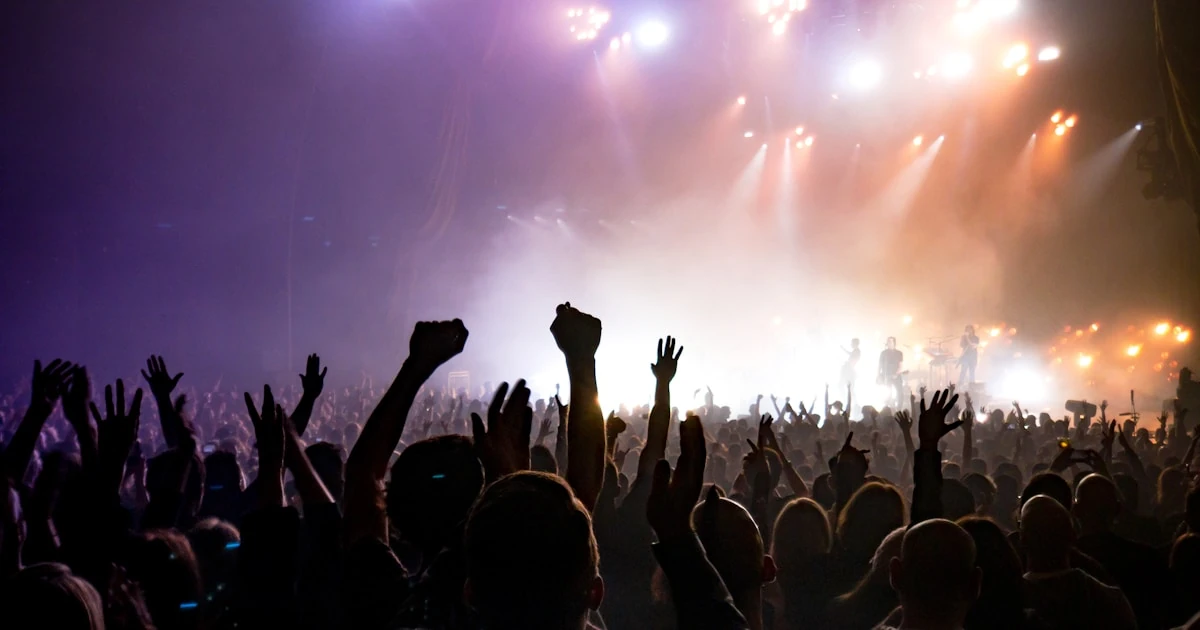
A Seoul festival offered a snapshot of where K-pop is headed
SEOUL — For years, the global story of K-pop was often told through metrics Americans recognize: Billboard rankings, YouTube views, sold-out arena tours and social media virality. But over two days at Olympic Park in Seoul, one of South Korea’s most closely watched music gatherings made a different argument. The next phase of K-pop’s global rise may be less about what fans stream at home and more about what they are willing to cross oceans to experience in person.
The 2026 Weverse Con Festival, organized by HYBE and held from June 6 to 7, brought together 30 acts spanning generations, genres and national backgrounds. The lineup stretched from one of Korean pop’s most emblematic veteran stars, Rain, to buzzy newcomers such as Cortis, a young act described in Korean entertainment coverage as one of this year’s breakout names. Between them stood an unusually wide cross-section of Korea’s current music landscape: idol groups, solo vocalists, a band, a rapper-producer and Japanese acts performing at a Korean festival for a global fan base.
That mix is what made the event feel bigger than a standard multi-act concert. At a time when K-pop companies are increasingly building their businesses around fan platforms, memberships, direct-to-fan sales and year-round digital communities, Weverse Con functioned as a live demonstration of the ecosystem. This was not just a place to hear songs that have already succeeded. It was a place to convert online attention into physical presence, to turn fandom into travel and to make discovery feel like part of the entertainment product.
For American readers, there is a useful analogy in the way major U.S. festivals such as Coachella, Lollapalooza or South by Southwest can shape a conversation beyond any one headliner. But Weverse Con also reflects a specifically Korean model of pop culture, one where fandom is highly organized, digitally connected and accustomed to moving fluidly between content, commerce and community. In that sense, the festival was not simply showcasing K-pop’s popularity. It was showing how the business of K-pop now works.
Two venues, two moods and one carefully designed fan experience
The festival unfolded across two spaces inside Seoul’s Olympic Park: the KSPO Dome, a large indoor arena long associated with major Korean pop performances, and the park’s 88 Lawn Field, an outdoor venue that offered a more open and festival-like atmosphere. The split mattered. It gave the event two distinct emotional registers, one intimate and concentrated, the other expansive and communal.
In the indoor venue, performances carried the kind of focus American concertgoers would associate with a tightly staged arena show, where lighting cues, sound design and fan chants converge in a controlled environment. Outside, the tone loosened. The outdoor lawn created space for movement, lingering and the more casual pleasures that define festival culture everywhere: stumbling across a set you had not planned to see, shifting between intensity and relaxation, and allowing the atmosphere itself to become part of the appeal.
That design choice says a great deal about where K-pop has evolved. For much of its international expansion, the genre was packaged through polished music videos, TV performances and highly choreographed concerts. What Weverse Con underscored is that K-pop is increasingly competing in the broader experience economy. It is not only about the songs or even the stars. It is about how long fans stay on-site, how many emotional tones they move through in a day and how deeply the event embeds itself in memory.
In the United States, live entertainment companies talk frequently about “immersive experiences” and “fan engagement.” Korean pop has its own version of that idea, though often with sharper execution. The venue layout at Olympic Park made clear that organizers were thinking beyond performance slots. They were thinking about flow: how a fan might move from a high-energy indoor set to a breezier outdoor performance, from the familiar to the unfamiliar, from the artist they came for to the artist they might leave talking about.
Newcomers and veterans shared the same stage — and that was the point
One of the festival’s most revealing features was its lineup architecture. Rather than organizing the event around a single generation of stars or a narrow genre identity, Weverse Con placed emerging acts and established names into the same frame. That included performers such as the Japanese girl group Cutie Street, groups including Aoen and &Team, the band Touched, singer-songwriter Kwon Jin-ah, rapper and producer Zico, P1Harmony, TWS, Le Sserafim and Kim Jae-joong. The result was a portrait of Korean popular music that felt much more layered than the idol-only image often projected abroad.
Rain’s appearance carried special symbolic weight. To many international fans who encountered Korean pop in earlier waves, Rain represents a foundational chapter in the export of Korean entertainment. Long before K-pop became a routine part of U.S. pop conversation, Rain was helping define what a Korean crossover star could look like. In Korea, he is often referred to as an “original world star,” a phrase that reflects his early role in taking Korean celebrity beyond national borders.
Putting Rain in the same festival as fast-rising younger acts was not just nostalgic programming. It created a living timeline. It reminded audiences that K-pop’s international reach did not appear overnight with one viral hit or one superstar group. It has been built in layers over decades, with each generation inheriting a larger global stage than the last.
That same structure also benefited newer performers. In festival settings, emerging acts do not simply perform for their own fans; they audition in front of everybody else’s. This is a central dynamic of the festival model, whether in Chicago, Austin or Seoul. A newcomer can arrive with online buzz, but a big live platform asks a different question: Can you command a room that did not come exclusively for you?
That question hovered over Cortis, the young group described in Korean coverage as part of a “young creator crew,” or a collective emblematic of the current moment. Their presence signaled where the market sees future momentum. Festivals are always in the business of selling both present popularity and future possibility. Weverse Con did so in unusually explicit fashion.
Cortis and the power of the live test
If one scene captured why the festival drew attention in Korean entertainment news, it was the response when Cortis took the stage at the KSPO Dome. According to local reporting, the arena erupted in cheers loud enough to suggest that the group’s rise is no longer just a matter of chart performance or online chatter. It has become something more difficult to manufacture and more valuable to the industry: immediate live reaction.
That distinction matters. In pop music everywhere, streaming numbers can indicate awareness, but they do not always measure emotional intensity. A festival crowd does. When a young act walks onto a major stage and instantly changes the energy in the room, the performance becomes a kind of market test in real time. Are people curious? Are they attentive? Do they know the hook? Will they sing it back?
Cortis opened with “TNT,” performing with handheld microphones, a detail that may seem minor but often helps shape the feel of a stage. In K-pop, where choreography and production can be meticulously calibrated, handheld mics can project looseness, mobility and confidence. Korean reports described the group as bringing a freewheeling, unrestrained charm to the performance, successfully lifting the temperature in the room from the start.
The even more telling moment came with “Red Red,” a song that has topped local music charts. When the chorus hit, the audience joined in on the repeated refrain, turning a hit into a shared ritual. That is one of the most significant transformations in modern pop: the point at which a song stops being a digital object and becomes a collective act. In that moment, the performance is no longer simply delivered to a crowd; it is completed by the crowd.
American readers have seen versions of this phenomenon when a breakout act suddenly graduates from internet interest to festival dominance. The difference in K-pop is that fan participation is often more organized, more lyrical and more immediate. Chants, sing-alongs and synchronized responses are not side effects. They are embedded into the culture of attendance. When that chemistry appears for a young act in a major venue, it can be one of the clearest signs that the artist has crossed into a new tier.
K-pop festivals are becoming platforms, not just concerts
The deeper significance of Weverse Con lies in the way it reflects a changing industry model. Traditionally, the center of pop success was easy to describe: albums, singles, tours and media exposure. Those pieces still matter. But K-pop’s ecosystem now increasingly operates through platforms that connect artists and fans continuously, whether through exclusive content, merch drops, digital communities, ticketing or fan communication apps.
Weverse, HYBE’s fan platform, sits squarely in that world. So a festival under that brand naturally carries a meaning beyond its performances. It acts as a real-world extension of a digital fan network. Fans who may have encountered artists through apps, clips, livestreams and posts are invited into a physical environment where those relationships are intensified and monetized. That is not cynical; it is simply the architecture of the contemporary entertainment business, and Korea has become especially adept at integrating all of its pieces.
For fans, the upside is discovery. Someone may show up for Le Sserafim or Zico and leave newly interested in Touched or Cortis. For performers, the payoff is adjacency. They gain exposure to overlapping but distinct fandoms in a setting where enthusiasm is contagious. For organizers, the festival becomes both showcase and marketplace — a place where music circulates, fandom expands and future consumer behavior is shaped.
This is one reason the presence of international attendees mattered so much. Korean reports emphasized that audiences came from around the world. That detail points to an important truth about K-pop in 2026: many fans no longer feel that watching from abroad is enough. South Korea itself has become part of the product. The festival grounds, the Seoul setting, the sense of proximity to the source — all of that adds value that cannot be fully replicated through streams or clips.
In tourism terms, K-pop has become a travel motivator. In cultural terms, it has become what might be called destination pop, a form of music whose meaning is deepened by being physically present where the culture is made. Weverse Con, with its mix of local staging and global attendance, embodied that shift.
A broader lineup challenged the narrow image of K-pop abroad
Another noteworthy element of the festival was the range within its lineup. Outside Korea, “K-pop” is often used as a catchall term for idol groups with synchronized choreography and glossy visuals. That image is not false, but it is incomplete. The festival suggested a much more varied reality.
Touched brought a band format. Kwon Jin-ah represented a singer-songwriter lane with a different emotional texture from idol-driven performance. Zico carried the hybrid identity of rapper, producer and pop architect, reflecting the fluid boundaries that shape Korean mainstream music today. This was not a lineup that insisted on one grammar of performance. It invited several.
That diversity is worth underscoring for American audiences because it helps explain K-pop’s durability. Genres survive by evolving internally. They absorb new styles, create new entry points and resist becoming too dependent on a single formula. What Weverse Con made visible is that Korean popular music under the broad K-pop umbrella is now expansive enough to sustain multiple performance traditions at once.
The inclusion of Japanese acts also highlighted a second shift. Although the festival was held in Seoul, its logic was not strictly national. It was regional and global at the same time. In practice, that means audiences are being organized less around passport categories and more around fan experience. Artists from different countries can share a Korean platform if they fit into the emotional and commercial universe the festival wants to create.
That approach reflects a broader East Asian entertainment market in which Korean companies, Japanese performers and international fan communities increasingly intersect. For U.S. readers, it may be helpful to think of it as a transnational pop circuit, one where Seoul has become a central hub but not the only source of talent or attention.
Why festival-style K-pop is resonating right now
The loudest clue may also be the simplest one: the crowd. The cheers that greeted Cortis, the mass sing-along to “Red Red,” and the sustained enthusiasm across multiple acts all point to a core change in fan behavior. K-pop listeners are no longer just consuming music. They are seeking participation.
Festival-style events are especially effective at delivering that. Fans can see the artist they already love, sample artists they only know vaguely and stumble into acts they have never heard before. They can move from indoor immersion to outdoor release. They can experience a familiar hit and a new debut in the same afternoon. The structure itself rewards curiosity, not just loyalty.
This matters commercially because discovery is one of the industry’s most valuable resources. In an era of fragmented attention, festivals give companies a way to stage discovery at scale. A single event can deepen existing fandoms while seeding the next ones. That is why the mix of established names and rising acts at Weverse Con felt so deliberate. It was not merely balanced programming. It was talent development in public.
There is also a cultural explanation. K-pop fandom has long placed special value on closeness — not necessarily personal access, but the feeling of being part of a shared, responsive community. Festival settings amplify that feeling. The fan is not sitting alone with headphones or watching a clip on a phone. The fan is in a crowd, helping create the atmosphere that validates the artist’s rise.
That is one reason the Korean term “ttechang,” often translated loosely as “group sing-along,” has become so central to the live K-pop experience. It describes those moments when fans collectively sing key lines back to the artist, not as background noise but as a recognizable part of the performance. To outsiders, it can look like enthusiastic crowd behavior. To insiders, it is a social signal, proof of connection and of a fandom’s readiness to show up for an artist in public.
What this weekend in Seoul says about the next chapter of Korean pop
Viewed narrowly, the Weverse Con Festival was a successful two-day event featuring 30 teams at one of Seoul’s best-known concert destinations. Viewed more broadly, it offered a compact explanation for why K-pop continues to renew itself as a global force.
Newcomers and veterans occupied the same narrative. Indoor and outdoor venues delivered different emotional textures. Korean and non-Korean acts shared a common stage. Hit songs and not-yet-canonized names circulated in the same space. And throughout it all, the audience functioned as more than spectators. They acted as participants, validators and amplifiers.
For American audiences accustomed to thinking of music success in terms of rankings and radio exposure, that may be the key takeaway. K-pop’s strength in 2026 is not only that it can produce stars or generate streams. It is that it can create environments where fans feel they must be there. That sense of necessity — the feeling that the “real” version of the music exists in the live encounter between stage and crowd — is difficult to build and even harder to export. Yet South Korea’s pop industry has become remarkably skilled at doing both.
That is why a festival like this resonates beyond entertainment headlines. It reveals how Korean pop culture is continuing to mature, not just as a genre but as an infrastructure: part music industry, part technology platform, part tourism engine and part global community builder. In Olympic Park over the weekend, all of those dimensions were visible at once.
If the previous era of K-pop’s international ascent was about proving it could travel, this one may be about proving fans will travel for it. Weverse Con suggested the answer is yes — and that the future of K-pop may depend as much on the crowd’s presence as on the songs themselves.
Comments
Post a Comment