K-pop Moves From the Playlist to the Classroom in Los Angeles, Signaling a New Phase of Korea’s Global Cultural Reach
From fandom to formal education
K-pop has spent years conquering American playlists, social media feeds and sold-out arenas. In cities across the United States, teenagers can identify the members of BTS or Blackpink as quickly as they can name Taylor Swift collaborators or Marvel superheroes. But a new development in Los Angeles suggests Korean pop music is entering a different stage of American life: the classroom.
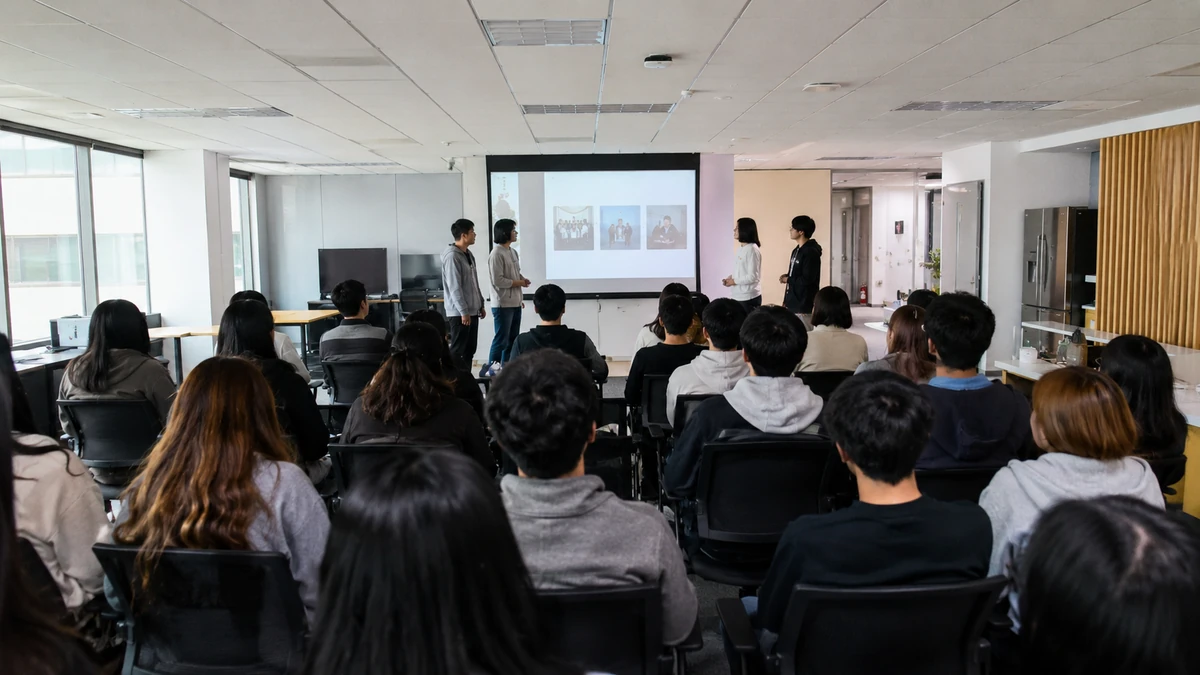
The Korean Consulate General in Los Angeles said students enrolled in a K-pop curriculum offered as a regular elective at middle and high schools in the Los Angeles Unified School District recently took part in an industry-linked program, presenting team projects directly to people working in the field. On paper, that may sound like a niche school event. In practice, it marks something much bigger. It means K-pop is no longer being treated only as entertainment to be consumed, but also as a system to be studied, analyzed and connected to careers.
That distinction matters. Pop culture often becomes part of school life informally, through talent shows, after-school clubs or student-led fan communities. It is far less common for a contemporary music phenomenon from another country to be folded into the formal structure of public education. Once a subject becomes a regular elective, it is no longer just a passing craze. It has entered the institutional language of schooling, where students are expected to learn frameworks, apply concepts and present their thinking in ways that resemble preparation for college or work.
In the case of K-pop, that shift says as much about the sophistication of South Korea’s entertainment industry as it does about the durability of Korean cultural influence abroad. For years, Americans often encountered K-pop through catchy songs, synchronized choreography and intensely loyal online fandoms. What is emerging now is a broader recognition that K-pop is also a business model, a content strategy and, increasingly, a case study in how culture travels globally.
That is why this story stands out in Korean entertainment news. It is not simply about celebrities or chart success. It is about the machinery behind the music becoming legible to students in one of America’s most culturally influential cities.
Why Los Angeles matters
If this development were going to happen anywhere in the United States, Los Angeles makes sense. LA is not only home to the nation’s second-largest school district, but also one of the world’s most recognizable entertainment capitals. It is where young people grow up surrounded by the idea that music, film, marketing, branding and performance are not abstract industries but real career paths. It is also one of the most diverse metropolitan areas in the country, with large immigrant communities and a long history of cultural exchange across the Pacific.
That local context helps explain why a K-pop course could move beyond a cultural enrichment activity and into a formal elective. In LA, students are already accustomed to thinking about media as a serious field of study. A class centered on K-pop can naturally branch into lessons about songwriting, artist development, video production, fan engagement, intellectual property, budgeting and international marketing. Those are not just entertainment topics. They are topics with direct relevance to modern creative economies.
There is also a symbolic layer. For decades, American entertainment flowed outward from Los Angeles to the rest of the world. Now the city is also a place where global entertainment industries are studied on their own terms. In that sense, K-pop’s presence in LA classrooms reflects a reversal that would have been harder to imagine a generation ago: not just American culture being exported, but foreign pop systems being examined by American students as models worth understanding.
That helps explain why this is more than a feel-good story about international friendship. It is evidence that Korean popular culture has gained enough institutional credibility to be treated as relevant to workforce development and media literacy in the United States. A school district does not make space for a subject simply because it is trendy. It does so when educators believe it can support learning goals and connect student interests to practical skills.
The Korean Consulate General in Los Angeles worked with LAUSD to develop the curriculum, and four middle and high schools in the area are now operating it as a regular elective. That is a limited rollout, not a districtwide transformation. But it is still significant. Public school systems tend to move carefully, especially when introducing new coursework. Even a small number of participating schools can serve as a test case for how cultural studies, arts education and career exploration might intersect in new ways.
What students are actually learning
One of the most revealing parts of the program is the kind of work students were asked to do. According to the summary of the event, students presented projects in teams focused on K-pop group concepts, musical direction, fandom strategy and global marketing plans. Those are not fan exercises. They are close to the kinds of questions entertainment companies, creative agencies and brand managers ask every day.
That matters because it reframes what K-pop is for young learners. In many American conversations, K-pop is still reduced to a handful of visible traits: polished visuals, tightly trained performers, devoted fans and a relentless online presence. Those are real features, but they can obscure the complexity of how the industry operates. By asking students to think through concept design, audience development and international expansion, the course treats K-pop not as a mysterious cultural product but as an organized ecosystem.
In practical terms, students are learning that a successful pop act is not built by music alone. It also involves storytelling, identity, aesthetics, scheduling, platform strategy and an ongoing relationship with fans. In K-pop, the word “concept” carries particular weight. For American readers unfamiliar with the term, it refers to the distinct creative identity a group adopts for a release or era — a combination of visual style, musical tone, choreography, fashion and narrative branding. It is one reason K-pop groups often feel more tightly packaged than many Western acts. Students studying concept development are, in effect, examining how entertainment companies build coherent brands that can travel across languages and markets.
The emphasis on fandom strategy is equally notable. In the U.S., fan culture is often discussed in terms of celebrity devotion, stan accounts or ticket-buying power. K-pop fandom, however, is especially organized and participatory. Fans do not just consume content; they coordinate streaming campaigns, promote artists online, produce translations, raise money for causes and help sustain visibility across digital platforms. To study fandom in a classroom is to study modern audience behavior, community building and the economics of attention.
Global marketing plans push the lesson even further. K-pop has become one of the clearest examples of how entertainment can be produced nationally and consumed transnationally. Songs may be released by Korean companies, feature multilingual lyrics, circulate first through YouTube or TikTok, and generate revenue from touring, merchandise, sponsorships and fandom subscriptions around the world. For students in Los Angeles, mapping that process offers a vivid lesson in globalization that is more concrete than a textbook chapter.
Just as important, industry professionals were there to advise students based on real-world experience. That gives the class a level of credibility beyond theory. In American education, career-connected learning has become a popular phrase, especially in districts trying to show students how classroom interests can translate into jobs. This K-pop program fits squarely into that model. It suggests that media education works best when it links passion to professional vocabulary.
Korean Wave, explained for an American audience
To understand why this development resonates beyond Southern California, it helps to place it within the broader rise of what is commonly called the Korean Wave, or “Hallyu.” The term refers to the global spread of South Korean popular culture, including music, television dramas, films, beauty products, fashion and food. If that sounds broad, it is. In the United States alone, Hallyu has touched everything from Netflix viewing habits to Sephora shelves to restaurant menus.
For many Americans, the most visible breakthrough points came in waves. There was Psy’s “Gangnam Style” in 2012, a viral novelty hit that introduced millions of people to Korean pop, even if many treated it as a one-off. Then came the sustained rise of BTS, whose success made it impossible to dismiss K-pop as a temporary internet phenomenon. Parasite’s best picture win at the Oscars in 2020 further expanded the Korean cultural footprint, proving that South Korean storytelling could move from art-house admiration to mainstream American prestige. Netflix’s global success with Korean series, especially Squid Game, added yet another layer.
What makes the Los Angeles classroom story different is that it reflects a stage after breakthrough and after normalization. K-pop is no longer just surprising Americans by showing up on the Billboard charts or dominating social media trends. It is being integrated into institutions that shape how young people learn and think. That is a different kind of influence — slower, less flashy and potentially more durable.
It also reflects a shift in how Korea’s entertainment industry is perceived overseas. For years, foreign coverage of K-pop focused heavily on the stars and their fans. That attention was understandable; celebrities are visible, and fandoms generate headlines. But the industry behind them is also notable for its production systems, training pipelines, export strategies and cross-platform coordination. In other words, K-pop is both a cultural form and a commercial framework. Once schools begin teaching it that way, the conversation changes.
There is a temptation in the U.S. to view non-English pop success as either exotic or exceptional. But the Korean Wave has increasingly shown that cultural influence can be built methodically, with government support, private investment, strong digital fluency and a willingness to think globally from the start. That does not mean the industry is without criticism or complexity. Like Hollywood, it raises questions about labor, image management and commercialization. Still, those very tensions can make it a meaningful subject of study.
More than music: a pipeline to careers
Perhaps the most important element of the LA program is not that students like K-pop, but that educators are using that interest to introduce a wider world of careers. According to LAUSD officials cited in the Korean report, the curriculum helps students understand fields including music, marketing, content production, law and accounting. That is a striking list, and it gets at the heart of why this story matters beyond entertainment news.
American schools are constantly looking for ways to make education feel relevant. Students often ask versions of the same question: When will I ever use this? A curriculum built around K-pop offers one answer. It shows that what may begin as a personal interest — favorite songs, dance clips, idol interviews, fan edits — can become an entry point into analytical and professional skills. A student may come for the music and leave with a deeper understanding of branding, copyright, distribution or project management.
That is especially important in an era when creative industries are often misunderstood by young people. Many teenagers see the visible stars but not the many jobs required to support them. K-pop, because of its highly systematized nature, can make those roles easier to identify. Behind every song or comeback are producers, choreographers, stylists, publicists, translators, social media managers, accountants, legal teams, videographers and event planners. Studying the industry opens the door to imagining a career not just on stage, but behind the scenes.
The Korean consul general described the goal as building a virtuous cycle in which education, culture and industry grow together, allowing younger generations to experience the value of Korean culture and the content business directly. For a diplomatic office, that language is strategic. But it also captures something real: soft power today is not just about making people admire your culture. It is about making them engage with it deeply enough to build knowledge, opportunity and even professional aspiration around it.
That may be the clearest sign that K-pop has moved into a new phase abroad. The first stage was exposure. The second was fandom. This third stage looks more like infrastructure: curricula, industry partnerships and career pathways. It is one thing to stream a song. It is another to study how a creative industry is built and decide you might want to work in it someday.
What this says about America, too
There is another way to read this story: not just as a measure of Korea’s success, but as a reflection of what American education is becoming. Public schools, especially in diverse urban districts, are increasingly under pressure to meet students where they are. That means taking youth culture seriously rather than dismissing it as distraction. It means recognizing that global media now shapes identity, aspiration and literacy just as much as traditional textbooks do.
A K-pop elective would have been difficult to imagine in many U.S. schools 20 years ago, not only because Korean pop was less visible, but because school systems were often slower to legitimize students’ pop-cultural worlds. Today, educators are more likely to see value in connecting classroom content to what students already care about. Whether the subject is hip-hop, gaming, digital storytelling or K-pop, the broader educational logic is similar: engagement can be a bridge to rigor.
At the same time, the Los Angeles setting raises questions that may become more relevant if programs like this expand. How should schools balance cultural appreciation with critical analysis? How do teachers avoid flattening a foreign industry into a trendy classroom brand? And how can courses explain both the appeal and the pressures of highly commercialized entertainment systems? Those are healthy questions, not reasons for dismissal. In fact, they are exactly the kinds of questions that signal a subject is mature enough to study seriously.
There is also something distinctly American about the way this program is being framed. In the U.S., education debates often circle around job readiness, relevance and measurable outcomes. The K-pop curriculum appears to align with that language by connecting arts and culture to concrete industries. That may help explain its appeal to school administrators. A course built around music alone might be seen as enrichment. A course that also teaches marketing, content production and business strategy looks like career education.
That framing could influence how similar programs develop elsewhere. If K-pop in schools is seen not merely as foreign culture appreciation but as a gateway to the creative economy, it may find broader institutional support. In a district as large and influential as LAUSD, even a modest experiment can carry outsized symbolic weight.
The next phase of Hallyu
The Korean Wave has often been measured in easy-to-count metrics: album sales, streaming figures, tourism numbers, YouTube views, sold-out tours. Those indicators still matter. But they do not capture the full picture of cultural staying power. A more enduring form of influence appears when a culture becomes part of how another society teaches, plans and imagines the future.
That is why the Los Angeles K-pop curriculum deserves attention. It suggests that Korean pop culture is no longer simply being imported as entertainment. It is being translated into educational frameworks that encourage analysis, collaboration and career thinking. Students are not only asking which song they like best. They are being asked how a group is positioned, how a fan base is cultivated and how a global market is reached.
On the same day this education story circulated in Korea, another piece of Hallyu-related news pointed to a different kind of expansion: the Korea Tourism Organization named Indian actor Priyanka Mohan as an honorary ambassador to attract more travelers from India, where Korean content enjoys exceptionally high favorability. The two developments are not identical, but together they show the range of Korea’s overseas strategy. In one case, star power is used to invite tourism. In another, K-pop becomes a classroom subject that can shape learning and career exploration. The methods differ, but the underlying pattern is the same: Korean culture is reaching beyond passive consumption into broader social institutions.
It would be premature to claim that K-pop electives are about to spread nationwide. The known facts are limited: four schools in the Los Angeles area are offering the course as a regular elective, and students recently took part in an industry-connected presentation program. That is enough to establish significance, but not enough to predict a national trend with confidence.
Still, even at this scale, the symbolism is hard to miss. For American readers used to thinking of K-pop as a soundtrack, a fandom or a concert ticket scramble, the Los Angeles example offers a useful update. K-pop is also becoming a way to teach how modern entertainment works. It is becoming a lens through which students can understand branding, globalization and the business of creativity. And in a city long defined by its own entertainment machine, that may be one of the clearest signs yet that Korean popular culture has moved from the margins of curiosity to the mainstream of institutional relevance.
Put simply, K-pop in Los Angeles classrooms is not just about music education. It is about what happens when a global cultural phenomenon becomes structured knowledge. That is why this story matters today, and why it may end up saying as much about the future of education and media in America as it does about the continuing rise of South Korea’s cultural power.
Comments
Post a Comment