Stray Kids’ Felix Is the New Face of Korea’s Hanbok Push, Turning Traditional Dress Into a Global Pop-Culture Export
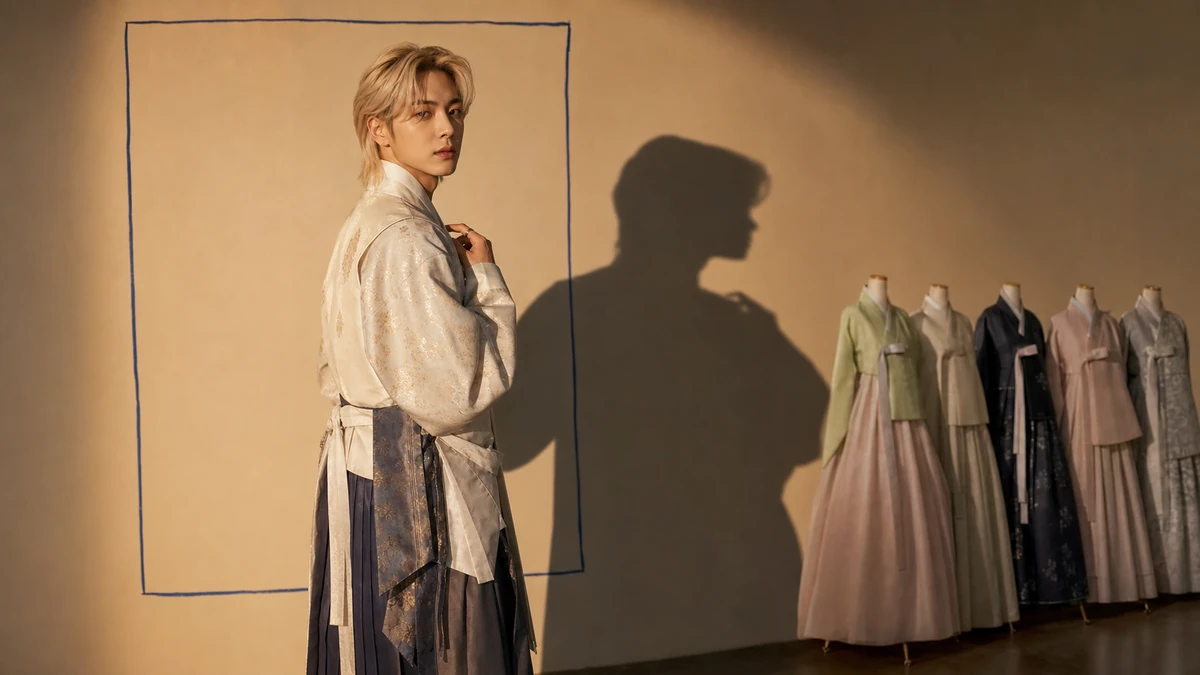
A K-pop star steps into a government-backed cultural campaign
South Korea is turning once again to one of its most powerful exports — K-pop celebrity — to promote something far older than the modern music industry: hanbok, the country’s traditional dress. This time, the star at the center of that effort is Felix of Stray Kids, a globally recognized member of one of K-pop’s biggest groups. South Korea’s Ministry of Culture, Sports and Tourism and the Korea Craft and Design Foundation said Thursday that Felix has been chosen as the featured Hallyu, or Korean Wave, artist for the 2026 Hanbok Wave project.
For American readers, the easiest comparison might be a public-private campaign that pairs a major pop star with independent American designers to revive and modernize a heritage fashion tradition — say, if the Smithsonian, the National Endowment for the Arts and a cluster of small design houses teamed up with a stadium-filling celebrity to reintroduce quilt-making, cowboy tailoring or Indigenous-inspired ceremonial fashion to a global audience. Hanbok Wave operates in that space where cultural preservation, branding and entertainment marketing all overlap.
The announcement is not simply that Felix will model a set of clothes. The broader idea is to use his image, fan reach and fashion influence to help reinterpret hanbok for international audiences who may know South Korea through streaming dramas, Oscar-winning films and K-pop performances, but may know little about Korean dress traditions. Under the project, five small and midsize hanbok companies will be selected to develop designs that reflect both the elegance associated with hanbok and the image and symbolism attached to Felix as a performer.
That makes this as much an industry story as an entertainment story. At one level, it is celebrity news involving a K-pop star with a huge global following. At another, it is a state-supported effort to help small Korean fashion businesses find international visibility by hitching traditional design to one of the fastest-moving engines in global youth culture.
And that is the heart of what makes this announcement notable beyond fan circles: South Korea is not treating tradition as a static museum artifact. It is treating it as something that can be remixed, styled, photographed, shared and scaled for a worldwide audience.
What hanbok means in Korea — and why it matters beyond holidays
Hanbok is the traditional clothing of Korea, recognizable for its clean lines, structured silhouette and graceful shape. In its best-known form, women’s hanbok typically includes a short jacket and a high-waisted full skirt, while men’s hanbok includes a jacket and loose trousers. Colors, fabric choices and decorative details can vary widely, and historically they reflected class, ceremony, season and occasion.
To many Americans, the closest analogy is probably formalwear with deep historical roots — something that carries the symbolic weight of a kimono in Japan, a sari in India or, in a much looser American sense, the way a tuxedo or wedding gown can signal ritual and national identity at once. But hanbok carries an especially visible role in Korean public life because it is closely tied to holidays, weddings, coming-of-age traditions, family rites and depictions of Korean history in film and television.
At the same time, hanbok is not confined to the past. In recent years, South Korea has seen a steady expansion of “modern hanbok,” a term used for updated versions that borrow traditional lines and elements while making them easier to wear in daily life or more adaptable for contemporary styling. If classic hanbok is associated with elegance and ceremony, modern hanbok often aims for versatility, fashion appeal and social media visibility.
That distinction matters because the Hanbok Wave project is not about preserving garments behind glass. It is about translating an old visual language into something people can encounter in a very 21st-century way: on digital billboards, in promotional campaigns, through fan edits, on Instagram, in short-form video clips and across the transnational image economy that powers pop culture now.
In that sense, the campaign reflects a broader South Korean strategy. The country has spent years building what is often called soft power, the ability to shape global perceptions through culture rather than politics or force. For many Americans, the Korean Wave may first register through familiar entry points: “Parasite” winning best picture at the Oscars, Netflix hits such as “Squid Game,” Korean beauty products appearing at Sephora or K-pop groups selling out U.S. stadiums. Hanbok now joins that same ecosystem of exportable culture.
Why Felix is a strategic choice
Felix is an especially effective ambassador for that effort because he exists at the intersection of performance, fashion and internet-era fandom. As a member of Stray Kids, he is part of a group that has built a large and highly engaged international audience, including a strong following in the United States and Europe. His individual image — sharpened by runway-ready styling, a distinctive stage presence and an instantly recognizable voice — already circulates heavily through fan communities that scrutinize everything from music video wardrobes to airport looks.
That matters in a campaign like this because K-pop fandom does not consume clothing passively. Fans identify brands, discuss silhouettes, collect visual references, compare styling choices across eras and turn looks into their own cultural currency online. In American celebrity culture, a red carpet look may trend for a day or dominate fashion coverage for a weekend. In K-pop, a single outfit can become a months-long object of close reading, memes, fan art and commercial spin-off attention.
That level of engagement is part of what South Korea’s cultural agencies appear to be counting on. Previous Hanbok Wave participants included actor Park Bo-gum, actor Kim Tae-ri, singer and actor Suzy, and former Olympic figure-skating champion Kim Yuna. That list shows a deliberate attempt to spread hanbok promotion across different branches of Korean celebrity: drama, film, sports and music. Felix, however, brings something a little different from some earlier ambassadors. He comes with a fan base trained to amplify imagery almost instantly on global platforms.
In practical terms, that means a hanbok campaign featuring Felix is likely to move not just through official media channels but through fan-led distribution networks that can sometimes outperform conventional advertising. The government can buy billboard space in major cities, but it cannot manufacture fandom. By tapping a performer whose image is already built for circulation, the campaign gives hanbok a better chance of entering everyday visual culture rather than remaining an elite or niche heritage message.
There is another layer here as well. Felix’s selection suggests a broader understanding of how younger global audiences encounter culture. Many people outside Korea do not first learn about Korean traditions in classrooms or museums. They encounter them sideways — through a song, a dance challenge, a drama costume, a red carpet appearance or a behind-the-scenes photo. Felix becomes, in effect, a bridge figure between a centuries-old garment tradition and a digital audience that may first discover hanbok through a fan account on X, TikTok or Instagram.
How Hanbok Wave works — and why small brands are central
The Hanbok Wave project is now in its seventh year, according to the Culture Ministry and the Korea Craft and Design Foundation. Its stated goal is twofold: promote the appeal of hanbok worldwide and help capable hanbok brands expand overseas. Those are related goals, but they are not identical. One is about national image; the other is about market opportunity.
That dual purpose is important because this program is not being pitched as a vanity showcase for a major luxury house. The ministry and foundation said they are accepting applications from small and midsize companies in the hanbok sector beginning Thursday through next month. Five companies will be selected. The evaluation criteria include creativity, expertise, feasibility and ripple effect — a telling mix of artistic and commercial language.
For an American audience, it may help to think of this as a design incubator with celebrity backing and state branding support. Smaller labels often have the craftsmanship and originality that large companies lack, but they rarely have the resources to put their work in front of an international audience at scale. A campaign like this offers a shortcut: attach those designers to a globally recognized star, develop a visual story around the collaboration and then distribute it in places where fashion and entertainment already command public attention.
The selected companies will create hanbok designs reflecting Felix’s image and symbolism. That phrasing is revealing. It suggests the project does not want generic traditional garments placed on a celebrity body. It wants a dialogue between the identity of the artist and the design language of hanbok. In other words, the designers are being asked to do more than reproduce tradition. They are being asked to interpret it.
That creates both opportunity and pressure. If the designs lean too far into spectacle, they risk flattening hanbok into costume. If they stay too close to conventional expectations, they may fail to connect with younger audiences outside Korea. The challenge is the same one heritage fashion brands face everywhere: how to keep integrity without becoming inert, and how to modernize without making the tradition unrecognizable.
The ministry’s emphasis on creativity and feasibility suggests officials understand that tension. A successful global image campaign requires more than beauty. It requires garments that photograph well, communicate instantly and invite curiosity without demanding a long explanation. In the age of algorithmic media, the first impression often comes without context. A striking image has to do the work before the caption ever does.
From Seoul to New York, Paris and Milan
The campaign’s planned rollout underscores just how intentionally global this effort is. The newly developed hanbok designs are set to be unveiled through promotional content and electronic billboards in Seoul, New York, Paris and Milan, according to the official announcement. Those city choices are not random.
Seoul is the obvious home base, the center of South Korea’s entertainment industry and the symbolic origin point of the Korean Wave. New York carries global media weight and remains one of the world’s most recognizable cultural crossroads, especially for fashion, music and advertising. Paris and Milan are synonymous with luxury fashion, runway prestige and the old guard of global style authority. Putting hanbok into those visual spaces is a statement that Korean dress belongs not only in cultural heritage conversations but also in the same international style dialogue that has long been dominated by European fashion capitals.
There is a certain confidence in that move. South Korea is no longer introducing itself to the world as a niche cultural player hoping to be noticed. It is behaving like a country that understands its cultural products already carry global demand. K-pop does not need to ask for permission anymore. Korean television and film do not either. The question now is how far that cultural influence can extend into adjacent industries such as design, crafts, tourism and fashion manufacturing.
Billboards may sound old-school in an era dominated by personal screens, but in global city branding they still matter. Giant digital displays in places associated with prestige and traffic can function as public declarations of cultural relevance. They also create a second life online: once photographed, posted and recirculated, a physical billboard becomes digital content. For K-pop fandoms in particular, the line between offline advertising and online amplification barely exists. A billboard in New York can become a global social media event within minutes.
That is likely part of the strategy here. The official announcement did not provide detailed city-by-city schedules or specific campaign mechanics, but the broad outline is enough to show the ambition. South Korea is not just promoting hanbok domestically and hoping the world notices. It is staging hanbok in highly legible international locations where fashion, tourism and entertainment all intersect.
The larger business case behind the aesthetics
It would be easy to dismiss all this as image-making, but there is a deeper economic logic underneath it. Traditional dress sectors often face a difficult commercial problem: they are symbolically important but commercially limited unless they can find new markets, new uses or new forms of consumer desire. In Korea, hanbok has prestige, but everyday wear is dominated by modern global fashion just as it is everywhere else.
That is why projects like Hanbok Wave matter to producers. They do not simply celebrate tradition; they attempt to create demand. If audiences abroad begin to associate hanbok with innovation, beauty and celebrity rather than only ceremony and heritage, then Korean brands have a better shot at selling related products, licensing designs, collaborating internationally or building recognition that translates into tourism and exports.
The fact that the program is open to small and midsize enterprises is especially significant. In many countries, heritage industries survive through artisans and family-run businesses that do not have the marketing power of luxury conglomerates. A state-backed campaign can act as a force multiplier for those firms, giving them access to branding opportunities they could never afford on their own.
There is also a timing advantage. Global consumers have shown increasing appetite for fashion that tells a story — clothing tied to place, craftsmanship and cultural specificity. At the same time, there is growing fatigue with anonymous fast fashion. Hanbok, especially when interpreted thoughtfully, offers designers a vocabulary that is visually distinct and historically rich. Pair that with a celebrity who already commands fashion attention, and the result is potentially potent.
Still, success is not guaranteed. Cultural export campaigns can generate plenty of headlines without producing durable business outcomes. The real test will be whether the designs resonate beyond the initial publicity burst and whether the participating brands gain meaningful recognition in foreign markets. Interest generated by a star does not automatically become long-term support for a sector. The strongest outcome would be if viewers first arrive because of Felix but stay because the work itself feels compelling.
What this says about the Korean Wave now
The Korean Wave, or Hallyu, used to be discussed primarily in terms of pop songs, TV dramas and movie breakthroughs. Increasingly, though, it is less a single entertainment phenomenon than a broader cultural infrastructure. Korean beauty, food, language study, tourism, design and fashion have all benefited from the pathways opened by entertainment success.
This Felix announcement shows how mature that system has become. A K-pop star is not just a singer in this framework. He is also a cultural node connecting audiences, brands, government institutions and small businesses. Hanbok is not just traditional clothing in this framework. It is a visual asset, a design challenge and a soft-power vehicle that can be deployed across cities, screens and fan communities.
For American readers, that may be one of the most interesting takeaways. The United States has long exported culture through Hollywood, pop music and sports, but South Korea has become remarkably sophisticated at turning cultural popularity into an ecosystem. It does not stop at entertainment consumption. It moves into beauty shelves, restaurant menus, language apps, tourism campaigns and now, quite deliberately, heritage fashion.
That does not mean every campaign will break through equally. Plenty of cultural promotion efforts remain highly legible in Korea but struggle to register abroad. Yet hanbok may have an advantage because it is so visually strong. Even without background knowledge, people can respond to silhouette, color, texture and styling. And in a media environment where visuals often travel faster than explanation, that matters.
The campaign also reflects a larger shift in how “traditional” culture survives. It no longer survives only through preservation. It survives through adaptation, circulation and reinvention. That can make purists uneasy, but it is increasingly the reality of global culture. A tradition that cannot be seen, shared or reinterpreted risks becoming invisible to younger generations. South Korea’s approach suggests it would rather risk debate over modernization than let hanbok fade into ceremonial marginality.
Why global audiences may pay attention
For people who do not follow Korean fashion or Korean government policy, this may initially sound like a niche announcement: a K-pop singer chosen for a cultural promotion project. But the reason it deserves wider attention is that it captures, in a single campaign, several of the forces shaping contemporary global culture.
It shows how celebrity can be used to market not just products, but identity. It shows how governments increasingly understand pop culture as an economic and diplomatic tool. It shows how fan communities have become distribution networks in their own right. And it shows how traditional culture now competes for attention in the same marketplace as entertainment, luxury branding and social media aesthetics.
Felix’s role in the 2026 Hanbok Wave project is therefore bigger than a modeling assignment. It is a test case in whether a traditional Korean garment can continue evolving from heritage symbol into globally legible style language. If the campaign succeeds, it will not be because audiences were persuaded by a history lesson. It will be because the images felt immediate, aspirational and shareable.
That may be the clearest sign of where the Korean Wave stands now. It is no longer only about exporting songs or shows. It is about converting “Korean” into a flexible cultural marker that can travel across industries and still retain emotional pull. Hanbok, one of the oldest visual expressions of Korean identity, is now being asked to perform in that modern role.
Whether that experiment leads to stronger overseas business for Korean hanbok makers remains to be seen. The official facts are still limited: Felix has been chosen as the featured Hallyu artist, five hanbok brands will be selected through an open call, and the resulting designs will be promoted through content and billboards in Seoul and major global cities including New York, Paris and Milan. But even at this early stage, the message is clear. South Korea believes its traditions can compete in the same global attention economy as its biggest stars.
And with Felix as the face of the campaign, it is betting that the path from historical dress to international relevance may run straight through the K-pop fandom machine.
Comments
Post a Comment