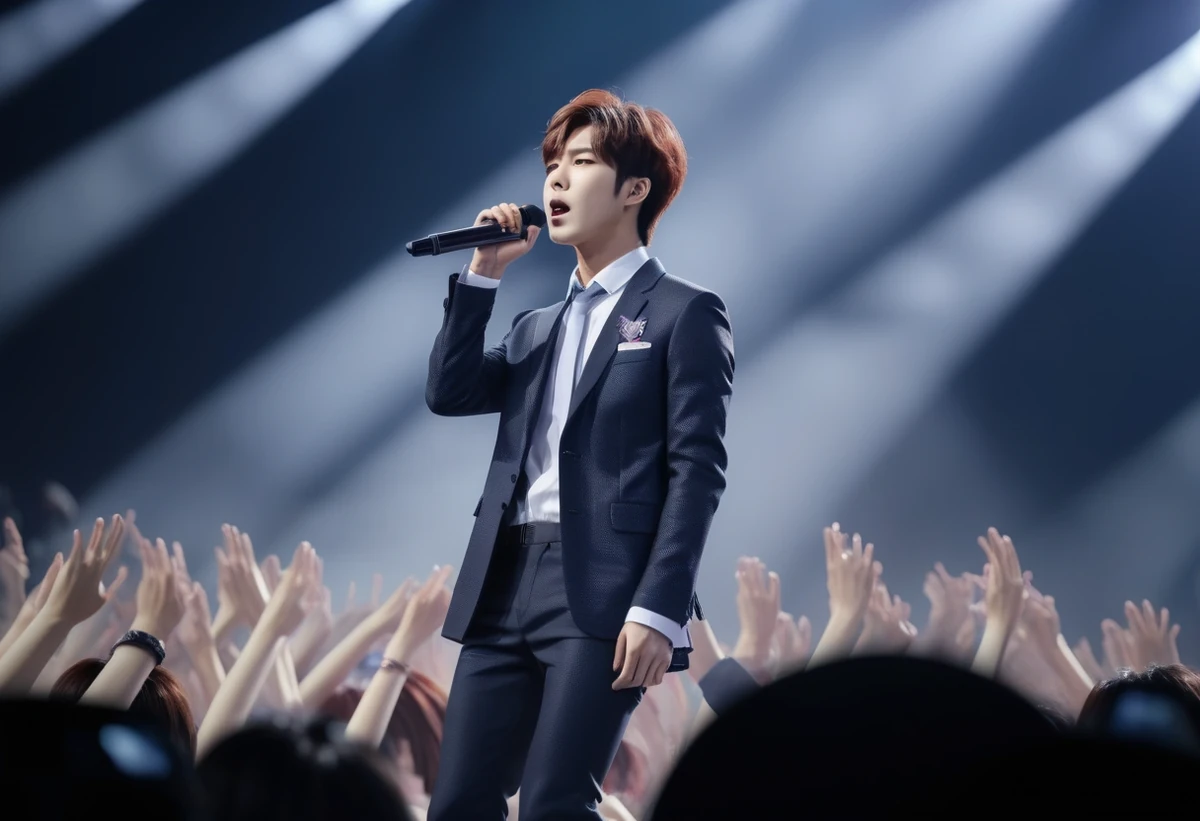
A veteran K-pop voice returns at a milestone moment
Ryeowook, one of the signature vocalists of the long-running K-pop group Super Junior, is set to release a new solo single titled Runaway on June 23, a move that carries more weight than the typical pop rollout. In South Korea’s music industry, where timing, anniversaries and fan engagement often matter almost as much as the songs themselves, the release is being framed as a defining moment in the singer’s career: It arrives as he marks the 10th anniversary of his solo debut.
For American readers who may know K-pop mainly through stadium acts like BTS, Blackpink or Twice, Ryeowook represents a different but equally important side of the industry. He is not a rookie chasing viral traction on TikTok, nor is he a breakout act trying to prove he belongs. He is part of an earlier generation of idols who helped build K-pop into a global export, and whose careers now show what longevity looks like in a business often associated with speed, youth and constant reinvention.
That makes this release notable beyond the arrival of three new songs. According to details released by SM Entertainment, one of South Korea’s biggest entertainment companies, Runaway is a commemorative project tied directly to Ryeowook’s decade as a solo artist. It is also his first new solo music in about two and a half years, following the December 2023 single A Wild Rose, known in Korean as Majung. Add in the announcement of his first solo Asia tour, and the picture that emerges is less a one-off single than a carefully assembled new season in his career.
In the American pop market, anniversary releases can sometimes feel like nostalgia plays — deluxe reissues, reunion tours, commemorative vinyl drops. In K-pop, an anniversary can serve a different purpose. It can be a live, ongoing chapter that links the past to the present, giving fans a way to celebrate a milestone while also being asked to invest in what comes next. That is the context surrounding Ryeowook’s upcoming release: It is both a look back at how far he has come and a statement about where he still intends to go.
Why a 10th anniversary matters so much in K-pop
In most music scenes, 10 years is a respectable marker. In K-pop, it can be a small miracle. The industry is famously demanding, with relentless promotional cycles, tightly managed public images and fierce competition from younger acts debuting every year. Many groups do not survive intact for a decade. Many solo careers never make it that far at all.
That is why a 10th solo anniversary has meaning beyond the number. It suggests durability, fan loyalty and an artist’s ability to evolve without losing the core of what made people care in the first place. Ryeowook’s case is especially interesting because his identity has long been tied to his voice. While Super Junior became known for its scale, variety-show savvy and staying power as one of second-generation K-pop’s defining acts, Ryeowook carved out a reputation as one of the group’s most emotionally precise singers.
In Korean fan culture, milestone dates carry unusual emotional force. Debut anniversaries, first solo releases and opening nights of tours are treated almost like holidays within fandom. Fans often organize projects, buy commemorative advertisements, send support items and revisit earlier music in collective celebration. To outsiders, that can seem intense. But it helps explain why a release like Runaway is not just another song drop. It lands on a date-rich emotional map that fans have already been following for years.
That dynamic is one reason K-pop remains so effective at sustaining long-term engagement. American audiences are used to album release weeks and tour announcements being important. K-pop expands that logic. The date itself becomes part of the message. The timing tells fans how to interpret the work — as a fresh start, a thank-you, a homecoming, or in this case, a milestone that honors the past while opening a new chapter.
For Ryeowook, the 10-year mark raises the stakes in a productive way. It invites listeners to ask not just whether the songs are good, but what kind of artist he is now. Has he leaned further into the ballad instincts that many fans associate with his voice? Has he chosen something brighter and more immediate? What does a singer with a decade of solo history want to say in 2026, to longtime fans who have grown older with him and to younger listeners who may only know him by name?
A comeback after two and a half years of waiting
The gap since Ryeowook’s last solo release matters, too. In K-pop vocabulary, the word “comeback” does not necessarily mean an artist has disappeared. It usually means a return with new music after a break, whether that break lasted months or years. Even so, a two-and-a-half-year wait is long enough to sharpen expectations.
That kind of gap can do two things at once. It can renew affection for the familiar qualities fans already love, and it can intensify curiosity about what has changed. In Ryeowook’s case, both forces are likely to be at work. He is established enough that listeners already have a strong sense of his strengths. But the longer the silence, the more every choice in the return begins to feel deliberate: the title, the mood, the number of tracks, even the cities on the tour schedule.
In the streaming era, where new music appears every Friday and attention spans are constantly tested, coming back after a longer break can actually help an artist stand out — if the rollout feels purposeful. Instead of flooding the market with content, the project becomes an event. That seems to be part of the strategy here. Rather than presenting an oversized album packed with filler, Ryeowook is returning with a compact three-song single release that appears designed for clarity and focus.
For American readers, a useful comparison might be the difference between a sprawling 25-track streaming-era album and a tightly edited EP that makes a more precise point. The latter can often feel more intentional, especially when tied to a major career moment. Ryeowook’s release appears to aim for that kind of concentration: small in size, but potentially large in meaning.
The wait also underscores an important truth about veteran K-pop artists. Their careers are no longer driven solely by speed or volume. Instead, they increasingly rely on narrative — on making each release feel like a chapter rather than a content drop. That is exactly how this new project is being read in South Korea: not simply as proof that Ryeowook is active again, but as a signal of how he wants to define this stage of his artistic life.
What “Runaway” suggests about the music itself
The new single will include three tracks: the title song Runaway, along with Defined and Chamomile. On paper, that may seem modest. In practice, it can be a smart way to frame a release around one central emotional idea.
The title Runaway immediately suggests movement, escape and emotional release — themes that travel well across borders because they are so universally legible. SM Entertainment has described the song as a pop-rock track with refreshing summer energy and a lingering emotional aftertaste. That combination is revealing. It suggests a song that is bright enough for the season but not disposable, driven by uplift without giving up emotional nuance.
That balance has become one of K-pop’s quiet strengths. For all the industry’s reputation for spectacle, some of its most durable songs are built on emotional layering rather than sheer impact. A track can feel breezy on first listen while carrying an undertow of melancholy, longing or reflection underneath. In American terms, think of the difference between a summer song that blasts from car speakers for a month and one that also leaves a faint ache after the hook ends. The latter tends to last longer.
That is why Runaway may be a particularly fitting title for this moment in Ryeowook’s career. A singer celebrating 10 years as a solo artist could easily lean into solemnity or self-congratulation. Instead, this project seems to point toward motion. The tone described so far is not heavy-handed prestige. It is something more open-air: seasonal, melodic, emotionally polished and meant to connect immediately.
The other two tracks may deepen that picture. Even without hearing them yet, their titles hint at a carefully arranged emotional palette. Defined sounds like a song that could explore identity, certainty or the desire to draw emotional boundaries. Chamomile, named after an herb often associated with calm and comfort, suggests softness and healing. Put together, the three songs could form a neat arc: motion, identity and rest. Whether or not that proves true, the release already feels curated rather than random.
That matters because K-pop fans often consume releases as narrative objects. The title track is the public face, but the surrounding songs help define the mood of the era. Fans do not just ask whether the lead single is catchy. They ask what emotional world the artist is constructing around it. With only three tracks, Ryeowook has less room to sprawl and more pressure to be precise.
From Seoul to Bangkok, Macau and Taipei
Just as significant as the music is what comes next: Ryeowook’s first solo Asia tour. The tour is scheduled to begin in Seoul from July 10 to 12 at Ticketlink Live Hall and then continue to Bangkok, Macau and Taipei. In the logic of K-pop, this sequencing is important. The songs are not being released into a vacuum. They are being attached almost immediately to physical performances, where the emotional meaning of the project can be expanded in real time.
That kind of release-to-tour pipeline has become standard across global pop, but in K-pop it often carries a more integrated storytelling function. The music video, comeback promotions, fan events and concerts are all treated as parts of one larger campaign. Rather than separating recording from live performance, the industry tends to package them together as one immersive era.
For Ryeowook, the fact that this is his first solo Asia tour gives the announcement added symbolic value. Touring with a group is one thing. Carrying a stage alone is another. The difference is not just practical; it is artistic. In a solo concert, the singer’s interpretive choices matter more. Song sequencing becomes more personal. The emotional pacing of the night depends more directly on one person’s ability to hold attention without the constant handoff that group performances allow.
That is especially relevant for a vocalist like Ryeowook, whose appeal has often centered on tone and feeling rather than large-scale choreography. A solo show allows those strengths to occupy center stage. It can turn the concert into a more intimate contract with the audience, even inside a professional arena-style framework.
The tour route itself also says something about where K-pop’s durable fan bases remain strongest. Bangkok, Macau and Taipei are not random stops. They are part of a long-established circuit for Korean pop acts, reflecting regional demand built over years of touring, broadcasting and digital fandom. For American readers used to thinking of global tours mainly in terms of North America and Europe, this is a useful reminder that K-pop’s international map has long been anchored in Asia first. The genre’s rise in the West did not replace that foundation; it layered onto it.
Starting in Seoul also preserves the symbolic order that matters in K-pop. Home comes first. Then the artist carries that momentum outward. It is a familiar pattern, but one that continues to resonate because it affirms both local roots and regional reach. In Ryeowook’s case, it turns the tour into more than a promotional add-on. It becomes proof that this 10th-anniversary moment is not just being celebrated online. It is being taken on the road.
Why this matters in the broader K-pop business
There is also an industry story here, and it is one worth paying attention to. K-pop is often discussed in the United States as if it were primarily a youth market driven by novelty, visual excess and social media momentum. Those elements are real, but they are only part of the picture. Equally important is the way Korean entertainment companies manage long careers — especially for artists who move from group fame into mature solo phases.
Ryeowook’s new project offers a clean example of that model. The strategy is straightforward: tie the release to a meaningful anniversary, keep the musical package focused, describe the sound in emotionally clear terms and connect the songs immediately to live dates. It is a form of brand management, yes, but also of career authorship. The artist’s history is not treated as baggage. It is turned into a story asset.
That kind of packaging may sound calculated, but so is most pop marketing everywhere. The difference is that K-pop often makes the structure more visible. Fans are invited to see the arc. They are told not just what the product is, but why this moment matters in the timeline. In that sense, K-pop can sometimes be more transparent than Western pop about the mechanics of anticipation.
There is another lesson here, too: veteran artists do not always need the loudest rollout. Sometimes what works best is a clear one. The information released so far is specific and efficient. The single drops June 23. It includes three tracks. The title song is a summer-ready pop-rock number with both freshness and emotional residue. The tour starts in Seoul and moves to key Asian cities. That is enough to give fans an image of the era before hearing a single note.
For an industry that often overwhelms audiences with content, that kind of restraint can be effective. It keeps the focus where it belongs: on the music and the stage. And for long-term fans, it reinforces a sense of trust. They are not being buried in noise. They are being given the coordinates for a return they have been waiting to see.
A familiar name, a new chapter
What happens next will depend, as always, on the songs themselves. But even before Runaway arrives, the release already tells a larger story about where K-pop stands in 2026. The genre is no longer defined only by new debuts, record-breaking rookie sales or the latest viral dance challenge. It is also about continuity. It is about what happens when artists who helped build the modern K-pop system reach the point where experience becomes part of the appeal.
Ryeowook may not be the most immediately recognizable Korean pop name to casual American readers. But that is part of what makes this story worth telling. Not every meaningful K-pop development revolves around the biggest global headline-makers. Sometimes it centers on the steady, durable careers that reveal how the industry really functions over time.
In that sense, Runaway is not merely a single announcement. It is a case study in K-pop longevity: a 10th-anniversary release from a veteran singer, arriving after a measured pause, packaged with emotional clarity and extended into a first solo Asia tour. It shows how a comeback can be commemorative without feeling static, and how an established artist can honor the past while still selling the future.
For fans, the appeal is easy to understand. They are getting new music, a milestone to celebrate and a concert run that transforms streaming anticipation into lived experience. For the broader industry, the message is just as clear. In K-pop, staying power is not accidental. It is produced through careful timing, narrative design and the continuing ability of artists to make each return feel like an event.
And for American readers looking to better understand the Korean wave beyond its most obvious stars, Ryeowook’s latest move offers a revealing window. It shows a pop system that takes memory seriously, treats anniversaries as living chapters and understands that even a three-song release can carry the weight of a decade. On June 23, when Runaway arrives, it will not simply mark the return of a singer. It will mark the latest proof that in K-pop, longevity can be every bit as compelling as breakout success.
Comments
Post a Comment