
A routine fare change that says a lot about daily life in South Korea
Starting at 4 a.m. on July 1, taxi passengers in Changwon, a major city in South Korea’s southeast, will see the base fare rise to 4,600 won from 4,000 won, according to city officials and South Korea’s Yonhap News Agency. On paper, the increase is 600 won, or roughly the equivalent of less than a dollar in U.S. currency depending on the exchange rate. In practice, though, fare changes like this tend to land with outsized force because the base fare is the first number riders see the moment they open the door.
That matters in Changwon, a city in South Gyeongsang province where taxis play an everyday role in getting people between train stations, bus terminals, apartment districts, shopping areas and industrial zones. For many Americans, the place name may not be instantly familiar in the way Seoul or Busan is. But Changwon is one of the country’s important regional cities, with a mix of manufacturing, residential neighborhoods and commercial centers that make it the kind of place where taxi policy touches ordinary life in direct ways.
The increase is set to take effect not at midnight, as many fare or policy changes do, but at 4 a.m. That detail may seem small, but it reflects how transportation systems often operate in the real world rather than on the clean edges of the calendar. Late-night trips, driver shift changes and overnight demand all shape the way local governments introduce changes. Officials did not provide a detailed explanation for the 4 a.m. timing, and the most accurate way to read the announcement is simply that the new base fare begins then.
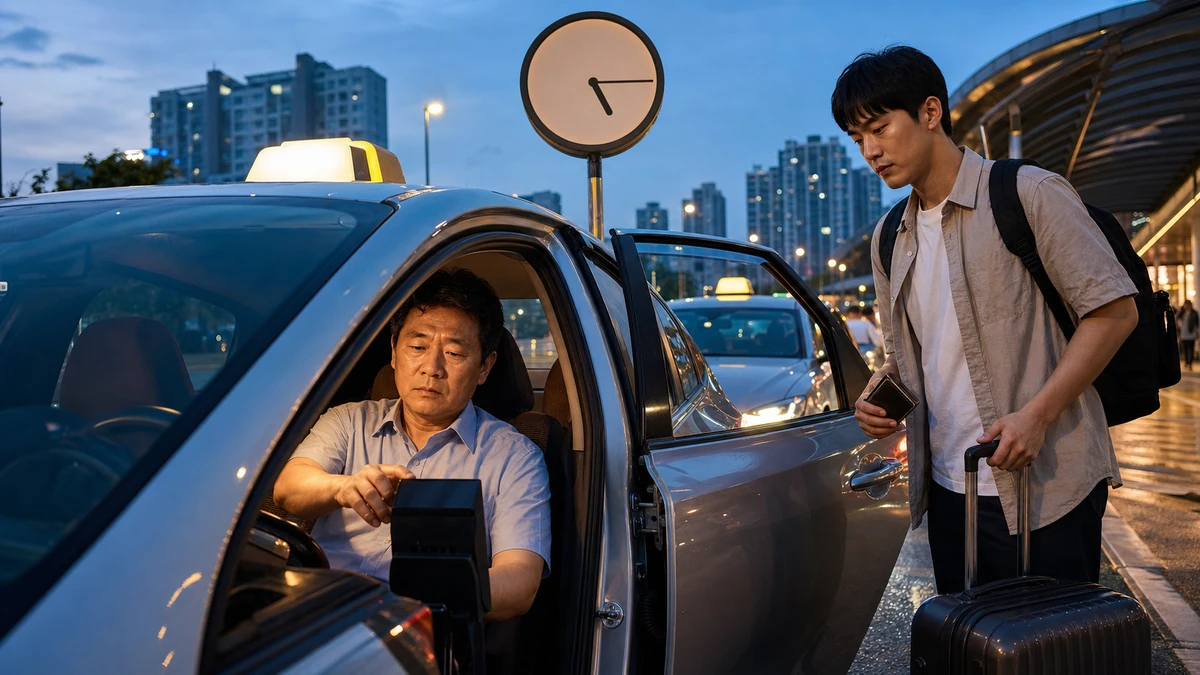
For visitors, the update is practical travel information. For residents, it is a small but noticeable shift in the cost of getting around. And for outside observers, it is a useful reminder that South Korea’s economic story is not only written in export numbers, tech giants and pop culture. It is also written in the price of a short taxi ride home on a rainy night.
Why a 600-won increase can feel bigger than it looks
In transportation, the psychology of price often matters as much as the math. Americans know this instinctively from subway fare hikes, airport parking increases or the rising minimum charge on ride-hailing apps. A modest change spread across a long trip may be easy to absorb. But when the starting price goes up, the increase becomes visible immediately and repeatedly, especially for people who rely on short rides.
That is what makes Changwon’s fare adjustment significant beyond the raw number. The base fare applies before additional distance or time charges begin to accumulate. So passengers taking brief trips, such as from a station to a nearby hotel, from a neighborhood restaurant back home, or from a bus stop to an apartment complex in bad weather, are often the first to notice the difference.
For residents who only occasionally use taxis, the increase may register as an annoyance more than a hardship. But for people who use taxis regularly because of late work hours, heavy bags, mobility needs or gaps in public transit, repeated short trips can make a fare adjustment feel sharper over time. That pattern is hardly unique to South Korea. In U.S. cities, too, transportation costs hit differently depending on whether a rider is choosing a taxi out of convenience, necessity or a lack of alternatives.
There is also a simple reason basic fare changes resonate in public conversation: they are easy to understand. Inflation can be abstract. Fuel prices move up and down. Utility bills are complicated. But a taxi base fare is immediate and concrete. You either remember the old number or you do not, and when it changes after a long stretch of stability, people notice.
According to the summary of the Korean report, this is the first fare adjustment in Changwon since June 2023, meaning the city has gone roughly three years without changing the rate. That kind of gap can make a new fare feel more dramatic, because people have had time to internalize the old one as normal. Once a price becomes part of everyday habit, even a relatively limited increase can feel like a reset in the background costs of urban life.
Understanding Changwon and why taxis matter there
To readers outside Korea, Changwon may be less recognizable than Seoul’s neon-heavy image or Busan’s beaches and port. But the city is an important example of regional South Korea: economically active, densely organized and shaped by both industry and residential life. It serves as a hub within South Gyeongsang province, and its urban layout creates many short-distance trips where taxis are especially useful.
That is an important point because the role of taxis varies widely from city to city. In New York, taxis are iconic but compete with subways and app-based services on every block. In Los Angeles, they have long existed alongside car dependency and ride-share platforms. In smaller American cities, taxis can be scarce or largely replaced by ride-hailing. In many South Korean cities, however, taxis still occupy a very visible middle ground between public transit and private car use.
They are commonly used for the so-called last mile, a term familiar in transportation planning that refers to the final leg of a trip from a station or stop to the actual destination. In a city like Changwon, that can mean getting from a train station to a hotel, from a bus terminal to an office, or from a nightlife district back to a residential neighborhood after public transit options have thinned out. Taxis also become more attractive in rain, during late hours, or when passengers are traveling in pairs or carrying luggage.
South Korea’s urban transportation networks are often efficient by international standards, but even strong transit systems have gaps. That is where taxis remain relevant. They are not just a luxury service. They are part of the practical architecture of daily movement, especially in regional cities where people’s routines may span industrial work sites, commercial districts and residential neighborhoods not perfectly linked by one direct transit line.
That helps explain why a taxi fare announcement can qualify as real civic news rather than a niche consumer update. It touches commuting habits, family budgets, visitor planning and the broader cost of participating in city life. To an American audience, the closest comparison may be the way local coverage treats transit fare changes, toll increases or airport access fees: not headline-dominating national news, but exactly the sort of information that shapes how a city feels to live in.
A provincial decision with local consequences
Although the immediate change affects Changwon riders, the decision did not emerge in isolation. The fare adjustment followed deliberation and approval by the South Gyeongsang Provincial Consumer Policy Committee, a body that reviews issues involving consumer prices and public charges in the region. That kind of administrative process may be unfamiliar to some American readers, but the basic idea is not. In the United States, public utility boards, transit authorities and local commissions often play similar roles in reviewing price changes that affect daily life.
In this case, the provincial committee set an upper limit of 4,600 won for taxi base fares across all 18 cities and counties in the province, according to the Korean summary. Changwon then aligned its new base fare with that ceiling, moving from 4,000 won to 4,600 won. The full list of the seven cities implementing increases on July 1 was not included in the material provided, and neither were the detailed fare structures for each municipality. What is clearly established is that Changwon is one of seven cities in the province making the change the same day.
That regional context matters because it suggests the increase is part of a broader cost and regulatory pattern rather than a city acting entirely on its own. In other words, this is not just about one mayor’s decision or one local taxi market. It reflects a provincial review of pricing conditions across multiple jurisdictions.
For American readers, it may help to think of it as something between a state-level framework and a local implementation decision. The province determines the general parameters, and cities apply them within their own administrative context. The resulting effect is both broad and intimate: broad because multiple cities are involved, intimate because the impact is felt one passenger at a time.
Stories like this can also illuminate the texture of South Korean governance, which is often highly structured and detail-oriented in its handling of public-facing services. Even changes that might appear modest from afar are rolled out with specific dates, times and jurisdictional boundaries. For foreign travelers, that can make the system easier to navigate. For residents, it creates a clear reference point for when a higher price begins.
What it means for residents, tourists and business travelers
The most immediate takeaway is straightforward: Anyone taking a taxi in Changwon after 4 a.m. on July 1 should expect the meter to start at 4,600 won instead of 4,000 won. That includes local residents, domestic travelers and international visitors who may be arriving in the city for business, family reasons or tourism.
For tourists, taxi fares often shape first impressions more than city officials might realize. A visitor arriving at a station or terminal in an unfamiliar place is likely to choose the most intuitive transport option, and that is often a taxi. In that moment, the base fare functions almost like a welcome price to the city. It sets the emotional tone for what the traveler thinks transportation will cost, even if the overall trip remains affordable compared with many large global cities.
The same applies to business travelers. Changwon is tied to South Korea’s industrial economy, and that means there are regular flows of workers, executives and contractors moving between transport hubs, hotels, office buildings and factory-related sites. For people on company expense accounts, the increase may be minor. For smaller businesses, freelancers or budget-conscious travelers, it becomes another line item in the cumulative cost of being on the road.
Residents, of course, will feel the change most consistently. Taxi riders are not a single bloc. Some choose cabs rarely, perhaps only after missing the last bus or when traveling with children or groceries. Others rely on them more routinely because of shift work, neighborhood geography or personal mobility constraints. A base fare increase affects all of them, but not in identical ways.
Importantly, the information provided does not include updated per-distance charges, waiting-time fees or detailed late-night structures. That limits what can responsibly be said about the total cost of typical trips. The confirmed change is the base fare itself. For readers planning travel, that means the practical lesson is simple: short rides are the most obvious place where the increase will be felt immediately.
There is also a broader cultural point worth noting for English-speaking audiences. International coverage of South Korea often concentrates on the country’s exports, elections, North Korea tensions, beauty trends or entertainment industry. But everyday logistics matter, too. The price of a taxi ride can reveal how local governments balance consumer sensitivity, service stability and the lived rhythm of urban movement. In a place that many outsiders encounter first through K-pop, streaming dramas or high-tech imagery, transportation fare policy offers a grounded look at ordinary life.
The bigger economic picture behind a small local story
Fare increases are never just about numbers on a meter. They sit at the intersection of household budgets, operating costs and public expectations about what urban services should cost. The Korean summary stops short of detailing the full rationale behind the increase, and that is an important limitation. Without official explanation beyond the approved adjustment, it would be speculative to assign a single cause. Still, the structure of the debate is recognizable everywhere.
Passengers tend to view fare hikes through the lens of affordability. Drivers and operators often see them through the lens of sustainability, particularly when fuel, maintenance, insurance and labor pressures accumulate over time. Local governments, meanwhile, are left trying to balance political caution with the practical need to keep service functioning.
That tension is familiar in the United States. Whether the issue is bus fares in Chicago, commuter rail deficits around New York, toll road increases in the Northeast or airport ride costs in California, transportation pricing routinely becomes a proxy for wider anxieties about inflation and quality of life. South Korea is no exception. A taxi fare change in Changwon is not a crisis, but it is part of the same larger question facing cities around the world: How much should convenient urban mobility cost, and who absorbs the pressure when those costs rise?
What makes the Changwon case interesting is its scale. This is not a capital city megaproject or a nationwide transportation overhaul. It is a local, practical adjustment in a regional city, and precisely for that reason it offers unusually clear insight into how policy touches ordinary routines. The measure comes with a precise start time, a clearly stated old and new base fare, and a provincial administrative backdrop. It is a small civic decision rendered in sharp detail.
For foreign readers, there is another layer. News from South Korea is often consumed abroad in translation or in fragments on social media. But understanding a place requires attention to seemingly minor administrative stories like this one. They show how governance works at ground level, how people move through their cities and how economic change arrives not only in stock markets or election campaigns but in the choices a person makes after dinner, after work or during a downpour.
Why stories like this matter beyond transportation
At first glance, a taxi base fare increase in Changwon may seem too narrow to carry wider meaning. Yet local fare changes often serve as a kind of civic x-ray. They show how a city organizes itself, what counts as essential mobility and how price shifts are communicated to the public.
In this case, the most important facts are plain. The base fare rises from 4,000 won to 4,600 won. The change begins at 4 a.m. on July 1. It follows review by a provincial consumer policy body. And Changwon is among seven cities in South Gyeongsang province implementing increases that day. Those details are useful to riders, but they also tell a larger story about predictability and administrative clarity.
That clarity matters because transportation pricing works best when riders know what to expect. Uncertainty produces frustration. Certainty allows people to plan, whether they are local residents deciding how often to hail a cab or visitors budgeting a trip through a city they do not know well. Even if passengers disagree with the increase, transparency reduces confusion.
There is also a reason everyday cost stories resonate internationally. They are universal. Americans may not know the street grid of Changwon or the exact layout of South Gyeongsang province, but they understand what it means when the price of getting home changes. They understand how a small fare increase can alter decisions about convenience, weather, timing and budget. They understand the split-screen reaction that follows almost any transportation hike: one side sees an unwelcome burden, the other sees a delayed but necessary adjustment.
For readers interested in Korean society beyond the biggest headlines, this is the value of the story. It shows South Korea not as an abstraction of soft power or geopolitics, but as a lived place where municipal governments announce fare changes, commuters recalculate routines and travelers update expectations. The Korean Wave may be what introduces many international audiences to the country. But the fuller picture emerges in stories like this one, where policy, price and daily life meet in the back seat of a taxi.
In that sense, Changwon’s new fare is more than a local transportation update. It is a snapshot of how modern urban life works in one corner of South Korea: carefully administered, highly practical and immediately felt by the people moving through it. Beginning at 4 a.m. on July 1, that snapshot will cost 600 won more at the curb.



0 Comments