A blues record from South Korea that speaks a universal language
For many American music fans, South Korea is still most readily associated with K-pop: precision choreography, polished idol groups and global fandoms that can send a song rocketing up the charts overnight. But South Korea’s music scene has always been far broader than its best-known export. Beneath the glare of the K-pop spotlight is a long-running ecosystem of indie rock clubs, folk musicians, jazz players, hip-hop artists and roots-oriented bands that have spent years building loyal followings at home. Into that lesser-known but deeply textured world comes “Human Scramble,” the fourth full-length album from Korean blues band Choi Hang-seok and the Boogie Monster.
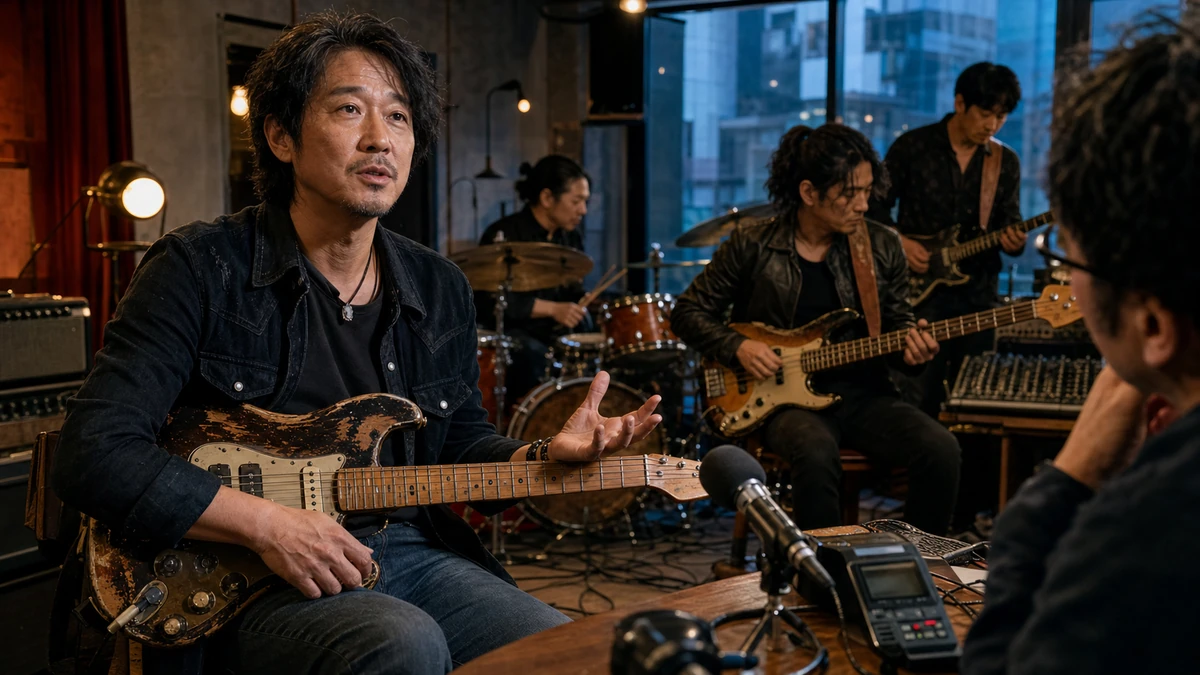
The band released the album on July 3, offering a set of songs shaped less by triumph than by the ordinary bruises of adult life: regret, fatigue, self-doubt, emotional damage and the stubborn instinct to get up and try again. In an interview in Seoul’s Jongno district, bandleader Choi Hang-seok explained that the record draws directly from his own life, including wounds from working not only in music but in other jobs, and from mistakes he says were his own. That may sound like a familiar singer-songwriter premise to American readers. But in Choi’s case, it arrives through the form of the blues, a genre born in the United States, carried across borders and now refracted through Korean experience.
The result is not an attempt to imitate American blues in a museum-piece sense, nor is it an effort to flatten Korean realities into a generic global sound. Instead, “Human Scramble” feels like an argument for why the blues remains relevant anywhere people wrestle with disappointment and keep moving. If the Korean Wave, or Hallyu, has shown American audiences anything over the past two decades, it is that Korean artists are remarkably adept at taking forms with global roots and making them speak in distinctly Korean ways. This album does exactly that, while still sounding emotionally legible to listeners far from Seoul.
At the center of the record is a simple but powerful idea: a dead end is not necessarily the end. That message comes through most clearly in the title track’s lead single, “Dead End Road,” which reframes the moment of being stuck not as a place of permanent defeat but as the point where a person can turn around and start again. It is a modest idea, intentionally so. Choi is not promising reinvention in the self-help sense or redemption on a cinematic scale. He is offering something more believable: when you cannot go forward, you may still be able to change direction.
Why ‘Human Scramble’ matters beyond Korea’s borders
The album title, “Human Scramble,” suggests emotional disorder by design. The songs do not separate joy from sorrow, pride from shame, or damage from recovery into neat categories. Instead, Choi and his band present those feelings as they often appear in real life: mixed together, unresolved and hard to name. For American audiences raised on the language of confessional rock, heartland storytelling or blues-inflected soul, this may be a familiar emotional map. But it lands differently in a Korean context, where public discussion of hardship has historically been shaped by social pressure to endure, maintain harmony and keep going.
That context is worth explaining. South Korea is a highly competitive society, especially in education and employment, and that pressure has long influenced its popular culture. In recent years, Korean film, television and music have increasingly confronted the emotional cost of that pressure, from class anxiety and burnout to loneliness and alienation. “Human Scramble” fits into that wider cultural conversation, though in a quieter, more intimate register. Rather than diagnosing a social crisis in sweeping terms, Choi narrows the frame to one person’s accumulated mistakes, disappointments and hard-earned clarity.
That choice matters. The record is not built around glamorous suffering or mythmaking. Choi, who was born in 1975 and is now in his early 50s, places age and experience at the center of the work rather than treating them as liabilities. In an industry that often prizes youth, novelty and viral appeal, his perspective carries a different kind of authority. He is not singing as a prodigy, nor as an artist trying to package wisdom into tidy lessons. He sounds more like a working musician taking stock of the road behind him and acknowledging that some of the damage came from other people, while some of it came from himself.
That balance between personal hurt and self-examination is one reason the album resonates. Too often, songs about struggle can drift toward grievance or abstraction. Choi’s account appears more grounded than that. By admitting fault alongside pain, he avoids turning the record into a one-sided complaint. The emotional world of “Human Scramble” is messy because human life is messy. That is not a slogan here; it is the album’s structure.
For English-speaking listeners who do not understand Korean lyrics, that emotional logic still carries. One of the strengths of blues, after all, is that its feeling often reaches the listener before every word does. Tone, phrasing, tension, release and the chemistry of a band playing together can communicate meaning across language barriers. That is especially true on this album’s key track, which leans on live ensemble energy to embody the instability it describes.
At the heart of the album, a dead end becomes a turning point
The title song “Dead End Road,” known in Korean as “Makdareun Gil,” states the album’s emotional thesis with unusual clarity. Choi has said the song grows from the thought that even when a person reaches a place where there seems to be no way forward, turning around can reveal the start of another path. He also said he wanted to speak to the feeling of being shoved into a corner by life, by circumstances, by the rough contact of moving through the world among other people.
That metaphor will be familiar to anyone who has lost a job, burned out in midcareer, ended a relationship, made a costly mistake or simply looked around and wondered how things narrowed so dramatically. The song’s power appears to come from what it does not do. It does not deny the wall at the end of the road. It does not insist that hardship is secretly a gift. It does not promise that if listeners think positively enough, the obstruction will disappear. The road remains blocked. The frustration remains real. The only thing that changes is the interpretation of what happens next.
In American terms, it is closer to the emotional realism of Bruce Springsteen’s harder-edged songs or the weary resilience found in country and blues traditions than to the language of motivational pop. The comfort here is not that life will quickly improve. It is that a person is not done simply because a plan has failed. That distinction gives the song weight. It respects the listener’s intelligence and, more importantly, the listener’s pain.
There is also something notably unadorned about the image itself. A dead end is not a poetic abstraction. It is physical, visual and immediate. Anyone who has driven down the wrong street understands it instinctively. And that may help explain why the song’s message has the potential to travel. The specifics of Korean life may differ from American life in countless ways, but the sensation of having run out of room is universal.
That universality is one reason Korean music outside the mainstream sometimes lands so strongly with international listeners. It does not always arrive through spectacle or novelty. Sometimes it arrives through recognition. A voice from another country names a feeling you know, and the distance between cultures suddenly seems smaller.
The sound of uncertainty: Why one-take recording matters
One of the most striking details about “Dead End Road” is the way it was recorded. Rather than building the track piece by piece with separate instrumental takes, Choi and the Boogie Monster recorded it as a one-take live performance, with all members playing together at the same time. In an era when digital production often allows songs to be endlessly refined, corrected and layered, that choice stands out. It is not anti-technology for its own sake. It is a creative decision that aligns directly with the song’s meaning.
Live one-take recording captures more than sound; it captures reaction. A slight shift in timing, a tightening of rhythm, a guitar answering a vocal line, a drummer leaning into a transition a split second harder because of the room’s energy — these are the things that make a band feel alive rather than assembled. When musicians record together in one pass, each player’s uncertainty and conviction affect the others in real time. The performance becomes a shared act of risk.
That risk fits the emotional architecture of “Human Scramble.” Life’s hardest moments do not come edited, polished or neatly sequenced. They arrive midstream, often before a person has found the right language for them. A one-take performance, with all its tension and dependence on mutual trust, mirrors that reality better than a track made surgically in pieces. The musicians are not demonstrating perfection; they are demonstrating presence.
For American readers, there is an easy reference point here in the appeal of live-in-the-room recording across blues, jazz, soul and roots rock traditions. Whether it is the raw electricity of a club session, the looseness of a Muscle Shoals-style ensemble or the chemistry of a bar band that knows how to breathe together, audiences often respond to the sense that a song was inhabited rather than manufactured. Choi and the Boogie Monster appear to be drawing from that same philosophy, while filtering it through their own Korean band identity.
That matters because authenticity in music is often misunderstood as a static quality, something tied to geography or historical origin alone. But authenticity can also come from method. By recording together, the band allows the song’s emotional instability to live inside the performance itself. A small wobble matters. A quick recovery matters. Trust matters. In that sense, the recording process does not merely illustrate the song’s message. It performs it.
A midlife record in a youth-driven industry
There is another reason “Human Scramble” deserves attention: it is a deeply midlife album. That should not be a novelty, but in global pop industries, it often is. Choi’s age is not incidental to the story. At 51, he is making a record that treats years lived not as baggage to hide but as raw material to work with. The songs draw on jobs outside music, on accumulated disappointments, on mistakes that can only be seen clearly after time has passed. This is not the voice of a newcomer narrating first heartbreak or first ambition. It is the voice of someone sorting through the debris and dignity of adulthood.
For American audiences, that may call to mind the best tradition of older songwriters who became more compelling as their lives grew more complicated: artists whose later records were not louder or more fashionable, but sharper and more human. What Choi appears to be offering is that kind of maturity, without self-congratulation. The record does not romanticize suffering as proof of seriousness. It simply acknowledges that by midlife, very few people remain unmarked.
That honesty can feel particularly significant in South Korea, where public culture often moves quickly and prizes freshness. Korean entertainment industries are famously fast-paced, and idol culture in particular can be intensely age-conscious. A 51-year-old blues musician speaking plainly about wounds, regrets and starting over occupies a different lane entirely. That difference is part of the story. “Human Scramble” is not trying to compete on the terms of youth-centric pop. It is offering an alternative set of values: texture over gloss, endurance over flash, self-scrutiny over image control.
There is also an ethical dimension to the way Choi frames his experience. He does not appear to cast himself solely as a victim of harsh conditions or other people’s actions. He includes his own shortcomings in the reckoning. That may be one of the album’s most compelling traits. It suggests a kind of adult accountability that is less common in popular music than fans might like to admit. The songs do not simply ask listeners to sympathize. They ask them to reflect on the ways they have been hurt and the ways they may have hurt others.
That is a harder emotional proposition, but a richer one. And it may help explain why the album reads not just as a personal diary, but as a record with broader social meaning. The more honestly a person documents private confusion, the more likely that confusion is to sound familiar.
How Korean blues offers comfort without false optimism
Choi has described blues as music that can comfort listeners whether they are happy or depressed, a form that has a positive effect not because it erases sadness, but because it makes room for feeling. That idea is central to understanding “Human Scramble.” The album’s version of comfort is not about converting sorrow into uplift as quickly as possible. It is about letting contradictory emotions sit side by side without forcing them into a single conclusion.
That may be one reason the record feels timely. Across cultures, audiences are increasingly suspicious of art that insists on easy hope. The past several years, marked by pandemic disruptions, economic strain, social isolation and political volatility, have made many people wary of messages that skip over difficulty in pursuit of inspiration. A song like “Dead End Road” offers something sturdier. It does not try to make despair pretty. It simply refuses to treat despair as final.
There is a subtle but important difference there. False optimism tells listeners that the obstacle is not as serious as they think. Blues, at its best, tells listeners the obstacle is real and survivable. That distinction has made the genre durable for generations, far beyond its birthplace. Its emotional logic travels because it is built on recognition rather than denial.
In the Korean context, that emotional frankness can also serve as a bridge for international listeners who know relatively little about the country’s non-pop music traditions. While Korean lyrics may carry nuances that are difficult to translate fully, the emotional architecture of the blues is already familiar to many Western ears. That familiarity does not make the music derivative. If anything, it allows the specificity of Choi’s experience to come through more clearly. The form gives listeners a way in.
And that may be where “Human Scramble” becomes most interesting from an American vantage point. It is not just a Korean band playing blues. It is a Korean band using blues to articulate a local experience of pressure, error, regret and restart, while trusting that those emotions do not need a passport to be understood. In an era when so much cross-border music coverage is driven by scale, virality or trend, this album is a reminder that international significance can also come from something quieter: a truthful song about what happens after things go wrong.
From one man’s diary to a wider human story
In the end, “Human Scramble” appears to work because it does not mistake confession for self-importance. The songs begin in one man’s life, but they do not stay there. Being cornered by circumstances, regretting your own choices, realizing that the future you imagined has narrowed, and trying anyway to step back into motion — these are not specifically Korean feelings, even if the details of their expression are shaped by Korean life.
That is why this album may find listeners well beyond South Korea, especially among those willing to look past the narrow idea that Korean music begins and ends with the pop idol system. Choi Hang-seok and the Boogie Monster are working in a different register altogether: seasoned, unvarnished, collaborative and emotionally literate. Their new record does not offer a grand theory of survival. It offers a smaller, harder-won truth. Sometimes a dead end is just a dead end. But if you can turn around, it may also be the place where another road begins.
For American audiences, that message lands in a cultural moment saturated with narratives of reinvention but often short on honest accounts of failure. “Human Scramble” supplies that honesty. It says a life is not made of one clean emotion at a time. It is scrambled — joy and sorrow, bruise and recovery, error and understanding all mixed together. The miracle is not sorting them perfectly. The miracle, if there is one, is learning to keep going while they remain unresolved.
That is a deeply blues sentiment, and perhaps a deeply human one. It is also what makes this Korean album worth hearing far beyond the language in which it was written. In Choi’s hands, the blues becomes not a borrowed costume but a working method for telling the truth. And in a crowded global music landscape, that kind of truth still has the power to cut through.
Comments
Post a Comment