A Local Education Program With National Ambitions
In many parts of the United States, students interested in aviation or robotics often discover those subjects through school clubs, STEM competitions, or community colleges. In South Korea, one midsize city is taking a different approach by helping teenagers earn an industry-recognized drone license before they even graduate from high school.
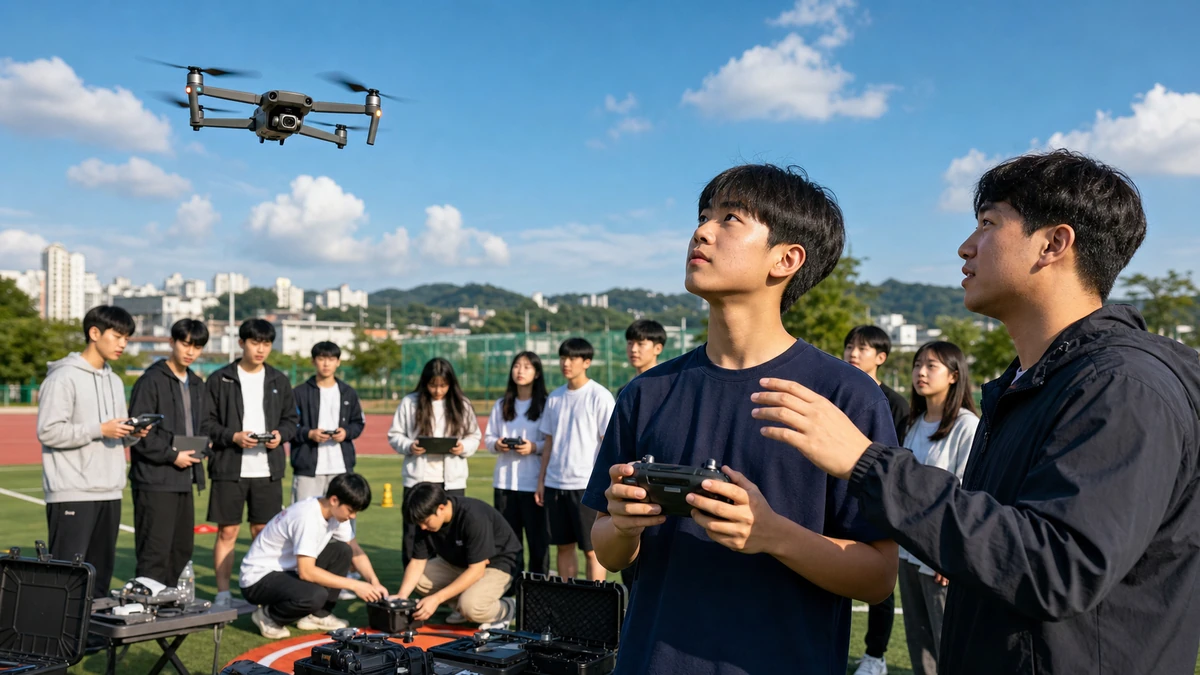
The city of Iksan, located in North Jeolla Province—officially known as Jeonbuk State—has launched its 2026 Summer Drone Certification Project for local middle and high school students. The program will accept just 13 participants, but city officials say its purpose extends far beyond a single summer class. The initiative is designed to connect classroom learning directly to future careers in one of the world's fastest-growing technology sectors.
Applicants must be at least 14 years old and either live in Iksan or attend a school there. Rather than offering a short technology demonstration or recreational workshop, the city intends to guide students through training toward obtaining a Class 1 drone pilot certification, a credential used in multiple professional industries throughout South Korea.
Although only a handful of students will participate this year, the project reflects a broader trend in South Korean education: local governments are increasingly investing in specialized career programs that prepare students for emerging industries before they enter college.
The initiative is part of South Korea's Education Development Special Zone program, a national policy that encourages municipalities to create locally tailored educational opportunities tied to regional economic development. Instead of relying solely on traditional academic achievement, participating communities are experimenting with programs that combine technical education, career exploration, and professional certification.
Why Drone Skills Matter Beyond Flying
To many Americans, drones may still be associated primarily with aerial photography, recreational flying, or package delivery experiments. In South Korea, however, drone technology has rapidly become integrated into a wide range of industrial and public service operations.
The certification targeted by Iksan's program prepares operators for work involving larger and more advanced unmanned aircraft. These drones are used in agriculture to spray crops across large fields, reducing labor requirements while improving precision. They also support wildfire response by providing aerial surveillance that allows emergency crews to monitor dangerous terrain without placing firefighters in unnecessary risk.
Search-and-rescue organizations increasingly rely on drones equipped with thermal cameras to locate missing people in mountains, forests, or flood zones. Energy companies use them to inspect transmission towers and solar power facilities, allowing technicians to identify damage without climbing hazardous structures.
Each of these applications requires more than basic piloting skills. Operators must understand aviation safety, flight planning, equipment maintenance, weather conditions, and applicable regulations. Professional certification demonstrates that an operator has completed structured training and meets established standards for safe operation.
For teenagers participating in the Iksan project, the program therefore serves as an introduction not only to drone technology but also to the diverse industries that increasingly depend on unmanned aircraft. Students are exposed to how a single technological platform can solve practical problems in agriculture, disaster response, infrastructure management, and environmental monitoring.
Lowering the Cost Barrier to Technical Education
One of the central motivations behind the project is financial accessibility. Professional drone training can be expensive, particularly for teenagers whose families may already face significant education costs.
City officials acknowledged that many students interested in drone technology never pursue formal certification because tuition and training expenses place the goal out of reach. Rather than expecting families to absorb those costs, the municipal government is using public funding to reduce the financial barrier.
Han In-kyung, director of Iksan's Education Cooperation Division, said the city hopes the program will provide an opportunity for students who previously found drone certification financially difficult to pursue because of high training costs.
That emphasis distinguishes the initiative from scholarship programs aimed only at top-performing students. Instead, the project focuses on expanding access by making specialized technical education available to young people who may have the interest and ability but lack the financial resources to begin.
Educational researchers frequently note that opportunity gaps are shaped not only by academic performance but also by access to expensive extracurricular experiences, certifications, and professional training. By covering much of the cost, Iksan is attempting to ensure that curiosity about technology can develop into practical skills rather than ending at the point where tuition becomes unaffordable.
From Career Exploration to Professional Credentials
Many youth technology programs around the world emphasize exposure—giving students a chance to try coding, robotics, or engineering for a day or a week. While those experiences can spark interest, they do not necessarily produce measurable qualifications.
Iksan's program takes a different approach by placing certification at its center. The project's very name highlights earning a license rather than simply experiencing drone flight.
This distinction changes how students engage with the program. Instead of treating drones as an entertaining summer activity, participants work toward a concrete professional milestone. That objective encourages structured learning, disciplined practice, and mastery of technical standards.
The city describes the initiative as combining several educational stages into one pathway: understanding the drone industry, exploring career possibilities, developing technical skills, and earning a recognized qualification.
Students may ultimately choose careers unrelated to aviation. Nevertheless, educators argue that learning how technology addresses real-world problems can influence future decisions regardless of profession. Exposure to industries before college often helps students make more informed choices about university majors, vocational education, or workforce training.
Preparing Teenagers for Industries of the Future
South Korea has spent years positioning itself as a global leader in advanced manufacturing, robotics, artificial intelligence, and digital infrastructure. National policy frequently emphasizes preparing the next generation for industries expected to experience significant growth over the coming decades.
Drone technology fits squarely within that strategy. Analysts expect continued expansion in commercial drone applications worldwide as governments and businesses adopt unmanned systems for logistics, inspection, emergency response, precision agriculture, and environmental monitoring.
By introducing teenagers to these technologies before they reach college, municipalities hope to cultivate a workforce that can adapt more quickly to evolving industrial demands.
Unlike initiatives concentrated in major metropolitan areas such as Seoul, Iksan's project demonstrates that smaller regional cities also intend to participate in developing high-tech talent. Rather than encouraging young people to leave their hometowns to discover emerging industries, local officials are attempting to bring those opportunities directly into their communities.
That strategy reflects an important shift in regional development policy. Instead of viewing education solely as preparation for university entrance exams, local governments increasingly see workforce development as beginning much earlier through specialized training linked to actual industries.
A Community-Based Model for Workforce Development
The eligibility rules reinforce the program's community focus. Students qualify if they either reside in Iksan or attend schools within the city, ensuring that the investment primarily benefits local young people.
This localized approach illustrates how South Korean municipalities increasingly tailor education to regional priorities. Rather than implementing identical programs nationwide, cities are encouraged to develop initiatives reflecting local economic opportunities and workforce needs.
For Iksan, supporting drone education aligns with broader efforts to prepare residents for industries expected to play larger roles in agriculture, public safety, logistics, and renewable energy—sectors already important to the surrounding region.
Officials have also indicated that they intend to expand educational programs responding to future industrial changes. While no detailed timeline or enrollment targets have been announced beyond this summer's initiative, the city has presented the drone certification project as one example of a larger vision for becoming what officials describe as a "premier education city."
Whether future programs focus on drones or other advanced technologies, the underlying philosophy remains consistent: local governments should help students build practical skills that connect directly to employment opportunities rather than limiting education to traditional academic instruction.
Thirteen Students, A Bigger Educational Message
At first glance, accepting only 13 students may seem too small to generate meaningful change. By itself, the number will not transform the local labor market or reshape South Korea's technology workforce.
Yet the significance of the project lies less in its size than in its design. Every participant receives access to expensive technical training, structured instruction, and the opportunity to earn a credential recognized across multiple industries.
Programs like this often function as pilot initiatives. Municipal governments can evaluate outcomes, measure student interest, and refine curricula before deciding whether to expand enrollment in future years.
The project also sends a broader message about how technological education is evolving. Rather than presenting advanced technology as something students will encounter only after entering college or joining the workforce, Iksan is treating it as part of secondary education and career planning.
For international observers, the initiative offers a glimpse into how South Korea's local governments are adapting education to a rapidly changing economy. Instead of simply encouraging students to learn about future industries, Iksan is helping a small group earn credentials that could become valuable in careers spanning agriculture, emergency services, infrastructure management, and clean energy.
The program may involve only 13 teenagers this summer, but it reflects a larger educational philosophy increasingly gaining attention around the world: preparing young people not only to understand emerging technologies, but to participate in the industries that will shape the decades ahead.
Comments
Post a Comment