A K-pop milestone event is getting even bigger
One of K-pop’s most influential acts is showing that nostalgia alone does not explain its staying power. BigBang, the veteran South Korean group that helped define the modern global image of K-pop, is releasing additional tickets for the opening shows of its 20th anniversary world tour after all three initial dates in Goyang, just northwest of Seoul, sold out.
YG Entertainment, the group’s longtime agency, said it will begin selling newly secured seats for BigBang’s concerts scheduled for Aug. 21 through 23 at Goyang Stadium, according to South Korea’s Yonhap News Agency. The new inventory includes both canceled tickets and seats in sections that were not previously made available for sale.
That kind of announcement may sound routine to American readers used to stadium tours adding obstructed-view seats or reopening sections once production layouts are finalized. But in the K-pop business, where fan demand, intricate stage design and tightly managed ticketing can shape the public narrative around a tour, the decision carries broader meaning. This is not a case of a promoter trying to move slow-selling inventory. It is the opposite: a sold-out launch being expanded because demand remained intense even after tickets were gone.
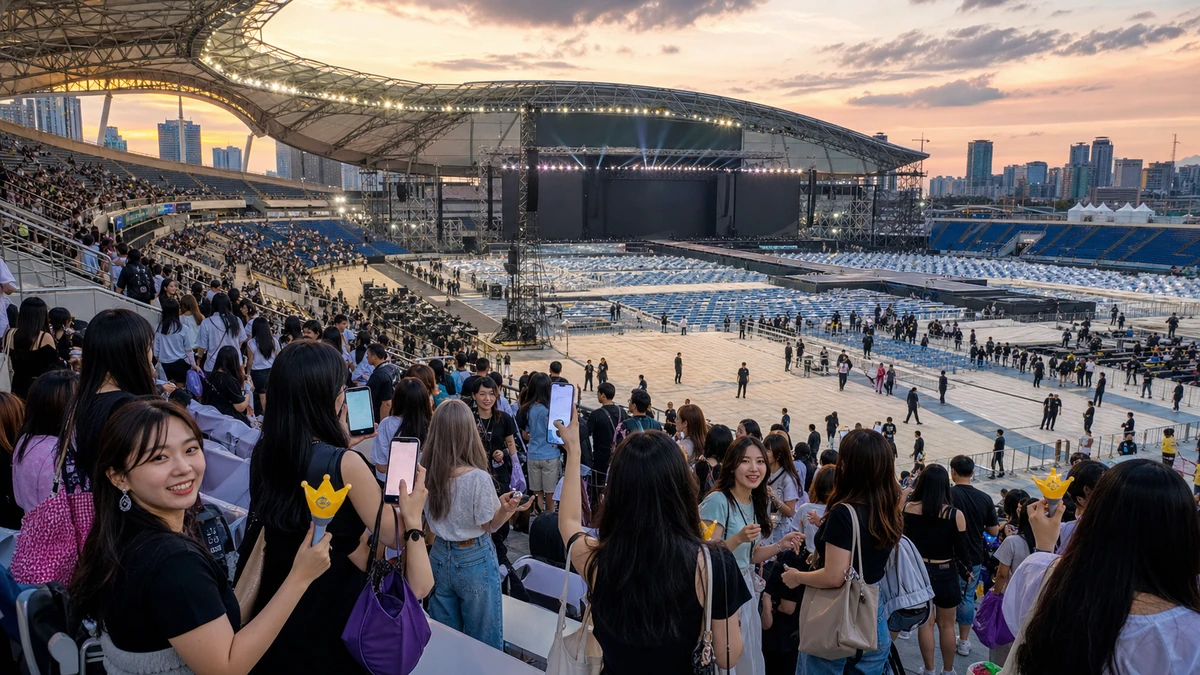
The timing matters, too. BigBang’s Goyang concerts are not just another stop on a reunion-style run. They are the opening dates of the group’s 20th anniversary world tour, a symbolic starting point in South Korea for a band whose career has tracked the rise of K-pop from regional phenomenon to global export. In practical terms, the extra seats give disappointed fans another chance. In industry terms, they serve as a visible measure of how much live demand BigBang still commands.
For American audiences who may know K-pop largely through BTS, Blackpink or the more recent generation of chart-making acts, BigBang occupies an earlier but crucial chapter. If today’s K-pop stadium shows can feel like polished global pop events with Korean lyrics at the center, BigBang was among the groups that helped build the path there. A 20th anniversary tour drawing this level of demand suggests that in K-pop, legacy acts can still function not just as symbols of the past, but as active forces in the present.
Why extra ticket sales matter in K-pop
In the United States, when a major artist opens additional seats after an onsale, fans usually read it as one of several familiar scenarios: production holds were released, the stage footprint changed, or some inventory had been reserved and later returned to the general public. In South Korea, the mechanics are similar, but the cultural meaning can be amplified by the way fandom operates.
K-pop ticketing is often treated as an event unto itself. Fans do not simply buy admission to a concert; they compete for participation in a shared milestone. That is especially true when the artist has a long history and the show marks a major anniversary. For many fans, being present at the first night of a tour is like attending opening day, a reunion and a cultural checkpoint all at once.
YG Entertainment said the decision was made in response to fans’ “explosive support,” language that is common in Korean entertainment publicity but significant in context. It signals that the added seats are being framed as a response to overwhelming demand, not an adjustment to weak sales. In a business where public perception matters, the distinction is important.
There is also a logistical side. Additional seats are not usually opened casually, particularly in a large venue. Concert organizers must consider sightlines, stage mechanics, camera platforms, speaker placement, emergency routes and crowd flow. Some sections may initially be held back because the production team does not yet know whether the view will be acceptable or whether the space will be needed for equipment. Releasing those seats later means the promoter has re-evaluated what can be sold without compromising the show experience or venue operations.
That matters because sold-out status in K-pop often becomes part of the story of the event itself. A three-night run selling out quickly, followed by a fresh scramble for canceled tickets and newly opened seats, reinforces the sense that a concert is more than entertainment. It is a scarce, emotionally charged moment inside a fandom economy where access can become a badge of commitment.
For fans who missed out the first time, the announcement effectively creates a second opening. In Korean fan culture, ticket updates spread rapidly across social media, fan communities and messaging platforms. A new batch of seats can trigger a fresh wave of planning, group chats and online coordination. The extra inventory is not just a practical ticketing decision. It revives anticipation and keeps the concerts at the center of conversation before the tour has even begun.
What 20 years means in the Korean pop industry
In American pop music, a 20th anniversary can mean a commemorative album, a legacy documentary or a greatest-hits tour aimed partly at long-term fans. In K-pop, where the industry is often associated with relentless turnover, youth-driven branding and tightly structured promotional cycles, reaching a 20-year milestone carries a different kind of weight.
Longevity in South Korean idol music is not impossible, but it is difficult. Groups must survive lineup changes, shifting music trends, contract renewals, military service, solo careers, public controversies and generational turnover in fandom. Many acts burn brightly for a few years and then fragment, pause or settle into niche status. A group still capable of selling out a stadium-scale opening run two decades after debut is doing something more than revisiting old glory.
That is why the Goyang concerts matter beyond the ticket numbers. They are the first chapter of a 20th anniversary world tour, and first chapters shape the narrative. The opening show of a tour tells fans, the industry and the media how the anniversary will be framed: as a sentimental look backward, a victory lap or a demonstration that the act remains commercially relevant in the here and now. The sellout and added seats point toward the third interpretation.
BigBang debuted in a much earlier era of K-pop’s international rise, before the genre became a regular part of American festival lineups, before Korean acts routinely landed on U.S. charts, and before social media platforms made global fandom instantaneous. The group emerged from a South Korean entertainment system that was already highly organized but not yet universally understood abroad. Over time, BigBang became associated with a looser, more swagger-driven image than many idol groups, helping broaden the idea of what a K-pop act could look and sound like.
That history explains why the 20th anniversary matters not just emotionally but structurally. BigBang belongs to a generation that helped export K-pop’s ambitions before the business fully matured into the global machine American audiences now recognize. If newer groups represent K-pop as a polished world-conquering industry, BigBang represents one of the bridges that got it there.
It is also significant that the tour opens in South Korea. For overseas fans, kickoff shows in an artist’s home market often function as both a symbolic homecoming and a preview of what is to come. In K-pop, the domestic launch still carries special prestige, even when the business is global. Beginning in Goyang places the anniversary in a Korean setting first, rooting the tour in the place where the group’s story began before it fans out across continents.
Goyang as a launchpad, and why location matters
For readers outside South Korea, Goyang may not be as immediately recognizable as Seoul, but it plays an important supporting role in the capital region’s live entertainment ecosystem. Located in Gyeonggi Province and adjacent to Seoul, the city is part of the dense metropolitan area that anchors much of the country’s media, business and cultural life. In practical terms, that makes it accessible to large local crowds while still suitable for a major stadium event.
Goyang Stadium is the kind of venue that signals scale. Choosing it for the opening of a 20th anniversary world tour sends a message about confidence in demand. This is not a small fan meeting or a theater run designed to lean on exclusivity. It is a large-format opening meant to absorb mass interest and visually underscore the significance of the moment.
Venue choice matters in K-pop because concerts often function as public markers of status. Just as an American act graduating from clubs to arenas to stadiums tells a story of growth, the Korean concert map has its own hierarchy. Performing in a major stadium near Seoul places an act in the top tier of live-event ambition. It also gives international fans a clear signal that the home-market launch is intended to feel monumental.
That symbolism grows stronger when the concerts sell out across three nights. A single sellout can sometimes be dismissed as concentrated hype. Three dates moving quickly suggest a broader base of demand. Opening additional seats after that reinforces the point that the initial appetite exceeded even an already large setup.
For global fans who may not attend in person, the Goyang launch still matters because first-night reactions in Korea tend to ripple outward fast. Set lists, stage design details, fan chants, fashion choices and emotional speeches can all circulate within minutes. The home-country opener becomes part concert, part cultural transmission. Fans in Los Angeles, London, Sydney or Bangkok often experience that first Korean show in real time through livestream snippets, social platforms and fan translations, then carry those expectations into later tour dates.
That means this extra-ticket announcement is not only local ticketing news. It is also a signal to the wider international fandom that the starting line of the tour already has unusual heat around it. In a global pop market driven by perception as much as product, that kind of early momentum can shape the emotional temperature of an entire tour.
A legacy act still moving the market
The most striking aspect of the announcement is the coexistence of two timelines: the weight of the past and the evidence of current demand. “20th anniversary” points backward, inviting reflection on how long BigBang has been around. “Additional tickets on sale after a sellout” points directly to the present, showing that fans are still acting on that connection with their wallets and their calendars.
That distinction is worth underlining because K-pop is often covered in the West as a youth genre obsessed with the new: new groups, new trainees, new concepts, new chart records. There is some truth in that. The business thrives on novelty and constant motion. But that framework can miss an important part of the industry’s evolution — the ability of veteran acts to retain emotional and commercial power over time.
BigBang’s anniversary tour suggests that K-pop’s globalization is not only about the latest breakout acts or the freshest viral single. It is also about the durability of older brands that built deep loyalty and can still activate it years later. In American terms, there is a difference between a catalog act that people remember fondly and an act that can still create urgency in the live market. The Goyang ticket news suggests BigBang remains closer to the latter.
That is important for understanding where K-pop is now. As the genre matures, it is developing something the American music business has long relied on: multiple generations of acts operating at once. Newer stars bring momentum and discovery. Legacy names bring continuity, long memory and repeat attendance from fans who have aged alongside the music. When both are strong, an industry becomes more stable and more culturally entrenched.
The extra seats in Goyang may be limited in raw number compared with the full venue capacity, but their symbolic value is larger than the seat count itself. They show that BigBang’s anniversary is not merely a commemorative campaign assembled by a label. It is a live commercial event with enough demand to force operational decisions. In other words, the fandom is not just observing the anniversary. It is powering it.
That kind of response also matters to promoters and partners watching the broader tour. A strong opening in Korea can help shape confidence around later dates in North America, Europe, Oceania and Asia. It strengthens the narrative that the tour is not simply important because of what BigBang used to be, but because of what the group can still draw in 2026.
The wider K-pop backdrop: multiple generations, one crowded calendar
BigBang’s ticket expansion arrives in the middle of a broader rush of K-pop activity, a reminder that the industry rarely slows down for one story at a time. In the same round of South Korean music news, SM Entertainment said NCT 127 plans to release its seventh full-length album next month and launch a new tour in Seoul in September.
The two developments are not identical, and comparing them helps explain how K-pop now operates across generations. BigBang’s story is about milestone, legacy and the commercial force of a long-running brand. NCT 127’s is about current-cycle momentum: a new album, fresh promotion and the next chapter of an active touring life. One is built around commemoration; the other around continuation.
Together, they paint a picture of an industry with more than one engine. For years, outsiders sometimes viewed K-pop as a conveyor belt in which newer acts simply replace older ones. The current landscape is more layered. Veteran groups can return for major anniversary events that command stadium attention, while established younger groups continue releasing albums and touring aggressively. That means fans do not simply migrate en masse from one act to another. They often maintain loyalties across generations and styles.
For the business, that is good news. It means the second half of the year can be crowded not because the industry is chasing one trend, but because several kinds of demand are operating simultaneously. Anniversary tours, comeback cycles, world tours and album promotions can all coexist, feeding a calendar that grows denser rather than narrower.
For audiences in English-speaking markets, this is one reason K-pop now feels less like a niche import and more like a permanent part of global pop culture. It no longer depends on a single breakout artist or one dominant wave of attention. It behaves more like an established entertainment ecosystem, with veteran acts, peak-career acts and rising acts all competing for time, headlines and fan spending.
In that ecosystem, BigBang’s ability to generate renewed ticket demand at the start of a 20th anniversary run stands out as a sign of institutional memory. K-pop is still a genre of relentless forward motion, but it is now old enough, and large enough, to have its own canon. BigBang sits inside that canon.
What global fans are really seeing in this announcement
At the most basic level, the news means more fans will have a shot at attending the opening leg of BigBang’s 20th anniversary tour in South Korea. But for the broader global audience, the story resonates for a deeper reason. It offers a snapshot of how K-pop fame evolves.
Not every group gets to turn longevity into urgency. Many artists can celebrate an anniversary; fewer can make that anniversary feel like a must-see event in real time. The Goyang concerts appear to be doing exactly that. Three dates sold out, additional seats are being released, and the home-country opener is taking on the atmosphere of a landmark occasion before the first song has even been performed.
That matters because opening nights in Korea often become the emotional blueprint for world tours. Fans elsewhere will study the show not just for spoilers, but for clues: What kind of production is BigBang bringing? How is the group presenting its history? Is the tone triumphant, reflective, intimate, defiant? What songs define 20 years of legacy? The answers to those questions begin in Goyang.
For American readers, the closest comparison may be a major legacy act opening a milestone tour in its hometown or home country and instantly creating a national-event feeling around the first dates. The mechanics are familiar, but K-pop adds its own intensity through digitally coordinated fandom and the cultural symbolism of a domestic launch. Fans are not just waiting for reviews. They are waiting for a shared moment that can be clipped, translated, memed and emotionally relived across time zones.
In that sense, the additional ticket sale is more than a footnote. It is a small but telling sign that BigBang’s 20-year story is not being archived; it is still being actively written. The group’s past gives the anniversary its meaning, but present demand gives it force. And that combination — history plus urgency — is what turns a concert run into a genuine pop-cultural event.
As the world tour prepares to move beyond South Korea to 18 cities across North America, Europe, Oceania and Asia, the opening shows in Goyang now carry even more significance. They will serve as the first proof point of what this anniversary means in practice: whether BigBang is simply being honored for its role in K-pop history, or whether it remains capable of shaping the genre’s current live landscape.
So far, the market is offering a clear answer. Twenty years after debut, BigBang is still moving tickets, still commanding attention and still reminding the industry that K-pop’s story is not only about who comes next. It is also about who endures.
Comments
Post a Comment