Global food prices ease again, offering South Korea a little relief but no clear break at the grocery store
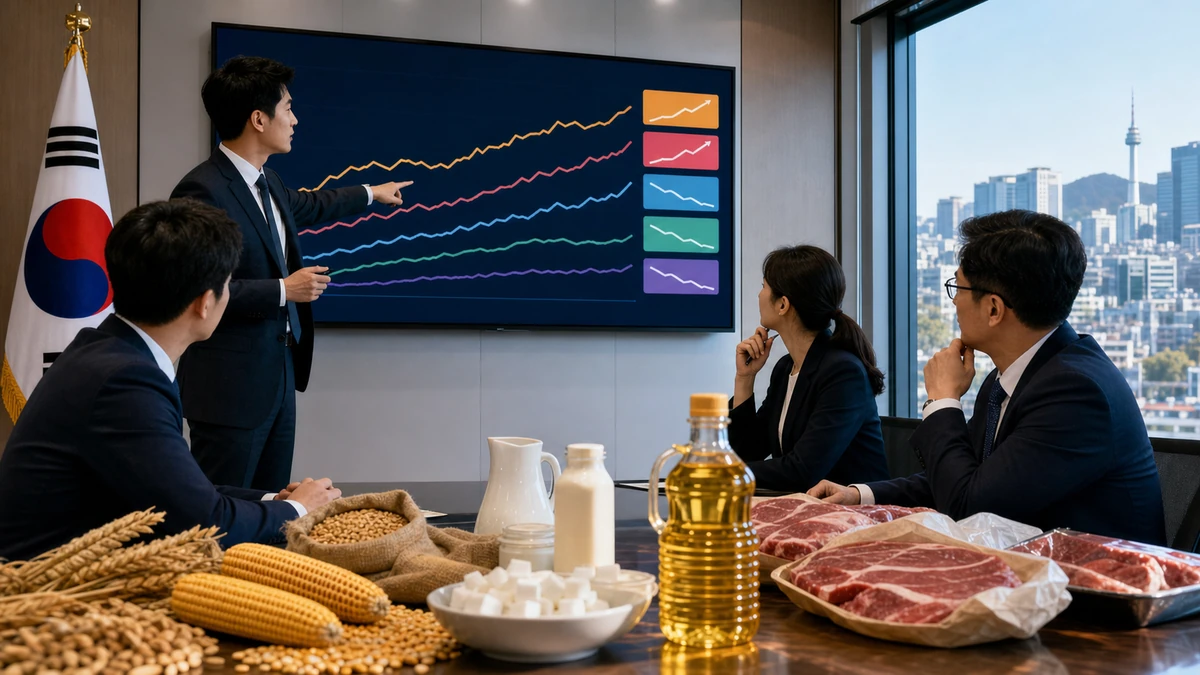
A global food gauge ticks down, but the bigger story is what it means for South Korea
Global food prices edged lower for a second straight month in the latest reading from the U.N. Food and Agriculture Organization, a modest shift that matters more than the headline number may suggest for South Korea, one of Asia’s most trade-dependent economies.
South Korea’s Agriculture, Food and Rural Affairs Ministry said the FAO Food Price Index came in at 130.3 for last month, down 0.3% from 130.8 a month earlier. The index tracks international prices for a basket of major food commodities and uses the 2014-2016 average as its baseline of 100. In plain terms, that means food prices in global markets are still well above where they were in the mid-2010s, even if the latest direction is slightly downward.
For American readers, the number is best understood as something like a global cousin to the inflation signals that can shape everyday costs at home, from cereal and restaurant meals to meat counters and bakery aisles. It is not a direct measure of what families in Seoul or Busan pay at the checkout line any more than commodity prices immediately dictate what shoppers in Chicago or Atlanta see on shelf tags. But it is an important early indicator of where cost pressures may be heading.
That is especially true in South Korea, where food manufacturers, restaurant chains and retailers are closely tied to international supply chains. The country imports a large share of its food inputs and animal feed, which means swings in global grain, dairy, sugar and oilseed markets can ripple quickly into corporate planning and, over time, consumer prices.
The latest update therefore lands as more than a dry statistical release. It offers a snapshot of how one of the world’s most globally connected consumer economies is reading the international food market at a moment when households remain sensitive to inflation and policymakers are still watching costs with unusual intensity.
The most important takeaway is not that food prices are suddenly cheap again. They are not. The more meaningful development is that the recent run-up appears to be cooling, at least for now, and that the cooling is uneven across categories. That distinction matters for a country like South Korea, where the average family’s sense of inflation is often shaped less by one index than by the price of staple foods, takeout meals and frequently purchased household items.
Why this matters in South Korea, where global price swings travel fast
South Korea is often described abroad through the lens of semiconductors, automobiles, K-pop and streaming dramas. But beneath the country’s image as a tech powerhouse is a practical economic reality: It is deeply exposed to imported raw materials, including key food inputs. That makes international food prices more than an abstract metric for economists.
When global grain prices fall, that can eventually help relieve pressure on flour, noodles, bread, snack foods, livestock feed and a long list of processed food products. When edible oil prices rise, the effect can show up in fried foods, packaged meals, food manufacturing and restaurant costs. Meat prices, likewise, influence not just what consumers pay at grocery chains and butcher counters, but also the margins of restaurants that operate in one of the world’s most vibrant dining cultures.
To understand why this gets such close attention in Seoul, it helps to know how seriously South Korea treats inflation in everyday life. Food carries an outsized political and social resonance. Much as Americans may talk about egg prices, gas prices or the cost of a fast-food meal as shorthand for the economy, South Koreans closely watch the price of grocery basics and common restaurant dishes. News about international food costs is not just for commodity traders. It is part of a broader public conversation about household pressure.
There is also a cultural layer that can be easy for outside audiences to miss. Eating out is central to modern Korean urban life, from office lunches to late-night meals to family outings. Prepared foods, convenience store meals and delivery culture are woven tightly into daily routines. That means changes in wholesale costs do not stay confined to supermarket shelves. They can affect lunch prices, bakery items, school food service and the economics of small business owners who run restaurants and cafes.
In that sense, the FAO index matters in Korea much the way commodity and shipping costs matter in the United States before they filter into broader inflation reports. The ministry’s decision to highlight the update is also telling. It reflects how the South Korean government often acts as an interpreter of global economic signals, explaining what international data may mean for domestic prices, corporate costs and public expectations.
That role is particularly visible during periods of inflation stress. Officials do not merely cite international numbers; they translate them into the language of household budgets, food company procurement and price stability. For a country with limited agricultural land relative to its population and a strong dependence on imported inputs, that translation exercise is an essential part of economic management.
Grains fall, oils and meat rise: Why one average number can hide very different stories
The latest FAO reading points to a familiar but often misunderstood reality: There is no such thing as a single global food market moving in perfect unison. Prices diverge sharply by category, and that split is what makes the current moment more complicated than a simple “inflation is easing” headline.
According to South Korea’s ministry, the grain price index fell to 110.2, down 3.5% from the previous month. That is the standout figure in the report. Grain prices are foundational because grains sit at the base of so many food systems. Wheat and corn help determine the cost of flour, noodles, bread products, snack foods and animal feed. When grain prices soften, the potential effects can spread broadly, even if the benefits take time to appear in retail prices.
For Korea, that is a welcome sign. Grain costs feed into the economics of large food manufacturers as well as the smaller firms behind packaged meals, bakeries and convenience foods that are ubiquitous in Korean cities. Cheaper grain does not automatically mean lower sticker prices next week, but it can ease some of the cost pressure that has built up over months.
Dairy and sugar prices also declined, another positive sign for the processed food sector. Those categories matter because they influence a wide range of consumer goods, from yogurt and milk-based drinks to desserts, breads and confectionery products. If you think about the role sugar and dairy play in American supermarket aisles, the Korean parallel is similar, even if the product mix differs.
But the report also delivered a cautionary note. Vegetable oils and meat prices rose. That matters because those categories are deeply embedded in both home cooking and food service. Edible oils are used across an enormous range of products and restaurant operations. Meat prices can be especially visible in South Korea, where barbecue culture is not just a dining preference but a social institution.
For readers less familiar with Korean food culture, meals centered on grilled pork belly, beef or chicken are a routine part of social and business life. Meat is not merely another grocery category; it is tied to one of the most recognizable forms of Korean dining. If global meat costs stay elevated, restaurants may feel pressure even as grain prices provide relief elsewhere.
This is why the decline in the overall FAO index should be treated carefully. A lower average can still coexist with real pain in specific categories. A food manufacturer that relies heavily on flour and sugar may see improving conditions. A restaurant chain dependent on cooking oil and meat may see the opposite. For consumers, the experience can be equally mixed: lower pressure in some products, little change or higher prices in others.
That unevenness is one reason inflation can feel confusing in real life. Governments and central banks talk in averages. Shoppers live in categories. The Korean government’s emphasis on the split across commodities is a recognition of that gap.
Two months of decline after three months of gains: A pause, not a victory lap
The latest number also matters because it extends a recent turn in direction. The FAO index had risen for three consecutive months from February through April before slipping in May. The June reading, released in early July, marks the second straight monthly decline.
That sequence suggests the global food market may be catching its breath after a period of renewed upward pressure. In the language of markets, this looks less like a collapse in prices than a pause in momentum. In the language of everyday economics, it means the squeeze is no longer intensifying across the board.
That distinction is important for policymakers in Seoul. South Korea’s economic managers are not simply looking for prices to fall in one month; they are watching for trend changes that could alter business decisions and inflation expectations. A second consecutive decline provides a little more confidence than a one-off dip would.
Still, nobody in government or industry is likely to treat 130.3 as a comfortable level. Because the index baseline is 100, the current reading remains substantially elevated relative to the 2014-2016 average. That means the world is still operating in a higher-cost food environment than the one that prevailed a decade ago.
For Americans, a useful comparison would be the difference between inflation slowing and prices returning to their old levels. Consumers know those are not the same thing. If the rate of increase cools, households may feel some relief from the pace of change, but they are still living with higher absolute costs. South Korean households face a similar reality here.
So the significance of the latest report is not that food inflation has disappeared. It is that the pressure may be easing at the margin after a renewed spring increase. In a country where imported cost swings can move quickly through supply chains, even modest changes in direction can influence business strategy, inventory management and public sentiment.
The message, in other words, is cautious encouragement. The market appears less overheated than it did a few months ago. But the level remains high enough, and the category splits sharp enough, that a broad sense of relief would be premature.
What consumers and companies may feel next, from supermarkets to street-side restaurants
The industries watching these numbers most closely in South Korea are food manufacturers, retailers, restaurant operators and distributors. For them, the FAO index is not a headline to glance at and forget. It is part of the background data that shapes purchasing plans, pricing strategy and margin forecasts.
If grain prices continue to ease, that could eventually benefit businesses involved in flour-based products, animal feed, instant meals, baked goods and snack manufacturing. Korea has a highly developed processed food sector, and costs for imported agricultural inputs can play a major role in profitability. Lower grain prices may give some companies more room to absorb expenses without passing them directly to consumers.
But companies do not price products based on one input alone. Freight costs, currency movements, wages, energy expenses and existing inventories all matter. A food company that bought raw materials at higher prices months ago may not be in a position to cut retail prices immediately even if global benchmarks soften. Retail pricing also depends on competition, contracts with suppliers and demand conditions.
This is one of the most persistent misunderstandings around commodity news. Consumers often assume lower input prices should quickly produce lower shelf prices. In reality, the transmission is slow, uneven and often incomplete. The same is true in the United States, where falling wholesale prices do not instantly translate into cheaper groceries.
In South Korea, the delay can be especially noticeable because many households are closely attuned to “felt inflation” — the day-to-day experience of what common items cost. A lower global index may improve the outlook for manufacturers long before it changes what a shopper pays for bread, cooking oil, ramen or a restaurant lunch.
Restaurants, meanwhile, may experience a more complicated picture. Korea’s dining sector ranges from giant franchise operators to small family-run establishments and neighborhood eateries. Those businesses are affected not only by food commodity prices but also by labor costs, rent and delivery platform fees. Even if grain and sugar prices decline, a rise in meat and edible oil costs could keep pressure on menu prices.
That matters in a society where eating out is woven deeply into everyday social life. Korean office workers often dine out in groups, students rely heavily on convenience foods and quick meals, and delivery remains a powerful part of urban consumption habits. Price changes in the food service sector therefore have an immediate public visibility that goes beyond the household kitchen.
For consumers, the most realistic near-term outcome is not a broad-based drop in food bills but a more differentiated environment. Some categories may stabilize. Others may continue climbing. The overall sense of relief, if it comes, is likely to arrive gradually rather than all at once.
The government’s role in translating global data into domestic economic language
South Korea’s Agriculture, Food and Rural Affairs Ministry occupies a role that may be somewhat broader than many Americans would assume from its name. It is not simply an agriculture department in the narrow sense. It is also a key government voice on food supply, livestock policy, rural development and the price environment surrounding essential food items.
When the ministry highlights the FAO index, it is effectively doing two things at once. First, it is relaying an international benchmark issued by a U.N. agency. Second, it is signaling how officials believe the data should be understood inside Korea’s domestic economy.
That is an important function in a country where global inputs play such a large role in domestic price formation. The government cannot control world commodity markets, but it can shape expectations, guide public interpretation and adjust policy responses accordingly. Those responses may include consultations with industry, monitoring of imported raw material costs and public messaging aimed at calming inflation concerns without overpromising relief.
There is a broader lesson here for international readers. Economic globalization is often discussed in abstract terms, but stories like this show what it looks like in practice. A U.N. index moves slightly lower. A ministry in Seoul issues a statement. Food companies, retailers and consumers try to infer what it might mean for their costs. That chain of interpretation is the real infrastructure of a globalized consumer economy.
South Korea is particularly instructive because it is both highly advanced and highly exposed. It has world-class manufacturing, dense urban consumption and sophisticated retail systems, but it must still pay close attention to the price of imported grains, oils, dairy products and feed. That combination makes the country a useful case study in how international commodity markets influence everyday life in a modern economy.
It also helps explain why apparently modest changes can command outsized attention. A 0.3% monthly decline may sound small. In context, though, it is part of a much larger effort to gauge whether cost pressures are building, plateauing or easing. In a politically sensitive inflation environment, those distinctions matter.
What the latest report does — and does not — say about inflation ahead
The newest FAO reading gives South Korea some reason for guarded optimism. A second straight monthly decline suggests the global food market is no longer moving in a single upward direction. The sharp drop in grains is especially notable because of how broadly those costs affect food production.
At the same time, the report does not justify a sweeping conclusion that food inflation is solved. The index remains elevated compared with its baseline. Oils and meats are still rising. And the path from global commodity prices to domestic consumer prices is filtered through exchange rates, shipping, wages, energy costs and business decisions.
That is why the current moment is best described as a partial easing rather than a turnaround. The pressure looks lighter in some corners of the market, but not gone. For Korean officials, businesses and consumers, the prudent reading is to separate trend from level: the trend has improved somewhat, but the level remains high.
For Americans following Asia’s economic story, this report is a reminder that South Korea’s experience can illuminate bigger global patterns. Like other import-reliant economies, it is living in the aftermath of a period when food and energy volatility reshaped business planning and household expectations. The country’s close attention to the FAO index reflects how carefully governments now watch the chain between global commodities and local politics.
In practical terms, the latest numbers may give Korean food companies a little breathing room and offer officials a modestly better backdrop for talking about price stability. But they are unlikely to change the mood overnight at supermarkets or in restaurant districts. Consumers tend to notice prices when they rise sharply and trust declines only after repeated evidence.
That is true in Seoul just as it is in the United States. Inflation is experienced one grocery basket, one takeout order and one family budget at a time. The FAO index can hint at where those experiences may be headed, but it cannot erase the gap between a softening trend and still-high costs.
For now, South Korea is receiving a cautious signal from the global food market: some pressure is easing, especially in grains, but enough stress remains in oils and meat to keep policymakers, businesses and households on alert. In an economy this plugged into the world, even a small dip in an international index is worth watching — not as a declaration of victory, but as an early clue about what may come next.
Comments
Post a Comment