Korean cooking shows are changing the recipe: After Netflix success, the drama is no longer just on the plate
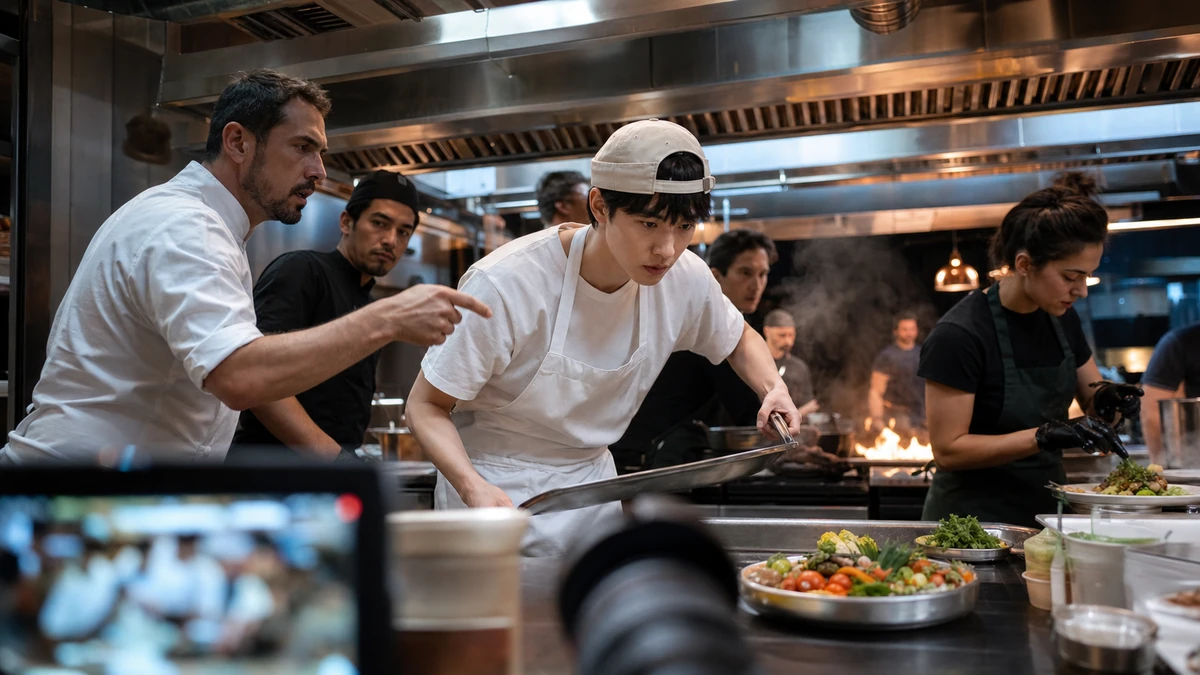
From food TV to workplace drama
South Korean cooking shows are entering a new phase, and the shift says as much about global television as it does about food. For years, Korean food entertainment largely followed a formula familiar to viewers in the United States: chefs demonstrated recipes, celebrities ate enthusiastically on camera, judges ranked dishes, and viewers were invited to admire technique, crave the meal and perhaps add a restaurant to their travel wish list. In South Korea, that broad category of food-centered programming has often been referred to as “cookbang,” a term combining the English word “cook” with the Korean shorthand “bang,” from “broadcast.” It sits alongside the better-known “mukbang,” or eating broadcasts, in which hosts consume food on camera while chatting with audiences.
Now, that format is evolving. The latest wave of Korean chef-centered variety shows is moving away from a narrow focus on taste and culinary prestige and toward something more universally legible: pressure, embarrassment, adaptation, teamwork and survival at work. The dish still matters, but increasingly it is a vehicle for a bigger story. What audiences are really being sold is not simply flavor. It is suspense.
That change has accelerated in the wake of the global success of Netflix’s “Culinary Class Wars,” a Korean food competition series known in Korean as “Black and White Chef.” The show demonstrated that Korean cooking programs can travel internationally without depending entirely on local celebrity recognition or insider cultural knowledge. A hot kitchen, a ticking clock, a bruised ego and a beautiful plate are easy to understand in Los Angeles, London or Manila, even if viewers do not know the chef’s résumé.
According to industry reporting in South Korea, broadcasters and streaming platforms alike have responded by rolling out more chef-themed programs. But rather than simply cloning another cooking contest, many are experimenting with formats that place chefs in unfamiliar environments and ask them to prove themselves all over again. The result is a genre that feels less like classic food TV and more like a hybrid of “Top Chef,” “Undercover Boss,” a workplace docuseries and, at times, a survival show.
For American viewers trying to understand why Korean food programming is suddenly taking on this shape, the answer lies partly in the larger DNA of Korean entertainment. South Korean variety shows have long been built on a simple but durable engine: take someone skilled or famous, strip away the comfort of status, drop them into a difficult setting, and watch what happens. The pleasure is not only seeing excellence. It is seeing vulnerability.
The rise of the chef as the new underdog
One of the clearest examples of this new direction is tvN’s “Undercover Chef,” which premiered in May. The premise is elegantly simple and tailor-made for reality TV: established Korean chefs, including well-known figures such as Sam Kim, Jeong Ji-seon and Kwon Sung-jun, hide their identities and work as entry-level kitchen staff in restaurants overseas. In Korean terms, they are effectively sent back to the position of “maknae,” the youngest or lowest-ranking member of a group. The concept of the maknae is deeply familiar in Korean workplaces and pop culture, where age and seniority often shape social dynamics. For American readers, the closest equivalent might be the intern who gets the least glamorous tasks, or the new line cook at the bottom of the kitchen hierarchy.
That rank reversal is central to the show’s appeal. These are chefs who have already achieved domestic fame and professional respect. In South Korea, their names carry weight. But inside a foreign kitchen where another language is spoken, another system runs the room and nobody is impressed by a television reputation from Seoul, their status evaporates. They are reduced to what they can do in the moment.
The tension comes not from a judge taking a bite and declaring a winner, but from watching a professional forced to operate without the protection of prestige. A chef fumbles because instructions are delivered in an unfamiliar language. A timing mistake disrupts service. A menu idea that might thrive in Seoul does not immediately translate abroad. The emotional hooks are panic, pride and recovery.
That is a notably different product from older food programming, in which the chef often occupied an almost instructional position: expert, polished, authoritative. In the new Korean format, the star chef is deconstructed before being rebuilt. The narrative arc is not “Look how talented this person is.” It is “Can this person prove their talent again when all the usual signals of authority have been stripped away?”
In a media environment saturated with competition shows, that framing matters. It turns a cooking program into a story about work and identity. It also makes the shows more accessible internationally. Viewers do not need to know who a celebrity chef is to understand the humiliation of making mistakes on the job or the satisfaction of gradually earning respect.
Why ratings matter in a crowded Korean TV market
The audience response suggests the formula is working. “Undercover Chef” debuted to modest ratings by South Korean standards, then climbed steadily, eventually posting a new high and holding the top spot in its time slot across cable and comprehensive programming channels for several consecutive weeks, according to local industry data. Those numbers do not just indicate that people enjoy watching food on television. Korean viewers have had plenty of that for years. They suggest that viewers are responding to a growth narrative.
Each episode reportedly asks chefs to accomplish a high-pressure mission within days, including getting their own dish onto the featured restaurant’s main menu. That setup does what all successful reality structures do: it creates a measurable goal, a clear deadline and real consequences. A plate is no longer just delicious or disappointing. It is tied to approval, revenue, legitimacy and personal redemption.
For Americans, it may be useful to think of the appeal as adjacent to workplace competition shows rather than traditional travel-and-food programming. The emotional engine is closer to watching a contestant on “Project Runway” rebuild after a failed challenge than watching a host stroll through a market praising local ingredients. The kitchen becomes a test site for adaptability.
This is also happening at a moment when South Korean broadcasters are under pressure to distinguish their programming from what is readily available on global streaming services. Domestic channels still care intensely about weekly ratings and time-slot performance, while streamers often chase global buzz, bingeability and export potential. A chef program built around strong missions, visible stakes and fish-out-of-water tension can serve both. It can keep traditional TV viewers coming back week after week while also offering the kind of instantly understandable concept that travels well on a platform like Netflix.
In that sense, the success of these shows is not just about food. It is about format engineering. Korean producers have become especially skilled at taking culturally specific material and packaging it around broadly human emotions. The audience may not know the hierarchy inside a Korean restaurant group or the domestic fame of a particular chef. But nearly everyone understands what it means to start over.
After Netflix, Korean food shows are speaking a more global language
The breakthrough of “Culinary Class Wars” helped clarify an important point for the Korean television business: food content does not need to remain local in order to feel authentic. In many ways, cooking is one of the easiest genres to export. It is visual, kinetic and relatively light on dialogue compared with a political drama or a wordplay-heavy comedy. Steam, knives, plating and stress read on screen regardless of subtitles.
But the Korean industry’s response has not been to keep remaking the same competition. Instead, producers appear to be widening the grammar of chef entertainment. “Undercover Chef” folds in a disguised-employment premise. Another program, “Street Restaurant Fighter,” reportedly shifts the contest away from pure taste and toward actual sales performance, asking participants not just to cook well but to sell well.
That is a meaningful distinction. In older food television, judges acted as final authorities. The audience accepted that a dish was superior because experts said so. In these newer formats, the standards of success are more varied and arguably more democratic. Can the chef survive the demands of a working kitchen? Can the dish earn a place on a real menu? Can customers be persuaded to spend money on it? Can the team function under pressure?
Those questions broaden the genre from culinary entertainment into something closer to labor drama and entrepreneurship television. And that shift reflects a wider truth about contemporary viewers: many are less interested in elite pronouncements than in process, friction and proof. It is not enough to hear that something tastes good. Audiences want to see what it cost to get there.
That emphasis also helps bridge cultural differences. A foreign viewer may not recognize every Korean ingredient or understand every nuance of local chef celebrity culture. But the anxiety of entering an unfamiliar workplace, the frustration of being underestimated and the drive to win recognition are nearly universal themes. South Korean producers seem increasingly aware that universal emotions, more than any single cuisine, are what make a show travel.
Food is still the hook, but labor and commerce are the story
What is especially striking about the newest chef shows is how directly they foreground labor. In the United States, restaurant culture on television often swings between glamour and catastrophe. We see either polished fine-dining ambition or explosive meltdowns. Korean chef variety programming is now carving out a somewhat different lane: the repetitive, hierarchical, physically demanding work of the kitchen itself becomes the entertainment.
That does not mean these shows are documentaries about labor conditions in any strict sense. They remain highly produced entertainment. But they increasingly ask viewers to pay attention to the mechanics of work rather than just the romance of cuisine. A chef takes orders, misreads the room, falls behind, cleans up mistakes, learns local rules and gradually becomes useful. That is a very different fantasy from the old image of the inspired genius effortlessly creating signature dishes.
There is something timely about that. In an era shaped by economic anxiety, side hustles, startup culture and relentless conversations about burnout, audiences may be more receptive to stories that make visible the labor behind polished results. The appeal of a chef struggling at the bottom of a new hierarchy is not entirely different from the appeal of office dramas, entrepreneurial competitions or makeover shows built around reinvention. These are narratives about competence under pressure.
“Street Restaurant Fighter,” with its emphasis on sales, pushes the idea even further. Here, taste alone is not the final metric. A dish has to perform in the marketplace. Customers have to choose it. Revenue becomes a narrative scoreboard. For American viewers, that may recall the blend of cooking and business found in programs that ask contestants to run pop-ups, food trucks or limited-time menus. But the Korean version appears to be leaning especially hard into the idea that cooking is inseparable from commerce.
That matters because it reframes the chef not just as an artist, but as a worker and operator. The genre begins to overlap with business reality television, a move that may be particularly attractive to streaming platforms looking for formats with obvious stakes and repeatable structures. The visual pleasure of food remains intact, but it is now embedded in a system of deadlines, hierarchies and financial results.
Why American audiences may find this shift familiar
For viewers in the United States, none of this is entirely alien. American television has long understood that expertise becomes more compelling when placed under duress. Sports broadcasts thrive on pressure. Home renovation shows thrive on deadlines. Cooking competitions thrive on mistakes as much as on mastery. What South Korea is doing now is adapting that logic to its own entertainment traditions and then sharpening it for global circulation.
There is also a cultural resonance here that may connect with international audiences in an unexpectedly deep way. South Korean dramas and variety shows often excel at portraying perseverance, humiliation followed by growth, and group dynamics shaped by hierarchy. Those themes are now being threaded into food television. Instead of a chef simply serving as a symbol of taste or refinement, the chef becomes a protagonist in a story about losing face, learning quickly and earning a second chance.
That emotional architecture may be one reason the new format feels so portable. Even when the setting is distinctly Korean, the core experience is recognizable. Anyone who has started a new job, struggled in a foreign environment or felt their past accomplishments suddenly count for very little can understand the stakes. The kitchen becomes a metaphor for the modern workplace: fast, unforgiving, collaborative and relentlessly evaluative.
It is also worth noting that these programs arrive amid sustained global interest in Korean culture more broadly. K-pop opened doors. Korean dramas deepened audience habits. Oscar-winning films and internationally recognized series expanded the map even further. Food was always part of that ecosystem, but often as an accessory — something fans encountered while watching another kind of Korean content. Now, food programming itself is becoming a stronger export category, not just because kimchi, barbecue and ramyeon are increasingly familiar abroad, but because the narrative packaging has become more legible to non-Korean viewers.
A new invitation from Korean entertainment
The broader takeaway is that South Korean chef variety shows are no longer asking audiences only one question: What looks delicious? Increasingly, they are asking a more dramatic one: Who can adapt, endure and be recognized again in an unfamiliar world?
That is a smart evolution for a genre that could easily have stalled out in repetition. There are only so many ways to tell viewers that one dish tastes better than another. There are far more ways to explore what happens when a respected professional is dropped into a setting where reputation means nothing. By shifting attention from the finished plate to the messy path that produces it, Korean producers have expanded what food television can do.
The trend also reveals something larger about the current state of Korean entertainment. The industry is increasingly adept at converting local textures into global emotional cues. A Korean celebrity chef working incognito in an overseas restaurant may be a highly specific setup, but the feelings it generates — anxiety, ambition, embarrassment, resilience — are universal. That is precisely the kind of translation, not of language but of emotion, that has powered the international rise of Korean pop culture.
For broadcasters and streamers, the appeal is obvious. Food offers immediate visual pleasure. Competition supplies momentum. Workplace struggle creates emotional depth. Cultural collision adds curiosity. Together, those elements form a package that can satisfy domestic ratings demands and international streaming ambitions at the same time.
For viewers, the appeal may be even simpler. Good television, whatever the genre, is often about watching people tested in ways that reveal character. In South Korea’s newest cooking shows, the test is no longer just whether a chef can make something delicious. It is whether that chef can start from the bottom, survive the pressure and prove, one more time, why they belong in the kitchen. That story does not require a shared language. It only requires an audience that knows what it means to begin again.
Comments
Post a Comment