South Korea plans a new K-drama soundtrack festival at the edge of the DMZ, turning screen nostalgia into a travel draw
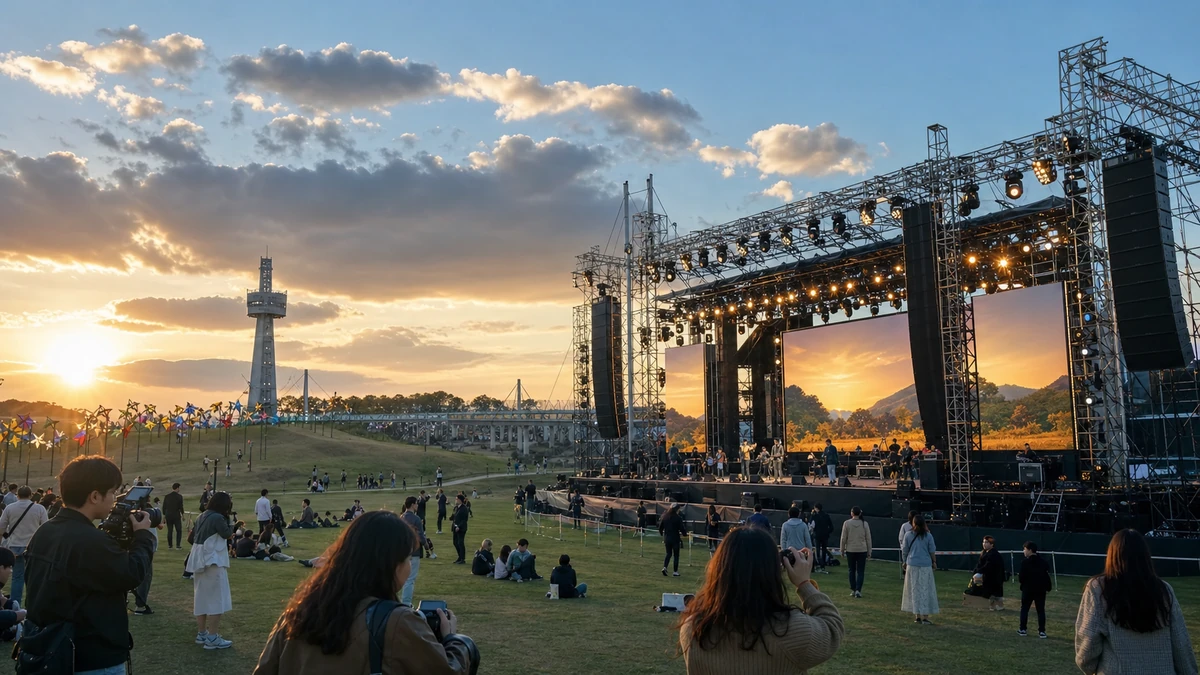
A new kind of Hallyu festival is coming to South Korea
South Korea is planning a new festival built around one of the most emotionally potent parts of its global entertainment boom: the music that lingers after the credits roll. The Gyeonggi Tourism Organization said it will hold the 2026 GHOST Festival from Oct. 9 to Oct. 11 at Pyeonghwa Nuri Park in Imjingak, a site in the border city of Paju that sits near the Korean Demilitarized Zone, or DMZ.
The name GHOST is an acronym for “Gyeonggi Hallyu Original Sound Track,” a deliberate attempt to package two of South Korea’s strongest international exports — pop-cultural storytelling and destination travel — into one event. Hallyu, often translated as the “Korean Wave,” refers to the global spread of South Korean popular culture, from K-pop and television dramas to films, beauty products and food. In the United States, the phenomenon is no longer niche. Netflix viewers have helped propel Korean series into the mainstream, Oscar audiences watched “Parasite” make history, and streaming platforms have made Korean soundtracks available to listeners who may not speak the language but know exactly which scene a song belongs to.
That is the opportunity local officials appear to be chasing. Rather than centering the festival on idol groups or celebrity fan meetings — familiar pillars of Korean Wave tourism — organizers are betting that original soundtracks, known widely in Korea as OSTs, can do something slightly different. They can summon memory. They can bring back a heartbreak scene from a tear-jerker series, a slow-burn confession from a romance, or the tension of a thriller with just a few piano notes. And, in the tourism industry’s ideal scenario, they can also persuade fans to book a trip.
The event is expected to feature concerts by prominent Korean soundtrack artists, along with an OST-themed experience zone, a Hallyu content market, a Korean food area and photo installations designed for social media sharing. Ticket prices announced by the tourism organization are 120,000 won for a one-day pass, 180,000 won for a two-day pass and 240,000 won for a three-day pass, with a 20% early-bird discount for one-day tickets.
For American readers, the easiest comparison may be to a fan convention crossed with a film-music festival and set at a site loaded with national symbolism. Think less Coachella and more a carefully branded cultural destination: part concert, part tourism campaign, part emotional pilgrimage for viewers who fell in love with Korean storytelling from thousands of miles away.
Why soundtrack music matters so much in Korean dramas and films
To understand why South Korea would build a festival around OSTs, it helps to understand how central music is to the viewing experience. In American television, theme songs and carefully selected needle drops can become iconic, but Korean dramas often use recurring ballads and character motifs in a more direct, emotionally legible way. A single song may reappear across multiple episodes, attached to a romantic arc, a family conflict or a tragic reveal, until it becomes inseparable from the story itself.
For longtime fans of Korean dramas, that pattern is instantly recognizable. A vocal swell can signal longing before a character says a word. A stripped-down acoustic track can turn an ordinary street scene into a memory. By the time a series becomes a hit abroad, its soundtrack often travels with it. Fans may not remember every plot detail, but they remember the song that played when the couple reunited in the rain or when a lead character walked away for what seemed like the last time.
That makes soundtrack music unusually portable as a tourism product. It is not as dependent on the physical presence of stars, and it is less restricted by the release cycle of any one group or actor. It is also tied to story worlds that fans already revisit on streaming services. In practical terms, a festival focused on OSTs can appeal to viewers of Korean romance dramas, historical epics, thrillers and films all at once, pulling from a wider and more cross-generational audience than an event narrowly built around a single artist or franchise.
There is also a business logic behind the format. Korean Wave tourism has already evolved through several stages. First came interest in filming locations — cafes, beaches, palaces and neighborhoods made famous by hit dramas. Then came more formalized fan travel tied to concerts, idol merchandise and studio tours. A soundtrack festival suggests a next phase: selling not just a place or a celebrity, but a feeling. It invites visitors to step inside the emotional afterglow of Korean content and experience it in a physical setting.
In the streaming era, that is a savvy move. Viewers in Los Angeles, Chicago or London can binge a Korean series over a weekend and immediately add its songs to a playlist. A festival like GHOST tries to close the loop by saying, in effect: if the soundtrack means something to you, come hear it where the broader story of contemporary Korea can also be felt.
Why the location matters: Imjingak, Paju and the meaning of the DMZ
The location may be the festival’s most distinctive feature. Pyeonghwa Nuri Park in Imjingak is not just another outdoor venue. It sits in Paju, a city near the border with North Korea, in one of the most symbolically charged regions in South Korea. For readers less familiar with the Korean Peninsula, the DMZ is the buffer zone established after the Korean War armistice in 1953. Despite the name, it is one of the most militarized borders in the world, separating North and South Korea along a strip that has come to represent both unresolved division and the hope, however distant, of peace.
Imjingak has long served as a public-facing space where those meanings are made visible. It is a place where South Korean families, especially older generations, have reflected on separation from relatives in the North. It is also a place tourists visit to better understand the peninsula’s still-unfinished war and the peculiar reality of a country that is economically modern, culturally influential and yet technically still in a state of armistice rather than formal peace.
That makes the choice of venue anything but incidental. Organizers said they want to connect the emotional pull of Korean drama and film music with the symbolism of the DMZ and create a global cultural tourism festival that blends content and place. In other words, this is not simply a concert that happens to be near the border. The border itself is part of the pitch.
For an American audience, imagine staging a major film-and-music event not at a generic fairground but at a site bound up with national memory — a place that immediately evokes conflict, loss and civic aspiration. The festival’s organizers appear to believe that pairing a soft-power product like soundtrack music with a hard-history location like Imjingak will give the event both emotional texture and international differentiation.
There are risks to that strategy. The DMZ is not a blank canvas, and any attempt to turn a politically and historically sensitive area into a festival brand must navigate questions of tone. But there is also a reason such a pairing may resonate. Korean popular culture, especially on television, has long excelled at folding big historical emotions into intimate stories. The same country that exports glossy romances and addictive thrillers also lives with the daily reality of a divided peninsula. Holding a Hallyu festival in Paju underscores that modern South Korea is not just a content factory; it is a place with a specific, unresolved history.
How officials hope to turn fandom into destination travel
The Gyeonggi Tourism Organization is framing the festival as more than an entertainment event. Officials have described it as a global model that connects peace and Hallyu, and they expect more than 50,000 domestic and international visitors. Those numbers are ambitious, but the broader strategy is familiar to tourism planners around the world: use a powerful cultural brand to encourage longer stays, wider spending and deeper engagement with a region outside the capital’s usual tourist circuits.
Gyeonggi Province surrounds Seoul and is often overshadowed by the capital in the imagination of foreign visitors. But it includes sites that tell a larger story about South Korea, from border tourism in Paju to historical fortresses and urban districts that benefit from proximity to Seoul without being fully defined by it. A three-day festival in October gives travelers a reason to build an itinerary around the area rather than treating it as a side trip.
The ticket structure reinforces that idea. Organizers are not pricing this as a one-night concert alone. By offering one-, two- and three-day passes, they are nudging visitors toward a stay-over model, where music is only one part of the weekend. The experience zones, food offerings and content market point in the same direction. Fans are meant to arrive, linger, eat, shop, take photos and post them online, effectively extending the festival’s marketing reach through user-generated content.
That matters because Korean Wave tourism is driven as much by personal storytelling as by formal advertising. Travelers do not simply say they visited South Korea. They say they ate the foods they had seen on-screen, took a photo at a recognizable location, heard a live version of a favorite song, or stood in a place that made a country’s history feel real. The better a destination can turn those experiences into shareable memories, the more likely it is to keep attracting new visitors.
For international fans, especially those coming from North America, the appeal may lie in how neatly the event packages several motivations into one trip. A traveler can come for the music, encounter Korean food in a casual festival setting, browse Hallyu-related merchandise and see a location tied to one of Asia’s most enduring geopolitical fault lines. That is a denser and arguably more distinctive travel narrative than a standard weekend concert in a large city arena.
What visitors can expect from the festival experience
Details remain limited, and organizers have not yet released a full performance lineup. Still, the broad outline suggests a festival designed with both die-hard fans and culturally curious travelers in mind. The main attraction is the GHOST concert, which officials say will feature top Korean OST artists. In the Korean entertainment ecosystem, soundtrack singers can range from household-name balladeers to K-pop idols, indie vocalists and actors who have lent their voices to drama tracks. A strong lineup would be essential to turning the concept into a must-attend event.
Beyond the concert stage, the supporting features are classic components of Korea’s event culture, where festivals are often built as immersive environments rather than single-purpose shows. The OST experience zone is likely meant to deepen engagement with the music, perhaps through listening installations, drama-themed exhibits or interactive spaces tied to well-known titles. The Hallyu content market could serve as a retail and promotional space where visitors browse entertainment-related products, local goods or branded items linked to Korean popular culture.
The K-food zone may sound like a standard festival add-on, but for foreign visitors it can be a practical gateway into Korean culinary culture. In the United States, Korean food has become far more visible over the last decade, especially through barbecue, fried chicken and dishes like bibimbap and tteokbokki. But a festival food area in Korea offers a different encounter: not just recognizable restaurant staples, but the social atmosphere of eating at an outdoor cultural event, where snacks, street-food style dishes and regional flavors become part of the outing itself.
Photo zones, meanwhile, are not trivial extras. In East Asian event design, they are often central to how audiences document and validate an experience. A well-designed photo spot can circulate far beyond the festival grounds through Instagram, TikTok and other platforms, especially among international fans who use visual proof of presence as part of their travel narrative. In that sense, the photo zone is both a memory device and a marketing tool.
If the organizers get the balance right, the event could function as a layered cultural introduction. A devoted fan may come to hear the song that defined a beloved drama, while a casual traveler may leave with a sharper understanding of how Korean entertainment, food culture, tourism and history are being deliberately woven together.
The broader significance for South Korea’s cultural strategy
The GHOST Festival also says something larger about where South Korea sees the future of its soft power. For years, Hallyu has been discussed mainly in terms of exports: music streams, box office wins, platform deals and brand influence. But as the Korean Wave matures, the next challenge is converting cultural affection into physical visits and regional economic activity. That means designing experiences that can pull people beyond Seoul and beyond one-off events.
South Korea has several advantages in that effort. Its entertainment industries are globally visible, its transportation infrastructure is strong, and its tourism authorities have become increasingly sophisticated about packaging culture as an on-the-ground experience. But competition is growing. Many countries now use music, film and food as tourism gateways. To stand out, a destination needs a concept that feels both unmistakably local and legible to outsiders.
This festival checks many of those boxes. Soundtrack music is instantly understandable to global audiences shaped by streaming culture. The DMZ is one of the rare Korean reference points that many non-Koreans recognize even if they know little else about the peninsula. And the emotional logic of the event — take the songs people already love and place them in a meaningful Korean setting — is easy to grasp across language barriers.
There is also a subtle shift here in how Korean identity is being presented. Rather than separating glossy cultural exports from the harder edges of history, the festival concept places them side by side. It suggests that visitors can consume Korean pop culture while also confronting a place marked by war, division and the aspiration for peace. That is a more complex story than the image of South Korea as simply the home of catchy songs, beauty trends and binge-worthy shows.
Whether audiences embrace that complexity remains to be seen. Much will depend on execution: the artist roster, transportation planning, multilingual accessibility, crowd management and the event’s ability to serve both domestic visitors and foreign fans. But even at the announcement stage, the idea is noteworthy. It reflects a country increasingly confident in using its entertainment power not only to shape taste abroad, but to guide how the world physically experiences Korea on Korean soil.
Why October in Paju could become a new pilgrimage point for fans
For international viewers who discovered South Korean storytelling through subtitled dramas and streamed films, the promise of the GHOST Festival is straightforward. It offers a chance to step out of the living room and into a place where the music, the imagery and the national backdrop intersect. The songs that once underscored a fictional romance or heartbreak would be heard live in a location that carries very real historical weight.
That combination could be especially compelling in autumn, when Korea’s cooler weather and changing foliage already make it a popular travel season. The dates, Oct. 9 through Oct. 11, give fans a concrete anchor for planning a trip. For many, that may be the first invitation to see Paju not merely as a border stop or a history lesson, but as part of a broader Korean cultural itinerary.
Of course, the festival’s long-term success is not guaranteed by concept alone. Plenty of cultural events launch with bold branding and struggle to become annual fixtures. Visitors will judge the experience on practical questions as much as symbolism: how easy it is to reach the venue, whether overseas travelers can navigate ticketing, how well programming fills out a three-day stay and whether the event feels coherent rather than overdesigned.
Still, the underlying premise is strong. In a media environment where fandom increasingly shapes travel decisions, South Korea is betting that the emotional residue of its dramas and films can do what traditional tourism campaigns often cannot: make people feel that a place is already familiar before they arrive. That is the power of a good soundtrack. It does not just accompany a story. It makes people want to re-enter it.
If the GHOST Festival succeeds, it could open a new chapter in Korean Wave tourism, one less dependent on celebrity proximity and more focused on mood, memory and place. For American and other English-speaking audiences, that may be the most interesting takeaway. South Korea is no longer simply exporting content for the world to consume at a distance. It is building increasingly sophisticated invitations for the world to come closer.
Comments
Post a Comment