South Korea Recasts a Gender Equality Panel for the AI Era, Signaling a New Fight Over Who Benefits From Workplace Change
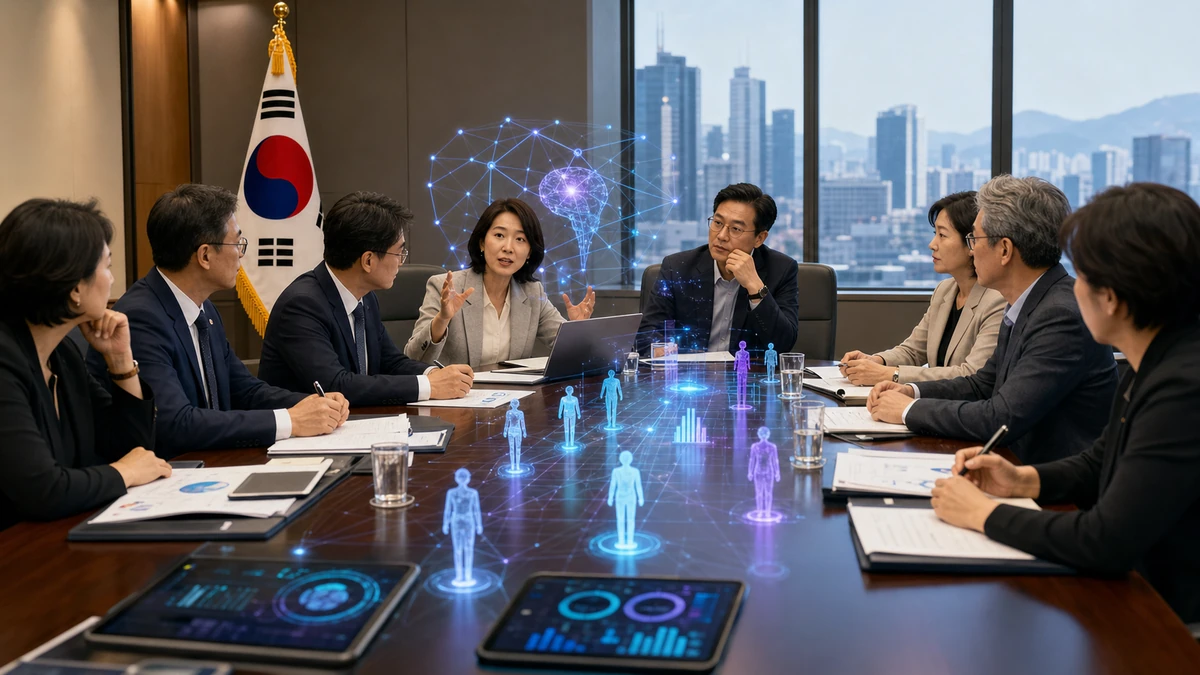
South Korea is treating artificial intelligence as a workplace issue, not just a tech story
South Korea’s Labor Ministry is reshaping one of its internal gender equality bodies to focus less on reviewing old policies and more on spotting new problems created by artificial intelligence in real workplaces. The move may sound bureaucratic, but it points to a bigger shift in how one of America’s closest Asian allies is thinking about the future of work: not simply as a matter of innovation and productivity, but as a question of fairness, access and who gets left behind when technology changes the rules.
According to the ministry, officials on July 3 approved a plan to reorganize its Gender Equality Committee so it can serve as a channel for identifying field-based policy tasks tied to the AI era. In plain English, that means the committee is being asked to listen more closely to what workers and employers are actually experiencing as AI enters hiring, job assignments, evaluations and day-to-day office routines. Instead of mainly receiving progress reports from government departments and offering recommendations after the fact, the committee is expected to play a more active role in detecting problems early.
That change matters because AI is no longer confined to Silicon Valley-style conversations about chatbots, chips and startup valuations. Across the globe, including in South Korea, artificial intelligence is becoming part of routine work: screening job applicants, organizing schedules, evaluating performance, automating repetitive tasks and helping companies decide which roles to expand or cut. Once technology starts influencing who gets hired, who gets promoted and whose work becomes more precarious, gender equality stops being a side issue. It becomes part of labor policy.
For American readers, a useful comparison might be the way U.S. debates over algorithms have moved from abstract concerns about innovation to concrete questions about discrimination in hiring software, surveillance at work and whether automation will hollow out certain kinds of jobs. South Korea’s latest step does not create a sweeping new law. It does not ban AI tools or impose a major regulatory framework. What it does do is reposition a government advisory body so that gender equality policy can respond faster to workplace disruption before those disruptions harden into structural disadvantages.
That may sound incremental. In practice, it reflects a serious recognition that technology policy is often made too late, after inequality has already spread.
Why this committee matters in South Korea’s system
To understand the significance of the decision, it helps to understand what this committee is. The Ministry of Employment and Labor is the central South Korean government agency responsible for employment policy and labor market systems. Within that ministry, the Gender Equality Committee has functioned as a consultative and advisory body dealing with gender-related issues in the labor sphere.
Until now, its role has largely been administrative and supervisory. It reviewed progress on policies and institutions related to gender equality and offered suggestions to the ministry. That is a familiar model in many governments: committees hear updates, discuss whether programs are working and recommend adjustments. What is changing here is the center of gravity. The ministry says the panel will now be strengthened as a mechanism for discovering policy tasks grounded in real-world conditions, particularly as AI changes industrial structure and work arrangements.
That phrase, “field-based,” is especially important. In Korean policymaking language, it signals a desire to move beyond top-down reporting and pay closer attention to what is happening on the ground. It suggests a recognition that gender inequality in the AI era may not first appear as a dramatic legal dispute or a headline-grabbing scandal. Instead, it may surface quietly: in the kinds of jobs women are steered toward, in who gets access to AI training, in whether caregiving responsibilities collide with new expectations for constant digital availability, or in which workers are most vulnerable when software takes over routine tasks.
South Korea has long relied on government committees, commissions and advisory bodies to help bridge ministries, experts and stakeholders. To an American audience, that may sound procedural, even dry. But in highly centralized systems, changes in the mandate of a committee can reveal where the state believes a problem is heading next. In this case, the message is that AI’s impact on work is not only about competitiveness or national growth. It is also about how technological change interacts with longstanding social inequalities.
That is especially relevant in South Korea, a country with world-class digital infrastructure, powerful technology companies and a workforce already deeply shaped by rapid modernization. It is also a country where gender inequality in the labor market remains a major public issue, even after years of debate over parental leave, workplace discrimination and women’s career interruptions tied to marriage and child care.
AI could deepen old gaps even as it creates new opportunities
The logic behind the committee overhaul is straightforward: if AI changes the structure of jobs, it can also change the structure of inequality. Technology does not arrive in a social vacuum. It lands in workplaces where power, status, pay and opportunity are already distributed unevenly.
Supporters of AI often emphasize efficiency. Companies can automate repetitive tasks, summarize documents, generate reports, respond to customers faster and make operations leaner. Those gains are real. But labor experts have warned for years that automation can cut in uneven ways. Jobs heavy on routine and administrative tasks may be more exposed than jobs that rely on high-level strategy, relationship-building or physically complex labor. If women and men are concentrated in different parts of the labor market, then automation may not hit them equally.
That is one reason officials are treating gender equality as a labor issue in the AI era. A software tool that appears neutral on paper can still produce unequal outcomes in practice. If an AI system is trained on historical hiring data from a male-dominated industry, it may reinforce old patterns. If companies invest more heavily in upskilling workers on fast-track technical teams than in clerical or support functions, some employees will be better positioned than others to ride the transition. If remote and platform-based work expands under AI-enabled management tools, flexibility could help some workers while isolating or destabilizing others.
American readers have seen versions of this story before. In the United States, concerns about algorithmic bias have surfaced in everything from resume screening to tenant screening to predictive policing. There is also a growing debate over who benefits when generative AI enters white-collar workplaces: Do workers gain time and flexibility, or do employers use the tools to demand faster output with fewer people? South Korea is now confronting similar questions through the lens of gender equality in employment.
The ministry’s decision does not claim to answer those questions yet. In fact, the available summary makes clear that the government is still at an early stage. The committee is being repurposed as a place to identify issues, not to announce a finished package of solutions. That distinction matters. It would be inaccurate to portray this as a major legislative breakthrough or a fully formed AI labor policy. The more precise reading is that South Korea is redesigning part of its internal policy machinery so it can detect emerging gendered effects of technological change earlier and more systematically.
In government, that kind of adjustment can be crucial. If policymakers wait until harms are obvious, the costs are usually higher and the remedies more limited.
The Korean context: work, gender and the pressure of rapid change
For readers outside Korea, the issue lands in a broader social context. South Korea is a high-income democracy known for its global brands, advanced broadband networks and cultural exports from K-pop to Oscar-winning films. But it is also a society where work carries intense social weight. A job is not just a paycheck. It is closely tied to status, family planning, mobility and long-term stability.
That makes labor-market inequality especially consequential. Women in South Korea have achieved high levels of education and visibility in public life, yet workplace inequality remains stubborn. The country has long struggled with one of the largest gender pay gaps among advanced economies. Career interruptions related to childbirth and caregiving have been a persistent concern. Corporate culture in some sectors has also been criticized as rigid and hierarchical, though conditions vary widely by company and industry.
These pressures are linked to one of the country’s most urgent national concerns: its ultralow birthrate. Policymakers have spent years trying to understand why so many young Koreans delay or avoid marriage and parenthood. The answers are complex, but work culture, housing costs and unequal caregiving burdens are central parts of the discussion. That means any technological change that alters job stability, scheduling, promotion patterns or family-work balance can quickly become politically and socially significant.
Seen in that light, the ministry’s committee overhaul is not just about abstract fairness. It is about whether the AI transition will worsen everyday barriers that women already face in building careers and families at the same time. If new digital tools make performance monitoring more constant, who absorbs the pressure? If AI accelerates office work, who is expected to keep up after taking parental leave? If certain middle-skill roles shrink, who gets redirected into growing sectors and who does not?
Korean public institutions often use the phrase “gender equality” in a way that can sound formal to American ears. But the underlying concern is familiar: making sure a new economic system does not reproduce the same old disadvantages. The novelty here is that the Korean government is explicitly linking that concern to the fast-changing architecture of AI-powered work.
What “field-based” could mean in practice
The ministry has not laid out a full operational blueprint in the summary provided, so there are clear limits to what can be said. It is not yet known which specific issues the revamped committee will prioritize first, how it will gather frontline feedback or what regulatory proposals might eventually emerge. Still, the phrase “field-based policy task discovery” offers clues.
At minimum, it implies that officials believe AI-related inequality cannot be understood through internal paperwork alone. They may need information from workplaces where change is already happening: offices adopting AI for documentation and scheduling, factories reorganizing tasks around automated systems, service-sector employers using software to monitor productivity, or firms changing recruitment practices based on data-driven assessments.
A field-based approach could involve hearing from workers, unions, employers, researchers and advocacy groups. It could mean tracking how job duties shift after AI adoption, whether training programs reach women and men equally, or whether algorithmic management changes the experience of part-time, contract or platform workers. It could also mean paying attention to roles that disappear gradually rather than vanish overnight. One of the hardest parts of technology-driven change is that people do not always lose jobs in a single dramatic wave. Sometimes tasks are shaved away piece by piece until a position loses bargaining power, prestige or a pathway to advancement.
That matters for gender equality because occupational segregation is still real in many countries, including South Korea and the United States. Women are often overrepresented in certain administrative, support and service roles that may be especially exposed to software-driven restructuring. At the same time, women may be underrepresented in the technical tracks most likely to shape or supervise AI systems. If a government wants to prevent the AI economy from amplifying those divides, it needs to know where they are emerging first.
There is also a symbolic aspect to the change. A committee that mainly receives reports is, by design, reactive. A committee tasked with discovering issues is being told to become a sensor. In policy terms, that is a meaningful shift. It suggests the state understands AI as a moving target that requires earlier detection of side effects, not just late-stage review.
How South Korea’s move fits a global debate
South Korea is far from alone in wrestling with the social consequences of artificial intelligence. Governments in the United States, Europe and Asia are all trying to figure out how to encourage innovation without allowing AI to deepen discrimination or destabilize workers. What makes the Korean case notable is the specific institutional lens: gender equality inside labor administration.
In Washington, debates over AI often split into separate lanes. One lane focuses on national competitiveness and the race against China. Another looks at consumer harms, misinformation or copyright. Another centers on labor, asking whether automation will eliminate jobs or degrade them. And still another examines civil rights concerns, including bias in algorithmic decision-making. South Korea’s latest move implicitly ties several of those lanes together by treating technological change in the workplace as inseparable from equality policy.
That may prove useful. Too often, governments talk about AI in broad promises or broad fears. The promises are familiar: productivity, innovation, growth. The fears are equally familiar: job loss, surveillance, loss of control. But the actual effects of AI are often more uneven and ordinary. They show up in office software, shift assignments, access to training and the kinds of workers managers decide are “replaceable.” Those are not just tech questions. They are labor questions, and they are often gender questions too.
For international observers, South Korea’s approach may offer a case study in how a government can adapt existing institutions instead of waiting for a perfect comprehensive framework. The move does not solve the larger problem. It does, however, indicate that officials see the need for better sensors inside government — mechanisms that can catch new forms of imbalance before they become normalized.
Whether that works will depend on execution. Advisory bodies can be meaningful or merely ceremonial. Much will hinge on whether the committee can gather candid input from workers and whether the ministry is willing to convert early warning signs into policy changes that employers must actually take seriously.
The real test will be whether workers’ voices shape policy
For now, the most important point is also the simplest: South Korea is changing the character of a government committee because it believes the AI transition is already reshaping work in ways that could affect gender equality. That is a significant acknowledgment, even if it falls short of a headline-grabbing reform package.
The challenge ahead is turning the phrase “field-based” into something more than bureaucratic language. If workers’ experiences remain filtered through formal reports, the committee may do little more than rename its mission. But if it becomes a real channel for identifying how AI alters hiring, workload, advancement, training and job security, it could help South Korea build a more grounded labor response to technological change.
That matters beyond Korea. The same basic question is emerging in offices and industries around the world: As artificial intelligence becomes embedded in everyday work, who gets new opportunities, who takes on new risks and who gets ignored because the harm looks too small or too technical at first? Governments that fail to ask those questions early often find themselves dealing with entrenched inequality later.
South Korea’s move is best understood not as a final answer, but as an early institutional adjustment — a way of recalibrating the government’s listening devices for a new era. The country is known globally for moving fast on technology. The harder task is making sure society moves just as thoughtfully on the consequences.
In that sense, this is not merely a Korean administrative story. It is a preview of the choices many democracies will face as AI becomes less of a novelty and more of a workplace reality. The future of work will not be shaped only by engineers and executives. It will also be shaped by whether governments can hear, in time, how change is landing on ordinary workers — and whether they act before the inequalities of the next economy become as familiar as those of the last.
Comments
Post a Comment