South Korea’s Monsoon Rains Are Shaping Weekend Life Again, With Jeju and the South in the Bull’s-Eye
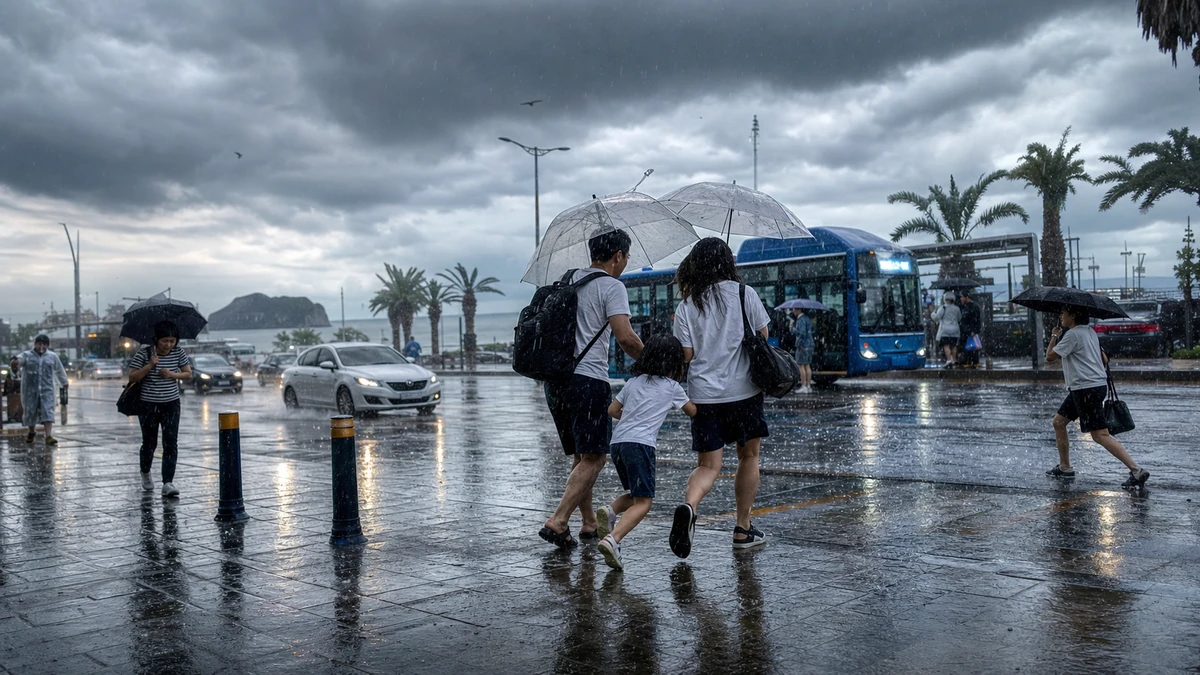
A cloudy Saturday across South Korea, with the heaviest focus in the south
South Korea is heading into a gray, rain-soaked Saturday as monsoon weather settles back over Jeju Island and much of the country’s southern region, turning what might otherwise be a peak summer travel weekend into a day of revised plans, slower transit and more indoor activity.
According to the latest forecast reported by Yonhap News Agency, skies across the country are expected to remain mostly overcast on Saturday, July 4, while rain that has already been falling in southern South Jeolla Province and on Jeju is expected to spread in stages through the day. Before dawn, the rain zone is forecast to expand into other parts of South Jeolla and along South Gyeongsang’s southern coast. By morning, it is expected to reach the broader South Gyeongsang region, and by nighttime, rain clouds are likely to extend into the southern parts of the Chungcheong region, North Jeolla and southern North Gyeongsang.
To an American reader, that may sound like an ordinary weather update. In South Korea, though, this kind of forecast lands differently. Summer monsoon rain, known in Korean as “jangma,” is not just a matter of whether people need an umbrella. It is a recurring seasonal pattern that influences how people commute, where families spend the weekend, how tourists move between cities and islands, and even how neighborhood businesses prepare for the day.
In a country where public life is dense, highly mobile and built around walking, subways, buses and crowded commercial districts, rain changes the rhythm quickly. A Saturday forecast like this one can reshape a day from the early morning onward, especially in regions that are popular with both domestic vacationers and foreign visitors.
This weekend’s forecast is especially notable because the rain is not expected to remain fixed over one area. Instead, it is projected to move south-region by south-region over the course of the day, creating a staggered weather map that may leave one city damp at sunrise, another soaked by lunch and another dealing with wet streets and transit delays by evening.
What “jangma” means in Korea and why it matters
For readers more familiar with American weather terms like hurricane season, atmospheric rivers or afternoon thunderstorms in the South, Korea’s jangma is best understood as a seasonal monsoon period that arrives with repeated rounds of rain, cloud cover and humidity. It is a normal part of the Korean summer, but “normal” does not mean minor. Jangma affects daily life in ways that are both practical and cultural.
Like the first big snowstorm in the northeastern United States or the start of wildfire season in California, monsoon season in Korea changes behavior almost immediately. People rethink clothing, footwear and travel routes. Restaurants and cafes see shifts in foot traffic. Coastal tourism slows outdoors and picks up indoors. Travel planners start checking not just whether it will rain, but where, when and how hard.
That matters because South Korea packs a great deal of movement into a relatively compact geography. People regularly travel between regions by train, car, bus and plane, and summer weekends are a major period for trips to beaches, islands, mountain trails, traditional markets and festival sites. Jeju, often compared to Hawaii in Korean tourism marketing, is one of the country’s best-known getaway destinations. The southern coast is also a prime summer draw, known for seafood, harbor views, resort areas and scenic drives.
So when monsoon rain returns, it doesn’t just change the weather. It changes the map of leisure. A family that planned an oceanside walk may pivot to a hotel cafe. A group of college students might skip a market district and head instead to a department store or museum. A traveler who expected to drive along the coast may build in more time, prepare for slippery conditions or rearrange a photography-heavy itinerary.
The Korean summary behind this report makes an important point that is easy to miss in simple translation: the rain itself becomes part of the social choreography of summer. It slows outdoor life but highlights indoor alternatives. It dampens some business while boosting others. It can make a city feel briefly compressed, as people cluster under awnings, crowd into subway stations and reroute through underground shopping areas that are common in major Korean cities.
Rainfall totals tell a story about how the day will feel
The forecast rainfall amounts are not catastrophic across every region, but they are significant enough to affect daily routines. Western parts of the South Gyeongsang southern coast are expected to receive about 20 to 60 millimeters of rain. Busan, Ulsan and the rest of South Gyeongsang, along with Gwangju, northern South Jeolla and North Jeolla, are forecast to see roughly 5 to 40 millimeters. Daejeon, southern South Chungcheong, southern North Chungcheong, Daegu and southern North Gyeongsang are expected to get about 5 to 10 millimeters.
Separately, the two-day accumulated rainfall from July 3 to July 4 is forecast at 30 to 80 millimeters in southern South Jeolla and on Jeju. That is a meaningful range, especially for areas with strong summer travel demand and exposed coastal terrain.
To an American audience, those numbers may not immediately register unless converted into lived experience. A lighter amount can still mean puddled sidewalks, intermittent transit slowdowns and a day spent ducking in and out of stores with a folding umbrella. Higher totals, especially over a short period, can make driving more difficult, reduce visibility on coastal roads and sharply curb outdoor tourism.
Even within the same general region, the impact can vary. A coastal district may feel heavier rain and stronger wind than an inland neighborhood. A city with abundant underground passageways may remain relatively navigable for pedestrians, while a smaller tourist area built around promenades, outdoor stalls or harborfront walking routes may feel much more disrupted. That is why Korean weather reporting often puts close emphasis on region-by-region differences rather than offering a single national summary.
It is also why residents and experienced travelers in Korea tend to think in layers when they read a forecast. Is the rain beginning at dawn or after dark? Is it a steady wet day or something that intensifies in bursts? Will it affect the departure city, the destination or both? In a country where same-day regional travel is common and often easy, the timing of rain can matter just as much as the amount.
An earlier downpour in Gwangju offered a preview of monsoon intensity
Part of the backdrop to this weekend forecast is what already happened earlier this week. On July 1, when this year’s first monsoon rain arrived, students at Chonnam National University in Gwangju were seen making their way across campus under umbrellas. At an official observation site in Unam-dong, in the city’s Buk District, the Korea Meteorological Administration recorded heavy rainfall of 30.7 millimeters per hour during the morning, with cumulative rainfall reaching 57.9 millimeters at that point.
That observation does not mean every place in Saturday’s forecast zone will see the same intensity. But it does offer a useful real-world example of what monsoon conditions can look like in an urban Korean setting. A burst of that magnitude is not an abstract chart on a weather map. It means soaked crosswalks, crowded bus stops, delayed foot traffic near storefronts and a city that briefly changes pace.
For Americans used to driving nearly everywhere, it is worth explaining how much everyday Korean city life depends on tightly linked walking routes. Many people leave an apartment building on foot, walk to a bus stop or subway station, transfer underground, then emerge into another dense district where they walk again. A strong rain event can disrupt each step of that chain. Sidewalks become slick. Umbrella traffic slows intersections. People pause under building entrances. Delivery patterns can change. Small shops may see fewer casual walk-ins, while coffee shops, malls and indoor food courts become more appealing refuges.
University districts are a particularly vivid example. In many Korean cities, campuses are woven directly into active commercial neighborhoods filled with restaurants, copy shops, convenience stores and cafes. A heavy morning rain in such an area does not just inconvenience students. It alters the opening tempo of the surrounding blocks.
That is part of what makes weather reporting in Korea feel so closely tied to everyday life. A forecast is not merely about climate; it is often a practical guide to how a neighborhood, transit system or tourism corridor is likely to function hour by hour.
For Jeju and the southern provinces, a rainy weekend can redraw travel plans
The areas expected to be affected Saturday include some of South Korea’s most visited warm-weather destinations. Jeju is the obvious standout. The volcanic island off the southern coast is famous for scenic shorelines, waterfalls, hiking, black pork barbecue and resort stays, and it attracts everyone from honeymooners and families to international tourists and domestic weekend travelers. In summer, a rain forecast for Jeju can alter nearly every kind of itinerary, from rental-car sightseeing to beach time and outdoor photography.
The same is true, in different ways, across the southern provinces. South Jeolla and South Gyeongsang contain many of the country’s coastal attractions, fishing ports, islands, market streets and food destinations. Busan, Korea’s second-largest city, mixes beach culture, apartment towers, seafood markets and major transit connections. Ulsan and nearby coastal areas also see heavy local movement. Even when forecast totals are moderate, a wet weekend in the south tends to push activity away from open-air plans and toward indoor spaces.
That does not mean the day shuts down. South Korea is notably adaptable in bad weather. Large shopping complexes, covered markets, basement arcades, museums, cinemas, hotel lounges and cafe districts can all absorb traffic when outdoor conditions worsen. In that sense, monsoon rain reveals a kind of urban flexibility. It slows one version of summer while activating another.
Still, there are practical considerations for visitors, especially those unfamiliar with Korea’s rainy season. Flights to and from Jeju can be affected by weather, even if not canceled outright. Travelers relying on rental cars may face reduced visibility and slower road conditions. Coastal walking routes and mountain viewpoints can become less rewarding or more hazardous. A carefully timed restaurant or attraction schedule may need more buffer time than usual.
The core lesson from this forecast is that it is not enough to know that rain is expected somewhere in the country. Travelers need to know which region is affected, during what time window, and at what approximate intensity. That is especially true in Korea, where transportation between regions is usually efficient enough that people sometimes underestimate how much weather can still shape the actual feel of a trip.
How a weather forecast reaches beyond umbrellas and into the local economy
Monsoon forecasts also carry economic implications, particularly for businesses that depend on a steady weekend stream of passersby. In the southern cities and coastal towns expected to be affected Saturday, rain timing may influence whether shop owners set outdoor tables, whether tourists linger in one district or move on quickly, and whether demand shifts toward delivery, takeout or indoor seating.
Morning rain can hurt brunch and early foot traffic while benefiting places that offer shelter and longer stays. Evening rain can cut into nighttime promenade business but help restaurants and bars that are close to transit or inside larger commercial buildings. Even among neighboring districts, the difference between drizzle and a concentrated burst can change the day’s sales pattern.
This is one reason Korean weather coverage often reads as a practical public-service bulletin rather than merely a climate note. Forecasts help people decide not just what to wear, but how to operate. A small business owner may stock more disposable umbrella covers or prepare for slower patio turnover. Hotel staff may recommend indoor alternatives. Families may shorten long-distance outings. Delivery services may see stronger demand if outdoor restaurant traffic weakens.
In the United States, local weather often affects suburban driving and big-box shopping patterns. In Korea, where many commercial areas remain deeply walkable and concentrated, rain can show up more immediately in the texture of street life. Empty outdoor market aisles, packed coffee chains, damp stairways leading into subway stations and clusters of people waiting under narrow storefront eaves are all part of the seasonal visual language of jangma.
That is why a forecast like Saturday’s matters even absent a major disaster warning. It is less about dramatic emergency and more about widespread micro-adjustment. The economy bends with the rain, sometimes block by block.
A seasonal story that helps explain Korea to outsiders
For international readers, especially those encountering Korea mainly through pop culture, food trends or tourism advertising, weather stories like this can offer a different kind of insight. They show how ordinary life works. They reveal how infrastructure, geography, habit and season all interact in a country that is modern, fast-moving and highly localized at the same time.
In Korean cultural life, the seasons are not just background scenery. They are part of the language people use to organize memory and daily routine. Spring is linked with cherry blossoms, yellow dust and school openings. Autumn brings foliage and harvest imagery. Summer is inseparable from humidity, heat and monsoon rain. Jangma, in that sense, is not just a meteorological term. It is a seasonal condition that shapes what people eat, wear, carry and postpone.
Saturday’s forecast, then, is not simply a cloudy sky and rain in the south. It is a picture of how Korea moves in summer. It is about a traveler recalculating a route on Jeju. A college student in the southwest leaving early to account for wet sidewalks. A family in Busan choosing an aquarium over the beach. A restaurant owner wondering whether outdoor seats will stay empty. A commuter checking whether the rain will arrive before the last bus ride home.
The most useful way to read this news is neither to exaggerate it nor dismiss it. The publicly reported rainfall ranges are just that: forecasts by region, not guarantees of uniform conditions. The actual impact will depend on exact location, transportation choices, travel distance, age of companions and whether an outdoor plan has a workable indoor substitute. But that modest uncertainty is itself part of life during monsoon season. People plan with flexibility, not panic.
As South Korea heads into another cloudy July weekend, the rain over Jeju and the southern provinces is doing what jangma often does: slowing the outdoor pace, shifting consumer habits, testing travel convenience and reminding everyone that in Korea, weather is often woven directly into the structure of the day. For residents, that may simply mean better shoes, extra commute time and a backup plan. For visitors, it can be a useful introduction to a country where the summer forecast is also a map of how daily life adapts.
Comments
Post a Comment