South Korean Comedian Lee Soo-ji to Undergo Treatment for Vocal Cord Nodules, Spotlighting the Physical Toll of a Voice-Driven Career
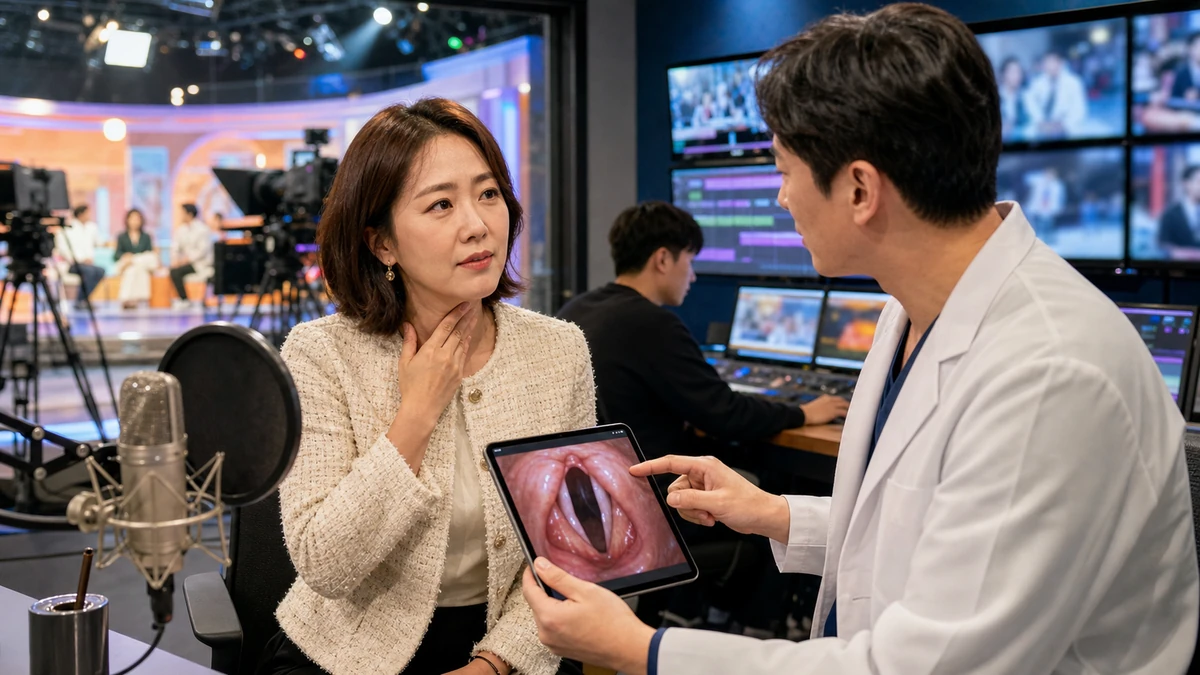
A familiar face in Korean comedy steps back to protect the instrument that built her career
South Korean comedian Lee Soo-ji, a widely recognized television and digital entertainer known for sharp character work and rapid-fire vocal delivery, is preparing to undergo treatment after being diagnosed with vocal cord nodules, according to her agency, CP Entertainment. The company said Lee, 41, will follow medical advice that could include surgery and will temporarily focus on recovery before resuming her career.
For American readers who may not know Lee by name, the story is less about celebrity gossip than about a performer protecting the central tool of her trade. In U.S. entertainment terms, imagine a sketch comedian, character actor and YouTube personality whose signature lies not just in punchlines, but in how she uses pitch, rhythm, accent and timing to create entire personalities in seconds. That is the lane Lee has occupied in South Korea: a performer whose voice is not merely part of the act, but often the act’s foundation.
Her agency emphasized that viewers are unlikely to see immediate disruptions to her current projects. Enough material was recorded before treatment plans were announced, the company said, to limit any interruption to her television appearances and online content. That means audiences can continue seeing scheduled episodes while Lee recovers without the added pressure of rushing back to work.
In an entertainment climate where stars are often expected to remain constantly visible, that detail matters. It suggests an increasingly professionalized approach to production planning in Korea’s fast-moving variety and digital content industries, and it offers a reminder that behind the polished pace of modern entertainment is a human voice that can be overused, strained and, sometimes, forced into silence.
The announcement has also resonated because Lee is not a peripheral figure quietly stepping away from the spotlight. She has been active on SBS, one of South Korea’s major broadcast networks, and on her personal YouTube channel, moving between traditional television and creator-led digital media with unusual ease. Her diagnosis, then, lands at the intersection of celebrity, labor and health in one of the world’s most closely watched pop-cultural ecosystems.
Why vocal cord nodules are especially serious for a comedian like Lee
Vocal cord nodules are noncancerous growths that can form when the voice is repeatedly strained. Teachers, singers, actors, broadcasters and anyone who relies heavily on speaking are often warned about them. The condition can cause hoarseness, pain, vocal fatigue and loss of range — symptoms that would be inconvenient for many people but potentially career-altering for performers whose livelihood depends on precise vocal control.
For Lee, the diagnosis carries particular weight because her comedy depends heavily on vocal versatility. South Korean comedy, especially on television variety programs and in sketch-based performances, often prizes rapid switching between recognizable social types: the officious office worker, the overbearing parent, the vain influencer, the fussy customer, the neighborhood gossip. The humor does not come only from what is said, but from how instantly a performer can signal an entire identity through intonation, breath control, pacing and subtle shifts in speech patterns.
That kind of performance can look effortless on screen. In reality, it demands a high level of physical technique. A comedian delivering multiple voices, strong enunciation and exaggerated emotional beats over long recording sessions is asking a lot from the body, particularly the throat. In that sense, Lee’s situation recalls the way American audiences talk about the wear and tear faced by stand-up comics on tour, Broadway singers doing eight shows a week or podcasters and radio hosts who spend hours behind a microphone. The medium may differ, but the strain is recognizable.
The broader lesson is one entertainment industries around the world continue to relearn: voice-driven work is physical labor. Fans often think first about schedules, ratings and content pipelines. Medical issues like this force a shift in perspective. A performer’s voice is not an endlessly renewable resource, and ignoring strain can make recovery longer and more complicated.
That is part of why the agency’s decision to disclose the diagnosis and frame recovery as the top priority has drawn supportive reactions. Rather than masking the problem or trying to power through it, the public message places treatment first. In an era when celebrity cultures can reward endurance to the point of self-harm, that is a notable choice.
Understanding Lee’s place in South Korea’s entertainment landscape
To understand why this news has drawn attention in Korea, it helps to understand what kind of performer Lee is and how South Korean entertainment works. Korea’s comedy ecosystem does not map perfectly onto American categories. There are stand-up comics, to be sure, but much of mainstream comedy operates through television variety shows, sketch formats, celebrity panel programs and hybrid entertainment series that blend games, commentary, improvisation and scripted bits.
Lee has been active in that environment through SBS’s variety program “Ani Geunde Jinjja!” and through her own YouTube channel, “Hot Issue-ji.” The Korean title of the TV show loosely carries the conversational flavor of, “No, but seriously,” a phrase that signals both comic exasperation and casual, quick-turn banter. That tone matters. Korean variety television frequently relies on chemistry among cast members, fast responses, self-aware reactions and highly stylized editing. It is not unlike American unscripted comedy formats in energy, but it tends to move with a distinctively Korean pace and social vocabulary.
For English-speaking audiences unfamiliar with the genre, variety shows in Korea are major cultural institutions. They can function as a mix of late-night television, improv theater, reality competition and celebrity roundtable, often all within a single hour. Performers who thrive there need more than a prepared routine. They need spontaneity, adaptability and the ability to generate laughs in real time among other strong personalities.
Lee’s YouTube presence adds another layer. In the U.S., audiences are used to entertainers building careers across television, streaming and social media, but the Korean version of that crossover has its own dynamics. Personal channels allow stars to shape their image more directly, outside the heavier structure of broadcast television. For a comedian, that means voice and persona are even more exposed. The rhythm of speech, the intimacy of delivery and the consistency of character become central to the channel’s appeal.
So while her diagnosis is personal, it also touches two different production systems at once: the network variety machine and the creator economy. In both, her voice is a key asset. Losing the ability to use it freely, even temporarily, would ripple beyond a single show or upload.
Pre-recorded episodes reveal how Korean entertainment manages around a health crisis
One of the most important details in the announcement is also one of the easiest to overlook: Lee’s team said enough footage had already been recorded to prevent major disruption to her current appearances. That may sound like routine scheduling, but it points to a larger truth about how modern entertainment industries manage risk.
In South Korea, broadcast schedules can be relentless. Variety shows, music programs, dramas and online content often operate on compressed timelines with high public visibility. A sudden hiatus by a cast member can create real logistical and financial headaches. By securing pre-recorded material before treatment, Lee’s team and production partners appear to have built a buffer that protects both the performer and the program.
For American readers, the equivalent might be a network taping extra late-night segments before a host’s medical leave, or a streaming production front-loading content to absorb an unexpected absence. The effect is the same: it buys time. That time can be medically significant. Recovery becomes something more than a narrow gap squeezed between obligations.
There is also a human dimension to the strategy. When audiences know a show will continue airing as planned, the conversation can move away from panic about cancellations and toward concern for the person involved. Instead of debating whether a production is collapsing, fans are more likely to focus on sending support and waiting for an update. In celebrity culture, where speculation often fills any silence, a practical scheduling solution can reduce noise.
It is worth noting what the announcement did not do. It did not promise a quick return. It did not attach a firm comeback date. It did not package the diagnosis as a dramatic cliffhanger. The message was measured: treatment will follow medical advice, existing content should continue without major problems and Lee plans to return after she has recovered. That restraint is significant. It avoids turning a health issue into a marketing device and leaves room for recovery to proceed at a medically responsible pace.
That kind of buffer also underscores a growing maturity in the way Korean entertainment companies handle health-related absences. The industry has often faced criticism, especially from international audiences, for demanding schedules and intense workloads. While one case does not erase those concerns, this approach suggests a more sustainable model: plan ahead, communicate clearly and let the performer heal without forcing an immediate choice between career momentum and physical well-being.
A nomination at the Baeksang Arts Awards shows what is at stake
Lee’s diagnosis comes at a moment when her professional visibility is especially high. This year, she was nominated for a variety performer honor at the 62nd Baeksang Arts Awards, one of South Korea’s most prestigious entertainment ceremonies. For readers unfamiliar with the event, Baeksang occupies a space somewhat comparable to a hybrid of the Emmys, Golden Globes and Screen Actors Guild Awards, though no American analogy is exact. It recognizes notable work across television, film and theater, and a nomination can serve as an important public marker of industry respect.
Lee also attended the awards ceremony’s red carpet event in Seoul in May, underscoring that she remains very much part of the current conversation in Korean entertainment. That matters because the diagnosis is not arriving after a long period of quiet. It arrives while she is active, visible and professionally affirmed.
In some ways, that makes the decision to prioritize treatment more notable. Entertainers often face the temptation to delay medical care when momentum is on their side. Awards attention can mean more bookings, stronger negotiating power, more public interest and greater pressure to stay in circulation. Stepping back under those conditions can feel risky. Yet the logic behind doing so is also obvious: if the voice is central to the work, preserving it is not a pause from the career but an investment in its continuation.
That point will be familiar to Americans who have seen singers postpone tours, actors withdraw from stage runs or athletes opt for surgery during peak competitive years. The short-term optics can be difficult, but the alternative may be worse. Continuing through injury or strain can turn a manageable condition into a long-term limitation.
For Lee, the nomination reinforces the broader significance of the moment. This is not simply an entertainer stepping back from one obligation. It is a recognized performer, in an active phase of her career, acknowledging that the very element that helped make her successful needs protection. There is a practical honesty in that. Comedy can seem light, but the labor behind it is not.
What this says about fans, transparency and the changing expectations around celebrity health
Another reason the story has drawn attention is that it reflects a broader shift in how health issues are discussed in Korean celebrity culture. Historically, entertainment industries everywhere, including in South Korea, have often preferred vague statements about “rest” or “personal reasons.” Sometimes that is appropriate, especially when privacy is at stake. But it can also leave room for rumors, unhealthy speculation and unrealistic expectations.
Here, the messaging was more direct. Lee was diagnosed with vocal cord nodules. She will receive treatment based on medical advice, potentially including surgery. She has pre-recorded enough material to reduce interruptions. She plans to return after taking time to recover. Those facts set boundaries without overexposing her private medical details.
That style of disclosure matters because fan culture in South Korea is powerful and highly organized. Support can be intense, loyal and genuinely moving, but the same attention can magnify pressure around timelines and appearances. A clear official statement helps redirect fan energy away from demands for immediate updates and toward a more sustainable message: wait for a healthy return, not just a fast one.
The distinction is important. In celebrity-driven industries, speed is often mistaken for resilience. But coming back too soon from a vocal injury can carry consequences. For someone like Lee, whose comedy depends on sustained, nuanced voice work, an incomplete recovery would not simply affect one day’s filming. It could affect her ability to perform at the level audiences expect across television, YouTube and future projects.
There is also something culturally telling in the way Korean audiences increasingly rally around the idea of “healthy return” rather than “immediate return.” That language has become more common in public statements about entertainers facing physical or mental health challenges. It reflects, at least in part, growing awareness that performers are workers whose bodies and minds have limits, even when the content they produce is cheerful, glamorous or seemingly effortless.
For international fans of Korean entertainment, that may be one of the most relatable aspects of this story. Whether the performer is a K-pop singer, an actor, a comedian or a sports figure, audiences across borders are confronting the same question: how do industries built on constant output make room for recovery? Lee’s case does not answer that question fully, but it offers one practical example of how to do better.
For now, the content continues — and the priority is recovery
In the immediate sense, the takeaway is straightforward. Lee Soo-ji is stepping back from active work to address a vocal cord condition that directly affects her ability to perform. Her agency says current programming should continue without major disruption because episodes were recorded in advance. There is no announced return date, and the timing of her comeback will depend on medical guidance and her recovery.
But the larger meaning goes beyond one scheduling update. It is a reminder of how much contemporary entertainment depends on voices that audiences rarely think about until something goes wrong. Lee’s comedy has been built on the kinds of vocal distinctions that can transform a line into a character and a character into a cultural reference point. When that instrument is under threat, rest is not a luxury. It is the work.
For American audiences looking in from outside the Korean media sphere, the specifics of the programs involved may be unfamiliar, but the central story is not. A respected performer in the middle of a busy career has hit a health limit, chosen treatment over denial and relied on careful production planning to make that choice possible. In a media environment that often rewards relentless visibility, that is a refreshingly grounded response.
It also helps explain why fans are likely to frame this not as a disappearance but as an intermission. The shows will go on, at least for now, through previously recorded content. Her online presence may quiet. Public updates may remain limited. And that is probably the point. A comedian whose gift lies in voice, timing and verbal precision now needs silence, patience and time.
In a business built on making people laugh, that can be a difficult adjustment for both performer and audience. Yet the measure of support in moments like this is not how loudly fans call for a comeback, but how willingly they allow one to happen at the right pace. Lee’s agency has made clear that the goal is not simply to get her back on camera, but to get her back healthy. For a performer whose career has been shaped by what her voice can do, that may be the most important line in the story.
Comments
Post a Comment