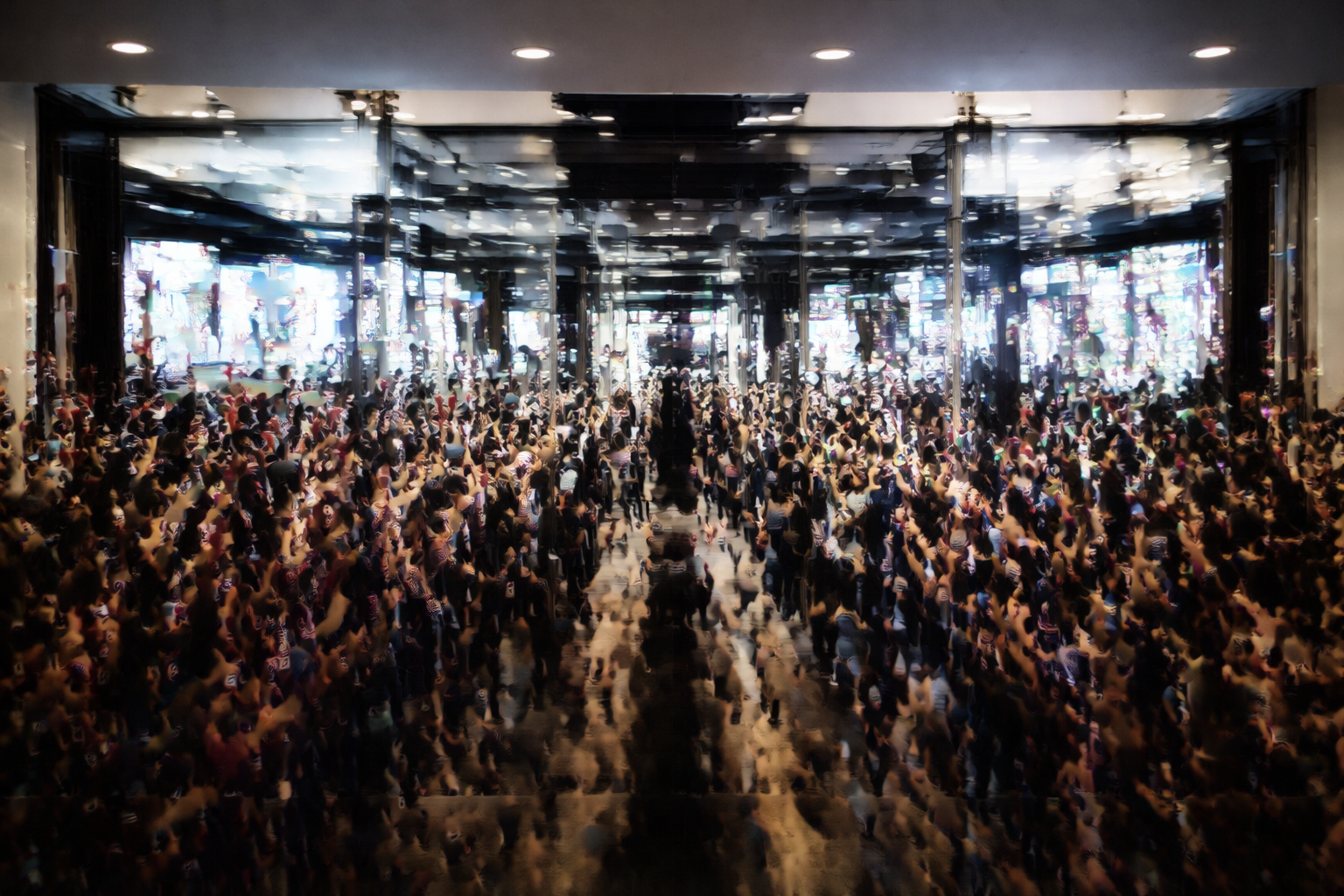
Movie theaters in South Korea are becoming something else
In the United States, movie theaters have spent years searching for ways to persuade audiences to leave the couch and return to the multiplex. Chains have added recliner seats, expanded food menus and turned opening weekends into event experiences. South Korea, one of the world’s most wired and trend-sensitive entertainment markets, is now pushing that reinvention in a different direction: the theater as an all-purpose cultural venue.
Major South Korean theater chains including CGV, Lotte Cinema and Megabox are no longer relying only on Hollywood blockbusters, Korean films and family animation to fill seats. Increasingly, they are screening live baseball broadcasts, K-pop concert films, real-time fan events, musical productions, opera performances and other non-film programming. In the Korean entertainment industry, this shift has come to be described as a move toward a “culture flex,” a term that suggests a multiplex is evolving into a broader cultural complex rather than simply a place to watch movies.
That change matters well beyond theater operations. It points to a deeper restructuring in how entertainment is packaged, distributed and monetized in South Korea, where fandom is highly organized, media consumption is fast-moving and the boundary between online and offline experience is unusually thin. A movie screen is no longer just a delivery system for narrative films. It is becoming a stage extension, a sports bar without the bar, a fan hub and, in some cases, a regional access point for audiences priced out of or geographically excluded from major live events.
For American readers, the closest comparison may be the way AMC or Regal occasionally turn auditoriums over to opera broadcasts, UFC fights or special concert films such as Taylor Swift’s blockbuster theatrical release. But in South Korea, this is not being treated as an occasional novelty. It is increasingly being approached as a recurring business model — one designed to address the financial strain on theaters after the pandemic and to better align with a culture where fan participation itself is a product.
Why theaters are changing now
The business pressures are familiar. South Korean theaters, like their counterparts in the U.S., have faced a slower-than-hoped recovery since the pandemic. Audience habits changed. Streaming became more entrenched. Production costs rose. Hit-driven economics intensified, meaning a handful of big titles can dominate the box office while mid-budget films struggle to secure screens or sustain runs.
Under those conditions, a theater business built mostly around movie release calendars looks increasingly fragile. If the lineup is weak, screens sit underused. If a giant title arrives, theaters can be flooded with demand for only a narrow range of films. Non-movie programming offers something exhibitors desperately need: flexibility. A live baseball game can be slotted into a prime evening window. A K-pop concert replay can be timed around fan anniversaries, album promotions or weekends when younger audiences are available. A special live viewing event can turn otherwise idle seats into premium-priced inventory.
This is especially significant in South Korea because multiplex chains have a dense national footprint. A theater can function as a neighborhood-scale event venue in a way that larger arenas cannot. That means theaters are not merely reacting to the film industry’s slowdown; they are repurposing their existing real estate and technical infrastructure to serve other sectors of the entertainment economy.
There is also a cultural reason the strategy fits Korea particularly well. South Korean audiences are accustomed to highly coordinated, communal forms of media consumption. Whether it is viewers voting in real time on competition shows, fans organizing mass streaming campaigns for idol groups or baseball supporters chanting in unison at games, audience participation is often part of the experience itself. The theater, with its large screen, strong sound and synchronized viewing environment, is well-suited to that instinct.
How K-pop helped turn the multiplex into a fan venue
K-pop is central to understanding why this model is gaining traction. To outsiders, a concert screening might sound like a consolation prize for fans who could not get tickets to the real thing. In reality, it is becoming a distinct product with its own economics and social value.
One reason is access. Like major U.S. tours that concentrate dates in Los Angeles, New York, Chicago or a few other major hubs, K-pop concerts are often clustered in Seoul, the Seoul metropolitan area or overseas gateway cities. That leaves many fans facing high travel costs, limited seating and intense competition for tickets. Theatrical live viewings and concert films give those fans another way to participate without the full financial burden of attending in person.
But access is only part of the story. K-pop fandom depends heavily on simultaneity — the feeling of experiencing something together, in the same moment, with the same emotional cues. Fans wave official light sticks, follow established chants, react to favorite songs together and share set-list moments in real time online. A solitary stream on a phone or laptop cannot fully reproduce that communal rhythm. A theater can come much closer. It offers scale, high-quality audio and a room full of like-minded fans who understand the unspoken rules of the event.
In that sense, the multiplex becomes another offline node in the K-pop ecosystem, alongside the arena, the pop-up shop and the fan-sign event. It is a physical space where fandom can be staged, monetized and geographically distributed. For entertainment agencies, this has obvious appeal. A single concert no longer ends when the last encore does. It can be re-edited, rebroadcast, released as a premium screening, bundled with merchandise or turned into a multi-stage product cycle that extends the revenue life of one performance.
This model also softens one of the industry’s chronic pain points: disappointed fans. When a major group has more demand than seats, there is always fallout. Theater screenings cannot eliminate that frustration, but they can absorb some of the excess demand and give agencies another way to maintain goodwill. For top-tier acts with global fandoms, they also help create the visual impression of scale. Packed theaters in multiple cities reinforce the narrative that an artist is not just popular but everywhere.
That said, not every artist is equally suited for this format. The theatrical model works best when a performer has a strong, organized fandom, highly visual stagecraft, repeat-viewing appeal and enough branding power to support related merchandise or special incentives. A group may be famous online and still fail to translate into a theater draw if the event does not feel distinct enough from clips fans can already find on social media.
What baseball broadcasts reveal about Korea’s entertainment economy
One of the more revealing aspects of South Korea’s theater strategy is that it extends beyond K-pop. Live baseball broadcasts have also been drawn into the mix, showing how the “culture flex” concept is really about event consumption more broadly.
Baseball in South Korea is not simply a sport. It is a ritualized spectator culture with organized chants, team songs, mascots, synchronized cheering tools and loyal regional identities. For an American comparison, imagine combining the pageantry of college football traditions with the everyday familiarity of Major League Baseball. Fans do not just watch the game; they perform their support collectively. That makes baseball unusually compatible with theatrical viewing, where the value lies not only in the image on the screen but in the room’s shared reaction.
This is where the overlap with idol fandom becomes especially interesting. On the surface, sports and K-pop may seem like separate business categories. But from an event-design perspective, they have strikingly similar mechanics: branded merchandise, limited-edition giveaways, choreographed chants, visual symbols of affiliation and a premium placed on being part of the crowd. In both cases, people are buying atmosphere as much as content.
For theaters, that creates a useful operational logic. Even if the programming changes — baseball on one night, an idol concert the next, a musical or fan meeting after that — the underlying business template can remain similar. Sell the ticket. Package the event. Add collectibles, drinks, posters or themed perks. Encourage group attendance. Turn passive viewing into participatory attendance.
That shift also hints at a broader change in why audiences go to theaters in the first place. Traditional moviegoing is generally built around focused, often quiet immersion in a story. By contrast, concert screenings and sports broadcasts derive part of their value from audible crowd response. Cheering, gasping, chanting and shared anticipation are not disruptions; they are features. If that behavior becomes more central to theater programming, exhibitors may need to rethink everything from scheduling to auditorium rules to marketing language.
A new revenue model, with clear upside and real limits
For theater operators, the appeal of non-film events is straightforward. They can fill off-peak hours, target clearly identifiable audiences and generate higher ancillary sales than a standard movie screening. In South Korea’s fan economy, “ancillary” revenue is not a minor add-on. It can be core to the business.
K-pop fans, in particular, are accustomed to buying participation through physical goods: photo cards, posters, limited-edition cups, special ticket packages and commemorative items tied to a specific date or event. The theater setting is especially conducive to this because it combines a controlled environment with a sense of occasion. A screening can be marketed not simply as content, but as a collectible memory. The ticket becomes part admission, part souvenir.
Timing is another advantage. Movies are constrained by release strategies, running times and screen competition. Live events, by contrast, can be slotted to maximize urgency. A baseball rivalry game belongs in a prime evening slot. A concert replay can be paired with an album anniversary. A fan meeting broadcast can be scheduled to activate a core audience on a weekend. The event nature of the content often makes marketing more efficient because the target audience and emotional hook are already built in.
Still, there are limits. Event fatigue is a real risk. What feels special can quickly become routine if theaters flood schedules with fan-oriented programming that lacks clear differentiation. There is also the question of balance. If theaters lean too heavily into fandom-driven events, they may alienate casual moviegoers who still expect the multiplex to function primarily as a film venue. That tension is not unique to Korea; American theater chains face similar dilemmas when they experiment with alternative content. But in a market as trend-sensitive as South Korea’s, oversaturation can happen quickly.
Pricing is another challenge. A theatrical live viewing has to be positioned carefully. If it is too expensive, consumers may see it as an inferior substitute for a real concert. If it is too cheap, the event may lose its premium aura and undercut the sense that this is a meaningful fan experience. The right price depends on the artist, the exclusivity of the content, the nature of any perks and the density of local demand.
What it means for artists and entertainment companies
For K-pop agencies, theaters offer something especially valuable: another layer of physical contact with fans in an era when fandom is dispersed across apps, social media platforms and global tour circuits. The theater becomes one more point on a carefully managed map of audience engagement.
That can help at multiple stages of an artist’s career. For a rookie or mid-level act, a theater screening can signal credibility — proof that a group’s performances are polished and marketable enough to command a premium large-screen presentation. For an established act, theater events can function as a brand amplifier, recapturing the scale of a world tour and turning one successful concert into a longer tail of content: behind-the-scenes films, documentaries, encore screenings and region-specific fan events.
There is also a storytelling benefit. Concert films are not just recordings; at their best, they condense the emotional arc of a live performance, the bond between artist and audience and the visual identity of a tour. When done well, they reinforce an artist’s narrative. When done poorly, they feel like expensive leftovers.
That distinction matters because theatrical success requires its own production grammar. Camera placement, subtitle quality, audio mixing, pacing and editing all influence whether audiences feel they are getting something worthy of a giant screen. Simply filming a show is not enough. Fans expect a version of the performance shaped for theatrical impact, with moments of intimacy, crowd scale and narrative rhythm that justify the ticket price.
In other words, the theater is not just another outlet. It is a medium with its own demands. Agencies that understand that can turn screenings into a meaningful extension of their business. Those that do not may find that novelty alone cannot carry repeat attendance.
Why this matters beyond South Korea
South Korea often serves as an early indicator of where entertainment models might be headed, especially in areas where digital culture, fandom organization and commercial experimentation overlap. The country did not invent event cinema or concert films, but it is pushing the logic further by integrating theaters more systematically into the entertainment supply chain.
That is worth watching in the U.S. and other English-speaking markets, where live-event ticket prices have climbed sharply and major concerts have become difficult to access for average fans. American theater chains have already seen the power of eventized screenings when the right artist or sports property is involved. The Korean model suggests the next step is not simply to add occasional special events, but to build a repeatable ecosystem around them.
There are reasons that may be easier in South Korea than in the United States. Korea is more geographically compact, its fan cultures are often more coordinated and its entertainment industry is unusually adept at turning audience participation into structured commerce. Still, the underlying lesson travels well: in a fragmented media landscape, shared physical experience has become more valuable, not less.
For years, streaming was supposed to make communal viewing feel outdated. Instead, what many audiences seem to want now is a version of collective attendance that sits somewhere between the convenience of digital media and the emotional intensity of a live event. South Korean multiplexes are trying to meet that demand by redefining what a screen is for.
The big picture is simple. The theater is no longer only a destination for films. In South Korea, it is being recast as a venue for fandom, ritual and real-time participation — a place where baseball, pop music and cinema all compete for the same seat, and where the value of entertainment lies increasingly in experiencing it together. That may not save every theater, and it will not replace the need for strong movies. But it does suggest that the future of the multiplex may look less like a shrine to film and more like a flexible cultural arena, built to host whatever audiences most want to feel as a crowd.
Comments
Post a Comment