South Korea Plans a New Command Center for Psychiatric Crises, Trying to Close Dangerous Gaps in Emergency Care
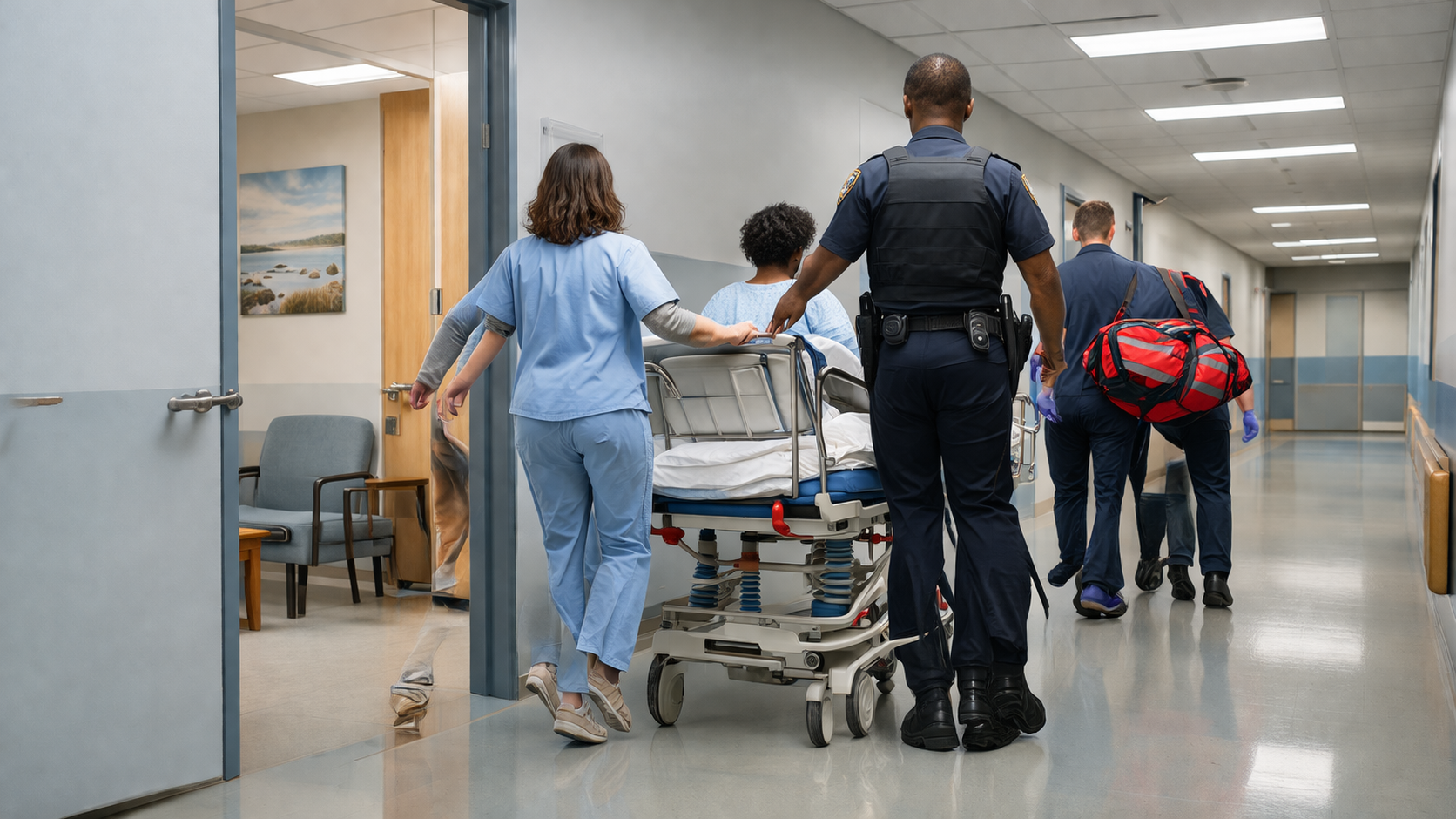
A new approach to a problem that does not fit neatly into the ER
South Korea is moving to pilot a new kind of emergency response hub for psychiatric crises, part of a broader government push to overhaul how the country handles some of its most difficult medical and public-safety cases. The proposal, announced in connection with reforms to involuntary hospitalization and treatment, aims to do more than create another hotline. Officials are trying to build a system that can rapidly connect police, firefighters, emergency rooms, psychiatrists, available hospital beds and community mental health services when a person is in acute psychological distress.
For American readers, the easiest comparison may be the difference between calling 911 for a heart attack and calling for a loved one who is hallucinating, threatening self-harm, refusing treatment or behaving in a way that frightens family members but does not produce a simple, visible medical diagnosis. In the United States, many cities and states are still struggling with the same problem: mental health emergencies often unfold in a patchwork system where police, ER staff, ambulance crews, crisis counselors and families each hold only part of the picture. South Korea’s proposed “psychiatric emergency medical situation room” is an attempt to create a single coordinating center for those cases.
The policy discussion reflects a growing recognition in South Korea that psychiatric emergencies are not just about whether there are enough hospital beds. They also involve legal authority, patient rights, split-second risk assessments and a basic question of command: Who decides what should happen next when someone may be at risk of harming themselves or others, cannot clearly express informed consent, or has no caregiver present to speak on their behalf?
Those questions matter in every country. In South Korea, they have taken on new urgency because frontline responders and families have long complained that the system is too fragmented. A call may come in through police or fire authorities. A patient may be taken to an ER that lacks a psychiatrist on site. A hospital may refuse admission because it has no secure bed or no staff available. Meanwhile, relatives are often left scrambling to explain the patient’s history, locate another facility and navigate unfamiliar legal rules on involuntary treatment. The government’s pilot project suggests Seoul is finally trying to tackle those breakdowns as a systemwide failure rather than a series of isolated incidents.
If it works, the change could make South Korea’s psychiatric emergency response look less like a maze and more like a coordinated command center. If it fails, critics say, it risks becoming one more bureaucratic layer in a process where time, trust and clarity are already in short supply.
Why psychiatric emergencies are harder to manage than other medical crises
Most people understand what an emergency room is for when the symptoms are obvious: chest pain, stroke symptoms, severe bleeding, a car crash. Psychiatric emergencies are different. The danger may be real and immediate, but it is often expressed through behavior rather than a visible injury. A person may be severely paranoid, hearing voices, experiencing a manic episode, threatening violence, attempting self-harm or spiraling from a mix of mental illness, alcohol or drug use. The challenge is not just treating the person. It is figuring out, quickly and lawfully, how serious the danger is, whether the patient can make decisions, whether restraint or transport is justified and where appropriate care is actually available.
That complexity is one reason emergency departments often struggle with psychiatric patients, in South Korea as in the United States. Many hospitals are not staffed around the clock with psychiatrists. Secure rooms or specially trained personnel may be limited. Staff members must protect the patient, other patients and themselves. In a crowded ER during a rush of trauma or cardiac cases, someone in acute psychiatric distress can end up waiting for hours, sometimes in an environment poorly suited to calming or evaluating them.
First responders face their own burdens. Police and firefighters are often the first to arrive, especially when a family calls for help because someone is acting unpredictably or making threats. But police are not psychiatrists, and firefighters are not judges of legal capacity. Yet in the real world, they are often forced into that role. They must decide whether a person can be safely calmed at home, whether transportation is needed, whether force might be required, and whether the risk is high enough to override a refusal of care. Those are profound decisions with consequences for civil liberties and physical safety.
Families, too, are pushed into an impossible role. When a psychiatric emergency erupts, relatives frequently become the de facto case managers, trying to explain symptoms, confirm medication history, call hospitals, locate an open bed and decipher whether they should contact police, local health authorities or a community mental health center. Anyone who has tried to navigate a hospital bureaucracy in a crisis can imagine the stress. In South Korea, where families have historically played a central role in elder care, disability care and mental health support, that burden can be especially heavy.
The government’s proposed command center is built around the idea that psychiatric emergencies are not simply medical events. They are multiagency incidents requiring real-time coordination. That means the system has to function less like a standard clinic and more like an air traffic control tower, constantly tracking resources, communication and risk.
What the government says it wants to build
Under the plan now being discussed, South Korea would test a psychiatric emergency medical control center that could act as a regional hub rather than a passive call desk. The concept is to tie together several moving parts that are currently disconnected: information on which hospitals have available psychiatric beds, access to on-call specialists, communication channels with police, firefighters and emergency departments, triage of high-risk cases, guidance for family members and a handoff to community mental health services after the immediate crisis passes.
That last piece is especially important. In mental health care, the crisis itself is often only one chapter. What happens after the ER visit or hospital stay can determine whether the patient stabilizes or returns to crisis again. A command center that only helps secure transport but does not connect the patient to ongoing follow-up care would solve only part of the problem.
South Korean officials are also discussing reforms to involuntary hospitalization and treatment, a sign that they understand the bottleneck is not only clinical but legal. In many psychiatric emergencies, the central dilemma is not whether someone is unwell, but whether the person meets the threshold for intervention without consent. Too strict a system can delay care until the person’s condition worsens or a tragedy occurs. Too loose a system can invite abuse, overreach or convenience-based confinement. Public trust depends on getting that balance right.
The government’s message, as reflected in the policy discussion, is that the existing structure allows emergency response and involuntary admission rules to operate in separate lanes. That separation has created confusion over responsibility. Hospitals may say they lack capacity. Police may say the matter is medical. Families may be told to obtain more paperwork. Local mental health centers may not be equipped for a middle-of-the-night crisis. A centralized hub could, in theory, reduce the “not our department” dynamic by designating one place responsible for coordinating the next step.
Whether that promise translates into practice will depend on details that often receive less public attention than the announcement itself. Real-time bed tracking sounds straightforward until hospitals disagree over whether a bed is truly usable. On-call specialist access sounds helpful until rural regions struggle to staff it. A family guidance line sounds compassionate until overwhelmed workers have no actual treatment slot to offer. In health policy, the operations manual matters as much as the press release.
The sensitive debate over involuntary treatment
Any conversation about involuntary psychiatric treatment quickly runs into one of the hardest ethical tensions in medicine: how to protect a person’s autonomy while also recognizing that some people in acute crisis may not be able to understand their own condition or the danger they are in. South Korea is now confronting that dilemma directly as it reviews possible changes to nonvoluntary admission and treatment rules alongside its emergency-response pilot.
For Americans, the debate will sound familiar. U.S. states also wrestle with standards for emergency psychiatric holds, competency evaluations and court-ordered treatment. Civil rights advocates have long warned that involuntary commitment can be abused, especially against marginalized populations. At the same time, families of people with severe mental illness often say the system waits too long, stepping in only after someone deteriorates to the point of violence, homelessness, incarceration or profound self-neglect.
South Korea’s policy debate is shaped by those same twin concerns: rights and safety. Experts there have stressed that reform should not be reduced to a simplistic argument over making hospitalization easier or harder. A more credible approach, they argue, would include standardized risk assessments, independent review, transparent documentation and some form of after-action oversight. In other words, if the state intervenes against a person’s wishes, it should be able to show clearly why, under what criteria and with what safeguards.
That is not just a legal nicety. It is the foundation of legitimacy. Mental illness remains heavily stigmatized in much of Asia, including South Korea, despite years of public campaigns and better awareness. Families may be reluctant to seek help out of fear of shame or social consequences. Patients may worry that a psychiatric label will follow them. In that environment, any expansion of coercive authority will be scrutinized intensely. If people believe involuntary treatment is being used as a shortcut to compensate for too few beds or understaffed hospitals, the backlash could be severe.
At the same time, psychiatric clinicians and emergency responders often describe situations in which the current system is so procedurally cumbersome that timely intervention becomes nearly impossible. A person who is clearly deteriorating may still fall into a gray area where no agency feels authorized to act quickly. By the time legal thresholds are met, the crisis may have escalated dramatically. That is the policy gap South Korea now appears to be trying to narrow.
Importantly, specialists have argued that the conversation should not focus only on getting someone through the hospital door. Short-term observation, intensive stabilization, crisis intervention outside the hospital and structured follow-up after discharge can matter just as much as the admission decision itself. A command center that coordinates this continuum of care would be more modern and more humane than one designed solely to facilitate confinement.
Can one control tower connect hospitals, police, fire services and local mental health centers?
The strongest case for the new system is also the simplest: South Korea’s psychiatric emergency response is fractured. Calls may enter through police or fire services. Medical evaluations happen in emergency departments. Longer-term management may fall to local mental health welfare centers or municipal authorities. But these pieces do not always operate simultaneously. Too often, they function in sequence, with one agency handing the case to another rather than managing it together in real time.
That handoff problem is not unique to South Korea. American officials have spent years trying to improve so-called crisis continuums of care, including the rollout of the 988 Suicide & Crisis Lifeline, co-responder models pairing police with clinicians, and mobile crisis units meant to divert some calls away from arrest or ER boarding. South Korea’s proposed situation room can be seen as its own version of that same search for a smarter front door to mental health emergencies.
For the control-center model to work, experts say at least three kinds of information must be connected in real time. The first is capacity data: which hospitals can actually accept a patient now, not in theory but in practice. The second is field information: the patient’s apparent level of risk, whether there are co-occurring medical or substance-use issues, whether a caregiver is present, and what responders are seeing on the scene. The third is downstream support: what community resources exist after the immediate crisis, whether that means outpatient treatment, home visits, welfare center follow-up or another form of local care.
If any one of those data streams is missing, the new hub could turn into a glorified switchboard. It may tell people where to call without having the authority or visibility to ensure a workable outcome. That is why governance matters. If a hospital refuses a referred patient, who must find the next option? If the patient’s condition changes during transport, who has final authority to alter the plan? If the patient is discharged and no community service picks up the case, who is responsible for re-engagement? Those questions may sound bureaucratic, but in crisis response they are often the difference between continuity and collapse.
Regional inequality is another challenge. South Korea is a highly wired, urbanized country, but it still has sharp differences between the Seoul metropolitan area and smaller cities or rural counties. A pilot that functions in a major urban hospital network may prove far harder to replicate where psychiatric specialists, protected beds and late-night response options are scarce. Policymakers will likely need different models for dense urban districts, midsize cities and mixed rural areas if they want a system that can scale nationally.
That makes the pilot phase crucial. The real test is not whether the government can launch a new office. It is whether it can produce measurable improvements: shorter wait times, fewer rejected transfers, safer scenes for responders, clearer guidance for families and stronger follow-up after discharge. Mental health policy succeeds or fails in implementation, not rhetoric.
What this could mean for patients and families
If South Korea gets the design right, the most immediate benefit may be clarity. In a psychiatric crisis, families often do not know whom to call first or what kind of help is even available. A functioning command center could create a single, recognizable point of contact that helps triage the situation and coordinate next steps. That alone would reduce the burden on relatives who currently find themselves making frantic calls to emergency rooms, local public health offices, police stations and mental health centers with no one clearly in charge.
Another likely benefit would be fewer delayed or failed transfers. One of the most exhausting experiences for patients and relatives alike is what some health systems call “ping-pong transport,” when a person is sent from one facility to another because the first hospital cannot or will not accept them. For someone in severe agitation, panic or psychosis, each delay can make the condition worse. A command center with current bed data and direct coordination power could, at least in theory, reduce those dead-end transfers.
Families may also see some of the invisible labor shift away from them. In many countries, including South Korea, a relative in crisis often depends on family to provide background information, consent paperwork, transportation support and post-discharge supervision. That expectation can be crushing, especially when caregivers are older parents, spouses with jobs, or adult children living separately. A system that formally links emergency intervention to community follow-up could ease at least part of that pressure.
Still, expectations should be tempered. A new control center cannot by itself solve deeper structural shortages in psychiatric care, including workforce gaps, uneven regional access and social stigma. Nor can it erase the emotional reality of psychiatric emergencies, which are often frightening, messy and deeply personal. The best system in the world cannot make those moments easy. It can only make them less chaotic, less dangerous and less lonely.
For South Korea, the stakes are broader than administrative reform. The country has spent years trying to modernize its mental health system while confronting persistent stigma and the legacy of institutional approaches that critics say at times prioritized control over recovery. A well-run pilot could signal a shift toward a model that is both more coordinated and more rights-conscious. A poorly run one could reinforce public suspicion that mental health policy still defaults to crisis management without enough patient voice.
In the end, what South Korea appears to be acknowledging is something every advanced health system eventually learns: psychiatric emergencies cannot be handled as an afterthought to general emergency medicine. They require their own infrastructure, training, legal standards and care pathways. The question now is whether the government can build a system that treats those crises with the urgency they demand while preserving the dignity and rights of the people caught in them.
That is a difficult balance. But if the pilot moves beyond slogans and into genuine coordination, South Korea may offer a case study other countries, including the United States, will want to watch closely.
Comments
Post a Comment