A Sudden U.S. Shift on a Lunar Space Station Leaves Japan Asking What Happened to Artemis Partnership
A moon plan meant to symbolize allied ambition now raises questions about trust
For years, the U.S.-led push back to the moon has been sold as more than a space program. It has been presented as a democratic counterweight to China’s growing reach in space, a proving ground for the technologies that could shape future industries, and a high-profile example of how American alliances can extend beyond military bases and trade deals into the most advanced scientific projects on Earth — and beyond it.
That is why reports that the United States moved to halt or scale back plans for a lunar-orbit space station without giving Japan advance notice have landed with unusual force. The issue is not simply whether one piece of NASA’s moon architecture may be delayed, downsized or abandoned. It is also about process: how Washington communicates major policy shifts to one of its closest allies in Asia, especially when that ally has spent years aligning budgets, industrial strategy and national prestige with a U.S.-led vision.
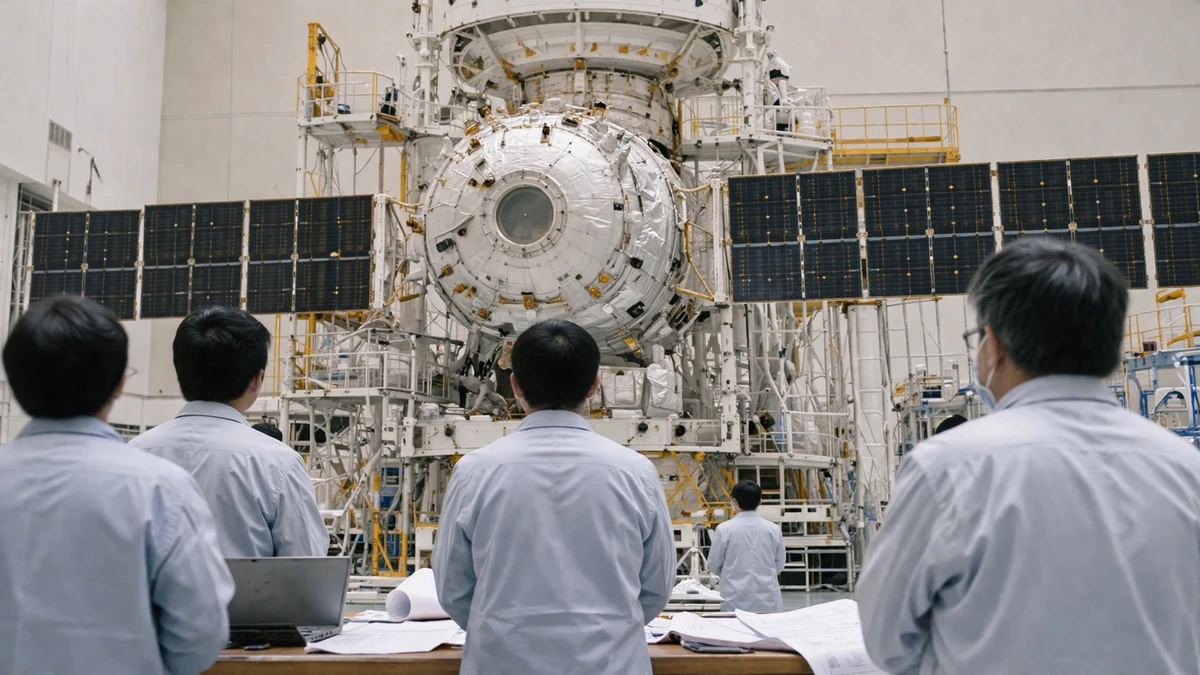
The project at the center of the controversy is commonly known as the lunar Gateway, a planned station in orbit around the moon that was designed to serve as a staging point for astronauts, cargo, science experiments and future deep-space missions. Unlike the International Space Station, which circles Earth in low orbit, Gateway was conceived as an outpost much farther from home — less a destination than a waypoint for sustained lunar exploration and, eventually, missions deeper into the solar system.
According to the Korean news summary, the key point causing friction is that Japan, one of the most active partners in the Artemis program, was not sufficiently briefed before the American announcement. If that account holds up, the diplomatic fallout could extend beyond this one project. In alliance management, particularly between countries that routinely describe each other as indispensable strategic partners, the procedure matters almost as much as the substance. A budget revision is one thing. Being blindsided is another.
At a moment when the U.S. and Japan are trying to tighten cooperation across semiconductors, batteries, artificial intelligence, supply chains and defense technology, space has been held up as a frontier where shared capability and shared values meet. A breakdown in communication in that arena would be hard to dismiss as a minor bureaucratic oversight.
Why Gateway mattered far beyond science
To many Americans, a lunar-orbit station may sound like one more expensive acronym in a long line of NASA projects. But Gateway was supposed to play a very specific role in the Artemis architecture. Rather than treating moon landings as isolated flag-and-footprints missions, as in the Apollo era, the concept envisioned a reusable platform that could support repeated operations: docking spacecraft, hosting crews for limited stays, enabling logistics and testing technologies needed for long-duration missions.
In plain terms, Gateway was marketed as part truck stop, part laboratory and part construction scaffold for a permanent return to deep space. The logic was familiar to anyone who has watched how infrastructure works on Earth. It is easier to build a larger transportation and economic system when there is an intermediate hub — a Chicago for railroads, an Atlanta for airline connections, a major port for global shipping. Gateway was supposed to serve that function in cislunar space, the region between Earth and the moon.
For the United States, that role gave Gateway value beyond engineering. It was meant to reinforce American leadership in setting the rules, standards and partnerships of the next phase of space exploration. As China advances its own space station program and lunar ambitions, U.S. officials have increasingly framed Artemis as an alliance-based alternative: not just America going back to the moon, but America bringing its partners along and shaping a norms-based order in space.
That kind of framing matters because space policy is no longer only about scientific discovery. It is tied to national security, industrial policy, communications infrastructure, advanced manufacturing and strategic supply chains. The same high-precision components, robotics and life-support systems that serve exploration missions can spill over into civilian and military applications. Countries join these projects not only for prestige but also because they want their companies embedded in the supply networks of the future.
Seen that way, Gateway was not just a station. It was an organizing idea. It told allied governments and private industry where to invest, what technologies to prioritize and what kind of long-term demand might exist. Remove that anchor, or even cast doubt on it, and the effects spread outward quickly.
Why Japan is likely to see this as more than a scheduling dispute
Japan has been among the most committed U.S. partners in Artemis. That commitment has not been symbolic. Tokyo has invested in technical cooperation, policy coordination and the political messaging that presents the U.S.-Japan alliance as one that now reaches from the Indo-Pacific to the lunar surface. Japanese officials have embraced the idea that participation in lunar exploration could give the country’s astronauts, engineers and manufacturers a prominent role in the next great phase of human spaceflight.
That interest is rooted in real industrial strengths. Japan has deep expertise in robotics, advanced manufacturing, precision components, energy management and transportation systems — exactly the kinds of capabilities that matter in harsh, remote environments where reliability is everything. Japanese companies have long seen space not only as a research domain but as a commercial arena where winning early credibility can translate into years of future contracts.
For American readers, the easiest comparison may be the way major defense or infrastructure programs create long planning horizons for contractors, universities and regional economies. Once a government and its partners signal that a flagship project is central to future strategy, companies begin shaping hiring, R&D and capital spending around that assumption. They build supply chains. They seek certifications. They prepare for follow-on work. That is part of why abrupt change, even when financially rational, can be so disruptive.
In Japan’s case, the stakes are also political. Japanese governments tend to place high value on careful coordination, especially with the United States. In East Asian diplomacy, process often carries its own meaning. Being informed in advance is not simply a courtesy; it is a signal of status and trust. If Japan learned of a major Artemis shift effectively at the same time as the public, many in Tokyo would likely read that not just as poor communication but as a downgrade in how its partnership is being handled.
That does not mean Japan is likely to launch a loud public confrontation. Tokyo often responds to alliance friction with restraint in public and intense review in private. But quiet disappointment can still have long-term effects. It can shape future negotiating demands, bureaucratic caution and the willingness to commit politically to U.S.-led projects whose direction may change with little warning.
The larger diplomatic question: What do allies owe one another in high-tech partnerships?
The episode points to a challenge that extends far beyond space. The United States increasingly asks allies to join projects that are expensive, strategically sensitive and politically exposed. Whether the field is chipmaking, clean energy, military systems or lunar exploration, Washington has emphasized the idea of a “trusted” technological ecosystem. But trust is not built only through speeches and summit statements. It is also built through consultation when plans change.
That is especially true in projects where the domestic politics are volatile. Big American programs often span multiple administrations, yearly budget fights and shifting congressional priorities. Allies know this. They understand that no White House can guarantee every long-range initiative will survive unchanged. What they do expect, however, is a mechanism for consultation before a major public turn. Even a difficult message is easier to manage when it arrives privately first and is accompanied by a credible explanation and a path forward.
If Japan was not given that opportunity, the problem becomes one of predictability. In strategic partnerships, predictability has value of its own. Governments and companies can tolerate risk; what they struggle with is uncertainty they cannot plan around. The more international cooperation moves into long-term, high-cost technological systems, the more allies will insist on formal procedures for how changes are discussed, documented and phased in.
There is a broader audience watching, too. Other Artemis partners and countries considering deeper cooperation with the United States in cutting-edge sectors are likely to study this case closely. They will want to know whether shared projects are durable policy commitments or vulnerable to sudden redesign. They may also ask a more pointed question: If a treaty ally as central as Japan can be surprised, what does that mean for everyone else?
That question matters because America’s comparative advantage in today’s geopolitical competition is not simply hardware. It is its network of allies and partners. A space strategy that relies on coalition-building works best when those partners feel they are true stakeholders, not subcontractors informed after the fact.
Budget pressures and shifting priorities may explain the move — but not the handling
There are, of course, plausible reasons the U.S. might rethink Gateway or alter its timetable. Deep-space human exploration is expensive, technically difficult and notoriously prone to delays. Every major element — launch systems, crew vehicles, lunar landers, cargo delivery, spacesuits, radiation protection and life-support systems — depends on other parts of the architecture. When one piece slips or grows more expensive, the ripple effects can force a broader redesign.
Budget pressure is the most obvious explanation. Washington is under constant pressure to reconcile ambitious goals with finite funding, and space programs compete with domestic priorities, defense spending and deficit concerns. In that environment, policymakers may decide that some elements of the moon program are more essential than others. A lunar-orbit station, while valuable, may be judged less urgent than the ability to launch astronauts, land them safely and return them home.
A second possibility is strategic sequencing. U.S. officials may conclude that it makes more sense to prioritize the capabilities needed for initial lunar missions and postpone a larger orbital infrastructure project until later. That would not necessarily mean abandoning deep-space ambitions; it could reflect a step-by-step approach in which Washington tries to show visible progress sooner, especially if patience is wearing thin in Congress or among taxpayers.
There is also the reality of electoral politics. Large-scale space programs often become symbols of national ambition, but they remain vulnerable to changing administrations, congressional committees, regional interests and lobbying from contractors. A project strongly championed in one political moment can lose momentum in the next, not because the underlying science has changed, but because the coalition sustaining it has weakened.
Even if one or all of those explanations prove true, they do not fully answer the diplomatic criticism. Allies generally accept that priorities change. What tends to damage confidence is the sense that they were not treated as partners in managing the change. In other words, the policy shift and the communication failure are related but not identical problems.
That distinction will matter in the weeks ahead. If U.S. officials quickly provide a detailed rationale, clarify the scope of any suspension or reduction and offer substitute pathways for allied participation, the damage may be contained. But if the message remains vague — or if Japan is left to infer the future of its role from incomplete public statements — the episode could linger as a cautionary tale.
What this could mean for Japan’s space industry and for Artemis itself
For Japan, the consequences are likely to unfold on two tracks. The first is governmental: how Tokyo recalibrates policy assumptions about U.S.-led space projects. The second is industrial: how companies and research institutions reassess business plans tied to Artemis-linked demand.
Those industrial implications can be easy to underestimate. Space projects do not operate like one-off purchases. Companies invest years in qualifying components, proving reliability and integrating themselves into international production chains. A platform like Gateway offers more than a contract opportunity; it offers repeated mission cycles, technical validation and the kind of track record that can open doors elsewhere in the global space economy.
If that platform shrinks or disappears, firms that expected to use it as a stepping stone may have to delay or redirect investment. Universities and laboratories could face uncertainty about which technologies deserve emphasis. Government agencies may need to revisit how they justify long-term funding to lawmakers and the public. In a sector built on decade-scale planning, even ambiguity carries a cost.
The symbolic consequences may be just as important. Artemis has often been presented as the contemporary successor to Apollo in political imagination, but with a major difference: It is not just an American story. It is supposed to be a coalition project, one that gives partner nations visible, meaningful roles in a shared enterprise. Japan’s participation has been a powerful example of that narrative. It signaled that the U.S.-Japan alliance was evolving into a full-spectrum technology partnership with global ambitions.
If one of the most visible components of that vision becomes uncertain, so does part of the story Washington has been telling about how its alliances work in the 21st century. That does not mean Artemis is collapsing. It means the narrative of reliability surrounding it may need repair.
The Korean summary notes that this development should not automatically be read as a full American retreat from crewed lunar exploration. That is an important caution. Cutting or pausing Gateway would not necessarily mean abandoning the moon. It could instead mark a narrower reordering of priorities within a still-active deep-space strategy. The crucial question is what replaces the lost certainty. If the U.S. pares back one pillar, what new structure does it offer allies in return?
What to watch next in Washington and Tokyo
The next phase will likely depend less on the initial announcement than on the follow-up. NASA, the White House and relevant U.S. agencies will need to clarify whether the move involves outright cancellation, temporary suspension, budget reduction, timeline adjustment or a broader redesign. Those distinctions are not semantic. A delayed program, a reduced program and a canceled program produce very different diplomatic and industrial outcomes.
Tokyo, for its part, is likely to seek a fuller explanation through quiet diplomatic channels even if public rhetoric stays measured. Japanese officials will want to know what consultation failed, whether future lunar roles for Japan remain intact and how existing industrial commitments are expected to be handled. They may also push for stronger consultation rules in future high-tech cooperation so that political surprises do not derail long-range planning.
American officials should understand that this issue touches something larger than one aerospace decision. Since Russia’s invasion of Ukraine and amid rising concern about China, the U.S. has asked allies to think of security in broader terms — including supply chains, emerging technology and space. That argument is persuasive only if allied governments believe Washington will manage those shared ventures with seriousness and transparency.
For U.S. audiences, the lesson is straightforward. Alliances are not self-sustaining. They are built through habits, and one of the most important habits is consultation before major shifts. In a military crisis, that principle is obvious. In a moon program, it can seem secondary — until a partner feels excluded and the damage starts to spread into politics, industry and trust.
Space has always carried a symbolic weight beyond its practical uses. During the Cold War, it was a stage for rivalry, prestige and ideological competition. In today’s world, it is also a stage for coalition politics. If the United States wants Artemis to remain the banner project of a like-minded international bloc, it will have to show that partnership applies not only when plans expand, but also when they contract.
For now, what appears to have startled Japan is not just the possibility that a moon-orbit station may be in trouble. It is the possibility that a close ally learned too late that the ground under a shared project had shifted. In Washington, that may look like a communications lapse. In Tokyo, it may look like a test of whether America’s most advanced partnerships are as dependable as advertised.
Comments
Post a Comment