As Arirang Marks 30 Years, South Korea’s Global Broadcaster Bets on a Digital-First Future for K-Content
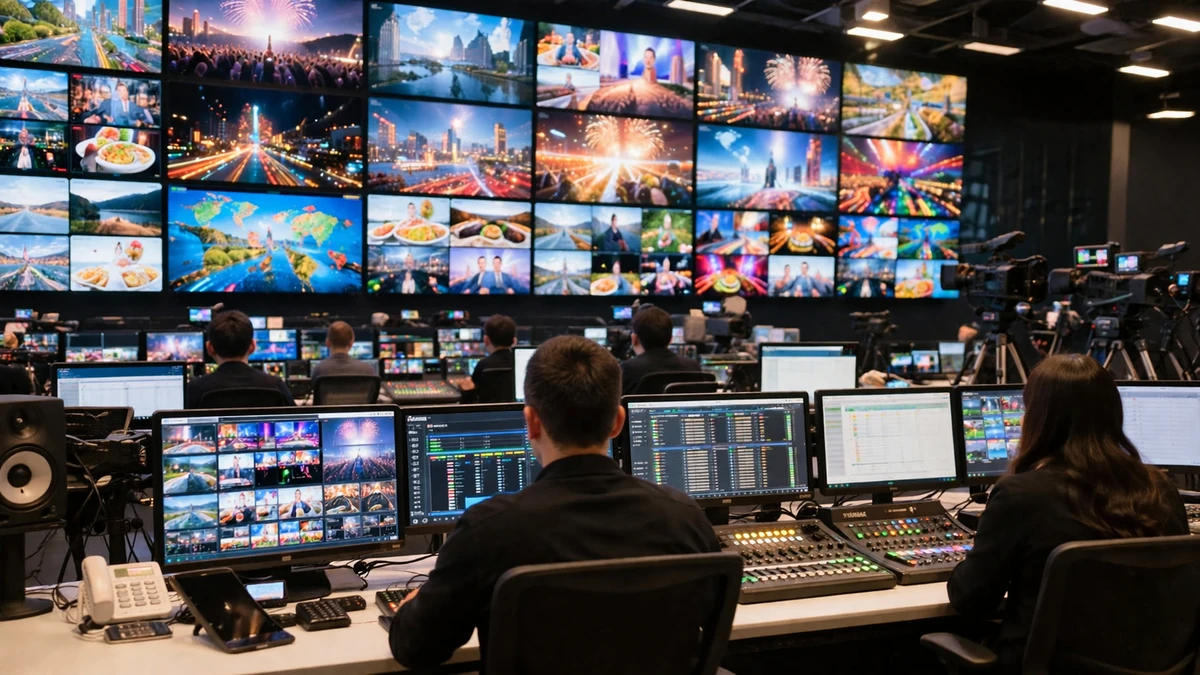
A Korean broadcaster Americans may not know is trying to reinvent how the world meets South Korea
If Americans know anything about South Korean media exports today, it is probably through Netflix drama hits, BTS and Blackpink clips on YouTube, or TikTok feeds packed with dance challenges, beauty trends and scenes from Seoul street life. But long before K-pop became a staple at Coachella and Korean dramas became mainstream on U.S. streaming platforms, one public-facing broadcaster had already spent decades introducing South Korea to overseas audiences: Arirang TV.
Now, as Arirang approaches its 30th anniversary on April 7, 2026, the state-funded international broadcaster says it is shifting to a “digital first” model — a phrase common in media strategy decks from New York to Los Angeles, but one that carries special implications in South Korea, where cultural exports have become both a major business and a key part of national identity. According to South Korean reporting, the change is meant to preserve Arirang’s traditional international broadcasting role while putting mobile viewing, social media and online video platforms at the center of its operations.
That may sound like a routine modernization effort. In reality, it speaks to a much larger question: In an era when global audiences discover Korean culture through algorithms, fan edits and viral snippets, what does a public international broadcaster still do? And perhaps more to the point, what should it do?
For American readers, a useful comparison might be a hybrid of PBS, Voice of America and a cultural diplomacy platform built for the age of YouTube. Arirang has long served as one of South Korea’s official windows to the world, offering news, cultural programming, language education and lifestyle content in multiple languages. Its job was not just to entertain but to explain South Korea to people abroad.
That explanatory role could become more important, not less, as Korean content grows more globally dominant. The more Americans and other international viewers encounter Korea through isolated clips and trending controversies, the greater the need for institutions that can provide context, translation and credibility.
Why Arirang still matters in the age of Netflix and TikTok
At first glance, it might seem as though Arirang is trying to solve a problem the market has already solved. Korean entertainment travels widely without much help from public broadcasters. Major entertainment agencies run their own channels. Streaming giants quickly subtitle and distribute popular series. Music companies release content built from the outset for global fandoms. Fans themselves act as unpaid promoters, translators and archivists, often moving faster than any formal news outlet.
But private platforms and public international media do not serve the same purpose.
Private entertainment companies are designed to maximize visibility, engagement and revenue. That is true in South Korea just as it is in Hollywood. Algorithms reward what is clickable, emotional and easily shareable. They do not necessarily reward accuracy, nuance or historical context. A controversy involving an idol’s remarks, a scene from a hit drama, or a politically sensitive cultural debate can spread globally in minutes, often stripped of the social context needed to understand it.
That is where a broadcaster like Arirang can still carve out a distinctive role. Its value is not simply that it can put Korean content in front of foreign viewers. Plenty of companies already do that. Its value lies in helping people understand what they are seeing and why it matters.
For Americans unfamiliar with Korean media culture, that may mean explaining why a television variety show works differently from a U.S. talk show, why military service remains a recurring issue in entertainment coverage, or why a seemingly small celebrity controversy may tap into larger debates about hierarchy, gender, nationalism or online fandom. Korean entertainment does not exist in a vacuum; it reflects the country’s social structures, work culture, generational tensions and political climate.
In that sense, Arirang’s public-service role resembles the difference between seeing a viral clip of a congressional hearing and reading a well-reported analysis that explains the stakes. One gives you the moment. The other gives you meaning.
“Digital first” is not just a distribution strategy. It changes how journalism and cultural media get made
In the media business, “digital first” is often used so loosely that it risks meaning almost nothing. Newsrooms from local papers to cable networks have used the phrase to justify everything from layoffs to social media expansion. But in Arirang’s case, the idea appears to be more structural: not merely taking television segments and reposting them online, but rethinking production from the ground up for how people actually consume content now.
That means starting with the phone screen, not the television schedule. It means asking whether subtitles are readable on a six-inch display, whether a core message lands within 30 seconds, whether a vertical video retains coherence, and whether an interview can be repackaged across YouTube, Instagram Reels, podcasts, short-form platforms and searchable news pages without losing context.
For entertainment coverage, that shift is especially significant. A K-pop interview is no longer just a single segment. It may need to exist simultaneously as a full-length conversation for broadcast or streaming, a set of shorter highlight clips for YouTube, subtitled snippets tailored to different language markets, quote cards for social media, and searchable explainers that situate the artist within a broader trend. The same goes for drama coverage, culture reporting or lifestyle content.
In other words, the unit of production is no longer just the program. It is the ecosystem around the story.
American media companies have gone through similar transitions, often painfully. Legacy newsrooms had to learn that a television package, newspaper column or radio segment could no longer be the final product. It had to be one expression of a story that would live across multiple platforms, each with different audience habits. Arirang now appears to be confronting that same reality — while also carrying the added burden of multilingual, cross-cultural communication.
That is a harder job than it sounds. It requires not only technical adaptation but editorial judgment. A short video can serve as an entry point, but if everything is reduced to bite-size virality, the public-service mission disappears. The real test of digital-first strategy is whether it can lure viewers in with accessible content and then lead them toward deeper reporting, interviews, archival material and explanatory journalism.
If Arirang gets this right, it will not simply make shorter videos. It will build a ladder: one that starts with discovery and ends with understanding.
The K-wave is global. So is the risk of misunderstanding it
The Korean Wave, or hallyu, is no longer a niche term used mainly in Asian studies classrooms and entertainment trade circles. It is a mainstream economic and cultural force. South Korean music acts top U.S. charts. Korean filmmakers win Oscars. Korean beauty and food brands line American shelves. Streaming services regularly promote Korean series to subscribers who do not speak Korean and may have no other connection to the country.
That success has created an impression that Korean culture now speaks for itself. In one sense, it does. But mass exposure also creates room for distortion.
The same global distribution system that can turn a Korean show into a hit in Texas or Toronto can also flatten complex cultural material into digestible stereotypes. Viewers may come away believing South Korean society is defined entirely by glamorous idols, hypercompetitive schools, beauty standards and revenge thrillers. Those themes are present, of course, but they are not the whole story.
Even within entertainment, context matters. A line in a drama may resonate differently depending on Korea’s class politics. A pop star’s image may reflect years of training in an industry that still operates with a rigor and hierarchy unfamiliar to many Americans. A dating rumor or public apology may seem excessive to U.S. audiences unless one understands the unusually intense relationship between Korean celebrities, agencies, advertisers and fan communities.
This is where a multilingual international broadcaster can do work the entertainment industry alone will not prioritize. A talent agency has little incentive to explain a social controversy in neutral terms. A streaming platform is not likely to create a deep archive about how regional culture shapes a television setting, or how Korea’s production system affects artistic choices. Fans may fill some of that gap, but fan communities are not always reliable, neutral or sustainable sources of information.
Arirang, at least in theory, can step into that space. It can connect the dots between what is popular and why it exists. It can explain not just which drama is trending but how webtoons, TV networks, production houses, music supervisors and location branding all fit into the ecosystem. It can frame Korean entertainment not simply as a consumer product, but as part of a wider society.
That kind of explanatory work may sound less flashy than a concert clip or celebrity exclusive. But in the long run, it is one of the few ways a public international broadcaster can justify its existence in a crowded digital marketplace.
A bigger role for overlooked artists, smaller studios and regional culture
One of the most intriguing possibilities in Arirang’s shift is not what it might do for already famous stars, but what it could do for everyone else.
Today’s global K-content economy is heavily tilted toward the biggest agencies, the most marketable actors and the most algorithm-friendly properties. The structure is familiar to Americans. Just as Hollywood’s blockbuster logic can squeeze out mid-budget films and local arts reporting, the global K-content machine tends to focus attention on a relatively small set of bankable names and breakout titles. If something is already trending, it gets more promotion. If it is not, it may never travel far.
That leaves gaps. Smaller production companies, rookie idol groups, independent musicians, regional festivals and less commercial cultural programming often struggle to break through internationally, even when they might appeal to niche or curious audiences abroad. A public broadcaster is one of the few institutions positioned to fill that gap without having to justify every editorial choice by immediate profit potential.
For example, when U.S. viewers become interested in a Korean drama, they often encounter only the lead actors, a few memorable scenes and rankings on streaming platforms. Much less visible are the screenwriters, original web novels or webtoons behind the adaptation, filming locations, costume traditions, soundtrack production, and the regional communities that sometimes gain tourism or business from a hit series. Those are precisely the kinds of secondary stories that help transform fandom into cultural literacy.
The same is true in music. International audiences may recognize a top-tier idol group but know little about the broader Korean music landscape that includes indie bands, hip-hop collectives, traditional fusion artists and regional cultural scenes. If Arirang uses its digital-first pivot to create strong multilingual archives and discoverable explainers, it could become a gateway not only to mainstream exports but to the wider ecosystem around them.
For Americans used to public radio or documentary channels that spotlight subjects beyond the commercial center, that mission should sound familiar. The challenge is whether Arirang can pursue it while still competing for attention in a brutally crowded digital environment.
The hardest balance: national image vs. journalistic credibility
The biggest question hanging over Arirang’s reinvention is not technical. It is editorial.
Any public international broadcaster faces a tension between representing the country and reporting on it honestly. That tension exists for institutions from the BBC World Service to France 24 to Voice of America. The more explicitly a broadcaster is seen as a national brand vehicle, the harder it can be to build trust with audiences who want reporting, not promotion.
That challenge may be even sharper in the realm of Korean entertainment. K-content is one of South Korea’s most successful forms of soft power — a term used in foreign policy to describe influence achieved through culture, values and persuasion rather than military or economic coercion. But audiences are often skeptical of media that sounds too promotional. American readers and viewers especially tend to recoil from messaging that feels like tourism advertising dressed up as journalism.
If Arirang leans too hard into celebratory messaging about K-content, it risks losing credibility with the very global users it hopes to attract. International audiences who already consume large amounts of Korean media do not need to be told, in broad slogans, that Korean entertainment is exciting and globally popular. They already know that. What they may want is smart reporting that treats Korean culture seriously enough to analyze it, question it and occasionally criticize it.
That means a successful digital-first Arirang cannot just function as a distribution channel for upbeat cultural messaging. It has to be willing to provide proportion, context and editorial distance. If a celebrity scandal reveals something about labor conditions, online harassment, censorship debates or the economics of idol training, audiences will likely trust a clear-eyed explanation more than a glossy public-relations response.
In practical terms, credibility may depend on tone as much as content. The most persuasive coverage for global audiences may be the coverage that assumes viewers are sophisticated, not naïve; curious, not passive; and open to complexity, not just celebration.
That may be a difficult balance for any state-supported cultural outlet. But it is likely the only sustainable one.
What this means for creators, agencies and the future of Korean media outreach
If Arirang’s pivot is real and not just a branding exercise, it could have ripple effects across how Korean cultural content is packaged for overseas audiences.
For producers, it could mean building international accessibility into projects much earlier. Interviews may need to be conducted with subtitling and multilingual clipping in mind. Rights agreements involving music, images and clips may need to be cleared for global digital distribution from the outset. Editors may have to plan multiple versions of the same material for television, vertical video, podcasts and search-friendly explainer formats.
For artists and their agencies, Arirang could become less of a traditional stop on the promotion circuit and more of a long-tail discovery platform. In an attention economy dominated by short-lived spikes, there is real value in being part of a credible, searchable, multilingual archive that remains useful after a comeback cycle or drama premiere fades. That may be especially important for rising actors, newer music groups and cultural figures who want recognition beyond the churn of viral media.
For South Korea more broadly, the move is a reminder that cultural influence requires infrastructure, not just hits. A country can produce globally successful entertainment and still struggle to explain itself coherently abroad. The world may know Korean songs and shows, but that does not automatically translate into understanding Korean society.
That gap matters. Cultural exports shape how countries are perceived, but those perceptions can be shallow or misleading if not accompanied by reliable interpretation. Americans learned that long ago with Hollywood: movies can project national imagery around the world, but they do not necessarily tell foreign audiences how the country actually works. South Korea now faces a version of the same dilemma, compressed into the faster, messier ecosystem of global digital platforms.
Arirang’s 30th-anniversary overhaul is therefore about more than one broadcaster’s survival. It is a test of whether public international media still has a role in an internet era dominated by recommendation engines and corporate platforms. It is also a test of whether South Korea can build a more durable communication system around its cultural rise — one that does not rely entirely on private companies, fandom labor and viral momentum.
For American audiences, the answer matters because South Korea is no longer culturally distant. Its music, television, beauty, food and social debates are already part of the international mainstream. The next stage of that relationship may depend less on export volume than on interpretation: who explains Korea to the world, through what platforms, and with how much trust.
Arirang is betting that the answer cannot simply be “the algorithm.”
Comments
Post a Comment