
A K-pop milestone will open in the California desert
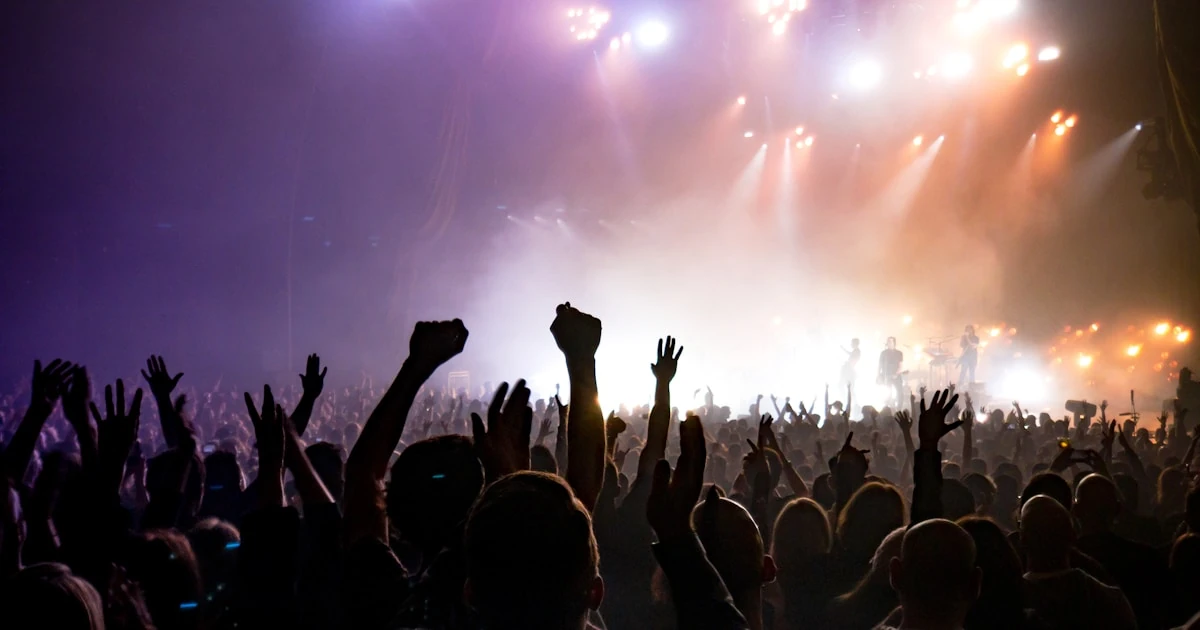
BigBang, one of the most influential acts in the history of Korean pop music, is set to perform at the 2026 Coachella Valley Music and Arts Festival, using one of America’s most visible festival stages to kick off a global 20th anniversary tour. According to details released through the group’s agency and reported by South Korea’s Yonhap News Agency, the group will appear on April 12 and April 19 at the festival in Indio, California, with a set expected to run about 60 minutes at Coachella’s Outdoor Theatre.
That is a notable booking on its own. For American readers, Coachella is not just another festival stop. It is one of the few music events in the United States that functions as both a concert and a global cultural signal. A major artist can use Coachella to do more than entertain a crowd in the desert; they can reset a narrative, introduce a new era, or remind the broader music industry why they mattered in the first place. BigBang’s appearance appears designed to do exactly that.
What makes the announcement more significant is how it has been framed. This is not being presented as a one-off reunion performance or a purely nostalgic anniversary celebration. Instead, the Coachella dates are being described as the opening chapter of a broader 20th anniversary global tour, with a new world tour expected to follow. In other words, the emphasis is less on looking back than on formally stepping into a new phase.
That distinction matters in K-pop, where anniversary events often carry multiple meanings at once. They can be commemorative, commercial and emotional, sometimes serving as a thank-you to fans and sometimes as a test of whether an act still has the power to command an international stage. In BigBang’s case, the message from the group is that Coachella is a beginning, not simply a tribute to its own legacy.
For U.S. audiences who may know the broad outlines of K-pop but not its internal history, BigBang occupies a place somewhat comparable to that of a genre-defining act that helped change the rules for everyone who came after. The group’s music, image and performance style helped expand what modern Korean pop could look and sound like, especially during the 2010s, when K-pop was becoming more visible beyond Asia. Long before the current global boom made Korean acts routine fixtures on American charts, BigBang was among the names helping open that door.
Why Coachella matters beyond the booking itself
The symbolism of Coachella is central to this story. In American pop culture, a Coachella slot can mean many things depending on the artist. For a young act, it can be a breakout moment. For an established star, it can be an image-making event. For a legacy performer, it can function almost like a referendum: Are you still able to turn a festival field into your stage?
BigBang appears to be approaching the festival with that kind of seriousness. The group said through YG Entertainment that it had prepared for the performance with a special sense of resolve because it sees Coachella as a symbolic stage marking “another beginning.” That language is worth paying attention to. Public statements from entertainment companies often lean heavily on grand wording, but here the symbolism is attached to something concrete: the start of a 20th anniversary global tour and the promise of a new world tour after that.
In practical terms, that means the Coachella appearance is being positioned not as an isolated American headline but as the first official scene in a larger campaign. The festival gives BigBang a ready-made global audience, including fans on the ground, livestream viewers, industry executives and a social media ecosystem that can turn a single performance into a weeks-long conversation. For an act looking to announce a new chapter, there may be few stages better suited for the task.
It also places BigBang in a familiar but evolving K-pop strategy. Over the past decade, Korean artists have increasingly used U.S. festivals and American touring circuits not as side quests, but as central parts of their international identities. Appearing at Coachella now carries a kind of shorthand recognition in the West. It tells casual listeners, not just core fans, that this is an act worth paying attention to.
Still, BigBang’s situation is different from that of newer groups making their first major splash in the United States. For them, Coachella can be a debut. For BigBang, it is more like a reintroduction with history attached. The question is not whether the group can get attention, but what kind of attention it wants. Based on the information released so far, the answer is clear: BigBang wants this performance to signal continuity, authority and forward momentum.
A 60-minute set suggests a full statement, not a cameo
Several details in the announcement point to the scale and intent of the performance. One is the venue within the festival. BigBang is slated for the Outdoor Theatre, one of Coachella’s major stages. Another is the running time: about 60 minutes. For anyone familiar with festival programming, those details are not minor. They suggest a substantial showcase rather than a brief guest appearance or novelty slot.
That matters because set length shapes what an artist can say on stage. A shorter performance might be enough to generate buzz, but it rarely allows for a full narrative arc. An hour, by contrast, gives a veteran act room to do what BigBang appears poised to do here: remind longtime fans why the group mattered, introduce those songs to newer listeners who know K-pop mostly through later generations, and establish a tone for the tour that follows.
In that sense, the format itself mirrors the messaging around the event. If this were merely a commemorative nod to the past, a smaller or more compressed performance could have achieved that. But an hour on a major Coachella stage suggests a proper set built to stand on its own, likely with enough room for pacing, crowd engagement and the kind of catalog-based storytelling that legacy acts often rely on when they want to connect multiple eras of their careers.
It is also a reminder of how festival stature is communicated in the U.S. context. American audiences may not always track the internal hierarchies of K-pop agencies or anniversaries, but they understand the language of festival placement. An Outdoor Theatre booking and a one-hour runtime tell a straightforward story: Coachella expects this act to draw and hold a crowd.
That creates both opportunity and pressure. Coachella audiences are famously mixed. Some are dedicated fans. Others are there for discovery, atmosphere or the next set. An act with a deep catalog and a strong performance identity can turn that setting into a triumph. But it requires confidence in the material. The information released so far suggests BigBang intends to lean into exactly that strength.
The choice of songs points to identity, not experimentation
Yonhap reported that BigBang plans to perform hit songs including “Bang Bang Bang” and “Fantastic Baby,” two tracks that remain among the group’s most recognizable anthems. For listeners in the United States who may not have followed every turn of K-pop’s rise, those titles are useful entry points. These are not obscure fan favorites. They are the kind of songs that helped define BigBang’s public identity and, in many ways, helped shape how bombastic, arena-sized K-pop could sound on the world stage.
“Fantastic Baby,” in particular, was one of the songs that circulated widely outside Korea during an earlier phase of K-pop’s globalization, when international fans often discovered artists through YouTube, dance covers and online fan communities rather than through mainstream American radio. “Bang Bang Bang” later reinforced BigBang’s reputation for making tracks built for collective release — songs that hit hard in large venues and thrive on crowd response.
That choice tells us something about the intended mood of the Coachella set. Rather than emphasizing unfamiliar material or trying to reinvent the group in front of a festival audience, BigBang appears ready to foreground the songs most closely tied to its legacy and performance power. That is often the smart move at a festival, especially one serving as the public launchpad for a tour. A familiar hit can do more than please old fans; it can instantly organize the energy of a large crowd, including people who may not know every detail of the act’s history.
There is also a deeper logic to using signature songs at a moment being described as “another beginning.” In American music culture, legacy acts often face an awkward choice when they return to a big stage: Do they lean into nostalgia or insist on novelty? BigBang’s apparent approach suggests a third path. Use the songs that built the foundation, then treat them not as museum pieces but as proof of present-day relevance.
The group has also said it plans to deliver a performance that lets it connect closely with fans around the world and become one through music. That language can sound lofty in translation, but the underlying idea is familiar to anyone who has watched a successful festival set: the goal is immediacy. Not explanation, but recognition. Not an introduction to a complicated backstory, but a shared live experience that works even if you only know a chorus or two.
Who BigBang is, and why an anniversary like this carries weight
To understand why this announcement has resonated in South Korea and beyond, it helps to understand BigBang’s place in pop history. Debuting under YG Entertainment, the group became one of the defining names of second-generation K-pop, a term fans use to describe the wave of Korean idol acts that transformed the industry in the late 2000s and early 2010s. If today’s K-pop landscape includes a polished global infrastructure of tours, fandom platforms and chart strategy, groups like BigBang helped build the conditions that made that possible.
In the United States, the easiest comparison may be to artists who changed not only their own field but the expectations around it. BigBang helped normalize the idea that a Korean idol group could be musically eclectic, fashion-forward, swagger-heavy and individually distinctive while still functioning as a powerhouse collective. Their influence has been visible in music, stage production and style, and in the way later K-pop acts approached scale and self-branding.
That is why a 20th anniversary is not merely a nice round number. In the idol industry, longevity itself is unusual. Many groups burn bright and then fade, slowed by contract cycles, military service, shifting markets or the simple churn of pop attention. Reaching two decades with enough cultural weight to launch a global anniversary tour is, by any measure, a major milestone.
And yet the framing here deliberately avoids sounding like a farewell lap. That may be the most striking part of the announcement. Instead of emphasizing sentimentality, the group and its agency have tied the anniversary to momentum. The subtext is that BigBang does not want to be treated only as a cherished artifact from an earlier era of K-pop. It wants to be seen as an active force still capable of commanding a global audience.
For American readers, that may sound familiar. U.S. pop history is full of acts that reached a point where legacy and present-tense relevance had to coexist. The ones that succeed are usually those that understand their classics are not a burden but an asset, provided they can still deliver them with conviction. BigBang’s Coachella strategy, at least on paper, fits that model.
A business message is embedded in the fan message
Entertainment announcements like this often function on two tracks at once. One is emotional: speak to fans, celebrate history, create anticipation. The other is strategic: tell the market what comes next. BigBang’s Coachella news clearly does both.
On the fan side, the messaging is straightforward. The group is promising a major live moment built around its best-known songs and aimed at global audiences. The emphasis on being close to fans around the world matters in K-pop, where fandom is not a side effect of success but a central part of how the industry operates. Fans are not just ticket buyers; they are communities that sustain artists across long gaps, public shifts and changing promotional cycles.
On the business side, the announcement reads like the opening line of a broader campaign. It links four powerful ideas in one package: Coachella, a 20th anniversary, a global tour and a new world tour to come. That is a carefully structured narrative. It tells promoters, partners, media outlets and audiences that this is not a single booking plucked from the calendar. It is the visible launch of a larger plan.
Even within the limited facts currently available, that structure is significant. There are still no additional tour dates, city lists or detailed rollout plans in the information released so far. But the framework is already in place. In the entertainment business, especially at this scale, a high-profile opening event can do much of the work of announcing a full cycle before the rest of the logistics are public.
That is one reason Coachella is such a useful first stop. It compresses marketing, performance and cultural validation into one event. A well-received set can create headlines, social clips, fan reactions and industry chatter all at once. For a group launching a new tour era, it is the kind of stage that can amplify every later announcement.
There is also a broader market reality worth noting. K-pop is no longer a niche category in the United States, but competition for attention is intense. New groups debut constantly, and global touring has become one of the most important revenue engines in pop music. By anchoring its anniversary campaign to a major American festival, BigBang is making a clear claim: its legacy is not separate from the current global market. It intends to compete within it.
What American audiences should watch for next
The confirmed facts are relatively clear. BigBang is scheduled to perform at Coachella on April 12 and April 19, 2026, in Indio, California. The set is expected to last about an hour at the Outdoor Theatre. Reported songs include “Bang Bang Bang” and “Fantastic Baby.” The performance is being positioned as the opening of the group’s 20th anniversary global tour, with a new world tour to follow.
Beyond those facts, the larger meaning of the moment lies in how BigBang is defining itself. The group is not presenting Coachella as a closing ceremony for a famous past. It is presenting it as an official starting gun. That language matters because it shapes expectations. Fans will likely approach the performance not only as a chance to hear beloved hits in a high-profile setting, but as a statement about what BigBang wants its next era to be.
American audiences, particularly those who came to K-pop through later acts, may also get a rare chance to see one of the genre’s most influential groups contextualize its own history in real time. That is one of the more compelling aspects of this booking. Coachella crowds often reward artists who know exactly who they are. BigBang’s challenge will be to translate two decades of history into a festival set that feels immediate to both longtime followers and casual observers.
If the announced framework holds, the performance could become one of those moments that means different things to different viewers at once: a celebration for devoted fans, a reintroduction for lapsed listeners, a history lesson for newer K-pop audiences and a business signal to the wider touring world. Those overlapping meanings are common in major pop events, but they are especially sharp here because BigBang’s place in the Korean music industry is so closely tied to larger questions about K-pop’s global evolution.
For now, the clearest takeaway is this: BigBang has chosen one of America’s most visible music stages to mark 20 years not by dwelling on memory, but by announcing motion. In a pop industry that often treats anniversaries as retrospective events, that is a notable choice. And in the California desert next April, it will be tested in front of one of the world’s most closely watched festival crowds.


0 Comments