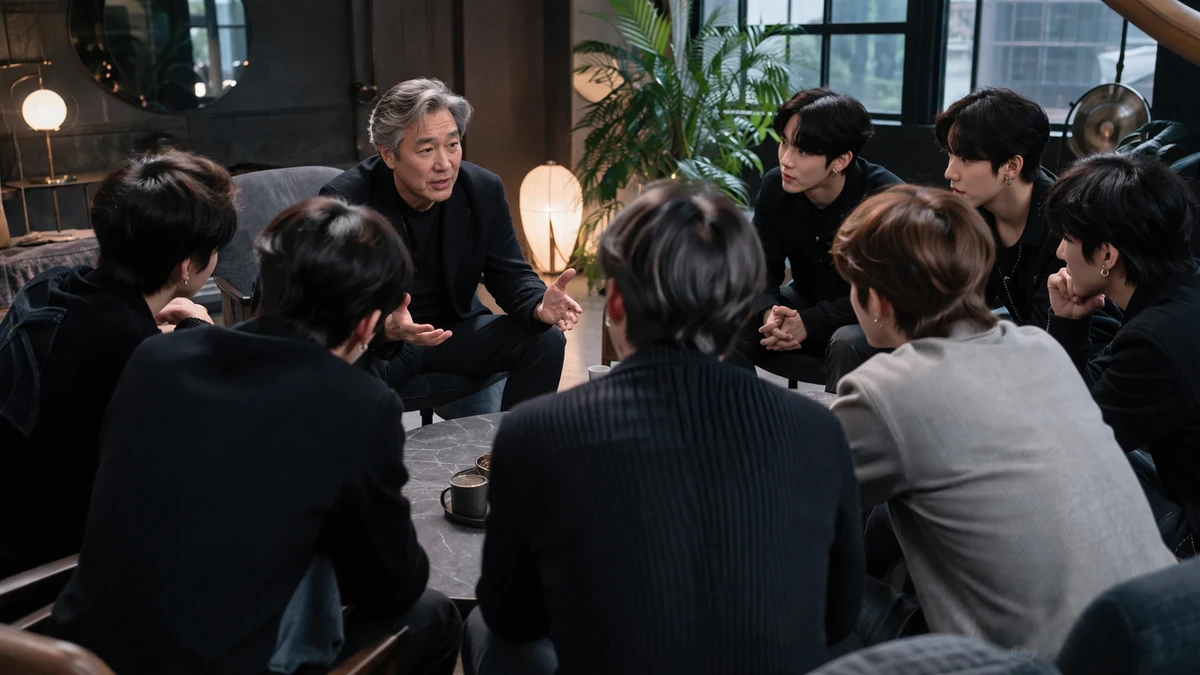
The Meeting of Cinema and Music
In a fascinating crossover of worlds, renowned director Park Chan-wook, known for his intricate films exploring complex human psychology and relationships, recently made a surprising appearance in BTS’s documentary. The collaboration reveals much more than just a meeting between a filmmaker and a K-pop group—it highlights the value of dialogue in artistic creation and the profound impact it can have on creativity. Park's appearance in the documentary not only delves into BTS’s musical journey but also reflects the deep connection between the director's own cinematic philosophy and the global K-pop icons.
Park Chan-wook's Cinematic Philosophy
Park Chan-wook is celebrated for his unique approach to storytelling, often focused on exploring intricate psychological conflicts and relationships in his characters. Films like 'Oldboy' and 'The Handmaiden' are a testament to his ability to weave complex emotional and narrative layers into his stories. What’s central to many of his works is the theme of 'dialogue'—communication between characters, whether it’s to resolve conflict, understand each other’s inner worlds, or confront unresolved tensions. For Park, dialogue is not just a plot device but the pathway to solving the deep psychological struggles his characters face.
The Power of Dialogue in the Creative Process
In his conversation with the BTS members, Park emphasized one key point: 'Dialogue is the best shortcut to judgment.' In a field where emotions and perspectives are often clouded by personal biases or ego, open and honest communication can reveal new insights. This is especially true in the arts, where collaboration often requires mutual understanding and trust. For BTS, whose music transcends borders and languages, this concept of dialogue resonates deeply. The band has long been known for their open communication with fans, their music's introspective lyrics, and their ongoing exploration of societal issues through song.
BTS's Artistic Journey and Park's Reflection
Park's interaction with BTS was not just about talking shop; it was about the mutual respect and admiration shared between them as artists. He acknowledged BTS’s global influence, recognizing that their music is not just a commercial product but a platform for delivering social and political messages. The band, which started with humble roots in South Korea, has since become a global sensation, using their platform to advocate for mental health awareness, self-love, and social change. For Park, BTS’s work reflects an artistic integrity that goes beyond mere pop stardom, positioning them as modern-day cultural revolutionaries.
The Future of Art and Dialogue
Looking forward, Park Chan-wook envisions more collaborations across artistic boundaries. He believes that sustained dialogue between different forms of art—cinema, music, and beyond—will continue to break down the walls separating them. Just as BTS has blended their musical talents with cultural and social commentary, Park’s films often carry similar layers of social reflection. It’s clear that for both Park and BTS, art is not merely about creating something beautiful—it’s about creating something that can change perspectives, provoke conversations, and inspire movements. Their partnership might very well spark new creative ventures that challenge existing norms and push artistic boundaries further.
Comments
Post a Comment