
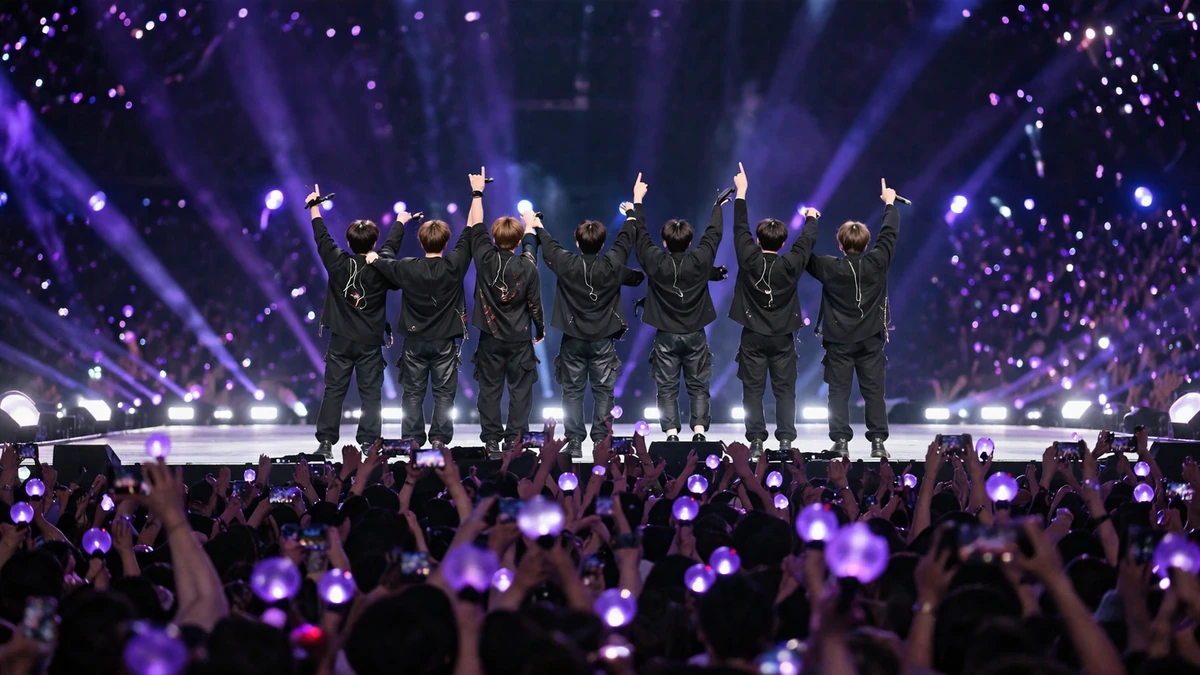
BTS stays on top, and the second week matters most
BTS has spent a second consecutive week at No. 1 on Spotify’s weekly chart, a result that says more about the group’s place in the global music business than any single splashy debut ever could. In an era when streaming has become the default way much of the world listens to music, holding the top spot for two weeks is not just a fan milestone. It is evidence of durability.
That distinction is important for readers in the United States, where chart conversations often focus on opening numbers: first-week sales, debut streams, surprise drops and social media buzz. Those metrics still matter. But in 2026, a first week can be powered by pent-up anticipation, coordinated fandom activity and the sheer novelty of a release. A second week at No. 1 suggests something harder to manufacture. It points to repeat listening, continued playlist traction and new listeners arriving after the initial excitement fades.
For BTS, the achievement reinforces a familiar but still remarkable reality. Even after years of solo projects, military service-related pauses and a changing global pop landscape, the group remains one of the few acts in the world capable of turning a release into a sustained international event. Not just a Korean event. Not just a fandom event. An international one.
That is why the phrase often used in South Korean media, roughly meaning “the return of BTS,” carries real commercial weight. It does not simply describe a comeback in the entertainment sense. In K-pop, the word “comeback” refers to a new release or promotion cycle, not necessarily a return from a breakup or long absence. When BTS returns as a group and immediately commands a platform as large as Spotify, the impact radiates well beyond one song. It affects advertisers, promoters, streaming platforms, merchandise sales, media bookings and the broader market logic of K-pop itself.
The new chart result, then, is not just another trophy to place on an already crowded shelf. It is a signal that BTS still occupies rare ground in pop music: a place where fan devotion and general-audience interest overlap at a massive global scale.
Why Spotify’s weekly chart matters in plain English
For American audiences, the easiest comparison is this: if Billboard remains the long-established scorekeeper of the music industry, Spotify has become one of the clearest real-time windows into how people actually listen now. Its weekly chart is not based on one-off purchases or a single televised performance. It reflects what users around the world are choosing to play over and over during a defined stretch of time.
That does not mean the chart is free from fandom influence. Far from it. Organized fan communities can absolutely move numbers, especially in the first few days of a release. K-pop fandoms, including BTS’ famously mobilized ARMY, are especially skilled at coordinating support across platforms. But there is a practical limit to what even the most dedicated fan base can do on its own at a global level for more than a brief burst. To remain No. 1 on Spotify’s weekly chart for a second week, an act generally needs more than coordinated intensity. It needs breadth.
Spotify also matters because it collapses national borders faster than older music systems did. Radio in the United States remains influential, but it is fragmented by format and geography. Television appearances can create moments, but not necessarily sustained listening. Album sales still count, but they no longer define the everyday habits of most listeners. Spotify, by contrast, combines listening from North America, Europe, Latin America, Southeast Asia and beyond into one constantly updated ecosystem.
That makes the platform especially revealing for a group like BTS, whose success has never depended on only one market. When the group first broke through in the U.S. mainstream, many skeptics tried to frame its achievements as a niche import powered solely by superfans. That argument has grown harder to defend with every passing year. A second week at No. 1 on a global Spotify chart suggests that BTS is not surviving on event-driven enthusiasm alone. It is functioning as a staple in the worldwide streaming environment.
Another reason industry executives pay attention to weekly streaming performance is that it captures the interconnected nature of music discovery today. A song can rise because of a streaming playlist, but also because of a YouTube performance clip, a viral TikTok-style short-form trend, fan-made explainers, translated lyrics, reaction videos or simple word of mouth. The final number is not just about the song itself. It is a condensed reading of how strongly an artist is connecting across the broader digital culture.
On that front, BTS has long been unusually strong. The group did not merely adapt to the online era. It helped define how a global act could use it.
The meaning of “returned BTS” for the music business
In South Korea’s entertainment industry, major group activity is often treated almost like a market-moving event. That may sound exaggerated to U.S. readers unfamiliar with K-pop’s industrial structure, but it is not far from the truth. Top-tier groups do not just release music. They activate full ecosystems: album distribution, sponsorship campaigns, live events, media coverage, fan-platform engagement, branded content and international partnerships.
That is especially true for BTS, whose rise helped transform K-pop from a successful export into a mainstream fixture of the global pop conversation. Over the past decade, BTS has done for Korean-language pop in America something few thought possible: it turned language from a presumed barrier into a secondary concern. Much as Spanish-language music gained wider U.S. acceptance through stars such as Bad Bunny, J Balvin and Karol G, BTS helped normalize the idea that audiences do not need full fluency in a song’s language to connect with it. Melody, performance, visuals, online community and cultural curiosity all do part of the work.
So when Korean media and industry watchers talk about the “return of BTS,” they are also talking about restored concentration. During periods when members pursued solo careers or group activities were less central, attention naturally dispersed. The BTS brand remained huge, but its energy was distributed across multiple projects. A group-level chart result of this scale recenters that energy. It tells the market that the BTS name, as a collective force, still has the power to gather consumers, headlines and spending into one place.
That does not mean BTS single-handedly changes the structure of the entire music business every time it charts. It would be an overreach to suggest that one strong performance instantly improves conditions for every K-pop act. The market is too crowded, and the gap between top-tier groups and smaller agencies remains wide. But benchmark acts do reset expectations. When BTS posts numbers like this, labels, advertisers and streaming partners study the result closely. They adjust marketing assumptions. They revisit investment priorities. They reconsider how much runway a Korean act can have outside Asia.
There is also a generational aspect. A long-running pop act faces a challenge familiar to Americans who have watched stars from Taylor Swift to Beyoncé to Drake navigate different phases of their careers: how do you keep core fans while bringing in younger listeners who may know the brand but did not experience the original breakthrough in real time? A strong second week suggests BTS may be doing both. Older listeners who remember the group’s earlier global peaks are returning, while newer users are discovering the group through algorithms, clips and current conversation rather than nostalgia alone.
Fandom and mainstream appeal are not opposites
One of the laziest ways to talk about K-pop in Western media has been to set up a false choice between fandom power and public popularity, as if the two are somehow mutually exclusive. BTS’ latest Spotify performance is a reminder that in today’s music market, the more accurate story is about interaction, not separation.
Fandom creates ignition. Mainstream appeal sustains the burn.
That is true across pop, not just in Korea. American artists rely on devoted fan communities too. Swifties, the BeyHive and the Barbz all help shape chart outcomes, online visibility and media narratives. What sometimes differs in K-pop is the level of organization and visibility. Fan communities often coordinate streaming strategies, translation efforts, charitable projects and online promotion with a discipline that can look unfamiliar to outsiders. But writing off chart success as “just fandom” misses how modern music travels.
If fans are the first wave, the broader audience often arrives through a different set of mechanisms. A listener hears a track in a curated playlist. A clip circulates on Instagram Reels or another short-form platform. A performance video lands on YouTube recommendations. A friend shares a subtitled interview. A sports arena, coffee shop or retail store plays the song. The barrier to entry is lower than it once was, because digital platforms no longer require people to commit deeply before sampling something new.
BTS has been especially well positioned in that environment. The group’s music, visuals and online presence were built for frictionless circulation long before the rest of the industry fully caught up. Its fan base does more than amplify releases. It also helps interpret them, offering context, translations and explanations that make Korean-language content more accessible to international audiences. For American readers less familiar with the mechanics of K-pop fandom, that labor matters. It is one reason listeners who do not speak Korean can still develop a meaningful relationship with the music and the artists.
Still, it is worth keeping perspective. A streaming chart, even a major one, does not settle every argument about artistic quality or cultural influence. Numbers can tell us a great deal about attention and habit, but they do not automatically capture depth, innovation or long-term legacy. What they do show, clearly, is that people are listening. In large numbers. Across borders. More than once.
That is enough to make this a significant music story, even before any broader critical judgments enter the picture.
What this says about K-pop’s next phase
BTS’ chart run also offers a window into where K-pop stands in 2026. For years, the genre’s international growth inspired two competing narratives in the U.S. One held that K-pop was the future of globally connected pop, with sophisticated digital strategy, tightly engineered performance and unusually engaged fan communities. The other suggested the boom might cool once novelty faded or military service interrupted the momentum of its biggest stars.
The truth has been more complicated. K-pop did not disappear, but it did mature. The market became more crowded. New acts debuted into a harsher attention economy. Some groups translated online noise into durable careers; others struggled to break beyond core fandom. At the same time, Korean entertainment companies expanded their ambitions, building multilingual marketing plans, global distribution strategies and platform-friendly release schedules from the earliest stages of artist development.
In that environment, BTS still functions as the category-defining standard. Not because every act can or should copy its exact path, but because the group embodies what the upper limit looks like. A second straight week atop Spotify’s weekly chart underlines that K-pop’s biggest success stories are no longer explainable as isolated fan phenomena from a distant market. They are part of the mainstream architecture of global pop.
That matters in boardrooms as much as on fan timelines. If you are a record label, a brand manager or a streaming executive, results like this validate the idea that Korean acts deserve long-term investment, not just one-off promotional experiments. They also reinforce another lesson the Korean industry has spent years refining: in the streaming era, a release does not end on launch day. It begins there.
That helps explain why K-pop agencies often surround a release with a steady stream of supporting content: music videos, choreography versions, behind-the-scenes footage, live performance clips, short interviews, fan interactions and platform-specific edits. To some American readers, that amount of content can seem excessive. In business terms, it is retention strategy. The goal is not simply to debut high. It is to keep a song in circulation long enough for algorithms, casual listeners and social conversation to reinforce one another.
BTS has excelled at that kind of extended engagement for years. The latest chart result suggests the formula still works when paired with a brand powerful enough to attract attention at scale.
What to watch in the weeks ahead
The most immediate question now is not whether BTS had a successful release. It clearly did. The more revealing question is how long the song or project can maintain altitude. In streaming, the third and fourth weeks often tell the deeper story. A steep drop can indicate a front-loaded release driven heavily by concentrated fan action. A gentler decline, or continued strength near the top, usually points to broader adoption.
That is why analysts in both the U.S. and South Korea will be watching the shape of the trajectory, not just the headline number. Does the song continue to hold across markets? Are some regions, such as Latin America or Southeast Asia, proving especially strong? Does the release translate into gains on YouTube, short-form video apps, local streaming platforms and radio? Does playlist placement remain robust? Those are the kinds of follow-up indicators that reveal whether a hit is merely large or truly durable.
There is also the question of spillover. BTS has historically been one of the best acts in the world at turning success on one platform into momentum on another. A streaming peak can become a video event. A video event can become a social trend. A social trend can drive catalog listening, pulling older songs back into circulation and introducing newer listeners to the group’s broader body of work. That kind of ecosystem effect is one reason legacy artists can experience fresh commercial life in the digital era.
For consumers, though, the most meaningful takeaway may be simpler. Behind every chart debate is an experience question: what comes next for the audience? In modern pop, No. 1 is not just an outcome. It is an invitation into the next stage of engagement, whether that means more performances, additional content, catalog rediscovery or renewed public conversation.
For BTS, the second week at No. 1 suggests that invitation is being accepted on a global scale. And for the broader industry, it serves as another reminder that some acts do not merely participate in the streaming era. They shape it.
A milestone that is bigger than a number
It is easy to become numb to big BTS statistics. The group has accumulated so many records over the years that each new one can seem like an extension of the last. But that attitude risks missing what makes this particular achievement meaningful. In 2026, after a period when the group’s future rhythm was watched with unusual intensity, BTS is not just reappearing. It is proving that its center of gravity remains intact.
In American pop terms, imagine the difference between an artist making a celebrated return and an artist returning to discover that the audience never really left. That is closer to what this Spotify result suggests. The world’s listening habits have changed, platforms have evolved, newer stars have emerged and the K-pop field has become more competitive. Yet BTS still commands the kind of sustained multinational attention that most artists, in any language, never reach.
That is ultimately why two weeks matters. One week can be a moment. Two weeks starts to look like a pattern. And in a music economy driven by constant churn, patterns are what separate noise from staying power.
For BTS, the message from Spotify’s weekly chart is straightforward: the group’s global audience is still listening, still returning and still large enough to make the rest of the industry pay attention.




0 Comments