South Korea expands mental health support for firefighters, signaling a broader shift in how trauma is treated as a public health issue
A new agreement aimed at an old problem
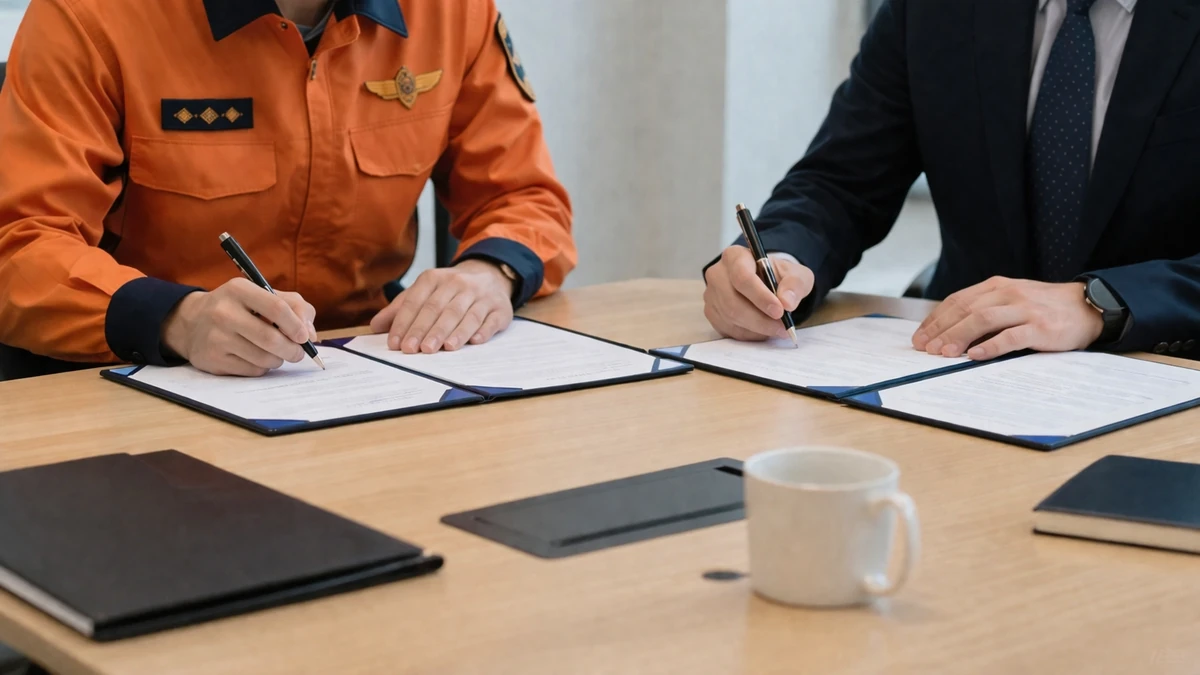
South Korea is moving to strengthen mental health support for firefighters, a step that reflects a broader change in how the country is treating psychological trauma among front-line workers. On April 10, 2026, the National Fire Agency signed an agreement with the Korean Neuropsychiatric Association to expand cooperation on mental health protection for firefighters and psychological support at disaster scenes, according to Yonhap News, South Korea’s national news agency.
On paper, the agreement may look like the kind of bureaucratic memorandum governments sign every year. In practice, it points to something larger: a growing recognition that the mental strain carried by emergency responders is not a private issue to be handled quietly, if at all, but a matter of public health, workplace safety and disaster preparedness.
That shift will sound familiar to Americans. In the United States, conversations about post-traumatic stress, depression, burnout and suicide among firefighters, police officers, paramedics and military veterans have become much more visible over the last two decades. Major fire departments now routinely talk about peer support, counseling and trauma-informed care in ways that would have been less common a generation ago. South Korea appears to be making a similar move, but within its own social and institutional context.
The Korean agreement centers on building a more formal pathway between firefighters and psychiatric professionals. Yonhap reported that the partnership will expand the cooperation base for promoting firefighters’ mental health and for providing psychological support in disaster settings. Just as important, the National Fire Agency’s network of partner hospitals has been expanded to 253 institutions, creating a wider treatment and referral infrastructure for workers who may need help.
That hospital number matters because mental health care is not only about whether treatment exists in theory. It is also about whether help is accessible when someone is ready to seek it, whether supervisors know where to send them, whether referrals can happen quickly and whether support continues over time. For people repeatedly exposed to fires, fatal accidents, rescues and mass-casualty incidents, the difference between having a system and not having one can be profound.
In that sense, South Korea’s latest move is not simply a workplace wellness initiative. It is a sign that trauma among emergency responders is being treated more seriously as a structural issue — one that requires organized links among government agencies, hospitals and professional psychiatric experts.
Why firefighters’ mental health has become a policy priority
Firefighting has always carried obvious physical risks: burns, smoke exposure, collapsing structures, toxic materials and extreme fatigue. What is less visible, but increasingly difficult for institutions to ignore, is the psychological cost of repeated exposure to death, injury and human crisis.
In South Korea, as in the United States, firefighters do far more than put out fires. They respond to vehicle crashes, medical emergencies, industrial accidents, natural disasters and rescue operations. In many cases, they are among the first people to encounter chaotic, emotionally devastating scenes. That can include handling fatalities, witnessing grievous injuries, searching for missing people or enduring the stress of rescue attempts that do not end in survival.
These are not one-time events. They are part of the job. Over time, repeated trauma exposure can affect sleep, mood, concentration, family life and job performance. It can also shape how a workplace functions, whether people feel safe asking for help and whether early symptoms are treated before they become crises.
Yonhap’s reporting framed the latest agreement as part of strengthening protections for firefighters’ mental health. That language is notable. It suggests the issue is no longer being discussed only as an individual medical matter but as a work-related health concern tied to the conditions of emergency service itself.
That distinction is important in South Korea, where mental health still carries stigma despite years of public discussion and policy attention. Like many societies, South Korea has long had cultural pressures around endurance, self-discipline and not burdening others with personal distress. Those pressures can be especially intense in hierarchical organizations and public service professions, where toughness and reliability are often prized.
For American readers, one rough comparison might be the gradual shift in the U.S. military and among first responders from a culture of “just suck it up” to a more open — though still imperfect — acknowledgment that trauma can injure the mind as surely as flames can injure the body. That change has not eliminated stigma in the United States, and it certainly has not made treatment universally accessible. But it has helped reframe psychological injury as something institutions must address, not something workers should simply absorb.
South Korea’s policy move fits into that broader global trend. It reflects a growing understanding that when a job repeatedly exposes workers to traumatic events, the mental health consequences are not incidental. They are part of the occupational hazard.
What the agreement actually changes
The most important feature of the new agreement may be its emphasis on connection rather than on any single treatment program. According to Yonhap, the two organizations agreed to expand the cooperation framework for firefighters’ mental health promotion and for psychological support at disaster sites. The psychiatric association will also help secure a pool of outside expert advisers to provide psychiatric consultation across the National Fire Agency’s health and safety programs.
That may sound technical, but it gets to the heart of how effective mental health policy is built. The biggest obstacle in many systems is not the total absence of doctors or counselors. It is the lack of a clear, trusted pathway that connects a person in distress to the right professional support at the right time.
Someone may recognize they are struggling but have no idea where to go. A supervisor may want to help but have no formal referral process. A department may offer a hotline or a seminar, but no continuity of care. In those situations, mental health support becomes fragmented, uneven and easy to avoid.
This agreement appears designed to reduce that fragmentation. The expanded partner hospital network gives the fire agency more places to connect personnel with care. The psychiatric association’s advisory role suggests mental health expertise will not be limited to individual treatment sessions after problems emerge, but may also inform program design, prevention strategies and operational planning from the outset.
That matters because trauma support works best when it is embedded into an organization rather than added as an afterthought. Effective systems usually require several layers: prevention education, confidential access points, trained clinicians, leadership buy-in, follow-up care and a culture that does not punish people for admitting they are struggling.
The agreement does not, at least from the publicly reported details, guarantee all of those outcomes. A signed partnership is not the same thing as a proven result. But it does indicate that South Korean authorities are trying to formalize the structure through which firefighters can be connected to specialized psychiatric care and professional guidance.
In policy terms, that is meaningful. It shifts the conversation away from one-off campaigns and toward institution-building. And in mental health, institutions often determine whether people actually receive help.
Why 253 partner hospitals matter
One of the clearest concrete details in Yonhap’s report was the expansion of the National Fire Agency’s partner hospitals to 253. By itself, that figure does not prove quality. A large network can still face uneven care, regional disparities or bureaucratic bottlenecks. But it does signal that the government is trying to widen access, and access is often one of the hardest parts of mental health care to fix.
For emergency workers, timing matters. Trauma symptoms do not always appear immediately, and when they do, the willingness to seek help can be fragile. If a firefighter finally decides to speak with a professional but faces a confusing referral system, a long delay or a distant facility, that opportunity can easily be lost.
Expanding the hospital network increases the odds that treatment options will be geographically and administratively reachable. It also suggests the agency is thinking beyond crisis management and toward continuity. Mental health treatment often requires more than a single consultation. It may involve assessment, therapy, medication management, time off, gradual return-to-work planning and long-term monitoring.
For American readers, it may help to think of this less as adding more hospital names to a list and more as creating a larger service map for a high-risk workforce. In the U.S., similar questions arise when states and municipalities debate whether veterans, police officers or firefighters have enough providers in their insurance network who actually understand trauma. The issue is not only insurance coverage. It is whether there are real treatment doors people can walk through.
The Korean case also underscores a common lesson in public health: availability shapes behavior. When institutions build visible, formal channels to care, they send a message that help-seeking is expected and legitimate. That can be especially important in professions where workers may worry that acknowledging distress will damage their reputation, stall promotions or lead colleagues to question their reliability.
If the National Fire Agency can use the 253-hospital network effectively — meaning clear referral systems, confidentiality and sustained access — it may do more than provide treatment. It may help normalize the idea that psychological care is part of maintaining operational readiness, not evidence of personal weakness.
Disaster response is not only physical
Another significant piece of the agreement is its focus on psychological support at disaster scenes. That expands the conversation beyond firefighters’ long-term well-being and into the immediate environment of emergency response.
When Americans think about disaster response, the first images are usually physical: firefighters pulling people from rubble, paramedics triaging the injured, police securing perimeters, utility crews restoring power. But anyone who has covered hurricanes, school shootings, wildfires or building collapses knows that disasters also create intense psychological strain — not only for survivors and families, but for the responders who spend hours or days inside those scenes.
South Korea’s new agreement appears to recognize that reality more explicitly. According to Yonhap, the two sides agreed to expand the cooperative base for psychological support in disaster situations. That suggests mental health is being folded more directly into how disaster response is conceptualized, rather than treated strictly as post-event cleanup.
That is a meaningful change in framing. It implies that emotional and psychiatric consequences are part of the disaster environment itself. In other words, a catastrophe does not end when the flames are out or the last victim is transported. Its effects continue in the people who witnessed it, managed it and carry memories of it afterward.
There is also a public safety dimension to this. Responders who are mentally supported are generally better positioned to function consistently in demanding circumstances. That does not mean counseling can erase trauma or that resilience training can solve every systemic problem. It does mean emergency systems are more sustainable when they account for the psychological burden placed on the workforce.
At the same time, caution is warranted. The current reporting establishes that the cooperation framework is being expanded and that psychiatric advisory support will be strengthened. It does not yet show how those measures will work on the ground, how quickly responders will be seen, how confidentiality will be protected or what standards will be used to measure success. Those details often determine whether a policy becomes transformative or remains largely symbolic.
Still, even the decision to embed psychological support into disaster-response planning is significant. It moves mental health closer to the center of emergency management, where it arguably belongs.
Why the role of the psychiatric association matters
The involvement of the Korean Neuropsychiatric Association gives this agreement a level of professional grounding that goes beyond general statements about wellness. According to Yonhap, the association will support the recruitment of an outside expert advisory pool and provide psychiatric consultation for the fire agency’s broader health and safety efforts.
In public policy, that kind of partnership matters because institutions often know they have a problem before they know how to design an effective response. Front-line agencies understand operational realities. Professional medical bodies understand diagnosis, treatment standards, risk factors and research trends. When those two types of institutions work together seriously, policy is often stronger than when either acts alone.
For American readers, the closest comparison might be a federal or state emergency-services agency working directly with a major psychiatric or medical association to shape both treatment access and workplace-health strategy. The point is not just to bring in experts after a crisis. It is to integrate specialized knowledge into the architecture of prevention and response.
The relationship also appears to be reciprocal. Yonhap reported that the National Fire Agency will cooperate with the psychiatric association’s public mental health promotion and research support projects. That suggests the fire service is not simply being treated as a passive recipient of care. Its experience may also inform broader national conversations about mental health, disaster exposure and how institutions should protect workers repeatedly exposed to trauma.
That kind of two-way exchange can be especially valuable in South Korea, where rapid urbanization, dense metropolitan living and periodic large-scale emergencies have kept disaster preparedness in public view. Firefighters occupy a particularly important role in that environment. Their experiences can offer insight into how trauma accumulates in high-pressure public service work, and how systems succeed or fail in responding to it.
There is another reason the psychiatric association’s role matters: credibility. In any country, mental health policies can falter if workers suspect they are primarily about liability protection, public relations or checking a compliance box. Involvement from a professional medical association may help reassure personnel that the effort is intended to reflect actual psychiatric expertise, not just managerial messaging.
Whether that credibility translates into trust among firefighters will depend on implementation. But the institutional design points in a direction that is harder to dismiss as cosmetic.
A sign of how South Korea’s mental health policy is evolving
Looked at more broadly, this agreement appears to reflect a larger evolution in South Korean health policy: a move toward treating mental health through more targeted, occupation-specific systems rather than leaving it confined to general public messaging or individual clinic visits.
That may seem like a subtle distinction, but it marks an important policy development. Mental health has often been discussed in abstract terms — awareness, stigma reduction, counseling campaigns, national concern. Those efforts have value, but they do not always address the lived realities of particular groups whose work exposes them to unusual levels of stress or trauma.
By focusing specifically on firefighters, the South Korean government is acknowledging that some professions face distinct mental health risks that require tailored institutional support. That is a public-health approach Americans would likely recognize from programs directed at veterans, health care workers, police officers or survivors of mass violence. The underlying principle is that risk is not evenly distributed, and neither should support systems be.
It also suggests that mental health policy in South Korea is becoming more operational. Rather than staying in the realm of broad national concern, it is being translated into partnerships, referral networks, advisory structures and role-specific interventions. For a country where mental health discussions have sometimes lagged behind need, that kind of administrative specificity is notable.
None of this means South Korea has solved the challenge. Mental health systems are difficult everywhere. Stigma persists. People fall through cracks. Resources can be unevenly distributed, especially outside major urban centers. And formal agreements often outpace the pace of culture change inside workplaces.
But this development is still worth watching because it shows how one U.S. ally in Asia is grappling with a question many countries face: How should the state care for people whose jobs require them to repeatedly witness society at its most traumatic moments?
The answer South Korea is beginning to sketch is that care cannot rely only on personal resilience or private treatment-seeking. It has to be built into the system itself.
What comes next
The success of this initiative will hinge less on the signing ceremony than on implementation. The key questions are practical ones: Will firefighters trust the system enough to use it? Will referrals be timely? Will services be confidential? Will leadership treat mental health care as compatible with professional competence rather than in tension with it? And will the network of 253 partner hospitals be broad in name only, or genuinely functional in practice?
Those are the same questions policymakers in the United States confront whenever they announce new support systems for trauma-exposed workers. Building a framework is necessary. Making it work in daily institutional life is harder.
Still, the agreement announced in South Korea deserves attention because it reflects a meaningful change in how trauma is being framed. Firefighters’ mental health is no longer being treated solely as a personal matter to be dealt with quietly after the shift ends. It is being defined, more clearly than before, as an issue of worker protection, disaster preparedness and public health.
That is a notable development in any country. In South Korea, where emergency responders occupy a crucial role in a fast-moving, densely populated society and where mental health stigma has long complicated treatment, it may prove especially important.
For English-speaking audiences, the takeaway is straightforward. This is not just a Korean administrative story. It is part of a much wider international reassessment of what societies owe the people who run toward catastrophe when everyone else is running away. South Korea’s latest move suggests one answer: more than gratitude, more than slogans and more than symbolic concern. It suggests they owe them a system.
Comments
Post a Comment