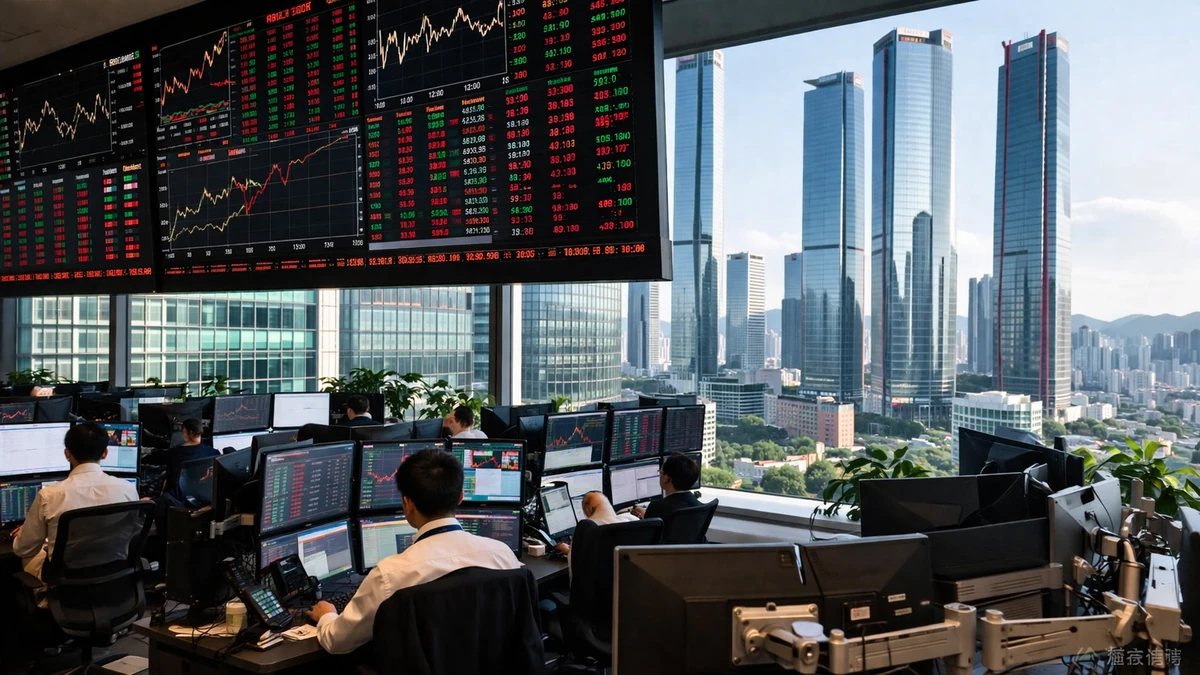
A regulatory meeting with outsized consequences
When South Korea’s Financial Services Commission meets on April 9, 2026, to review whether Samsung Securities can enter the country’s so-called “issued note” business, the decision will be about far more than whether one brokerage gets permission to sell a new short-term financial product. In South Korea, the case is shaping up as a test of how policymakers want the nation’s capital markets to evolve at a delicate moment for the economy — one marked by elevated borrowing costs, concerns about household debt and lingering stress in real estate-linked credit.
For Americans, the easiest way to understand the stakes is to think of this as a fight over who gets to become more bank-like without actually being a bank. Samsung Securities is already one of South Korea’s largest brokerage houses, with estimated equity capital of around 6 trillion won, or roughly several billion dollars. If regulators grant the license, the firm would gain access to a large and relatively stable funding channel that could then be deployed into corporate lending, bond underwriting, structured finance and other investment banking businesses.
That matters because South Korea’s financial system has long been dominated by banks, even as its securities firms have tried to grow into something closer to Wall Street-style investment banks. The license under review would give Samsung Securities another tool to compete in that transition. Supporters see it as a way to deepen the capital markets and provide businesses with more financing options beyond traditional bank loans. Critics worry it could encourage more leverage and push short-term money into longer-term or riskier assets, creating fresh vulnerabilities if markets turn.
In other words, this is not just a licensing decision. It is a referendum on how much risk South Korea is willing to tolerate in exchange for growth, competition and a more sophisticated financial system.
What “issued notes” are — and why the term can be misleading
The Korean product at the center of the debate is known as balhaeng eoeum, or issued notes. While the name may sound technical, the concept is fairly simple. They are short-term notes, typically maturing within one year, that a securities firm sells using its own credit. Investors buy them as a place to park cash for a short period, often in exchange for a yield that can be higher than a standard bank deposit.
That does not mean they are the same as savings accounts. Legally and structurally, they are not deposits protected in the way bank accounts are. Instead, they are debt instruments issued by the brokerage itself. The distinction is important, even if many retail investors may treat them psychologically like a cash-management product. In South Korea, where households are highly engaged in financial markets and often move money quickly in search of yield, that resemblance to a bank-like product is one reason regulators have historically been cautious.
For U.S. readers, the closest comparison is not perfect, but imagine a large brokerage using its brand and credit quality to offer a short-dated cash product that feels safer and more convenient than a corporate bond, while using the proceeds to fund a broader investment banking operation. That can be attractive for both the firm and the customer. The firm gets a scalable source of funding; the customer gets an alternative to leaving money idle in a checking account or low-yield deposit.
South Korea limits this business to very large, well-capitalized securities firms, often described domestically as “super-sized investment banks.” Even those firms do not get automatic access. They must win separate regulatory approval, a sign of how seriously the government treats the business. The reason is straightforward: a product marketed as a short-term parking place for money can become systemically important if sold at scale.
Why securities firms want this license so badly
Brokerages everywhere face a version of the same problem: commission income is volatile, trading volume rises and falls with market sentiment, and wealth management fees alone rarely provide enough stability to support a major expansion in corporate finance. South Korea is no exception. For years, the country’s biggest securities firms have tried to reduce reliance on brokerage commissions and build up steadier revenue streams from underwriting, lending, advisory work and asset management.
Issued notes help solve a basic business problem in that strategy: funding. Without them, brokerages generally rely on tools such as repurchase agreements, short-term electronic debt, corporate bond issuance, credit lines and their own capital. Those channels can be more expensive, more limited or more exposed to shifts in market confidence. A firm that wins an issued-note license can collect funds more broadly from individuals and institutions, often at a cost that makes its balance sheet more competitive.
That gives the firm something resembling a spread business — the classic financial model of borrowing at one rate and investing or lending at a higher one. If the brokerage can raise money at, say, mid-3% yields and then deploy that money into bond underwriting, corporate loans, high-quality securitized assets or structured deals that generate higher returns, the result can be a more recurring earnings engine.
In American terms, this is partly about moving from a transaction-driven business to a platform model. A brokerage with dependable funding can do more than sell stocks to retail investors. It can underwrite more bonds, participate in acquisition financing, support infrastructure deals, bridge mergers, back corporate restructurings and compete for larger mandates at home and abroad. It becomes less of a storefront and more of a financial hub.
That shift is especially important in a market like South Korea, where companies have been gradually diversifying away from pure bank lending toward a mix of bonds, commercial paper, mezzanine financing and private structured deals. The brokerage that can reliably gather cash and redistribute it efficiently becomes much more powerful in that ecosystem.
Why Samsung Securities is the company everyone is watching
Samsung Securities occupies a distinctive place in the Korean financial landscape. It is widely known for its strength in retail wealth management, particularly among affluent clients, and for the brand recognition that comes with being part of the broader Samsung orbit, even though the group’s financial affiliates operate under their own regulatory structures. In a country where trust, brand reputation and distribution networks matter enormously in retail finance, that is no small advantage.
What Samsung Securities has lacked, according to many market analysts, is this specific funding tool. Even with sufficient capital size to qualify for consideration, the absence of an issued-note license has been seen as a structural disadvantage compared with rivals already able to tap that market. Without it, a brokerage may still compete in investment banking, but usually with a higher funding burden or less flexibility in scaling large deals.
If the license is approved, Samsung Securities would likely be able to leverage its existing client base quickly. That is one reason the market is paying close attention. The company’s wealthy individual clients, corporate cash-management customers and broader retail network could provide a ready audience for short-term products positioned as alternatives to bank time deposits, cash management accounts or idle brokerage balances.
In South Korea, affluent investors often keep substantial sums in low-duration vehicles while waiting for opportunities in equities, bonds, property or private products. A large brokerage with a strong advisory network can gather those balances faster than outsiders might expect. Industry analysts have long argued that, for a company with Samsung Securities’ reach, initial uptake could be significant if interest rates and market conditions are supportive.
The benefits would not stop there. A stronger liability base could allow Samsung Securities to expand more aggressively in underwriting corporate bonds, extending credit to companies, financing acquisitions or participating in overseas alternative investments. Over time, that could reshape not only the firm’s earnings mix but also the competitive balance among South Korea’s top securities houses.
Why the timing matters in South Korea’s economy
The significance of the decision lies not just in what the product is, but in when regulators are weighing it. South Korea enters this review facing several overlapping pressures. The country has been dealing with the aftereffects of a strong dollar, still-elevated financing costs and recurring concerns about household leverage. Corporate borrowers, meanwhile, remain sensitive to funding costs at a time when export performance, property markets and global demand all feel less predictable than they did in the era of ultra-low interest rates.
That makes the license review a balancing act. On one hand, allowing another major brokerage to gather and deploy large pools of capital could provide support to companies seeking financing. In periods of bond-market volatility, securities firms with robust balance sheets can serve as important intermediaries, stepping in to underwrite debt, warehouse risk temporarily or provide bridge financing when market access is uneven.
On the other hand, expanding this business can also amplify leverage in the financial system. When short-term funding becomes more abundant, institutions face a natural temptation to put it to work in higher-yielding assets. That is rational from a business standpoint, but it can create problems if the assets are long-dated, illiquid or exposed to sectors already under strain.
South Korea has recent experience with this kind of stress. The 2022 “Legoland” credit scare — triggered by concerns linked to a project-finance default and the backing of debt tied to a local development project — helped freeze parts of the country’s short-term funding markets. It became a vivid lesson in how quickly confidence can evaporate when investors begin to question liquidity and credit quality. For regulators, that episode remains a cautionary tale about maturity mismatches and hidden fragilities in shadow-banking style funding channels.
Seen through that lens, the Samsung Securities decision is less about rewarding one firm and more about whether authorities believe the market can absorb another powerful funding conduit without recreating old vulnerabilities.
What this could mean for companies, banks and everyday investors
If Samsung Securities receives approval, the first effects are likely to be felt in corporate finance. Korean companies, especially larger ones and upper-tier midsize firms, increasingly use multiple funding sources rather than relying only on bank loans. A brokerage with more room to raise cash can underwrite more bonds, support bridge loans and offer financing structures tailored to complex transactions. That can be especially valuable when public bond markets become choppy or when banks turn more conservative.
For banks, the development could mean sharper competition for short-term funds. Issued notes are not the same as deposits, but from the perspective of many customers, they can function as a practical alternative for cash that does not need to be locked away for long. If banks are slow to raise deposit rates, a highly rated brokerage offering slightly better yields can become an appealing destination for spare cash.
That dynamic could also affect money market funds, cash management accounts and short-duration fixed-income products. In a country where consumers are unusually attentive to rate differences — a familiar behavior to Americans who moved money aggressively into higher-yield online savings accounts as interest rates rose — even small changes in relative yields can shift large amounts of money.
For ordinary investors, the key issue is understanding the trade-off between convenience and risk. The product may look and feel conservative because of its short maturity and the reputation of the issuer. But it is still a security, not a bank deposit. Its safety ultimately depends on the strength of the issuing firm and the prudence with which the firm uses the proceeds. That is why these products sit in a regulatory gray zone that often makes policymakers uneasy: they are simple enough to attract household money but consequential enough to shape the plumbing of the broader financial system.
The biggest risk is not raising the money, but where it goes
At the heart of the policy debate is an old financial truth: funding is only as safe as the assets it supports. The immediate appeal of issued notes is that they bring in short-term cash. The danger is that the money may be invested in assets with much longer maturities or far less liquidity. As long as markets remain calm, that mismatch may appear manageable. When markets seize up, it can become the source of a crisis.
That risk is especially relevant in sectors such as real estate finance, structured credit and certain forms of alternative investment, where returns may look attractive but exit paths can become narrow under stress. South Korean regulators have spent years trying to contain risks around project finance, commonly referred to in Korea as PF, shorthand for development lending that can become vulnerable when property values fall or refinancing windows close.
There is also the issue of internal controls and conflicts of interest. Securities firms often operate multiple businesses under one roof: deal origination, underwriting, sales, trading and asset management. If governance is weak, a firm can be tempted to use fresh funding to support inventory it cannot easily sell, channel money toward related-party transactions or keep shaky projects alive longer than it should. Those are not uniquely Korean concerns; they are familiar in every market where firms both manufacture and distribute financial products.
That is why the government’s review is expected to focus not only on headline capital levels, but also on risk management, compliance systems, governance structures and post-approval monitoring. Regulators know the real test begins after the license is granted. The crucial questions will be how quickly the firm grows the business, how concentrated its asset portfolio becomes, how well its liquidity buffers hold up and whether it avoids overexposure to any one sector.
In that sense, the license is not the finish line. It is the beginning of a continuous exam.
A bigger shift in South Korea’s financial identity
Beneath the technical language, the Samsung Securities case points to a broader transformation in the Korean economy. South Korea has spent decades building world-class industrial champions and a globally connected export sector. Its financial system, however, has often been criticized as less dynamic than the country’s manufacturing might would suggest — still heavily bank-centered, occasionally overregulated and at times too dependent on property-linked credit cycles.
Allowing more securities firms to operate with quasi-deposit-like funding channels is part of a longer push to deepen capital markets and create institutions that can do more than intermediate household savings into traditional loans. It reflects a desire to build Korean versions of diversified financial platforms that can support corporate expansion, innovation and global deal-making.
But modernization in finance rarely happens without trade-offs. The more firms can fund themselves outside the banking system, the more regulators must monitor risks that do not fit neatly into old categories. South Korea, like the United States and other advanced economies, is wrestling with a familiar question: how do you foster market-based finance without letting it become a source of instability?
That is why the upcoming review has captured such attention. If approved, Samsung Securities could become a stronger rival in the race to build a more expansive investment banking franchise. Corporate borrowers might gain another meaningful source of capital. Customers could get a new place to park cash. Yet each of those benefits comes with a policy challenge attached.
For American readers, the story may sound highly local, but its core themes are universal. It is about the blurred line between banks and nonbanks, the attraction of short-term funding, the dangers of chasing yield and the constant tension between financial innovation and financial stability. South Korea is simply confronting those questions in its own way — and this time, the answer may hinge on whether one of the country’s most recognizable financial brands is allowed to open a new pipeline for money.
Whatever regulators decide on April 9, the outcome will send a signal well beyond Samsung Securities. It will tell the market how aggressively Seoul wants to push the next phase of capital-market development — and how much faith it has that the safeguards are strong enough to keep that growth from turning into the next source of financial strain.
Comments
Post a Comment