A Global Food Price Gauge Just Hit a Three-Year High. In South Korea, It’s a Warning Sign for the Dinner Table — and a Lesson for Everyone Else.
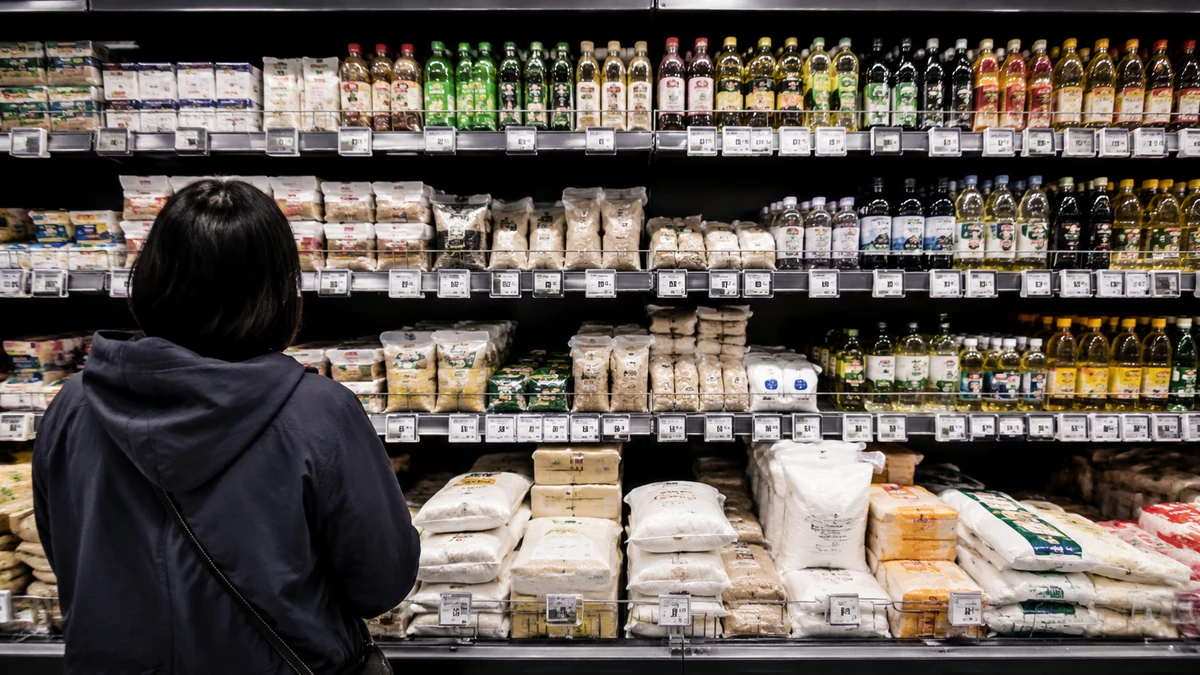
A familiar inflation story, told through food
A closely watched global measure of food costs climbed in April to its highest level in more than three years, a development that is likely to resonate far beyond commodity markets and government ministries. According to the United Nations’ Food and Agriculture Organization, or FAO, the world food price index rose to 130.7 last month, up 1.6% from March and the highest reading in three years and two months.
On paper, that number can look abstract — the kind of statistic that usually lives in the business section, not at the family dinner table. But in South Korea, where officials quickly highlighted the data, the increase is being read as something more immediate: a warning that pressure is building again across the global food system, especially in vegetable oils, grains and meat. For a country that imports large amounts of raw materials and remains deeply tied to global trade flows, the index is not just an international benchmark. It is an early signal of what could eventually show up in supermarket aisles, restaurant menus and factory procurement costs.
That broader significance is not unique to South Korea. Americans have lived through their own version of the same lesson over the past several years, when spikes in groceries — eggs, cooking oil, beef, cereal and bread — turned global supply chain stress into a kitchen-table issue. What makes the latest FAO reading notable is not simply that prices rose. It is that they rose after a stretch of declines, suggesting the direction of travel may be changing again. For businesses, consumers and policymakers, a renewed upswing in food costs can be harder to ignore than a one-month shock.
In South Korea, the latest figures are drawing attention because they compress a large and complicated story into a single number. They reflect harvest conditions, shipping costs, fuel trends, stockpiles, consumer demand and market expectations around the world. And for an export-driven, import-reliant economy like South Korea’s, those forces do not stay overseas for long.
That is why this latest report matters to global readers as well. South Korea often serves as an especially clear case study in how international price swings ripple through a modern, trade-dependent economy. When costs rise in the world market, South Korea tends to feel it quickly — and its response can offer clues about what other import-dependent nations may face next.
Why 130.7 matters more than it looks
The FAO food price index measures monthly changes in international prices across a basket of major food commodities. It uses the average price level from 2014 through 2016 as a baseline of 100. That means a reading of 130.7 is not just a month-to-month uptick. It indicates that global food prices remain substantially above that reference period.
That distinction matters. A monthly increase of 1.6% tells economists about speed — how fast prices are moving right now. But the absolute level of 130.7 says something different: the burden is already elevated before the latest rise is even added. In other words, this is not a case of prices rebounding from unusually low levels. It is an increase layered on top of an already expensive environment.
That helps explain why officials and market watchers are taking the report seriously. In economic coverage, direction and level are often equally important. A small rise from a depressed baseline may not alter corporate planning or household expectations very much. But an additional increase at a relatively high level can affect behavior quickly. Food manufacturers may start to reconsider supply contracts. Retailers may prepare for tougher negotiations with suppliers. Restaurants may become less willing to absorb higher input costs. Consumers, in turn, may shift spending or trade down to cheaper products.
There is also a psychological dimension. Inflation is not just about what something costs today. It is also about what people think it will cost tomorrow. When price indexes notch a multiyear high, it can shape expectations even before the full impact hits store shelves. In the United States, policymakers at the Federal Reserve have long emphasized that inflation expectations can become self-reinforcing. Food markets are no different. If producers and distributors believe raw materials will remain expensive, they adjust purchasing, inventory and pricing accordingly.
In South Korea, that matters because the country has relatively limited agricultural self-sufficiency in some key areas and relies heavily on imported feed, grains, edible oils and other raw inputs. A number published by a U.N. agency may seem distant from everyday life in Seoul or Busan, but it can become very local very quickly once it moves through food manufacturing, logistics, wholesale channels and restaurants.
Vegetable oils are at the center of the latest surge
The most striking part of the latest report is the jump in vegetable oil prices. South Korea’s Agriculture Ministry said the vegetable oil price index rose 5.9% from the previous month to 193.9, a sharp increase driven by higher prices for palm oil, soybean oil, sunflower oil and rapeseed oil.
That breadth is important. This was not a spike in one obscure commodity caused by a temporary local disruption. It was a broader move across the major edible oils that underpin much of the modern food economy. These oils are everywhere: in home cooking, processed foods, snacks, baked goods, instant noodles, frozen meals, restaurant fryers and packaged products that line grocery store shelves from Seoul to Chicago.
Palm oil is drawing particular attention because it has now risen for five consecutive months, in part on expectations of stronger demand from biofuels. That detail may sound technical, but it points to a major structural reality of today’s food markets: agricultural commodities are no longer shaped only by what people eat. They are also shaped by energy policy, climate goals and industrial demand.
For American readers, there is a useful comparison here. Corn in the United States has long been tied not just to food and animal feed but also to ethanol policy. Soybeans are not only a crop for tofu, livestock feed and cooking oil; they are also part of a larger energy and industrial equation. The same dynamic is increasingly visible in global edible oils. When governments and industries push for alternative fuels, some of the same crops and inputs that feed people or support food manufacturing also become part of fuel supply chains. That can tighten markets and raise prices.
For food companies, rising vegetable oil prices are particularly hard to avoid. Oil is both a direct ingredient and an indirect cost driver. It affects cooking, preservation, texture and production efficiency. It also feeds into transportation and packaging decisions, since many processed foods are built around ingredient systems that cannot be changed overnight without reformulation, testing and cost trade-offs.
In South Korea, where convenience foods, fried foods, packaged snacks and prepared meals are major parts of the consumer market, higher oil prices can spread widely. The same is true in the United States, where a rise in cooking oil can ripple from grocery chains to school cafeterias, fast-food operators and big consumer packaged goods companies. In both countries, that means the headline number on global food prices may eventually translate into many smaller price adjustments rather than one dramatic shock.
Grains and meat add to the pressure
If higher vegetable oil prices were the whole story, businesses and consumers might still hope to absorb some of the shock through substitutions or temporary margin compression. But the latest FAO report also showed increases in grains and meat, making the picture more complicated.
That combination is especially significant because grains and meat sit at the core of daily diets and industrial food systems. Grains are basic building blocks — not just for bread, noodles and cereals, but also for livestock feed and countless processed foods. Meat prices matter not only because they affect what consumers pay at the butcher counter or in the refrigerated aisle, but because they reflect broader costs across feed, transportation, disease management and supply chain logistics.
In South Korea, grains and meat carry both economic and cultural weight. Rice remains central to the Korean table, even as bread and noodles have become more common. Meat, especially pork and beef, plays a major role in popular meals and social dining culture, from samgyeopsal, or grilled pork belly, to bulgogi and other restaurant staples. When the cost of grain-based feed rises, the pressure can move through livestock systems and eventually affect those familiar dishes.
For American audiences, the dynamic is not hard to recognize. Anyone who has watched the price of beef, chicken wings or sandwich bread fluctuate over the past several years understands how closely interconnected these categories can be. Feed costs affect ranchers and poultry producers. Grain shortages or shipping problems can raise costs for bakeries and cereal makers. Higher global commodity prices do not always map neatly onto retail prices, but over time the relationship tends to assert itself.
It is true that not every category moved up. Dairy and sugar prices declined, offering at least some offset. But the center of gravity in the current report is clearly on the rising side, particularly because the biggest increases are concentrated in foundational inputs that touch multiple layers of the food economy. That is why the report is being viewed less as a statistical curiosity than as a marker of renewed cost pressure.
South Korea’s exposure makes it an important case study
South Korea is hardly alone in facing food inflation risks, but it offers a particularly useful lens because of the structure of its economy. The country is highly developed, deeply integrated into global trade and heavily dependent on imported energy and many imported raw materials. Those characteristics make it unusually sensitive to shifts in world prices.
That sensitivity extends well beyond farms. South Korea’s powerful food manufacturing sector, sprawling convenience-store culture, school lunch systems and restaurant industry all rely on complex supply chains. A swing in international commodity prices can become a domestic issue for everyone from major conglomerates to neighborhood restaurant owners.
And the burden is not shared equally. Large firms typically have more room to manage volatility through diversified sourcing, longer-term contracts, hedging strategies and inventory control. Smaller companies often have fewer such options. A midsize food producer or independent restaurant may feel cost shocks faster and more intensely, especially if competition makes it hard to pass those increases on to customers immediately.
That mirrors a pattern familiar in the United States. Big-box retailers and multinational food companies can sometimes delay or soften the blow of rising input costs. Small bakeries, family-owned restaurants and regional processors usually have less bargaining power and less financial cushion. In inflationary periods, that difference matters. It can affect business closures, menu prices, employment decisions and consumer choice.
South Korea’s government therefore pays close attention to signals like the FAO index not because they automatically dictate domestic inflation, but because they provide an early read on external pressure. Ministries and businesses use such data to think about import procurement, pricing decisions and supply diversification. In a country where economic planning often involves close monitoring of global shifts, the index functions as a kind of warning light on the dashboard.
That makes South Korea’s reaction instructive for other countries, especially those that depend heavily on imports. If vegetable oils, grains and meat remain under pressure globally, other economies with similar trade profiles may soon face the same questions: How much can industry absorb? When do companies raise prices? How exposed are consumers already stretched by housing, utilities or debt costs?
The trend may matter more than the one-month jump
Perhaps the most important detail in the latest data is not the size of the April increase but the fact that it extends a broader reversal. The FAO index had declined for five straight months through January. Then it turned upward in February and continued rising for three consecutive months.
That kind of shift can be more meaningful than a single sharp move. Markets often absorb one-off volatility without drastically changing behavior. But when an index stops falling and begins rising repeatedly, it can change how businesses interpret the future. What once looked temporary starts to look structural.
For food companies, that can influence everything from contract timing to inventory management. If executives believe prices are merely fluctuating, they may wait for better terms. If they begin to think a new cost cycle is underway, they may lock in supplies sooner, raise prices faster or revise product strategies. Retailers and restaurant chains make similar judgments. So do consumers, who may not follow commodity indexes directly but do notice patterns at the store.
In practical terms, a three-month run of increases across several key categories tells producers that the era of relief may be over, at least for now. That does not guarantee a return to the kind of severe food inflation seen during earlier global disruptions. But it does make it harder to treat higher costs as an isolated blip.
This is one reason the phrase “highest level in three years and two months” carries such weight. In economics, records and multiyear highs are not just descriptive; they shape sentiment. They influence the way market participants talk to one another, the way investors and analysts frame risk, and the way policymakers think about vulnerability. The number becomes a benchmark against which future developments are judged.
For households, the process can be subtler but no less real. When shoppers begin hearing repeatedly that food prices are climbing again, they may start adjusting sooner — buying store brands, cutting discretionary spending or eating out less. In South Korea, as in the United States, those small household choices can accumulate into broader economic effects.
What this says about the global economy, not just Korea
The latest food price data is, in one sense, simply a monthly statistical release. But taken together — the surge in vegetable oils, the continued rise in palm oil, the increases in grains and meat, and the three-month rebound after a five-month decline — it paints a larger picture of a global economy still vulnerable to overlapping shocks.
Food markets today are shaped by more than weather and harvests. They are tied to energy transitions, geopolitical uncertainty, logistics networks, labor availability and consumer behavior across continents. When biofuel demand influences edible oil prices, or when grain prices feed through to meat costs, the boundaries between agriculture, industry and energy become increasingly blurred.
That is part of why this story deserves attention outside South Korea. The country’s exposure makes the pressure easy to see, but the underlying forces are global. Americans, too, remain vulnerable to the same broad trends, even if the transmission mechanisms differ. The United States is a major agricultural producer, but that does not insulate it from higher global input costs, weather volatility, energy prices or the knock-on effects of international demand shifts.
There is also a broader policy lesson here. Nations facing more volatile food and energy costs are increasingly looking to productivity, technology and supply chain resilience as part of their defense. In South Korea, separate economic initiatives announced the same day — including new support for regional innovation and research and development in areas such as energy systems, automation and industrial efficiency — underscore how seriously the country is thinking about resilience in an era of external price shocks. Those projects are not direct responses to food inflation, but they reflect the same strategic instinct: when the outside world gets more volatile, efficiency and adaptability matter more.
For global readers, that may be the most important takeaway. The rise in the FAO index is not just about whether cooking oil or meat becomes more expensive next month. It is about how modern economies cope when essentials — food, fuel, raw materials — become more unpredictable at the same time. South Korea’s experience offers a concentrated example of that challenge.
For now, one monthly report does not tell the whole story. Retail price pass-through is uneven, local supply conditions matter, and some categories may stabilize. But the latest reading is enough to sharpen attention. A number like 130.7 may begin as an international index. In a trade-connected world, it rarely stays abstract for long.
Comments
Post a Comment