A Korean Office Romance Ends on a High Note, Showing How K-Dramas Keep Reinventing the Workplace Story
A finale that landed like a hit, not just a goodbye
South Korean television has no shortage of office romances, but the tvN drama "Secret Audit" closed its run with a message that felt more pointed than the usual will-they-won't-they payoff. According to Yonhap News Agency, the series ended May 31 with a nationwide rating of 9.7%, a strong finish that suggests viewers stayed engaged through its final hour rather than drifting away before the conclusion. In the world of Korean broadcast and cable television, where ratings are still closely watched as a measure of buzz, staying power and industry momentum, that number matters.
For American readers who may not track Korean TV ratings the way sports fans follow playoff numbers or network executives watch Nielsen overnights, a 9.7% audience share for a cable drama is not a trivial result. South Korea's TV landscape is fragmented, competitive and fast-moving, with major broadcast networks, cable channels and streaming platforms all fighting for attention. A finale approaching double digits, especially for a contemporary drama without the spectacle of a fantasy epic or crime thriller, signals that the show found a real audience and held it.
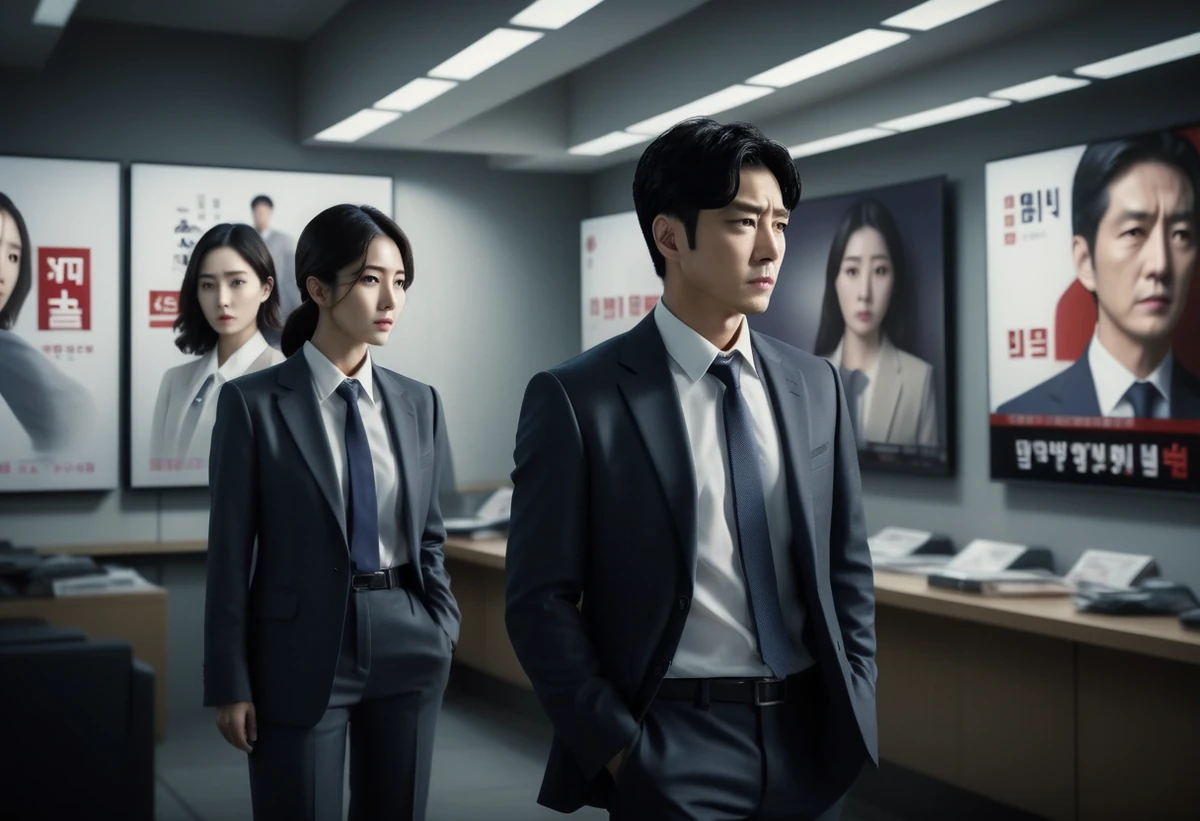
But the significance of "Secret Audit" goes beyond a ratings figure. The series, led by Shin Hye-sun and Gong Myoung, framed its romance inside a corporate audit office at the fictional Haemu Group, a setting that gave the familiar beats of workplace attraction a sharper edge. Instead of placing flirtation in a marketing department, newsroom or legal office, the drama centered on a team responsible for monitoring conduct, discipline and internal order. That choice turned what could have been a conventional office romance into a story about what happens when personal feeling collides with institutional responsibility.
By the end, the drama delivered exactly the outcome Korean entertainment coverage highlighted: it managed to secure both "work and love." In other words, its central couple did not have to choose between career integrity and emotional fulfillment. For a genre that often reduces office life to a glossy backdrop for chemistry, that balance helps explain why the finale landed as more than a tidy romantic wrap-up. It felt like a statement about adulthood, professionalism and the fantasy of having a meaningful job without sacrificing a meaningful relationship.
That theme is not uniquely Korean, but it resonates in a distinct way inside South Korea's corporate culture, where hierarchy, loyalty and group identity often carry more visible weight than they do in many American workplaces. "Secret Audit" used that environment to ask a familiar question in a less familiar key: Can two people build trust in a system built to watch, regulate and sometimes punish human behavior?
Why an audit office makes this drama different
To understand why the premise stood out, it helps to unpack what an "audit office" represents in a Korean corporate context. In the broadest sense, an internal audit division oversees compliance, corporate risk, misconduct and organizational accountability. In American terms, think of a hybrid between internal investigations, ethics and compliance, and a department that quietly reports to power rather than performs for the public. It is not the kind of workplace usually romanticized on screen. That is precisely why it made for intriguing television.
Yonhap's summary of the show emphasizes that this particular unit investigates workplace impropriety, a phrase that can carry a wide range of implications in Korean office culture. It is not simply about catching rule-breakers in the abstract. It touches questions of hierarchy, favoritism, personal conduct, reputation and the unwritten codes that shape life inside large companies. In South Korea, the corporate conglomerate, known as a chaebol, remains one of the defining institutions of modern economic life. These family-controlled giants, comparable in influence to the largest American conglomerates but often even more central to national identity, have long been fixtures in Korean dramas because they combine wealth, power, secrecy and family politics in one package.
Haemu Group, the fictional company at the center of "Secret Audit," fits squarely into that tradition. Yet the series does something notable: it shifts the focus from the boardroom heirs and succession melodrama to the people tasked with keeping the institution from spinning out of control. That choice matters because Korean dramas often treat corporations as stages for power struggles, while ordinary workers and midlevel professionals are left to orbit around the chaebol family at the center. Here, the audit office becomes the story's nerve center. The people doing oversight, not merely the people inheriting the company, drive the narrative.
For overseas viewers encountering this setup through subtitles or summary articles, the appeal is easy to grasp. Workplace stories are universal. So are stories about surveillance, compliance and the tension between official rules and private emotion. In the United States, audiences have embraced office shows from "The Office" to "Suits" to "Industry," each translating work anxiety into a different kind of entertainment. What "Secret Audit" adds is a distinctly Korean sense of organizational pressure. Status matters. Seniority matters. Appearances matter. The company does not just employ the characters; it shapes how they speak, defer, conceal and commit.
That is why the audit office is more than a gimmick. It is a dramatic engine. Put romance in a space designed to investigate conduct, and every glance, alliance and misunderstanding carries extra charge. The department's very existence forces characters to measure themselves, not just their feelings. In that sense, the show's premise turns the old office-romance formula inside out. The workplace is not merely where love happens. It is the mechanism that tests whether love can survive scrutiny at all.
How the finale tied together corporate crisis and personal commitment
At the center of the finale are Ju In-a and Noh Gi-jun, the lead characters played by Shin Hye-sun and Gong Myoung. Their ending, at least as described in Korean coverage, is important not because it surprises but because it resolves two storylines at once. They do not simply confess their feelings in isolation. They move through a corporate crisis, help stabilize the company and, in the process, clarify what they mean to one another. That dual resolution is what gives the ending its emotional heft.
Haemu Group faces a sale crisis, and Noh Gi-jun helps prevent that outcome by sincerely persuading Jeon Jae-yeol, who had stepped back from a succession struggle. That plot point may sound like classic corporate melodrama, but the method matters. He does not win by defeating a villain in some explosive showdown. He wins through persuasion, which is one of the more revealing details in the summary. It suggests the drama remained committed to relationships, negotiation and personal credibility rather than pivoting to a purely sensational finale.
That, too, is characteristic of many Korean dramas at their best. They often generate tension not only through plot twists but through the question of whether people can be moved, softened or changed. In American television, especially in legal or political procedurals, climaxes can depend on exposing a secret, delivering a gotcha speech or toppling an opponent. Korean dramas frequently place more weight on whether a character can make another character understand something fundamental. "Secret Audit" appears to follow that logic all the way to the end.
Ju In-a and Noh Gi-jun also help restore the audit office as an independent organization, another story beat with symbolic value. The independence of a watchdog unit inside a large company implies that accountability itself has survived. In dramatic terms, it means love does not derail professionalism; instead, the characters' emotional maturity seems to strengthen their sense of duty. That is a meaningful distinction. One of the recurring criticisms of workplace romances, in Korea and elsewhere, is that they trivialize the office by treating careers as disposable set dressing. This finale apparently argues the opposite: that serious people can love seriously without abandoning the responsibilities that define them.
The couple's happy ending comes with a promise to face whatever life brings together. On paper, that sounds like standard romantic fare. In context, it lands differently. The promise comes after the work is done, after the crisis is managed, after the institutional stakes are addressed. Love is not used as an escape hatch from adulthood; it is framed as something earned through adulthood. That may be one reason the ending resonated. It offers a fantasy, certainly, but a grounded one: not that romance frees you from work, but that the right partnership can make difficult work more bearable and more purposeful.
What Shin Hye-sun and Gong Myoung bring to a familiar genre
Star power is never incidental in Korean drama, and "Secret Audit" had plenty of it. Shin Hye-sun is one of the more versatile actresses working in the Korean television industry, known for performances that balance emotional intelligence with sharp comic timing. She has built a career on making smart, self-possessed women feel accessible rather than remote. That quality matters in a series like this, where the female lead has to carry both romantic credibility and professional authority.
Gong Myoung, meanwhile, has spent years building a steady screen presence across film and television, but this project appears to have marked a meaningful expansion for him. In an interview cited in Korean reports, he said this was his first time taking on an office drama. That may sound minor, but genres in Korean entertainment can be surprisingly type-specific. A historical series, a campus romance, a legal drama and an office melodrama each require different rhythms, postures and even speech patterns. Playing a professional in a corporate environment means learning how to wear authority, restraint and hierarchy in a believable way.
One of the more charming details from his interview was that his parents reportedly looked at him in a suit and wondered whether that is what he would have looked like in ordinary office life. American audiences may recognize the appeal of that anecdote. It gets at a basic truth about star casting: part of the pleasure is seeing a performer step into a social role that feels adjacent to everyday life. The suit, in this case, is not just a costume. It is a marker of adulthood, conformity and institutional belonging.
Gong Myoung also said he came away newly drawn to the office-drama genre and would like to play another professional role in a suit. Just as important, he acknowledged that the dialogue and work environment initially felt unfamiliar. That admission points to one of the reasons workplace dramas can fail when they are not carefully built: viewers can immediately sense when the office is just decorative. In this case, he said the writer had several acquaintances in audit teams and that real-life episodes were reflected in the script, allowing him to ask practical questions directly rather than relying solely on abstract research.
That kind of behind-the-scenes detail is revealing. Korean dramas are often marketed internationally for their polish, glamour and emotional sweep, but their best workplace stories tend to work because they contain just enough professional texture to feel lived in. The office jargon, the caution in how subordinates speak, the pressure to manage optics, the invisible lines between formal and informal conduct: these elements make the romance more persuasive. They also make the show more exportable, because the more specific a workplace feels, the more universal its emotional stakes can become.
The enduring appeal of office romance in Korea and beyond
Office romance remains one of the most durable formats in Korean drama because it naturally blends fantasy and familiarity. Most viewers know something about work stress, professional ambition and the exhaustion of performing competence all day. A workplace setting provides built-in obstacles, recurring contact and a believable reason for emotionally guarded adults to keep encountering each other. It is, structurally, one of the most efficient engines for serialized romance.
In South Korea, the genre has extra resonance because work can occupy such an outsized place in adult identity. Long hours, rigid seniority, group dinners and intense competition are common themes in discussions of Korean office life, even as younger workers increasingly push back against those norms. Dramas frequently soften or stylize these realities, but they do not ignore them entirely. That is why an office romance can feel escapist while still touching something true. The fantasy is not only that love arrives; it is that love arrives in an environment that otherwise feels highly controlled.
"Secret Audit" appears to sharpen that appeal by pairing the familiar with the strange. The romance itself is recognizable, including the attention paid to the age dynamic between the leads, an older woman and younger man pairing that remains noteworthy in many parts of Asian pop culture even if it is far from unheard of. In Korean drama, age hierarchy can shape speech, etiquette and expectations in ways that may be less visible to American audiences. A relationship that crosses even a modest age line can subtly challenge assumptions about who leads, who hesitates and who risks more socially.
Set against that is the unfamiliar setting of a department that investigates impropriety. The result is a romance that has to move through rules, consequences and internal observation. Every workplace romance asks whether love can survive policy and reputation. "Secret Audit" literalizes that question. Its characters are not merely worried about gossip. They work in the machinery that identifies and evaluates misconduct. That gives the emotional arc extra friction and, by extension, extra satisfaction when the characters reach a stable ending.
For American audiences who have come to K-dramas through Netflix-era global hits, there is something instructive here. Not every successful Korean drama depends on zombies, revenge, palace intrigue or high-concept fantasy. Sometimes the hook is subtler: a recognizable human problem placed in a highly specific Korean institution. That is often where the industry is strongest. It takes a familiar emotional shape and places it in a setting textured by local culture, creating stories that feel both accessible and new.
What this ending says about the current state of the Korean drama business
The final rating for "Secret Audit" also has meaning within the Korean entertainment industry itself. End-of-run numbers are watched closely because they can affect how networks, advertisers, producers and talent agencies read the viability of a genre. A strong finish for an office romance suggests that viewers still have appetite for dramas rooted in contemporary professional life, even in an era dominated by streaming algorithms and flashy global tentpoles.
That is not a small point. The international rise of Korean entertainment has created a tendency abroad to focus on only the most export-friendly extremes: dystopian thrillers, lavish period pieces, celebrity-driven romances and prestige dramas with obvious hooks. But the domestic industry still depends heavily on midrange series that build audience week by week through character investment and relatable settings. An office romance that performs well at the finish line is a reminder that not every hit has to be an event series in the American sense.
There is also an industrial logic to the success of a drama like this. Workplace series are comparatively adaptable. They can be grounded enough to feel inexpensive next to fantasy spectacles, but flexible enough to absorb romance, comedy, family tension and corporate intrigue. They also give actors room to expand their image. As Gong Myoung's comments suggest, a professional role in a suit is not just about looking polished. It can reposition a performer as mature, credible and ready for a broader range of projects.
For networks and studios, that matters. A successful drama does several things at once: it entertains audiences, creates a library title that can travel internationally, and helps shape the next phase of an actor's career. If "Secret Audit" is read within the industry as proof that office romance remains a durable lane, it may encourage more experiments with unusual workplace settings rather than generic corporate backdrops. The audit office in this case functioned not merely as decoration but as a differentiator.
And that may be the larger lesson from the show's finale. Korean drama is often at its most compelling when it takes a well-worn format and adjusts one key variable. Here, that variable was not a supernatural premise or a shocking twist. It was a department, a culture of oversight and a corporate ecosystem where romance had to coexist with discipline. The fact that nearly one in 10 national viewers on cable stayed with that story to the end suggests the formula worked.
Why American viewers should pay attention
For English-speaking audiences who are newer to Korean television, "Secret Audit" offers a useful window into how K-dramas can be both culturally specific and emotionally legible. You do not need a deep knowledge of chaebol politics or Korean office etiquette to understand why a romance inside an internal watchdog unit is compelling. But knowing that context enriches the experience. In Korea, the company is often portrayed not just as a place of employment but as a social world with its own hierarchy, rituals and emotional hazards. That is what gives a show like this its texture.
It also provides a contrast with many American workplace stories. U.S. television often treats work either as absurd comedy, as in "The Office," or as a site of ruthless competition, as in finance and law dramas. Korean series frequently leave more room for sincerity. Even when they critique institutions, they tend to ask whether decent people can preserve dignity, kindness and loyalty inside them. That tonal balance can feel refreshing to viewers accustomed to irony-heavy storytelling.
"Secret Audit" seems to have understood that balance well. It did not abandon romance for procedural complexity, nor did it hollow out the workplace to make room for easy chemistry. Instead, it treated labor, hierarchy and responsibility as part of what makes adult intimacy meaningful. Its finale, with the leads securing both professional purpose and emotional commitment, delivered a kind of ending many viewers still crave: hopeful, but earned.
In that sense, the show's 9.7% finale is indeed more than a number. It marks the success of a drama that trusted viewers to care about policy, persuasion, office politics and feeling all at once. It confirmed the drawing power of Shin Hye-sun and Gong Myoung. And it suggested that even in an overcrowded entertainment market, there is still room for stories about people in suits trying to do the right thing, falling in love and keeping a company from losing itself in the process.
That may sound like a distinctly Korean setup. In practice, it is part of a much broader appeal. Whether the workplace is a Manhattan newsroom, a Silicon Valley startup or a fictional audit office in Seoul, the central question remains familiar: Can people remain honest with themselves and with each other inside institutions built on pressure, appearances and power? "Secret Audit" answered yes, and viewers stayed long enough to watch it happen.
Comments
Post a Comment