South Korea’s Under-17 Women Send a Message at the Asian Cup, Clinching the Quarterfinals With a 4-0 Rout of Taiwan
A fast start, and an early statement
South Korea’s women’s under-17 national team has done more than simply survive the opening week of the AFC U-17 Women’s Asian Cup. It has announced itself as one of the teams worth watching.
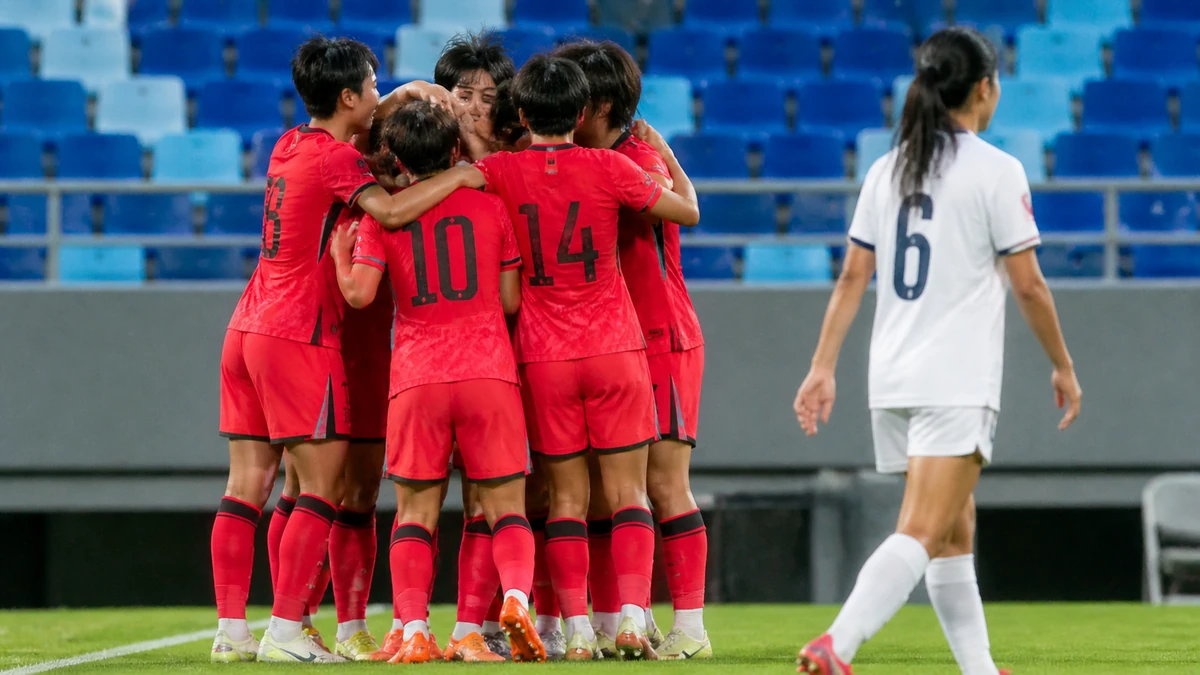
With a 4-0 victory over Taiwan on Monday in Suzhou, China, South Korea secured its second straight win in Group C and clinched a place in the quarterfinals with a match still to play. In a youth tournament, where nerves can rattle even talented teams and where the margin for error is especially small, wrapping up advancement this early matters. It means the Koreans are no longer playing to avoid disaster. They are now playing for position, momentum and proof that this generation can be more than a promising age-group side.
Under coach Lee Da-young, South Korea has collected six points through two group-stage matches and posted a plus-9 goal differential, enough to guarantee at least second place in the group. North Korea, the defending champion, also sits on six points after overpowering the Philippines 8-0 the same day. But North Korea’s extraordinary plus-18 goal differential keeps it in first place for now, setting up a high-stakes final group match between the two Korean sides on May 8.
For American readers more familiar with the Women’s World Cup or the U.S. women’s national team pipeline than with the structure of Asian youth competitions, the significance is straightforward: this is the kind of tournament where future senior internationals start to separate themselves. Just as fans in the United States watch youth national team camps and NCAA standouts for clues about the next generation of American stars, countries across Asia treat events like this as an important measuring stick. South Korea’s early qualification suggests its next wave of players is arriving on schedule — and perhaps ahead of it.
The scoreline against Taiwan was emphatic on its own. The context makes it more meaningful. In a short group stage, teams are not judged only by whether they win, but by whether they can repeat results against different opponents while keeping their composure. South Korea has now done that twice.
Why a youth tournament matters beyond the box score
It can be tempting to dismiss under-17 soccer as a niche story, especially outside countries where youth development is followed closely. But tournaments like the AFC U-17 Women’s Asian Cup often provide an early preview of where national programs are headed. The senior game may get the headlines, yet the foundation is built much earlier — in camps, academies and age-group national teams that expose young players to international pressure long before they reach the biggest stages.
That is particularly relevant in South Korea, where women’s soccer has grown steadily but still operates in the shadow of the men’s game and of powerhouse women’s programs in places like the United States, Japan and several European countries. The Korean women’s senior national team has had periods of real progress, including World Cup appearances and a place in the broader global conversation, but sustaining that progress depends on producing technically polished, tactically disciplined players year after year.
That is why this week’s result resonates beyond a single afternoon in Suzhou. The issue is not merely that South Korea beat Taiwan. It is that the team handled a match it was expected to win, turned it into a one-sided result and made sure there would be no late drama. In youth tournaments, that kind of professionalism is often a better long-term sign than a single upset against a more famous opponent.
There is also a cultural dimension that may be less familiar to some English-speaking audiences. In South Korean sports, age-group national teams are often viewed as a proving ground not just for athletic talent but for mental discipline and collective organization. Korean sports fans frequently value what they describe as “organization” or “system” as much as raw flair, especially in international competition. That helps explain why reports around this team have emphasized not only the four goals scored but also the clean sheet and the controlled game management. A 4-0 win says the attack was sharp. A 4-0 win with no goals conceded says the team stayed focused from start to finish.
For a country trying to build durable success in women’s soccer, those details matter.
The numbers tell a story of control
Statistics in youth tournaments can be misleading if taken in isolation. Opponents vary widely in experience and depth, and one lopsided result does not necessarily predict the next stage. Still, South Korea’s numbers through two matches suggest something more substantial than simple good fortune.
Two wins, six points and a plus-9 goal differential indicate a team that has not scraped by. It has controlled games. Just as important, South Korea’s quarterfinal place was confirmed because both Taiwan and the Philippines lost their first two matches, leaving the two Korean teams safely through regardless of the final group results. That removes the anxiety that often defines the last round of group play and shifts the emphasis toward sharpening the team for knockout soccer.
In tournaments with short group stages, every team talks about “taking it one match at a time.” What matters is whether a team can actually do that. South Korea has. It won its opener, then came back and dispatched Taiwan without allowing the group to become complicated. There is real value in that. American sports fans see versions of this all the time in the NCAA tournament or in the group phase of major international events: the teams that avoid making life difficult for themselves often preserve emotional energy and tactical flexibility for the bigger tests ahead.
The shutout stands out as much as the four goals. At any age level, knockout soccer tends to compress margins quickly. A team can cruise through group play and then get dragged into a quarterfinal where one lapse decides everything. By finishing the Taiwan match without conceding, South Korea added another layer of evidence that this team is not built only to outrun weaker opponents. It may also have the defensive shape and concentration to survive tighter contests.
That matters because youth soccer can swing wildly with momentum. One careless turnover, one bad set piece, one moment of panic — and a team that looked comfortable can suddenly be chasing the game. South Korea avoided that kind of instability against Taiwan. The message was simple: this side can impose order.
The looming showdown with North Korea
If South Korea’s win over Taiwan confirmed advancement, it also sharpened the focus on what comes next: a final group-stage meeting with North Korea that now determines first place in Group C.
On paper, North Korea has been the tournament’s most intimidating force so far. The defending champion has scored 18 goals in two matches without conceding, including a 10-0 victory over Taiwan and an 8-0 rout of the Philippines. Those are not merely strong results. They are the kind of scorelines that suggest a team overwhelming opponents physically, technically and psychologically from the opening whistle.
North Korea’s history in this competition gives those numbers extra weight. It is not just a hot team; it is an established power at this level, with four titles overall and the status of reigning champion. For longtime followers of Asian women’s soccer, that pedigree is instantly recognizable. For newer American readers, think of it this way: in certain youth competitions, some programs build reputations similar to blue-blood college basketball teams in March — they are expected to contend every time because the development pipeline keeps producing.
That is the challenge awaiting South Korea. But it is also the opportunity.
Because South Korea has already secured a quarterfinal place, the North Korea match carries a different emotional texture than a winner-take-all game. The Koreans can approach it with ambition rather than fear. Yes, first place matters. In tournaments like this, group position can affect the degree of difficulty in the knockout bracket and can shape the team’s confidence entering the quarterfinals. But perhaps more important, the match offers a live test against the strongest attacking team in the group without the immediate threat of elimination hanging over every mistake.
That freedom can be useful for a young team. Coaches often say players reveal more about themselves when they are not paralyzed by the consequences of one error. Against North Korea, South Korea can measure its pressing, spacing, defensive discipline and finishing against elite opposition. It can learn whether the rhythm it has established so far holds up when the other team refuses to yield control.
For fans, the appeal is obvious. Even in youth soccer, a match between South Korea and North Korea draws attention because of the political and historical reality of the Korean Peninsula. In sports coverage for American audiences, it is important not to overdramatize that context or reduce the athletes to symbols. But it would also be unrealistic to pretend the pairing carries no extra resonance. Whenever teams from the two Koreas meet, there is heightened interest because the countries share language and history while remaining divided by one of the most enduring geopolitical fault lines in the world. On the field, though, this particular game is best understood first as a high-level soccer contest between two of the group’s best teams.
What Lee Da-young’s team appears to be showing
The early returns under coach Lee Da-young suggest a group that understands the basics of tournament soccer: handle the games you should handle, stay organized, do not let one result change your temperament, and make sure your next challenge is one you have earned rather than one you are desperate to survive.
That may sound simple, but it is not, especially with teenage players. Youth internationals face an unusual mix of excitement and pressure. Many are representing their country in a major setting for the first time. They are adjusting to travel, short rest, unfamiliar opponents and the emotional highs and lows of competition compressed into a matter of days. At this age, talent gaps can narrow quickly if one team loses its concentration or if nerves take over.
South Korea’s two wins suggest that has not happened here. Reports surrounding the team’s performance have emphasized not just the results but the consistency of the approach from one match to the next. That matters because well-organized youth sides often translate more successfully into senior national programs. Individual prodigies may grab headlines, but systems create continuity.
In South Korea, that idea carries particular weight. The country’s sporting culture often celebrates perseverance, discipline and collective execution, themes that show up across school sports, club development and national-team setups. In Korean, commentators frequently talk about “teamwork” and “organization” in ways that go beyond cliché; they are treated almost as moral virtues within competition. Lee’s team appears to be earning praise in exactly that tradition.
There is also a broader strategic point. Women’s soccer globally is getting faster, deeper and more competitive. Programs that once relied on one gifted generation can quickly fall behind if the next age group is not ready. South Korea does not have the luxury of assuming future success. It has to build it. That is why a composed run through the opening phase of a youth championship can feel so important inside the country. It signals that the pipeline is functioning.
Whether this group eventually produces senior stars is impossible to know now. Youth success does not guarantee professional or international stardom. American soccer has seen that lesson repeatedly; so have powers across Europe and Asia. But what this tournament can reveal is whether a cohort has the habits and baseline quality to remain relevant as the level rises. So far, South Korea’s answer appears to be yes.
A bigger picture for Korean women’s soccer
For those outside East Asia, Korean women’s soccer may still be most familiar through the senior national team’s World Cup appearances or through a handful of standout players who have reached global audiences. But the larger story is one of gradual institution-building. South Korea has been trying to strengthen the women’s game through schools, university programs, domestic competition and age-group national teams, all while operating in a crowded sports landscape where baseball, men’s soccer, volleyball and, increasingly, global sports entertainment all compete for attention.
That makes moments like this useful windows into where the sport stands. A quarterfinal berth at the under-17 Asian Cup does not transform the landscape overnight. It does, however, offer evidence that the infrastructure beneath the senior team is producing players who can compete regionally. In a confederation that includes formidable programs such as Japan, North Korea, China and Australia, there are few easy routes to success. Advancing comfortably is meaningful.
It is also worth noting that youth tournaments often serve as confidence accelerators. Players who perform well in these settings return home with a sharper understanding of pace, pressure and possibility. They have seen what top regional competition looks like. Coaches can use that experience as a building block. Federations can point to it as proof that investment is yielding something tangible. Fans can begin to connect names and styles with the future of the senior side.
For American readers, there is a familiar pattern here. The United States has long understood the importance of youth pathways in women’s soccer, whether through elite club systems, college soccer or underage national teams. South Korea’s challenge is different in structure and scale, but the principle is the same: if you want a stronger senior team in four, six or eight years, you need teenagers learning how to win internationally now.
That is why this week’s result deserves more attention than a typical youth scoreline might receive. South Korea did not merely qualify. It qualified early, decisively and with enough balance to suggest the team is not just exciting but functional.
What to watch next
The final group-stage match against North Korea will naturally dominate the conversation. The immediate questions are straightforward. Can South Korea slow the tournament’s most explosive attack? Can it create chances against a team that has not conceded? Can it finish first in the group and enter the quarterfinals with a signature result?
But there are subtler things worth watching too. Does South Korea remain patient if it spends stretches without the ball? Does its defensive line hold shape under sustained pressure? Do the players still look composed if the scoreline stays tight deep into the match? Those are the kinds of details that often forecast whether a team can thrive in the knockout rounds, where style points disappear and resilience becomes a currency of its own.
No matter the outcome of that showdown, South Korea has already accomplished the tournament’s first major task. It is through. It has given itself room to compete rather than merely cling on. And in doing so, it has provided a glimpse of what the next chapter of Korean women’s soccer could look like.
That may be the most important takeaway of all. Around the world, senior national teams are often judged as if they emerge fully formed. In reality, they are built years in advance, in moments exactly like this one — on youth tournament fields, far from the biggest stadiums, where future internationals learn how to carry expectation, execute under pressure and turn promise into results. South Korea’s 4-0 win over Taiwan was one afternoon in Suzhou. It was also, potentially, an early signal of something larger on the horizon.
Comments
Post a Comment