Korean culture gets the long-form documentary treatment
For years, American audiences have encountered South Korean culture in flashes: a viral song, an Oscar-winning film, a binge-worthy Netflix drama, a skin care product recommended on TikTok, a Korean fried chicken chain opening in a U.S. suburb. What once felt, to many Western viewers, like a series of disconnected imports has increasingly revealed itself as something more coherent — a broad cultural ecosystem with global reach.
That is the premise behind “K-Everything,” a new four-part CNN documentary series backed exclusively by Hyundai Motor Co., which debuted May 9 and is drawing attention for the way it frames South Korea’s rise as a cultural force. According to South Korea’s Yonhap News Agency, the series examines how Korean culture has moved from niche fascination to a defining current in global popular culture, using music, film, food and beauty as its four main pillars.
The project arrives at a moment when “K-culture,” shorthand for the global spread of South Korean entertainment and lifestyle influence, no longer needs much introduction among younger audiences. But for mainstream American viewers — including those who may know BTS but not the broader machinery behind the Korean Wave — the significance of the series lies in its attempt to connect the dots. Rather than offering a tourism-style sampler, “K-Everything” appears to argue that Korean cultural power works as a system: music leads to dramas, dramas lead to food, food leads to beauty, and all of it feeds curiosity about Korea itself.
That is a more sophisticated thesis than simply saying South Korea is having a moment. The country has been exporting culture for decades, but in the past 15 years it has done something few nations have managed at this scale: it has turned entertainment into a gateway for broader national influence without relying solely on Hollywood-style domination or state messaging. Instead, South Korean culture has traveled through fandom, digital communities, streaming platforms and consumer habits — a blend of industrial planning and organic audience enthusiasm.
For American viewers accustomed to thinking of cultural exports through the lens of U.S. pop music, Marvel franchises or Japanese anime, “K-Everything” may offer a clearer framework for understanding why Korean culture has become so durable. This is not just about catchy songs or glossy TV dramas. It is about the way South Korea built a feedback loop between art, commerce, technology and identity, then found a global audience ready to amplify it.
Why K-pop remains the front door
The series begins where many international fans began: K-pop. That choice is neither surprising nor superficial. If Korean culture is now a global house, K-pop is still the front door.
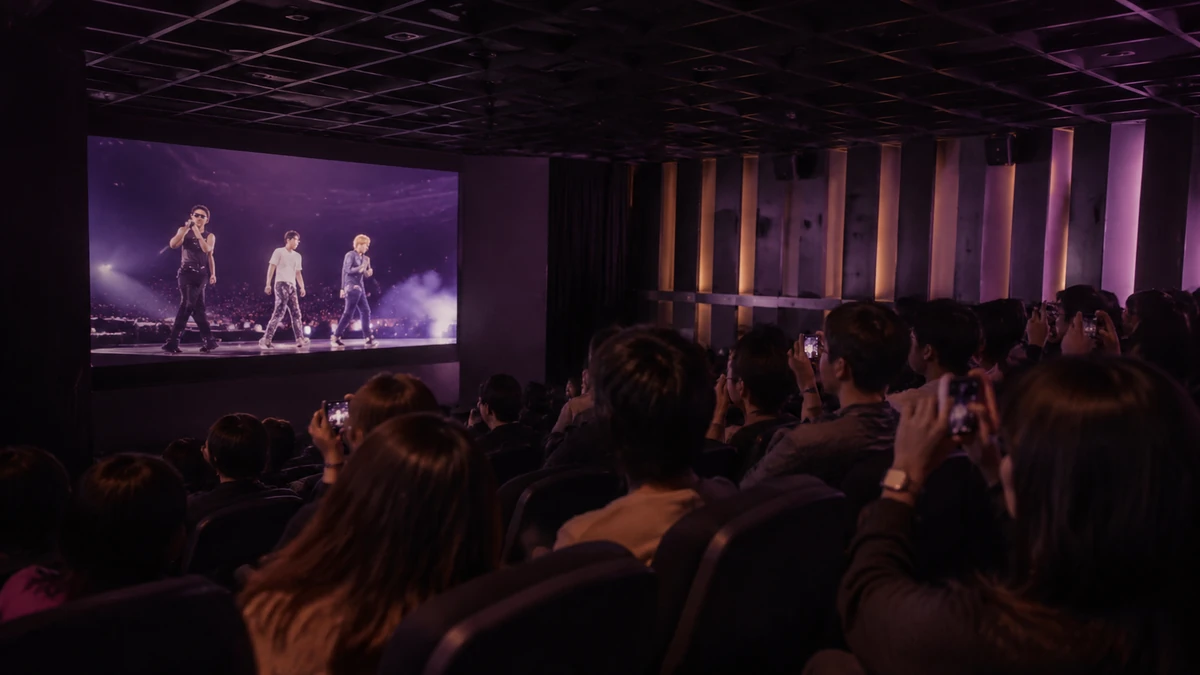
The first episode reportedly features Psy, BigBang member Taeyang and solo artist Jeon Somi, a lineup that spans different eras and styles of Korean pop. The mix matters. Psy represents a pivotal rupture in the American mainstream imagination. When “Gangnam Style” exploded in 2012, it was easy for some U.S. audiences to read it as a novelty hit — an internet joke with a horse-riding dance. In hindsight, it looks more like a cultural warning shot. The song showed that language was no longer a meaningful barrier to global reach in the YouTube era, and that South Korea could generate a pop product capable of dominating the same digital spaces long ruled by American acts.
Taeyang, meanwhile, represents a different facet of K-pop’s appeal: technical polish, performance discipline and the ability of idol groups and soloists to move between tightly choreographed spectacle and individual artistry. BigBang, the group with which he is most associated, helped establish K-pop as more than a local industry with export ambitions. It became a model of pop production that many fans saw as distinct from the U.S. system — more visual, more synchronized, more concept-driven and often more immersive.
Jeon Somi points to the contemporary phase of K-pop, in which artists are often multilingual, globally fluent and positioned from the outset for international audiences. Today’s K-pop acts do not “cross over” in the old sense of trying to break into America after first succeeding at home. Many are designed to live everywhere at once, through streaming, subtitled content, fan apps, short-form video and social media ecosystems that collapse geography.
That is one reason K-pop can be difficult for outsiders to explain if they treat it as just another music genre. It functions more like a full-spectrum entertainment model. Songs matter, but so do visuals, choreography, variety show appearances, behind-the-scenes videos, fashion choices and the ongoing narrative of artist development. Fans are not merely listeners; they are participants, translators, promoters, archivists and community builders. In American terms, imagine a blend of pop stardom, sports-style loyalty, Comic-Con-level fandom and the social media intensity of the BeyHive or Swifties — then multiply it across borders and time zones.
By starting with K-pop, “K-Everything” appears to recognize that Korean culture’s global expansion did not happen because one sector got lucky. It happened because K-pop created a highly visible entry point, one that taught international audiences how to watch, share and care about Korean content. Once that door opened, many fans kept walking.
From Parasite to streaming drama: Korea’s storytelling machine
If K-pop opened the door, Korean film and television helped convince global audiences to stay. The second part of the series, focused on film, reportedly includes actor Lee Byung-hun, filmmaker Yeon Sang-ho, screenwriter Kim Eun-sook and entertainment executive Miky Lee. Together, those names suggest a broad look at how Korean screen storytelling became one of the most influential narrative engines in contemporary culture.
American audiences may already recognize the milestones. Bong Joon Ho’s “Parasite” made history in 2020 as the first non-English-language film to win the Academy Award for best picture. “Squid Game” became a worldwide phenomenon for Netflix, turning a Korean-language survival drama into a Halloween costume, office conversation and Wall Street talking point almost overnight. Korean dramas, long beloved by dedicated international fans, moved into the U.S. mainstream with unprecedented speed once streaming erased many of the traditional distribution barriers.
But the success of Korean screen content did not begin with those titles, and it cannot be explained by them alone. That is what makes the reported lineup for the documentary so telling. Lee Byung-hun brings the perspective of a star who has moved between Korean and Hollywood productions. Yeon Sang-ho, known internationally for “Train to Busan,” represents genre filmmaking with mass appeal. Kim Eun-sook is one of South Korea’s most influential drama writers, a reminder that the country’s storytelling power depends not just on actors and directors but on strong scripts and serialized emotional architecture. Miky Lee, a key figure in the growth of CJ Group’s entertainment influence, points to the industrial scaffolding behind the creative output.
For U.S. readers unfamiliar with how Korean dramas work, one useful comparison is to think of them as a medium where the emotional payoff of prestige TV meets the accessibility of network melodrama, often wrapped in a shorter and more tightly planned format than American series. Many Korean dramas run for a single season with a defined ending. That structure can make them feel more manageable and satisfying to viewers burned out on endlessly extended franchises.
Korean films and dramas also tend to move nimbly between tones that Hollywood often keeps separate. A work can be funny, devastating, romantic and politically sharp in the span of a single episode or film. That tonal flexibility has become one of the signatures of Korean storytelling. It reflects not just artistic preference, but an audience culture comfortable with emotional range and genre blending.
“K-Everything” seems poised to underscore a crucial point: Korean cinema and television did not become global by accident. They developed through accumulated craft, risk-taking creators, strong distribution networks and a domestic audience that rewarded innovation. As with K-pop, the international wave rests on a system — one built over time, then accelerated by streaming platforms hungry for content that felt fresh to viewers tired of formula.
Food and beauty are not side dishes to the story
One of the more revealing aspects of the documentary’s structure is that it does not stop at entertainment. By expanding into food and beauty, the series acknowledges something that cultural analysts — and millions of fans — have understood for years: Korean influence spreads not just through what people watch and listen to, but through what they eat, buy and imitate.
That matters because for many Americans, the first truly personal interaction with Korean culture does not come through subtitles. It comes through dinner, skin care or a makeup routine. Korean barbecue, once concentrated in Koreatowns and major cities, is now a common part of the American restaurant landscape. Kimchi appears on upscale menus and in grocery chains. Korean fried chicken has become a category of its own, celebrated for its crispness and sauce profiles. Instant ramen brands from South Korea are staples on social media and in pantries far beyond immigrant communities.
Beauty is a similar story. “K-beauty” has become a familiar retail term in the United States, even for shoppers who may know little about South Korea itself. Multi-step skin care routines, sheet masks, cushion compacts and an emphasis on hydration and prevention over heavy correction all entered the U.S. beauty conversation in ways that reshaped consumer expectations. Some of that has been simplified or commercialized in translation, but the influence is real.
What makes these categories significant is that they reveal how cultural power often works quietly. A person may not identify as a fan of Korean entertainment and still be participating in Korean cultural circulation. They may order tteokbokki after seeing it in a drama, try a lip tint inspired by an idol’s look or learn basic Korean words through restaurant menus and streaming subtitles. Culture moves through aspiration, repetition and habit, not just through formal fandom.
In that sense, the documentary’s food and beauty episodes could prove especially valuable for an American audience. They widen the frame beyond celebrity and remind viewers that South Korea’s global profile is no longer confined to entertainment headlines. It is visible in the routines of everyday life — in refrigerators, bathroom cabinets and shopping carts.
That kind of influence is not trivial. It is one of the clearest signs that Korea’s cultural footprint has matured. When a country’s exports shape not just media consumption but taste itself — what people think is stylish, delicious, modern or desirable — it has moved well beyond trend status.
Daniel Dae Kim as translator, not gatekeeper
The involvement of Daniel Dae Kim as host and executive producer adds another layer of significance. Kim, an actor, producer and director with a long career in American television and film, occupies a space that makes him an effective bridge for this kind of project. He is well known to U.S. audiences from shows such as “Lost” and “Hawaii Five-0,” and he has also been a prominent advocate for Asian American representation in Hollywood.
His role here is not simply to narrate a documentary. It suggests an awareness that Korean culture, when presented to global audiences, benefits from interpreters who understand both the source material and the receiving culture. That distinction matters. There is a long history of non-Western cultures being packaged for American audiences in ways that feel anthropological, flattening or exoticizing. A host like Kim can help avoid that trap by positioning Korean culture not as an oddity to decode, but as a major contemporary force worthy of the same serious, curious treatment routinely granted to American or European cultural industries.
For many English-speaking viewers, Kim’s presence may also ease a generational and cultural transition. Older audiences who are less immersed in online fandom culture may be more likely to engage with a series anchored by a familiar face from American entertainment. Younger viewers, especially Asian American viewers, may recognize in his involvement a broader story about who gets to mediate global culture in U.S. media.
There is also symbolic value in the fact that Kim’s career has unfolded largely in the United States, even as the subject of the series is Korean cultural influence. That reflects one of the central dynamics of the Korean Wave in America: it is not only an import from abroad, but also a conversation with diaspora communities, bilingual audiences and second-generation viewers who have helped interpret, spread and normalize Korean culture in American life.
In that sense, Kim serves less as a gatekeeper than as a translator in the best journalistic sense of the word. He helps frame context without diluting complexity. For a documentary trying to explain not just what Korean culture is, but why it has resonated so widely, that role is critical.
Fandom, industry and the architecture of influence
One of the strongest themes in the reporting around “K-Everything” is its emphasis on fandom culture and industrial structure. That is important because discussions of Korean pop culture in the United States often swing between two oversimplifications. One reduces the phenomenon to fan enthusiasm, as though global success emerged mainly from internet obsession. The other treats it as pure corporate engineering, as though audiences were simply manipulated into caring.
The truth, as the documentary appears to recognize, lies in the interaction between the two.
K-pop in particular has become one of the clearest examples in the world of how fan communities can function as a cultural distribution network. Fans organize streaming campaigns, subtitle videos, translate interviews, trend hashtags, coordinate charitable projects and generate a constant flow of interpretive content. In American sports, fans travel, buy merchandise and defend their teams online; in K-pop, those habits exist too, but often with an added layer of digital organization and transnational collaboration.
At the same time, none of this exists in a vacuum. South Korea’s entertainment industries invested heavily in training systems, production values, global marketing strategies and the digital habits that help artists remain visible between major releases. The documentary’s framing suggests that Korea’s cultural ascent is best understood as the meeting point of production discipline and participatory audience culture.
That model has implications far beyond music. It helps explain how Korean dramas build dedicated international followings, how films travel through festival circuits into streaming conversations and how brands linked to celebrities or shows can convert attention into consumption. In an age when audiences no longer passively wait for media institutions to define culture for them, South Korea has been unusually effective at building content designed to be circulated, discussed and emotionally invested in by networked communities.
This is one reason the phrase “soft power” only partly captures what is happening. Traditionally, soft power refers to a country’s ability to shape global opinion through attraction rather than coercion. Korean culture certainly does that. But the Korean Wave also demonstrates something more commercially and technologically specific: how a middle power can build a globally influential cultural economy by understanding platforms, fandom and serialized attention better than many larger rivals.
That should be of interest not just to entertainment fans, but to anyone watching how culture is made and monetized in the 21st century.
What Hyundai’s sponsorship says about Korea’s place in the world
The fact that Hyundai is the exclusive sponsor of the series is noteworthy, though not necessarily in the cynical sense of brand placement. Corporate backing always raises questions about framing and image management, especially when national identity and commerce are intertwined. But the more telling point may be that Korean culture is now seen as a sufficiently powerful global subject to warrant this kind of large-scale media investment.
For decades, companies have understood that selling a country’s products often means selling a story about the country itself. Japan’s postwar global reputation was shaped in part by consumer electronics and automobiles. The United States has long benefited from the worldwide reach of Hollywood, fast food and tech brands. South Korea’s advantage is that its consumer brands and cultural exports have risen in tandem.
Hyundai’s association with a documentary about Korean culture reflects that broader alignment. The company is not just sponsoring a program about music and movies; it is attaching itself to the image of Korea as innovative, creative, disciplined and globally relevant. That synergy between corporate identity and cultural prestige is itself evidence of how far South Korea’s international profile has evolved.
There is, of course, a tension here. Any project backed by a major corporation risks being read as image enhancement. But documentary sponsorship does not automatically negate editorial or cultural value. Much depends on whether the series offers real insight rather than polished boosterism. If “K-Everything” successfully explains the mechanisms, contradictions and breadth of Korea’s cultural influence, then the sponsorship may be less important than the fact that a mainstream global network is devoting significant attention to the subject at all.
For American viewers, that should be the larger takeaway. Korean culture is no longer a quirky international sidebar or a youth-market niche. It is now substantial enough to support a multipart documentary, broad enough to encompass industries from music to cosmetics, and influential enough that major corporations want to be visibly associated with it.
Not a fad, but a new cultural common sense
The most useful way to understand “K-Everything” may be to see it not as a celebration of a fleeting craze, but as an acknowledgment of a new cultural common sense. The Korean Wave has matured. It has moved from surprising breakout story to durable fact of global life.
For Americans, that shift can still be easy to miss because U.S. media has long been accustomed to seeing itself as the center of global entertainment gravity. But the rise of Korean culture has coincided with a broader decentralization of pop culture power. Streaming platforms, social media and digital fandoms have weakened the old gatekeepers. Audiences now discover culture horizontally, through recommendation algorithms, friend networks and online communities, not only vertically through major American institutions. South Korea seized that opening with unusual agility.
That does not mean Korean culture has replaced American culture, nor that every Korean export succeeds abroad. It means the cultural map has changed. South Korea has become one of the clearest examples of how a country can translate domestic creativity into international presence without waiting for Western validation first. In some cases — “Parasite” at the Oscars, “Squid Game” on Netflix, the global saturation of K-pop — Western institutions ended up reacting to momentum that had already been built elsewhere.
If “K-Everything” works, it will help American viewers see that the Korean Wave is not one thing. It is not just BTS, just “Parasite,” just kimchi, just skin care or just viral dance videos. It is a network of cultural production and audience desire that keeps generating new entry points. Someone comes for a song and stays for the dramas. Someone starts with a drama and ends up cooking Korean food. Someone buys a beauty product and becomes curious about the society that made it. The path varies, but the pattern repeats.
That is why the series matters. It treats Korean culture not as a curiosity from abroad, but as one of the defining stories in contemporary global entertainment and consumer life. For U.S. audiences still catching up, that may be the most important message of all: Korea is no longer arriving. It is already here, woven into the mainstream, shaping what the world watches, hears, eats and wants next.
Comments
Post a Comment