South Korea’s message to Washington: Investment has to make business sense
South Korea’s top industry official returned from a trip to the United States and Canada this week with a message that may sound obvious to American executives but carries real weight in the current political moment: Big cross-border investments should be driven by business logic, not diplomatic theater.
Kim Jung-kwan, South Korea’s minister of trade, industry and energy, said after arriving at Incheon International Airport on May 10 that the governing principle for Korean investment projects in the United States is “commercial rationality” — in plain English, whether a deal is financially sound, operationally realistic and worth the risk. He added that U.S. officials understand that principle as well.
That may read like a carefully polished government talking point, but in the context of the U.S.-South Korea economic relationship, it is more significant than it looks. Washington and Seoul have spent the past several years deepening industrial cooperation in areas such as semiconductors, batteries, electric vehicles, energy and supply chains. South Korean companies have become some of the most visible foreign investors in the United States, especially in the South, where plants and industrial projects have been marketed as job creators and strategic assets.
Against that backdrop, Kim’s remarks serve as a reminder that even between close allies, economics does not disappear simply because geopolitics grows more urgent. South Korea may be eager to strengthen ties with the United States, but its government is also signaling that it does not intend to push companies into expensive, politically symbolic projects that cannot stand on their own balance sheets.
For American readers, the closest comparison might be the way U.S. officials talk about “friend-shoring” or “industrial policy” while corporations still answer to investors, lenders and market demand. Governments can set the tone, provide incentives and frame investments as strategic. But in the end, someone still has to make the numbers work.
That is the core of Seoul’s latest message: Alliance politics matters, but profitability, feasibility and long-term sustainability matter too.
Why this matters now
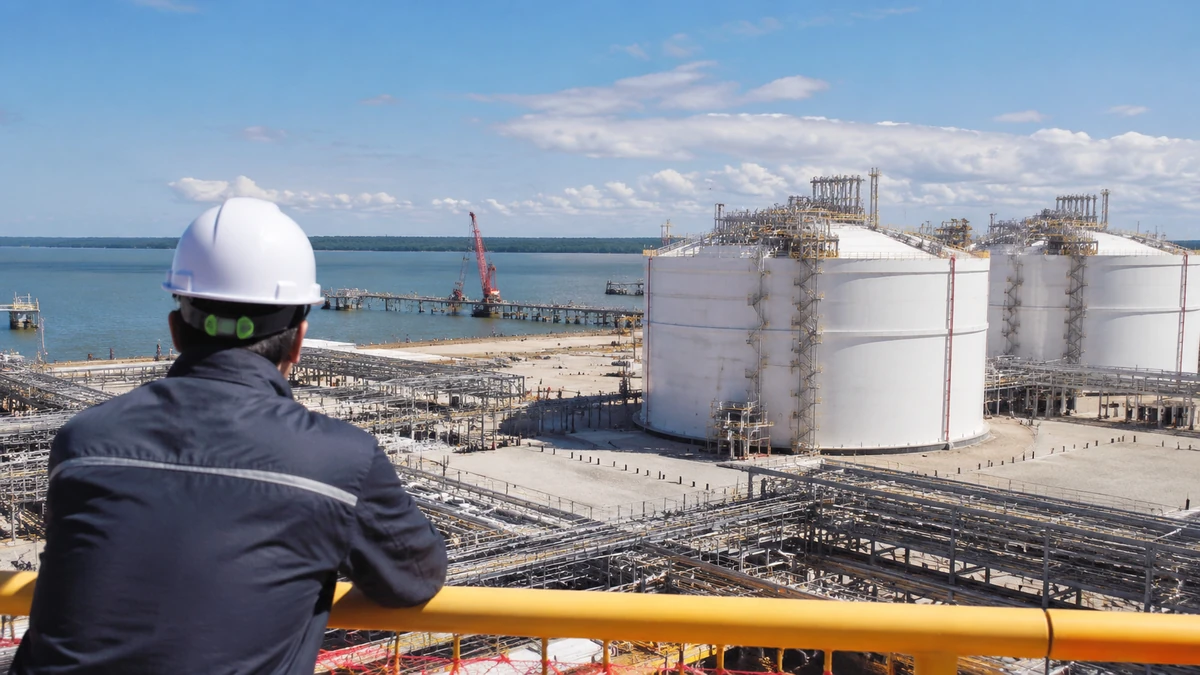
Kim’s comments drew attention because they were tied to real projects under discussion, not just abstract principles. Among the proposals being mentioned as possible flagship investments are energy infrastructure ventures in the United States, including a liquefied natural gas export terminal in Louisiana and a new nuclear power plant project.
Neither project has been formally confirmed, and Kim declined to name a specific deal, saying negotiations are still underway and asking observers to wait calmly for results. That caution is notable in itself. In many countries, including South Korea and the United States, governments often face pressure to announce big overseas investments quickly, especially when such announcements can be cast as evidence of diplomatic momentum or economic leadership.
But energy infrastructure is not the kind of field where a ribbon-cutting headline tells the whole story. LNG terminals require enormous upfront capital, complicated regulatory pathways, long construction schedules and confidence that demand will remain strong enough for years to justify the expense. New nuclear projects are even more complex. They involve financing, technology transfer, public trust, safety regulation, long-term operations and, in most cases, a political commitment that outlasts election cycles.
That helps explain why South Korea’s government is emphasizing caution rather than speed. A car plant, battery factory or semiconductor expansion can be major undertakings, but energy infrastructure operates on a different time horizon. These are assets that shape supply chains and industrial strategy for decades. Once a government and a company make that kind of bet, walking it back can be costly economically and politically.
Kim’s remarks therefore suggest that Seoul wants to be seen as a serious negotiating partner, not a government chasing headlines. In effect, South Korea is telling both domestic audiences and U.S. counterparts that it is open to deeper investment ties, especially in strategically important sectors, but it will not treat every politically appealing project as automatically viable.
That distinction matters in a global economy where governments increasingly mix national security priorities with trade and investment policy. The harder that line becomes to draw, the more both sides need a shared definition of what counts as a workable deal.
The projects on the table show how energy has become strategic again
The fact that energy infrastructure is at the center of the discussion says a great deal about where the U.S.-South Korea relationship is heading. In past decades, American consumers often associated South Korean business with cars, electronics, ships or, more recently, batteries and chips. Those sectors still matter enormously. But energy now sits much closer to the heart of industrial strategy than it did for much of the post-Cold War era.
An LNG export terminal in Louisiana would not be just another construction project. Louisiana is already one of the anchors of America’s natural gas export industry, and Gulf Coast infrastructure plays a central role in how U.S. energy reaches overseas buyers. A Korean-linked investment there would connect Seoul more directly to the physical network that processes, stores and ships fuel to global markets.
For South Korea, which imports the overwhelming majority of its energy, that kind of access carries strategic appeal. The country is one of the world’s largest energy importers and a major manufacturing exporter, meaning that energy security is not just about keeping the lights on. It is about protecting the industrial base that supports everything from steelmaking and petrochemicals to semiconductors and shipbuilding. Reliable fuel access can shape competitiveness across the entire economy.
The nuclear angle is just as consequential. South Korea has one of the world’s more advanced civil nuclear industries and has long seen reactor technology as both a domestic energy asset and an export opportunity. In the United States, meanwhile, nuclear power has reentered the conversation as policymakers search for low-carbon electricity sources that can supplement renewables and support data centers, industrial growth and grid stability.
That does not mean a new nuclear project would be easy. Quite the opposite. Americans need only look at the painful history of cost overruns and delays in some U.S. nuclear builds to understand why investors and governments would tread carefully. But if such a partnership moved forward, it would represent more than a business deal. It would be a statement about how allies are trying to rebuild industrial capacity in sectors once considered too costly, too politically difficult or too slow-moving to attract sustained support.
In that sense, the possible projects under discussion reflect a larger global shift. Energy is no longer treated merely as a commodity market issue. It has become entwined with national resilience, manufacturing competitiveness, technological capability and geopolitical leverage.
What “commercial rationality” means in the Korean policy context
Kim’s use of the phrase “commercial rationality” deserves a little unpacking for readers outside South Korea. In Korean policy language, terms like this often signal more than narrow corporate profitability. They usually refer to a broader calculation that includes return on investment, financing conditions, regulatory clarity, partner alignment, long-term operational viability and exposure to geopolitical or market risk.
In other words, the phrase does not simply mean “Will this make money next quarter?” It means “Does this project make sense when all the real-world constraints are taken seriously?”
That distinction is important because South Korea’s economy is unusually exposed to the outside world. It is one of the most trade-dependent advanced economies, with major companies deeply integrated into global supply chains. Korean firms do not make overseas investment decisions in a vacuum. They must weigh exchange rates, shipping routes, labor costs, U.S. federal incentives, state-level politics, environmental permitting, financing costs and long-term changes in global demand.
There is also a domestic political layer. South Korean governments, regardless of party, often promote overseas industrial deals as evidence that the country is upgrading its global economic role. But they also face criticism if those deals later look wasteful, overly politicized or too favorable to foreign partners. By publicly emphasizing commercial discipline, Kim appears to be setting expectations in advance. He is signaling that the government supports stronger U.S. ties, but not at any price.
His additional comment that the United States understands this principle may be just as telling. That line suggests Seoul wants to reassure domestic audiences that Washington is not demanding blind commitments or trying to turn alliance politics into a one-way transaction. It frames the negotiations as realistic and mutual, not as a test of loyalty.
For American readers, there is a familiar theme here. U.S. officials often celebrate inbound foreign investment, especially when it creates jobs in politically competitive states or strategic industries. But those same projects only happen when companies believe the regulatory environment, market demand and policy incentives align. South Korea is essentially saying out loud what private investors everywhere already know: Geopolitical alignment may open the door, but it does not close the deal.
A slower process may actually be the healthier one
Kim also said his U.S. trip was not aimed at a single dramatic milestone but was meant to review and consolidate ongoing discussions that working-level officials had already been having. That may sound procedural, but it offers a revealing look at how these negotiations are actually unfolding.
In major international economic deals, the public often sees only the summit photo, the press conference or the investment pledge announced with fanfare. What it usually does not see are the months of technical talks over financing structures, risk-sharing, procurement, construction timelines, feedstock access, legal liability and expected returns. Those details are not glamorous, but they are often what determines whether a project survives first contact with reality.
Kim’s description suggests the talks are in precisely that phase — serious enough to matter, but still dependent on technical alignment. That may frustrate those looking for quick announcements, especially in an environment where both Seoul and Washington have incentives to showcase economic cooperation. Still, in industries like LNG and nuclear power, caution can be a virtue rather than a sign of weakness.
There is an American analogy here too. Think of how major infrastructure or energy projects in the United States move from concept to reality: studies, permits, environmental reviews, lawsuits, financing rounds, state and federal approvals, labor questions and market reassessments. Even projects with broad political support can stall for years. The same logic applies to foreign-backed projects, except the complexity is multiplied by cross-border interests.
That is why Kim’s low-key tone matters. Rather than promising a breakthrough on a politically convenient timetable, he is framing the process as one that must withstand scrutiny. In the long run, that approach may help both countries more than a rushed “first project” chosen for symbolic value alone.
If a flagship deal eventually emerges from this process, its credibility will depend in part on whether it was negotiated patiently enough to survive changes in commodity prices, politics and demand conditions. Speed can be useful in diplomacy. In infrastructure, durability is usually more valuable.
The broader backdrop: supply chains, energy insecurity and allied industrial policy
It is impossible to separate this investment discussion from the broader international environment. Over the past several years, the United States and its allies have become far more attentive to the vulnerability of supply chains, energy routes and industrial dependencies. The pandemic exposed weaknesses in logistics and production networks. Russia’s war in Ukraine reshaped energy thinking in Europe and beyond. Tensions in the Middle East have underscored how quickly shocks can alter prices, shipping risks and strategic calculations.
For South Korea, these are not distant concerns. Its economy depends heavily on imported energy and exported manufactured goods, leaving it exposed at both ends of the chain. A disruption in fuel supply or transport can ripple through factories, shipping schedules and trade balances. That is one reason energy infrastructure investments abroad carry significance beyond pure profit.
Recent developments have only sharpened that concern. South Korean authorities on May 10 announced the results of a joint government investigation into a fire involving a Korean-flagged vessel, saying it was caused by a strike from an unidentified flying object. The incident, linked to broader Middle East uncertainty, is a reminder that energy and shipping security remain deeply vulnerable to geopolitical instability.
At the same time, major oil producers have reported profit jumps tied to war-driven price increases, highlighting how quickly turbulence in one region can reshape global energy economics. None of that means an LNG terminal in Louisiana or a nuclear project in the United States would solve every strategic risk facing South Korea. But it does help explain why such assets are now being viewed as part of a larger resilience strategy.
For the United States, this aligns with a familiar policy trend. Washington increasingly wants allied capital, technology and manufacturing capacity tied more closely to American infrastructure and industrial policy goals. The logic is straightforward: If the world is entering an era of fragmented supply chains and strategic competition, then trusted partners matter more.
South Korea is one of the allies best positioned to fit that model. Its companies bring capital, technical expertise and experience in large-scale industrial execution. But Seoul’s latest message is that participation in this allied strategy must still meet commercial tests. That is not resistance. It is a demand for sustainability.
The symbolism of a “first project” — and the danger of getting it wrong
One reason the current negotiations are attracting so much attention is the idea of a “first project” — a flagship investment that could set the tone for what follows. In government and business alike, first deals matter. They signal seriousness, define expectations and create political narratives that can either accelerate future cooperation or complicate it.
That is especially true in South Korea, where policy language around a “No. 1 project” or inaugural initiative often carries extra symbolic weight. It suggests not just one transaction but a model for future deals. If the first project is perceived as strong, practical and mutually beneficial, it can make later negotiations easier. If it looks rushed, opaque or economically shaky, it can cast a shadow over everything that comes after.
Kim appears acutely aware of that risk. His refusal to overstate progress suggests a desire to avoid letting symbolism outrun substance. That is a smart instinct. The history of international investment is full of splashy announcements that looked impressive at the moment and then ran into financing issues, construction delays, legal obstacles or disappointing market conditions.
For an American audience, the lesson is familiar. Public officials often love the headline number — billions of dollars promised, thousands of jobs projected, a map dotted with strategic sites. But investors and communities eventually want to know the less glamorous details: Who bears the risk? What happens if demand weakens? Is the project still viable if interest rates stay higher for longer? What permits are still outstanding? What guarantees, if any, are built into the deal?
By insisting on commercial rationality before political branding, South Korea is trying to flip the usual order of events. Instead of announcing first and sorting out the hard questions later, it is signaling that the hard questions come first. That may dampen short-term excitement, but it could ultimately produce more credible cooperation.
What to watch next in U.S.-South Korea economic relations
In practical terms, the next phase will likely depend on whether negotiators can reconcile strategic ambition with financial discipline. If one of the energy projects under discussion advances, observers should pay close attention not just to the headline investment figure but to the structure underneath it: ownership stakes, supply commitments, government support, timelines and long-term revenue assumptions.
They should also watch how Washington responds. If U.S. officials truly recognize Seoul’s emphasis on commercial rationality, as Kim suggested, that could make for a healthier partnership. It would mean the United States is not merely asking allies to invest for political symbolism, but is prepared to help create conditions under which those investments can succeed.
That might involve regulatory clarity, policy consistency, credible market signals and a recognition that energy infrastructure cannot be negotiated like a short-cycle political deliverable. It might also require a more mature public conversation in both countries about what allied economic cooperation really entails. Not every strategically appealing project is bankable. Not every profitable project is strategically important. The challenge is finding the overlap.
For now, South Korea’s message is one of disciplined engagement. It is not stepping back from the United States. On the contrary, it appears interested in deeper cooperation in some of the most consequential sectors of the modern economy. But it is making clear that partnership does not eliminate the need for rigorous investment standards.
That may be the most important takeaway from Kim’s remarks. At a time when the language of alliance, security and industrial strategy can easily overwhelm ordinary economic judgment, South Korea is drawing a line that many businesses — and many taxpayers — will understand. Strategic cooperation is valuable. But if a project is going to last, it has to work as a business too.
In an era when governments on both sides of the Pacific increasingly talk about resilience, supply chains and trusted partners, that may be the most durable principle of all.
Comments
Post a Comment