
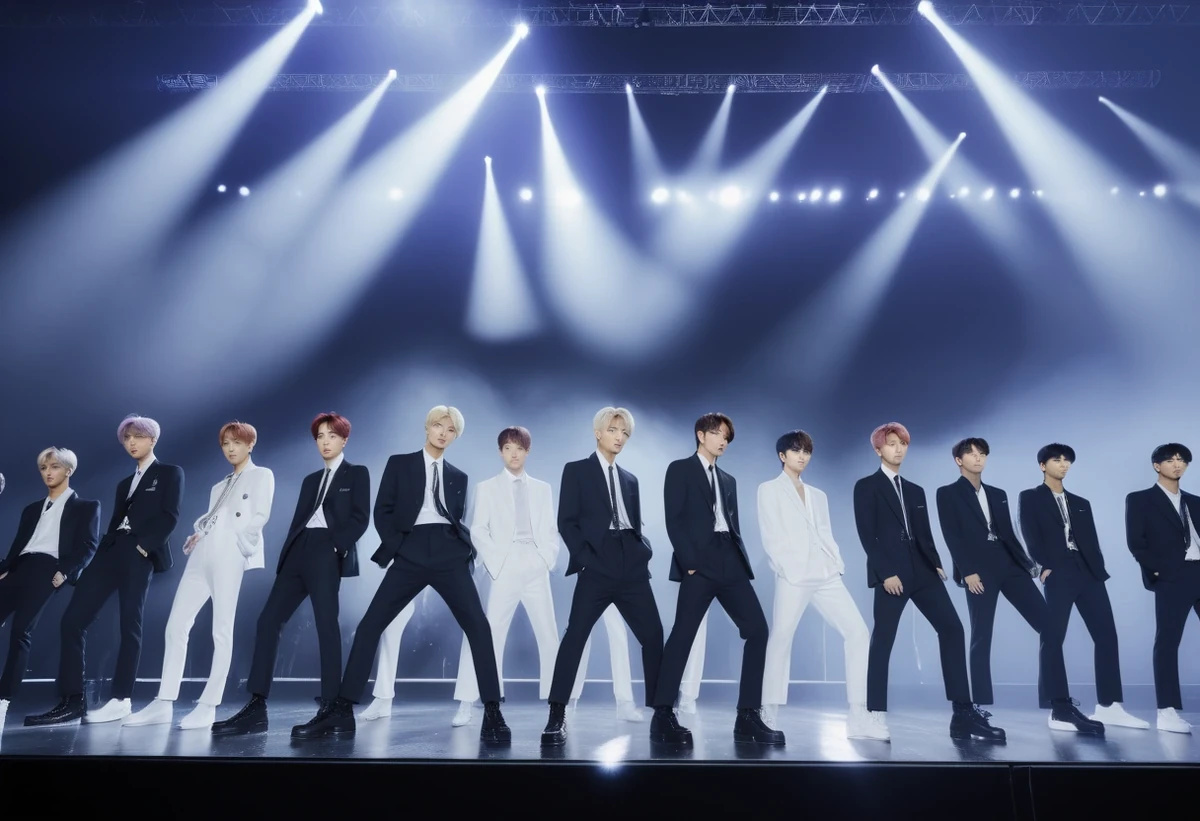
A K-pop tour becomes an economic story
For years, BTS has been treated as a pop-culture phenomenon. Now the group is increasingly being discussed in a different language: that of economists, city tourism boards and global entertainment analysts. According to reporting out of South Korea, BTS’ current world tour, titled “Arirang,” is generating the kind of spending wave that has led observers to compare it with “Swiftonomics,” the term used to describe the broader economic jolt created by Taylor Swift’s Eras Tour. In South Korea, that new label is “BTSnomics” — shorthand for the idea that the group’s influence stretches well beyond music sales and into travel, hotels, restaurants, retail and local services.
That comparison matters because it signals a shift in how K-pop is understood outside Asia. BTS is no longer being framed simply as a successful Korean act with an unusually devoted overseas following. Instead, the group is being measured against the biggest touring brands in the world, in the same conversation as Swift or Coldplay. Reuters, citing industry expectations, reported that BTS’ current tour could bring in about $1.8 billion in total revenue, a figure that would place it among the most commercially powerful tours in modern pop.
In American terms, that is the difference between being a chart success and becoming a traveling economic engine. Cities do not just host a concert when an act of this scale arrives. They absorb a temporary boom: flights fill up, hotel rooms tighten, restaurant reservations climb and merch lines spill into nearby business districts. Fans do not simply buy a ticket; they build a trip around the event. That is the central idea behind BTSnomics, and it helps explain why this latest BTS news has resonated far beyond fan circles.
The Korean article at the center of this discussion argues that the most important part of the story is not the headline revenue alone. It is the structure underneath it. BTS’ popularity now creates a chain reaction that extends from streaming platforms and album sales to transportation networks and urban spending patterns. That is especially significant for K-pop, a genre that was once often treated in the West as a niche import driven mainly by internet fandom. What BTS is showing, with unusual clarity, is that K-pop has matured into something more durable and more economically consequential: a global cultural business capable of moving real people, real money and real city economies.
That does not mean every K-pop act will produce the same effect, any more than every American pop star can replicate Swift’s impact. But it does mean the old assumptions about Korean pop music being mostly digital, youth-oriented and culturally distant from mainstream Western audiences no longer hold up. If anything, BTS’ current tour suggests the opposite. The fan base is broad, geographically mobile and willing to spend in ways that look familiar to anyone who watched the Eras Tour reshape travel and hospitality patterns across the United States.
What “BTSnomics” actually means
The phrase “BTSnomics” may sound catchy, but it points to a specific economic reality. In simple terms, it refers to the ripple effects caused by BTS activity, especially live touring. A fan buys a concert ticket, but the spending rarely ends there. That fan may book a flight or take a train, reserve a hotel room, eat out before and after the show, pay for local transportation, buy clothing or themed merchandise, visit nearby attractions and sometimes extend the trip into a short vacation. Add tens of thousands of people doing that at once, often across multiple nights, and the impact grows quickly.
This is the same logic that American audiences came to understand during the peak of Eras Tour coverage. Economists and local business owners began talking about Taylor Swift concerts the way they might talk about a political convention, a Super Bowl weekend or a major festival. The star was still the centerpiece, but the conversation expanded to room rates, air traffic and tax revenue. South Korean observers are now applying a similar lens to BTS, and with good reason.
Part of what makes the BTS example so striking is that the effect is not confined to South Korea. K-pop has long been tied to the concept of Hallyu, or the “Korean Wave,” a term used to describe the global spread of South Korean popular culture, from television dramas and beauty products to food and music. For many Americans, Hallyu first registered through the global success of “Gangnam Style,” the Oscar-winning film “Parasite,” the survival drama “Squid Game,” or the growing presence of Korean skincare and Korean restaurants in major cities. BTS helped push that wave into a different category altogether: sustained global fandom with repeatable, large-scale purchasing power.
That matters because fan culture in K-pop is often more participatory and organized than many outsiders realize. Fans do not merely listen passively. They coordinate travel, trade information, create communities online, attend multiple shows and treat live events as milestones rather than casual outings. In that sense, a BTS concert is less like a one-night stop on a tour and more like a temporary gathering point for a dispersed international community. The economic impact follows from that behavior.
There is also a symbolic layer to the term. To call it BTSnomics is to say that BTS has crossed from celebrity into infrastructure-like significance within the entertainment business. The group’s name can influence planning decisions not just within a record label, but within cities and tourism sectors anticipating what the arrival of their fan base will mean. That is not a trivial distinction. It places BTS in a category where culture and commerce are no longer separate stories.
The scale of the tour tells its own story
By the numbers alone, the “Arirang” tour is enormous. South Korean reporting says the tour spans 34 cities and 85 shows worldwide. Those figures do more than convey popularity. They suggest a high level of logistical confidence and a market deep enough to sustain repeat performances across a broad geography.
In practical terms, 34 cities means this is not a narrowly concentrated success driven by one or two powerhouse markets. It indicates broad distribution of demand. An act can sell out Los Angeles, New York or London and still remain dependent on a handful of core fan hubs. A tour built around dozens of cities is different. It implies that the audience is strong across regions and that promoters believe interest will hold not just for opening-night headlines, but over time and across multiple stops.
The 85-show figure matters for another reason: endurance. Large tours require more than celebrity. They require supply chains, crew coordination, venue relationships, marketing, travel planning and confidence that demand will not collapse halfway through the schedule. That kind of tour is a long-haul business operation, not just a string of prestige appearances. When observers compare BTS to the world’s biggest touring acts, this is part of what they mean. The group is not simply commanding attention; it is supporting a global entertainment machine at a scale that only a handful of artists can sustain.
The tour title itself, “Arirang,” may also resonate differently for Korean and non-Korean audiences. “Arirang” is one of Korea’s best-known traditional folk songs and, more broadly, a cultural symbol often associated with longing, resilience and national identity. For an American audience, the closest comparison might be a pop megastar drawing on a song or symbol deeply embedded in national cultural memory. That choice gives the tour an added layer of meaning. It suggests that even at the height of global commercialization, BTS remains connected to Korean identity in a visible way.
That blend of local symbolism and global market power is part of what makes K-pop’s rise distinctive. American pop tours often export U.S. culture outward from a position of long-established dominance. BTS, by contrast, comes from an industry that spent years building international credibility from outside the traditional Anglo-American center of pop music. A tour this large is evidence not just of fandom, but of a rebalancing in who gets to define global pop relevance.
Why the Mexico stop matters
One of the most telling details in the Korean report concerns Mexico. BTS’ agency estimated that just three concerts there, beginning May 7 local time, could generate about $107.5 million in economic impact. If the overall tour figure offers the macro picture, the Mexico stop provides a street-level illustration of how BTSnomics works in practice.
That estimate suggests a dense concentration of spending in and around a single market over a short period. Ticket revenue is only part of the total. The larger figure depends on the surrounding ecosystem: travel into the city, overnight stays, dining, transportation, shopping and all the incidental purchases that turn a concert outing into a multi-day consumer event. In other words, the show is the catalyst, but the city becomes the marketplace.
Mexico is an important example because it underscores something American readers may still underestimate about K-pop: its reach is not limited to East Asia, English-speaking markets or a handful of global capitals. Latin America has long been one of the most passionate regions for Korean pop fandom, with highly organized fans and strong demand for live appearances. The fact that a Korean group can create that kind of economic stir in Mexico says something larger about how culture now travels. It does not always move through the old gatekeepers, nor does it require linguistic familiarity to generate loyalty.
For U.S. readers, there is a useful analogy in the way major sports events or music festivals can redefine a city weekend. Think of how a Final Four, a Formula 1 race or a Beyoncé stadium run changes local business activity. What the Mexico estimate suggests is that BTS can do something similar: bring in concentrated demand that spills well beyond the venue gates. That is one reason city officials and industry analysts increasingly watch these tours with the attention once reserved mainly for mega-events.
It also points to one of the strongest features of K-pop fandom in the live era: online organization that translates into offline action. Fans discover music, build community and coordinate plans digitally, but the culmination is physical. They travel. They gather. They spend. That bridge between internet culture and real-world economics is one of the clearest explanations for why a group like BTS can have an outsized local impact wherever it lands.
Measured against Swift and Coldplay, not just K-pop peers
Reuters’ comparison of BTS’ projected tour revenue with Taylor Swift’s Eras Tour and Coldplay’s “Music of the Spheres” tour may be the most revealing part of the conversation. The significance is not simply that BTS is making a lot of money. It is that the benchmark has changed. The group is no longer being measured mainly against other Korean acts or even other Asian acts. It is being measured against the very top tier of the global touring business.
That shift in comparison changes the story Americans should be telling about BTS and, more broadly, about K-pop. For years, Western media often approached Korean pop through a novelty frame: stylish, highly choreographed, fan-driven, digitally savvy, perhaps intense but somehow separate from the “mainstream” structures of the global music industry. That distinction becomes harder to maintain when the revenue projections, venue scale and economic spillover begin to mirror those of the most dominant names in pop.
To be compared with Swift and Coldplay is to be recognized not just for musical reach, but for industrial sophistication. Top-level touring requires strong forecasting, stable demand, repeat attendance, high production values and a fan culture that remains engaged over long stretches. It also requires trust from promoters, insurers, venues and brand partners. In short, it requires a mature marketplace around the artist, not just excitement around the artist.
For BTS, that maturity has been years in the making. The group’s rise did not happen through a single viral hit or one crossover collaboration, although those moments helped. It came through a sustained relationship with fans, known collectively as ARMY, and through a model of visibility that mixed social media intimacy, performance spectacle and narrative continuity. Fans were not only buying songs; they were buying into an evolving story. Touring transforms that emotional investment into measurable economic behavior.
American readers may find this familiar, even if the Korean context feels new. The U.S. has long understood how stars can become economic ecosystems. Elvis Presley turned Graceland into a tourist industry. Disney transformed intellectual property into destination spending. Taylor Swift reshaped the modern stadium tour market. What is different here is that a Korean group is now operating at that level of consequence across borders, forcing the global industry to treat K-pop not as an adjacent category, but as a central one.
The fandom economy behind the numbers
At the heart of BTSnomics is a broader question: What exactly are fans buying now? The old answer would have been songs, albums or maybe T-shirts. The newer answer is experience, identity and participation. In the K-pop world especially, fandom often involves a long arc of engagement that begins online and expands into everyday life. Concerts are not isolated transactions. They are peaks in a much larger cycle of anticipation, preparation, attendance, sharing and follow-up spending.
That helps explain why the economic footprint of a BTS tour can be so broad. The concert experience starts long before the lights go down. Fans plan outfits, trade venue tips, coordinate travel and often arrange group meetups. In K-pop, there is also a strong tradition of event-specific merchandise, fan-made goods and rituals tied to participation. Light sticks, photo cards and themed apparel may sound niche to outsiders, but together they form a robust secondary layer of spending and social meaning.
Another piece of context Americans may not immediately grasp is that K-pop fandom is often unusually transnational. A fan in Texas might decide to attend a show in Mexico City or Los Angeles depending on availability, price or the chance to travel with friends. That mobility increases the economic footprint of a tour because it redistributes demand across regions and turns concerts into destination events. Again, this is something U.S. observers saw during the Eras Tour, when fans flew across state lines or even overseas for tickets. BTS operates within a similarly mobile consumption culture.
There is also a feedback loop that strengthens the system. Online fandom helps fill arenas and stadiums. Those live events create unforgettable memories and social media content. That content deepens fans’ attachment and recruits new followers. The larger and more emotionally charged the live experience becomes, the stronger the community feels, and the more likely fans are to repeat the cycle. From an economic standpoint, that makes live touring more than a revenue stream. It becomes the engine that powers multiple other forms of consumption.
This is one reason the Korean summary describes the tour almost like a “cultural map” of global fandom. Each city stop reveals not only where fans are, but how intensely they are willing to mobilize. That matters for the future of the music business. In a streaming era where recorded music can be ubiquitous but financially diffuse, the artists who can convert attention into travel and in-person spending hold extraordinary value.
What this says about K-pop’s place in the world now
Seen narrowly, the current BTS tour is a story about one superstar group having an exceptional run. Seen more broadly, it is a marker of where Korean pop music stands in the global cultural order. K-pop is no longer just an export that performs well abroad. It is increasingly part of the way global pop itself is defined, measured and monetized.
That shift has been visible for some time, but BTS makes it harder to ignore. The group’s success demonstrates that Korean-language music can command massive, sustained demand without being remade into something more legible to the Anglo-American market. In that sense, BTS’ rise has challenged one of the entertainment industry’s oldest assumptions: that global scale requires cultural flattening or English-language dominance. Instead, the group has shown that audiences will meet artists on their own terms if the music, storytelling and fan relationship are strong enough.
For South Korea, that has obvious soft-power implications. The country’s cultural industries already punch above their weight internationally, from cinema and television to beauty and food. BTS strengthens that ecosystem by acting as both a commercial force and a gateway. Fans who arrive for the music often leave with a broader curiosity about Korean language, fashion, travel and media. That dynamic has helped make Hallyu not just a series of entertainment successes, but a full-spectrum cultural export strategy, whether formally planned or not.
For American audiences, the lesson is less about novelty than about adjustment. The center of gravity in pop culture is more distributed than it used to be. Influence no longer flows in one direction, from the U.S. and Britain outward. It moves through networks of fandom, platforms and live events that can elevate artists from Seoul to Mexico City to Los Angeles without waiting for traditional gatekeepers to bless the journey. BTS’ current tour is a vivid example of that new reality.
And that is why the phrase BTSnomics, however catchy, captures something serious. It names a world in which a Korean group’s tour can alter hotel bookings in one country, drive tourism in another and force global analysts to rethink how cultural value is measured. The point is not merely that BTS is huge. It is that the group’s hugeness now behaves like an economic system. In an era when entertainment is often discussed as content — endlessly streamed, clipped and scrolled past — BTS is a reminder that culture still has the power to move bodies across borders, not just images across screens.
If the projected numbers hold, the “Arirang” tour will stand as one of the clearest pieces of evidence yet that K-pop’s global influence has entered a new phase. It is no longer enough to count views, streams or album sales. To understand what BTS represents now, you have to look at airports, hotels, restaurant receipts and city streets outside the stadium. That is where the real shape of BTSnomics comes into focus — not only as a testament to one group’s popularity, but as a sign of how thoroughly Korean pop has embedded itself in the world’s cultural and economic life.



0 Comments