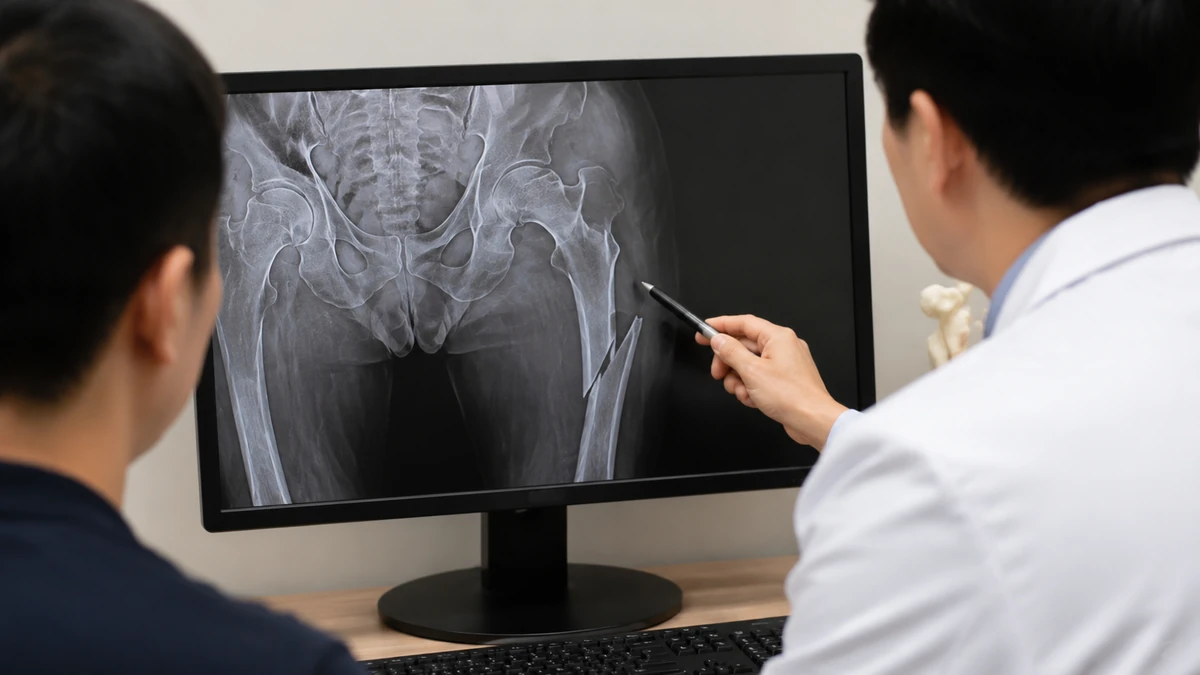
A surgery once seen mainly through an infection lens may have longer-term consequences
For years, the medical conversation around spleen removal has been relatively straightforward. If a patient loses the organ — often after a car crash, a fall or some other traumatic injury — doctors and families are taught to focus on one major issue: infection risk. The spleen is a key part of the body’s immune defenses, helping filter blood and respond to certain bacteria. Without it, patients can face a lifetime of added vulnerability to serious infections, and that has shaped follow-up care in hospitals from Seoul to Chicago.
Now, a large new study from South Korea is pushing that conversation in a broader direction. Researchers at Korea University Guro Hospital reported that people who had undergone a splenectomy, the surgical removal of the spleen, faced a 1.6-times higher long-term risk of fractures than people who had not had the surgery. The finding does not mean a broken bone is inevitable after spleen removal, and it does not prove the surgery itself directly causes fractures. But it does raise an important question for doctors and patients alike: Should bone health become part of routine long-term care after splenectomy?
That question matters because splenectomy is not a rare or exotic procedure. In the United States, as in South Korea, it can be performed after traumatic injury, certain blood disorders, cancers or other medical problems. In many cases, the immediate crisis passes, the patient recovers and life moves on. Months or years later, however, the medical system may no longer be closely tracking what the loss of that organ could mean for the rest of the body. The Korean research suggests that may be too narrow a view.
What makes the study notable is not just the result, but the scale. According to the summary of the findings, the analysis drew on health screening data from more than 3.12 million adults age 40 and older who underwent Korea’s national health checkups in 2012. For American readers, that kind of dataset is roughly comparable to the power researchers can get from large Medicare analyses or sprawling integrated health systems — the sort of population-level evidence that can reveal patterns too subtle to spot in a single hospital or small clinic.
In other words, this was not a report built on a handful of unusual cases. It was an attempt to look across an entire population and ask whether a signal shows up in the real world. According to the researchers, it did.
Why South Korea is often a powerful place to study long-term health trends
American readers may be less familiar with why so many health stories out of South Korea involve enormous national datasets. The answer lies partly in the structure of the country’s health system. South Korea has a national health insurance framework and a robust health screening culture, especially for middle-aged and older adults. Regular checkups are common, and the data generated by those exams can be used — with appropriate protections and under research rules — to study disease patterns across millions of people.
That matters in cases like this one. A lot of medical questions are difficult to answer because the events being studied unfold over many years. A person may have surgery in one decade and a fracture in another. In a fragmented health system, or one where patients move in and out of different insurers and doctor networks, it can be hard to connect those dots. Large national cohorts make it easier to detect those longer arcs of risk.
South Korea has increasingly become a source of this kind of epidemiological research, producing studies that resonate far beyond the country’s borders. Americans may know South Korea best through K-pop, Oscar-winning films like “Parasite,” hit dramas on Netflix, or the country’s globally competitive tech industry. But in public health and medicine, it has also emerged as an important generator of large-scale observational data — the sort of evidence that often shapes how clinicians think, even before formal treatment guidelines change.
That does not mean every association found in a national database should immediately transform patient care. Observational studies come with limits. They can show that two things move together more often than expected, but they do not automatically prove one caused the other. Still, when a study is this large, and when the biological explanation appears plausible, physicians tend to pay attention.
That is especially true when the finding highlights a blind spot. Splenectomy patients are already known to need vaccines, counseling about infection risks and, in some cases, preventive antibiotics or extra vigilance when they get sick. Bone health has not historically been the first thing many clinicians or patients think about in that context. The Korean study suggests it may deserve a place on the checklist.
The spleen and the skeleton are not as unrelated as they sound
At first glance, the connection may seem surprising. What does an immune organ in the upper abdomen have to do with a fracture in the hip, spine or wrist years later?
The answer lies in a growing area of research sometimes described as osteoimmunology, the study of how the immune system and the skeletal system interact. To many nonmedical readers, bones are easy to picture as structural supports — the body’s framework, something closer to steel beams than living tissue. But bone is biologically active. It is constantly being broken down and rebuilt in a process called remodeling. That process involves a complicated conversation among cells, hormones, inflammatory signals and immune pathways.
The Korean researchers framed their work around what is sometimes called the “bone-immune axis,” the idea that changes in immune regulation can ripple into bone metabolism. The spleen plays an important role in immune function and infection defense. Remove it, and the body’s immune balance changes. Researchers say that altered immune signaling could, at least in theory, affect how bone is maintained over time.
For American audiences, there are familiar parallels. Doctors have long understood that chronic steroid use can weaken bones, that autoimmune diseases can raise osteoporosis risk, and that inflammation can affect multiple organ systems at once. The notion that the immune system and the skeleton are linked is not fringe science. What is newer here is the suggestion that spleen removal may be another meaningful marker in that network of risks.
That is an important distinction. The study is not saying the spleen itself directly “protects” bones in a simple one-to-one way, or that anyone without a spleen is destined for osteoporosis. Rather, it suggests that when an organ involved in immune regulation is removed, the downstream effects may extend beyond the infection concerns doctors have traditionally prioritized. In plain English: Losing the spleen may change more than previously appreciated, and some of those changes might show up years later in bone health.
That kind of whole-body thinking is increasingly common in modern medicine. Researchers now talk more routinely about the gut-brain axis, the heart-kidney connection, the way obesity affects cancer risk, or how sleep influences metabolic disease. The body is less a collection of isolated parts than an interconnected system. The Korean findings fit squarely into that broader medical shift.
What a 1.6-times higher fracture risk really means — and what it does not
Health headlines often stumble when it comes to risk. A number like “1.6 times higher” can sound either terrifying or trivial depending on how it is framed. The reality is more measured.
What the researchers found was an increased relative risk of fractures among people who had undergone splenectomy compared with those who had not. Relative risk is useful because it flags whether one group is doing meaningfully worse than another. But it does not, by itself, tell patients their personal odds of suffering a fracture next year, or even over the next decade. For that, doctors would want more detail, including age, sex, baseline bone density, smoking history, alcohol use, medications, menopause status, exercise levels and whether the person had other conditions that already affect bone strength.
That means the finding should be interpreted as a warning signal, not a sentence. It tells clinicians there may be a population-level problem worth addressing. It does not mean every patient who has had a spleen removed should panic, assume they have brittle bones or expect to break a hip. Fracture risk is shaped by many factors, and surgery history is only one piece of that puzzle.
Still, population signals can drive practical changes. A woman in her 60s who had a splenectomy years ago after a traumatic car crash, for example, may already have age-related bone loss. If the surgery adds to that burden even modestly, her doctor might want to be more proactive about screening. A middle-aged man who lost his spleen after an accident and has since resumed normal life may not realize his medical history still matters outside the context of infection prevention. This study suggests it may.
In American medicine, clinicians already use risk-based approaches for bone health. They consider family history, low body weight, smoking, prior fractures, certain medications and other medical conditions when deciding whether to order bone density scans or discuss prevention strategies. The Korean study raises the possibility that prior splenectomy could belong on that list, especially for adults over 40 and particularly for patients whose surgery followed trauma and who may have otherwise fallen out of long-term specialty follow-up.
That is why the finding has clinical relevance even without immediate guideline changes. Medicine often evolves this way: first a signal, then repeated investigation, then debate, then eventual updates to how patients are monitored. The message from the researchers is not that splenectomy should be avoided when it is necessary. In many trauma settings, it can be life-saving. The message is that care should not stop at surgical recovery.
How follow-up care could change for patients who no longer have a spleen
The Korean research team’s practical conclusion was fairly clear: Patients who undergo splenectomy after trauma may need more active consideration of bone density evaluation and fracture-prevention strategies in the years that follow. For patients and families, that may sound technical. In everyday terms, it means a surgery from the past might deserve a place in future conversations about osteoporosis screening, fall prevention and long-term health planning.
In the United States, that could translate into several concrete questions at routine appointments. Has the patient ever had a spleen removed? If so, when and why? Have they had a bone density scan, especially if they are older, postmenopausal, or have other risk factors? Are they getting enough calcium and vitamin D? Do they engage in weight-bearing exercise, such as walking or strength training, which can help preserve bone health? Have they had prior falls or fractures? Are they taking medications that may thin bone?
None of those questions is revolutionary on its own. What is new is the idea that splenectomy may belong in the background information that prompts them. In the same way that doctors ask about steroid use, smoking or early menopause when thinking about osteoporosis risk, they may eventually need to ask more intentionally about spleen removal.
That shift also carries a message for patients themselves: Surgical history matters long after the stitches are gone. Americans are often advised to keep track of major operations because they can affect everything from emergency care to medication choices. This study suggests that splenectomy should not be remembered only as a fact relevant to vaccines and infections. It may also be relevant when discussing bone health later in life.
There is a broader health-system lesson here as well. Modern medicine is often very good at the acute phase of care. Trauma surgeons save lives. Intensive care teams stabilize patients. Rehabilitation specialists help people get back on their feet. But long-term management can become fragmented once the emergency fades. A person who lost a spleen in a crash at age 42 may no longer be seeing the trauma team by 52. If no one has built a durable follow-up plan, subtler long-run risks can be missed.
That is one reason findings like these matter. They do not just add another fact to a medical textbook. They challenge the boundaries of what counts as “recovery.” Surviving the surgery is one milestone. Living well years afterward is another.
What patients should take away without overreacting
For people who have already had a splenectomy, the appropriate reaction is not alarm but informed attention. The study does not prove that every such patient needs immediate treatment for osteoporosis. It does suggest that they may want to bring the issue up with a physician, particularly if they are over 40, have additional fracture risk factors, or have never had a detailed conversation about bone health.
That conversation might include whether a bone density test is appropriate, what kinds of exercise are safest and most beneficial, how to reduce fall risk at home, and whether diet or supplements need attention. It may also include a review of other medical issues that can affect bone strength, such as thyroid disease, diabetes, alcohol use, smoking or long-term use of medications like corticosteroids.
For caregivers and family members, the Korean study is a reminder that the consequences of a major surgery do not always stay confined to the organ involved. A patient who lost a spleen years ago may look fully recovered and may no longer think of themselves as having an ongoing medical issue. Yet their health history can still shape future risks in ways that are neither dramatic nor obvious.
And for clinicians, the study reinforces a growing truth in medicine: prevention is often less about one big intervention than about noticing patterns early. If splenectomy proves to be a reproducible marker for higher fracture risk, then identifying those patients before they show up with a broken wrist, vertebral compression fracture or hip fracture could make a real difference in quality of life. Anyone who has watched an older relative struggle after a hip fracture knows how profound that difference can be. These are not minor injuries; they can be life-changing events that lead to disability, loss of independence and serious complications.
In that sense, the Korean findings land in a place American readers will recognize. They are part of a larger shift away from viewing medicine only as rescue care and toward seeing it as long-term risk management. The operation may be over. The story of recovery is not.
A Korean study with implications far beyond Korea
Although the data come from South Korea, the implications are global. Splenectomy is performed worldwide. The biological pathways connecting immune regulation and bone health are not unique to any one country. And the central question posed by the research — whether care teams should widen their lens after spleen removal — is one that trauma surgeons, internists, endocrinologists and primary care physicians everywhere can understand.
The study also illustrates why international health reporting matters. Some medical findings travel easily across borders because they speak to universal aspects of the human body. Others are worth watching because they emerge from health systems that can observe populations on a scale many countries struggle to match. This appears to be both.
More research will be needed, including studies that examine which patients are at greatest risk, how soon the fracture risk rises, what types of fractures are most common, and whether screening or preventive treatment changes outcomes. Researchers will also want to account for other factors that may affect both splenectomy rates and fracture risk. That is how science advances: not with one headline, but with accumulation, testing and refinement.
Even so, the Korean study has already done something valuable. It has widened the frame. It suggests that spleen removal is not merely an event to survive and then forget, but a turning point that may shape long-term health in ways doctors are only beginning to map. For patients who have undergone the procedure, and for the physicians who care for them, that may be reason enough to take a second look at the bones.
In an era when medicine often emphasizes specialization, the message is almost refreshingly simple: The body keeps score across systems. An organ tied to immunity may influence the skeleton. A surgery performed in an emergency may echo years later in a routine clinic visit. And a study from South Korea may ultimately change how doctors in the United States think about what recovery really means.
Comments
Post a Comment