North Korea’s Streets Show Signs of Change: Yellow License Plates and Growing Car Ownership in Pyongyang
Introduction: A New View of Pyongyang
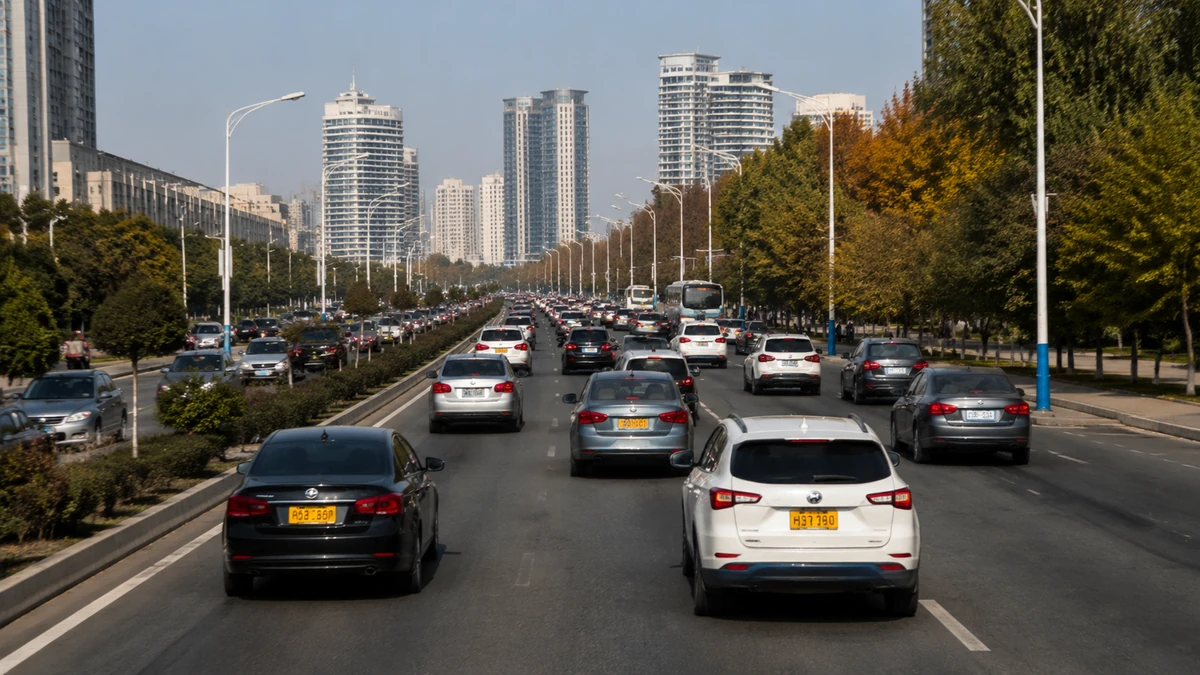
For decades, images of North Korea, particularly its capital Pyongyang, have been dominated by stark displays of state power: grand monuments, military parades, and tightly controlled public spaces. But recent reporting suggests a quieter, subtler shift is unfolding in the city’s daily life. On May 12, 2026, Reuters, drawing from observations in North Korea, highlighted an increase in privately owned cars, most of them Chinese-made, which is reshaping the urban landscape of Pyongyang. For international audiences, these details—cars with yellow license plates stuck in traffic jams—offer a rare window into everyday life in one of the world's most closed societies.
Traffic Jams in a City Once Defined by State Control
Pyongyang has long been imagined as a city frozen in time, where the state dominates all aspects of public life. The sudden emergence of traffic congestion signals a break from this perception. Traffic jams, a common frustration in American cities from Los Angeles to New York, are now appearing in North Korea’s capital—a city where previously, the streets were more ceremonial than congested. Observers note that these bottlenecks are not caused by a single event but reflect a sustained increase in the number of private vehicles. The scarcity of parking, another familiar challenge for urban drivers in the U.S., has also emerged, indicating that cars are not only on the move but also being used regularly for daily routines.
Yellow License Plates: A Sign of Emerging Mobility
Photographer Aram Pan, a Singaporean visitor who toured Pyongyang in October, reported spotting more than 100 vehicles sporting yellow license plates. These plates are more than a visual curiosity—they signal the evolving vehicle registration and ownership system in North Korea. In American terms, it’s akin to noticing a fleet of electric vehicles suddenly appearing in a city that had none before. While the color alone doesn’t tell the full story, its consistent appearance suggests that what was once a rare sight is now a routine part of urban life. Social media posts and satellite images further corroborate these observations, revealing that the city’s road networks are experiencing patterns of increased vehicle usage.
China’s Role in North Korea’s Automotive Scene
Most of the newly observed cars are Chinese brands, highlighting North Korea’s economic connections to its neighbor. While American drivers might take for granted a wide variety of imported cars, the dominance of Chinese vehicles in Pyongyang illustrates how external trade and policy changes translate directly into everyday consumer choices. The easing of car ownership regulations internally meets the availability of imported vehicles externally. For global observers, this is a rare glimpse of how North Korea’s domestic policy and international trade intersect in tangible ways. In essence, the streets of Pyongyang are acting as a living economic indicator, much like how U.S. analysts might monitor trends in consumer electronics or automotive sales to gauge market shifts.
Daily Life Through the Lens of Transportation
Traffic congestion is not just a logistical inconvenience; it reflects deeper shifts in lifestyle and urban planning. In the U.S., increased car ownership usually signals economic mobility, suburbanization, and expanded consumer choice. In Pyongyang, these developments suggest a move toward individualized transport options, longer commutes, and perhaps new patterns in urban activity. As cars proliferate, drivers must navigate not only the roads but also the limitations of parking and road design, introducing elements of everyday complexity previously absent in a highly controlled city. The Reuters report’s combination of satellite imagery, social media posts, and eyewitness interviews provides a robust picture, demonstrating that even in tightly controlled societies, subtle signals on the streets can reveal significant social shifts.
Implications for International Understanding
For decades, North Korea’s narrative in international news has been dominated by nuclear tests, diplomatic standoffs, and high-profile leadership events. Yet these images of traffic jams and yellow license plates point to a more nuanced reality. They remind global audiences that beneath geopolitical tensions lies a society undergoing changes in infrastructure, consumption, and daily routines. It’s a reminder that news from Pyongyang can be as much about the mundane as the monumental. While these developments do not indicate sweeping economic reform, they serve as an accessible lens for understanding the evolving nature of life inside North Korea, bringing a human dimension to a country often portrayed in purely strategic or military terms.
Conclusion: A City in Motion
Pyongyang’s streets, once emblematic of rigid state control, now tell a different story: one of increasing personal mobility, the influence of foreign products, and the subtle emergence of everyday challenges like traffic congestion and parking shortages. For Americans used to congested urban centers, these developments resonate as familiar markers of a changing city, albeit in a context that is politically and economically unique. By observing the details—the color of a license plate, the brand of a car, the pattern of a traffic jam—international audiences gain a more textured understanding of North Korean life, illustrating how even the smallest shifts in urban routine can provide insights into broader social dynamics.
Comments
Post a Comment