Residents in South Korea Push Back on a Planned Data Center, Turning a Neighborhood Fight Into a Bigger Debate About the Digital Economy
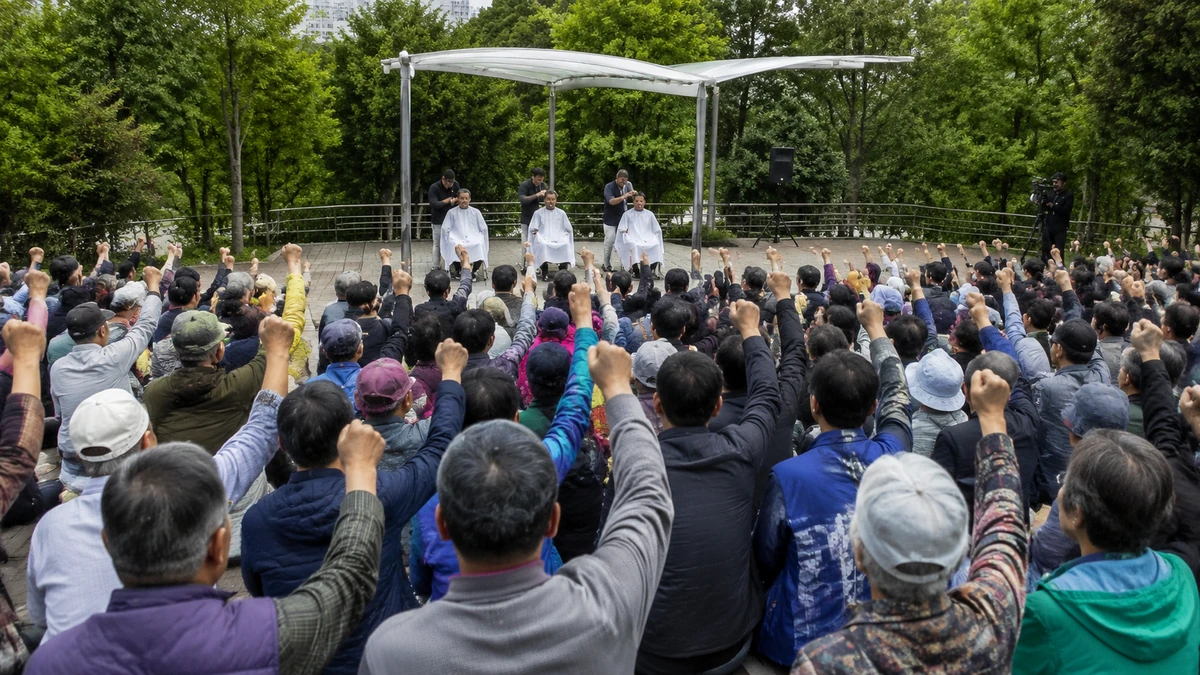
A neighborhood protest in Incheon captures a global tension
Residents in a neighborhood west of Seoul rallied Friday against a planned data center, arguing that the project could threaten their health and quality of life and underscoring a growing tension familiar far beyond South Korea: Everyone wants the convenience of the digital economy, but far fewer people want the physical infrastructure that makes it possible built near their homes.
According to South Korea’s Yonhap News Agency, about 200 people gathered at a local park in Dohwa-dong, a neighborhood in Incheon’s Michuhol district, to demand that authorities scrap plans for the facility altogether. Organizers said the proposed project, backed by KDB Infra Asset Management, would bring a seven-story data center to a site covering about 17,015 square meters, or a little more than 4 acres.
The protest was not a routine community meeting or a low-key petition drive. In one of the most dramatic moments, three representatives of the anti-project group shaved their heads on site, a gesture that can carry strong symbolic force in South Korean protest culture. To many American readers, it may register as startling or theatrical. In South Korea, head-shaving has long been used by activists, workers and political demonstrators to signal sacrifice, moral urgency and deep resolve. It is meant to show that a dispute has moved beyond ordinary complaints and into something more existential.
At the center of the conflict is a phrase that appears often in Korean civic activism: “health rights.” Residents say they fear possible exposure to electromagnetic waves and noise if the center is built and begins operating near homes. Those concerns, whether ultimately validated or mitigated through review, have become the language through which the community is framing the fight. This is not simply a dispute over aesthetics, traffic or property values. It is being presented by opponents as a question of bodily safety, family well-being and the right to live in a secure environment.
That framing matters because it elevates the issue from a conventional land-use disagreement into a broader social question: In an economy increasingly powered by cloud computing, artificial intelligence and always-on connectivity, where should the machinery of that system actually go? And who gets asked to live next to it?
Why a data center can become a flashpoint
For many people, a data center is an abstract idea — the hidden backbone behind streaming video, online banking, smartphone apps, e-commerce, social media and workplace software. Americans may think of “the cloud” as something intangible, a phrase that makes digital life sound clean and weightless. But data has to live somewhere. It is stored, processed and transmitted through enormous physical facilities packed with servers, cooling systems, backup power equipment and security controls.
Those buildings are often described in the language of modern convenience and economic development. They are marketed as essential infrastructure, like highways, ports or power substations for the information age. Governments court them as signs of technological sophistication. Investors see them as a growth industry as demand rises for AI computing, video storage and real-time digital services.
But to the people who live nearby, a data center is not a metaphor. It is a large industrial-scale structure with mechanical systems, energy demands and a footprint that can reshape the feel of a neighborhood. Residents may worry about persistent noise from cooling equipment, the visual impact of a large boxy building, strain on local utilities, emergency generator use and broader environmental costs. Even when developers and public officials say facilities will meet regulatory standards, community opposition can still grow if residents believe risks are being minimized or decisions are moving ahead without meaningful consultation.
That dynamic is hardly unique to South Korea. In the United States, communities have pushed back against warehouses, battery plants, transmission lines, wind farms, natural gas facilities and other projects that serve wider public needs while concentrating disruption in one place. Economists and planners sometimes describe this as the problem of distributed benefits and localized burdens. The convenience is shared widely; the inconvenience is not.
The Dohwa-dong case sits squarely within that pattern. The people who would benefit from faster, more resilient digital infrastructure are not limited to one block or one district. But the people who feel exposed to the project’s potential downsides are the ones living closest to the site. That gap between broad social value and immediate neighborhood impact often defines modern infrastructure politics, whether the setting is suburban Virginia, rural Arizona or an urban district in Incheon.
The language of “health rights” in South Korean civic life
One of the most important cultural and political details in this story is the emphasis on health rights. In American debates, residents opposing development often talk about safety, environmental justice, children’s health or quality of life. In South Korea, “health rights” can function as a similarly powerful framework, linking a local dispute to a larger idea that citizens have a right to protection from harmful living conditions.
In the Dohwa-dong protest, organizers argued that electromagnetic waves and noise from the planned data center could harm residents. At this stage, based on the details in the reported summary, what is established is the existence of those fears and the fact that they are driving organized resistance. The underlying risk level and what government reviews may ultimately conclude are separate questions. That distinction is important in responsible reporting. Community concern is real and socially significant even before technical or legal processes determine whether a project violates standards or can proceed with mitigation.
Still, the power of the residents’ claim comes from where it lands emotionally and politically. If a community says a project is inconvenient, officials may respond with revised traffic routes or landscaping. If a community says a project threatens health, the conversation changes. Parents think about their children. Older residents think about long-term exposure. The issue becomes less about development preferences and more about whether the state is adequately protecting people in their everyday surroundings.
That is particularly potent in dense urban areas, where the line between residential life and major infrastructure can feel uncomfortably thin. South Korea is one of the most urbanized and wired countries in the world. It also has a long history of contentious development battles in which residents have challenged government planning decisions, especially when they believe they are being asked to absorb risks for someone else’s gain. In that sense, the protest in Incheon is not just about one building. It reflects a deeper public sensitivity to how aggressively development is pursued and how unevenly its costs can be distributed.
The head-shaving by protest representatives reinforces that message. In the South Korean context, it is a visible statement that organizers believe ordinary channels of complaint are not enough. They are signaling seriousness not only to the district office and the developer, but also to the wider public and the media.
A rapidly digital country confronts the physical cost of connectivity
South Korea is often held up in the United States as a model of ultra-fast internet, digital convenience and tech-savvy urban life. It is home to some of the world’s most connected consumers, globally influential electronics companies and a culture in which online services are deeply embedded in daily routines. That makes disputes like this especially revealing.
The same society that prizes speed, connectivity and digital integration must still decide where to place the warehouses of the internet. Data centers are not glamorous. They do not attract the same public enthusiasm as a new startup campus or consumer-facing technology launch. Their social role is indispensable, but their physical presence can be hard to love.
That contradiction is becoming sharper as demand grows. Artificial intelligence systems require extraordinary computing power. Video streaming, cloud storage, e-commerce logistics and digital payments all depend on increasingly robust infrastructure. Governments and companies talk about digital transformation as though it is a seamless upgrade. On the ground, however, digital transformation can look like diesel backup generators, cooling units, heavy power use and large secure buildings rising near apartment blocks and schools.
For American readers, there is an easy comparison. The debate resembles fights over cell towers in earlier decades, when communities wanted strong mobile service but often resisted towers near homes. It also echoes more recent disputes over fulfillment centers and distribution hubs. Consumers expect rapid delivery and uninterrupted digital access. The infrastructure behind those services is celebrated in the abstract and contested in the specific.
In Korea, where urban density is high and land-use decisions can have immediate effects on tightly packed communities, those conflicts can become especially intense. Residents in Dohwa-dong are effectively asking a question that cities around the world increasingly face: If the digital future is a public good, does that mean some neighborhoods are expected to shoulder an outsized share of the sacrifice? And if so, how should those decisions be made?
That is why this story resonates beyond local politics. It is not a quirky neighborhood objection to high-tech progress. It is a test case in how advanced societies negotiate the real estate of the digital age.
The specifics of the Incheon dispute
The protest in Dohwa-dong was organized by a group calling for the data center plan to be scrapped. Residents gathered at Hwadong Neighborhood Park and demanded a full cancellation of the project, not simply revisions. Organizers said they plan to continue their campaign until the proposal is withdrawn. According to the reported account, protest signatures and a written statement of opposition are expected to be delivered to the Michuhol district office on May 18, suggesting the movement is moving from public demonstration to formal administrative pressure.
The scale of the proposal has contributed to the intensity of the backlash. The project under discussion is not a small utility installation tucked out of sight. It is a seven-story structure on a site of significant size in a lived-in district. Once communities can attach dimensions, floor counts and a specific location to a project, opposition often becomes more concrete and organized. Rumors become maps. Unease becomes a campaign.
The attendance figure — about 200 people, according to organizers — may sound modest by the standards of national political demonstrations. But in a neighborhood infrastructure dispute, it is substantial enough to signal real mobilization, especially when paired with coordinated messaging, signature collection and symbolic protest actions. Numbers alone rarely tell the full story in local civic fights. The more important question is whether a protest shows sustained organization, a clear grievance and a path toward administrative escalation. By that measure, the Dohwa-dong rally appears significant.
What remains less clear, at least from the publicly summarized reporting, is how the developer and local officials will respond in detail. In these cases, much often turns on process: environmental or safety reviews, public hearings, technical explanations, mitigation proposals and political willingness to adjust or delay plans. Residents may seek total cancellation, while developers and officials may argue the facility can operate safely within legal limits. Those arguments are likely to define the next phase of the dispute.
And that next phase can matter as much as the protest itself. A common trigger for prolonged distrust in infrastructure battles is not only the project, but the feeling that public institutions are speaking in bureaucratic language while residents are speaking in the language of everyday risk. When one side talks about compliance and the other talks about children sleeping, constructive dialogue can quickly break down.
What officials and developers are now up against
For local authorities and the company behind the project, the challenge is no longer just technical approval. It is legitimacy. Even a legally compliant project can face a legitimacy crisis if the public believes concerns are being brushed aside or addressed too late. In that sense, the core issue is not simply whether the data center meets standards, but whether residents trust the people interpreting those standards and making decisions on their behalf.
That is a difficult problem in many democracies, and South Korea is no exception. The country’s development history includes eras of top-down planning that delivered rapid growth but also left legacies of public suspicion about whose interests were prioritized. Today, communities are often better organized, more media-savvy and more willing to challenge major projects directly. A district office that treats this only as a matter of paperwork risks deepening the backlash.
The summary of the dispute suggests several flashpoints that will likely require careful handling: concerns about electromagnetic exposure, worries over noise, fear of reduced living quality and the broader sense that a residential area is being asked to accommodate infrastructure serving a much wider digital economy. Whether or not those concerns can be mitigated, they cannot simply be dismissed if officials hope to defuse the conflict.
Developers in similar situations often try to reassure communities with engineering studies, soundproofing measures, buffer zones, traffic management plans or promises of local investment. Sometimes that works. Often it does not, especially if opposition has already hardened around a principle rather than a negotiable detail. Once residents begin using language like “health rights” and calling for “blank-sheet cancellation” — essentially a full reset or abandonment of the plan — compromise becomes harder.
That does not mean compromise is impossible. But it does mean the burden of explanation grows heavier. If authorities want to persuade residents, they will need to address fears in plain, human terms, not just administrative ones. In American political language, this is the difference between saying a project is within regulatory limits and making a credible public case that families living nearby will be protected and heard.
Why this local fight matters beyond one Korean neighborhood
On the surface, this is a local South Korean story about one proposed data center and one neighborhood’s resistance. But it points to a much larger reality: The future of digital infrastructure may be decided not only in corporate boardrooms and national tech strategies, but also in parks, district offices and community meetings where residents ask who bears the cost of progress.
That question is increasingly universal. Across the world, societies are racing to build the hardware behind AI, cloud services and hyper-connectivity. Yet each new facility must be placed somewhere on actual land, near actual homes, inside actual political communities. Every one of those choices produces winners and losers, or at least people who feel that way.
The Incheon protest also illustrates how infrastructure stories become social stories. It is not only about servers or zoning. It is about trust, fairness and whether ordinary people believe they have meaningful influence over decisions that affect their daily lives. That is one reason the issue has news value in South Korea, and one reason it should interest readers elsewhere. Advanced technology often arrives wrapped in the language of inevitability. Local protests are one of the few ways communities push back against that inevitability and demand that the terms be debated.
For Americans, the scene in Dohwa-dong may feel both distant and familiar. The setting is Korean, the protest customs are Korean, and the language of the dispute emerges from South Korean civic life. But the underlying dilemma is recognizably modern and global. The same digital systems that make life faster, smarter and more seamless also require large, energy-intensive, place-based infrastructure. Sooner or later, someone has to live next door to it.
That is why this protest matters. It is not a rejection of technology itself so much as a demand to reckon honestly with where technology lives. In one Incheon neighborhood, residents are insisting that the physical burdens of the internet age should not be treated as an afterthought. However this specific dispute is resolved, that argument is likely to surface again — in South Korea, in the United States and in any society trying to build a more connected future without losing the consent of the people asked to host it.
Comments
Post a Comment