South Korea Moves to Block Franchise Chains From Profiting Off State-Backed Loans at Store Owners’ Expense
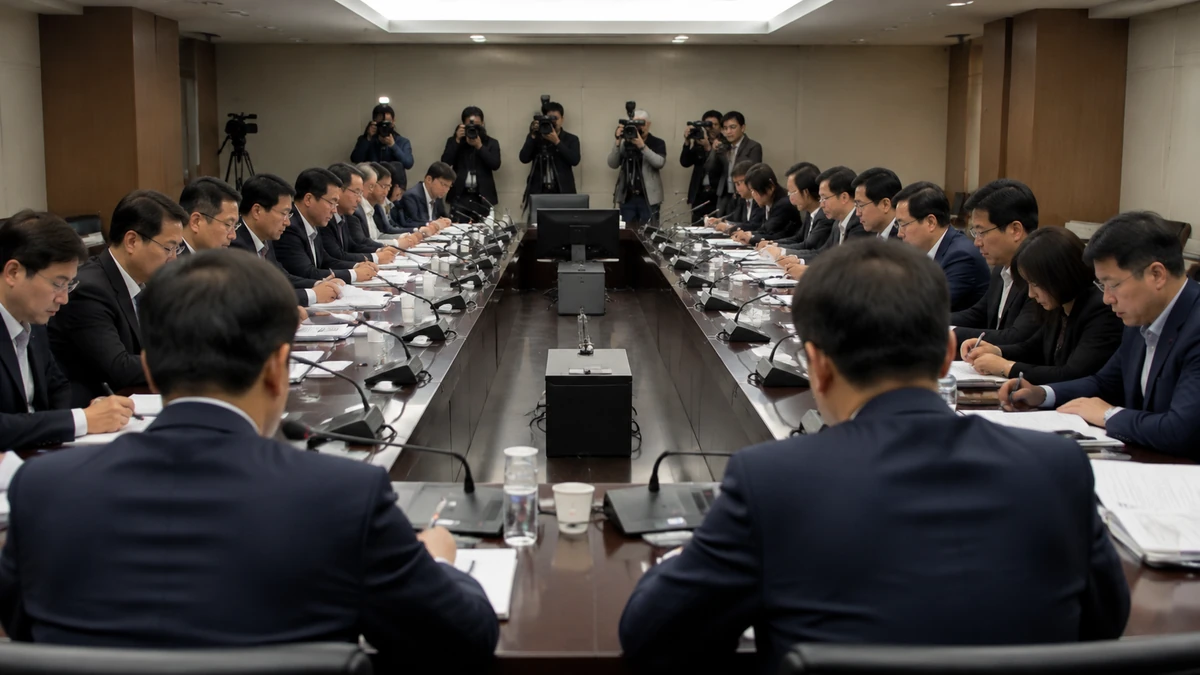
South Korea targets a little-seen pressure point in its franchise economy
South Korea’s financial regulators are moving to shut down a practice they say distorted the purpose of government-backed business lending and shifted costs onto some of the country’s most vulnerable entrepreneurs: franchise store operators.
In a policy package announced May 10, South Korea’s Financial Services Commission and Fair Trade Commission said franchise headquarters that borrow low-interest policy funds from state-backed financial institutions and then relend that money to franchisees at significantly higher rates could face restrictions on future access to those funds. The move follows scrutiny tied to what local media have referred to as the “Myeongryundang incident,” a case that became a shorthand in South Korea for concerns about opaque financing practices inside the franchise sector.
For American readers, the issue may sound a bit like a business franchisor in the United States securing favorable public financing — something akin to subsidized or development-oriented lending — and then turning around to act as a high-cost lender to the small operators running locations under its brand. The legal and financial systems are different, but the basic concern is familiar: public money intended to support business growth is allegedly being used in ways that increase the dependency of smaller operators rather than easing it.
That matters in South Korea because franchising is not a niche corner of the economy. It is deeply woven into everyday commercial life, especially in food service. The country’s urban streets are dense with branded fried chicken shops, coffee chains, barbecue restaurants, rice roll counters and other quick-service concepts. For many Koreans, and increasingly for international consumers who encounter Korean food through pop culture and global expansion, these brands are part of the face of modern Korean life. But behind the polished storefronts and social media-ready menus is a franchise system that has long been criticized for uneven bargaining power between headquarters and the individual business owners who operate local outlets.
The new policy does more than address one questionable loan structure. It signals that South Korean regulators are beginning to treat financing arrangements between franchisors and franchisees not just as private business matters, but as an area where public policy, fair competition and small-business protection overlap.
Why this issue resonates beyond one company or one loan
At the center of the latest action is the idea of policy finance, a term that may be unfamiliar outside South Korea. In Korea, as in many countries, state-backed financial institutions provide lower-cost lending, guarantees or other support to encourage investment, business growth and industrial development. These funds are meant to advance public goals. They are not simply cheap capital for companies to use however they please.
According to the government’s description of the problem, some franchise headquarters obtained these relatively low-cost funds and then extended loans to franchisees — the small business owners operating individual locations — at much higher interest rates. Regulators now argue that when public-interest funding is transformed into a profit-making financing channel inside a franchise network, the original policy purpose is undermined.
In plain terms, the concern is not just that a loan was expensive. It is that the party with structural power in the franchise relationship may also have become the gatekeeper to financing. That combination can deepen dependence. A franchisee may already rely on the franchisor for branding, supply chains, training, marketing, store design and operational rules. If that same franchisor also becomes a creditor on terms more favorable to itself than to the borrower, the imbalance can grow even more severe.
That asymmetry is hardly unique to South Korea. In the U.S., franchisees have long argued that parent companies often hold the upper hand through contracts, purchasing requirements and renewal terms. What gives the Korean case added urgency is the role of government-linked money in the chain. When public funds are involved, the debate stops being only about aggressive business conduct and becomes a question of whether the state is indirectly enabling practices that can harm small operators.
South Korean regulators appear to be responding to exactly that concern. Their message is that if a franchisor uses state-backed capital in a way that effectively monetizes its financial leverage over franchisees, access to future policy funding may be cut off. That is a significant threat in a business environment where policy lending and guarantees can be important tools, particularly for firms looking to expand.
What regulators say will change
The policy response is notable not only for what it punishes, but for how it tries to prevent the problem from recurring. Rather than relying solely on penalties after misconduct is discovered, regulators said they will strengthen disclosure before franchise contracts are signed and tighten oversight throughout the life cycle of state-backed loans.
That first piece — better pre-contract information — goes to a common source of frustration in franchise relationships. Aspiring franchisees often focus on visible factors such as brand recognition, foot traffic, menu appeal and startup cost. But financing terms can shape whether a business is viable long after the grand opening. If a would-be operator does not fully understand whether the franchisor is offering credit directly, arranging it indirectly, or attaching strings to that financing, the true cost of entering the system can remain hidden until it is too late.
South Korea’s Fair Trade Commission and Financial Services Commission said they plan to expand the scope of information available to prospective franchisees regarding credit provision or brokerage by franchise headquarters. The goal is to allow people considering a franchise purchase to evaluate not just the brand, but the funding structure surrounding it.
The second piece is closer, repeated monitoring by policy financial institutions. Regulators said major state-backed lenders and guarantee providers — including the Korea Development Bank, Industrial Bank of Korea, Korea Credit Guarantee Fund and Korea Technology Finance Corporation — will strengthen screening and ongoing checks involving franchise headquarters. Those checks are expected to cover new loans and guarantees, reviews of whether funds were used for approved purposes, and even extension decisions when existing financing comes due.
In other words, oversight is no longer meant to happen only at the front door. Korean authorities appear to be trying to follow the money through its full path: from public lending institution to franchise headquarters to any downstream financial relationship with store owners. That matters because regulatory systems often look tough at the moment funds are approved but become weaker when it comes to monitoring what happens afterward. By adding repeated verification points, the government is trying to close that gap.
If implemented rigorously, the policy would also make it harder for companies to argue that questionable relending was a one-off or a misunderstanding. Repeated disclosure and review create a paper trail. That can deter misuse by increasing the likelihood that problematic practices are detected before they become systemic.
Why the restaurant franchise sector is especially sensitive in Korea
The crackdown lands with particular force in food-service franchising, one of South Korea’s most visible and culturally important business sectors. To many outsiders, Korean food now arrives packaged in the broader export engine of the Korean Wave, or “Hallyu,” the global spread of Korean popular culture. Audiences who discover Korean television, music and movies often encounter Korean cuisine next, whether through instant noodles, Korean fried chicken, barbecue, tteokbokki or kimbap.
That makes restaurant brands more than domestic business ventures. They are part of Korea’s soft-power economy, shaping how international consumers understand the country’s everyday culture. A growing Korean food chain can project convenience, trendiness and national identity all at once. But that visibility can obscure the realities faced by store-level operators who take on leases, labor costs, inventory risk and local competition.
In Korea, as in the United States, a franchise brand’s expansion story often looks compelling from the outside. A chain can appear to be thriving because new locations keep opening, the logo is everywhere and customers recognize the product. Yet that surface-level growth does not always reveal whether the individual outlets are financially healthy. If operators are carrying heavy debt burdens or entering financing arrangements that favor the franchisor, the underlying business may be less stable than the brand suggests.
That instability can ripple outward. Operators under excessive financial strain may cut costs, delay maintenance, struggle with staffing or close sooner than expected. Service quality can decline. Brand reputation can suffer. Suppliers and workers can feel the effects. For an industry that depends heavily on consistency across locations, franchisee distress is not a side issue; it can become a threat to the system itself.
That helps explain why Korean regulators appear to see the problem as larger than any single chain. The question is not merely whether one company charged too much interest. It is whether the franchise model has, in some cases, allowed headquarters to deepen their influence over operators by combining brand power with credit power. In a sector where many entrepreneurs are betting personal savings or family money on a storefront, that is a politically and socially sensitive issue.
The broader Korean context: small-business risk and power imbalances
To understand why this kind of announcement matters in South Korea, it helps to know how central small-business ownership is to the country’s economic and social fabric. Korea has a large population of self-employed people, and opening a small shop or restaurant has often been seen as a path for retirement, midcareer transition or family income after job loss. That is not unusual globally, but in Korea the density of small retail and food businesses is especially striking.
With that opportunity comes fragility. Many small operators enter highly competitive markets with narrow margins. Franchise systems can look safer than going independent because they offer a recognized brand, an established operating model and perceived support from headquarters. Yet those same systems can create dependency, especially when the franchisor controls information and key inputs.
The franchise relationship in Korea has been a repeated target of public concern for years, often centered on what economists call information asymmetry and bargaining asymmetry. Put more simply, the franchisor usually knows more and has more leverage. It writes the contracts, controls the business model and often has superior access to capital. The franchisee, meanwhile, may be making a once-in-a-lifetime decision with limited room to negotiate.
When financing gets folded into that relationship, the power gap can widen further. A prospective franchisee may feel pressure to accept a loan recommended or provided by the headquarters because it seems convenient, because approval may be easier, or because the broader business package feels difficult to separate. That is one reason Korean regulators are emphasizing pre-contract disclosure: a decision that looks like an entrepreneurial choice may in reality be shaped by incomplete information.
For Americans, there is a recognizable parallel in the way some small businesses can become locked into complex ecosystems of fees, financing and vendor obligations. The Korean franchise setting has its own legal framework and business norms, but the core tension is familiar. When a dominant company becomes both business partner and lender, the risks are not theoretical.
What this could mean for franchise headquarters
For franchise companies, the new approach is likely to create pressure well beyond the narrow question of whether they can relend policy funds. It raises the standard for how they explain their capital structure, their treatment of franchisees and the internal logic of their financing arrangements.
Any headquarters that relies on public or quasi-public financial support may now need to assume that regulators will examine not just whether it qualified for the money, but how that money interacts with its broader commercial strategy. A company that views financing franchisees as a profit center rather than a support function may find itself in a regulatory gray zone that is quickly darkening.
That does not mean every franchisor offering financing is doing something improper. In many systems, legitimate support for store operators can be necessary, especially for startup costs, equipment purchases or working capital. The issue regulators appear to be drawing a line around is whether low-cost public funding is being converted into high-margin debt for smaller operators who have less bargaining power and fewer alternatives.
There is also a reputational dimension. South Korean consumers, investors and policymakers have become increasingly sensitive to governance issues, especially where a company’s growth depends on a network of smaller counterparties. In that environment, transparency is not just a compliance burden; it can become part of brand value. A franchise that can show it treats operators fairly may be better positioned over time than one that grows quickly while inviting scrutiny over its financial practices.
In the short term, some companies may complain that the government is adding red tape or second-guessing commercial judgment. That is a common response whenever regulators expand supervision. But the Korean government appears to have concluded that the costs of inaction are higher — particularly if public-interest funds end up reinforcing a model that extracts value from entrepreneurs at the store level.
What prospective franchisees should watch for
For people in South Korea considering buying into a franchise, the policy shift sends a clear practical message: the financing package deserves as much scrutiny as the menu, foot traffic and logo. That may sound obvious, but in fast-growing franchise environments, branding can overshadow the less glamorous details that determine whether the business is sustainable.
Among the key issues are who is providing the credit, whether the franchisor is lending directly or arranging financing through another channel, what the interest rate is, what collateral or guarantees are required, and whether accepting financing affects other terms of the relationship. Those questions matter in any market. The difference now is that Korean regulators are signaling they expect those answers to be more visible up front.
That could modestly improve the bargaining position of would-be franchisees, even if it does not eliminate the underlying imbalance. Better disclosure does not automatically produce fair contracts, but it can reduce the likelihood that operators discover critical financial burdens only after they have signed leases, renovated space and committed personal assets.
There is also an important symbolic point here. By putting these financing practices under the joint attention of financial and competition regulators, the government is effectively saying that what happens between franchisors and franchisees is not merely a private matter if it intersects with public policy goals and market fairness. That kind of framing can shape future enforcement far beyond the current announcement.
A bigger question about the purpose of public money
At its broadest, this story is about the meaning of state-backed finance in a market economy. Public lending tools are designed to support economic activity that governments consider valuable, whether that means innovation, industrial growth, regional development or small-business support. Their legitimacy depends on the idea that they serve a public purpose.
When those funds are rerouted in ways that appear to burden smaller businesses rather than help them, trust in the system can erode. The Korean government’s response suggests it wants to reaffirm a principle that many countries struggle to enforce: money backed by the public should not quietly become a mechanism for private advantage at the expense of weaker parties in the same commercial chain.
That is especially relevant in a country where franchise growth has helped shape modern consumer culture and where Korean food brands now carry global visibility. The storefronts that foreigners see — whether in Seoul, Los Angeles or London — are the public face of a much more complicated business structure. If the operators behind those counters are squeezed by opaque or costly financial arrangements, the long-term health of the brand can suffer no matter how trendy the product looks from the outside.
South Korea’s new measures will not solve every structural problem in franchising. Disclosure rules can be evaded, enforcement can be uneven and companies often adapt faster than regulations do. But the policy is significant because it identifies a specific mechanism of imbalance and ties consequences to access to public funds.
For a country that has built world-class cultural exports while also wrestling with the pressures facing small operators at home, that is a telling move. It suggests that the next phase of Korea’s franchise story may not be judged only by how quickly brands expand, but by whether the system underneath them is transparent enough to deserve trust.
Comments
Post a Comment