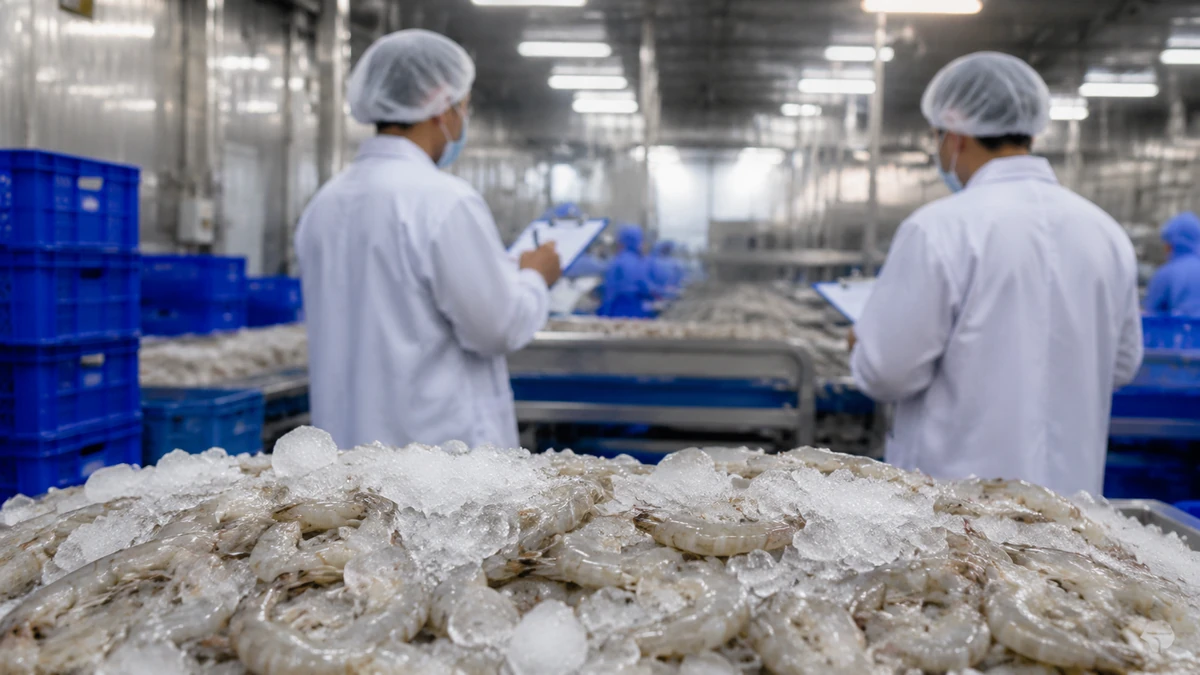
A shrimp recall in South Korea carries a broader warning about the global seafood trade
South Korean food safety officials have ordered a recall of some frozen peeled whiteleg shrimp imported from Vietnam after tests found excessive levels of doxycycline, an antibiotic used in veterinary medicine. On its face, the action is straightforward: regulators identified a product that failed to meet national standards, halted sales and moved to pull it from the market. But in a country where imported seafood is a routine part of daily life, the recall is also a window into how modern food safety systems work when a problem surfaces deep inside a global supply chain.
The Ministry of Food and Drug Safety, South Korea’s top food and pharmaceutical regulator, said the recalled product was sold by Haeu Seafood, a company based in the southern port city of Busan. The affected item is a 900-gram package of frozen whiteleg shrimp meat produced Aug. 26 of last year, with a use-by date of Aug. 25, 2028. Authorities said 17,577 kilograms, or nearly 38,750 pounds, of the imported shrimp are subject to the measure.
For American readers, the product itself is easy to picture. Whiteleg shrimp, known scientifically as Litopenaeus vannamei, is the species most commonly sold in supermarkets, casual seafood chains and frozen-food aisles in the United States. It is the standard shrimp behind everything from shrimp cocktail platters to weeknight stir-fries. In South Korea, it fills a similarly ordinary role: a versatile seafood used at home, in restaurants and in the country’s sprawling food-service sector.
That everyday familiarity is exactly why the case matters. Recalls rarely become significant because of a single package or one importer alone. They become significant because they test whether a government can quickly identify a risky item, tell consumers exactly what to look for and preserve confidence in the wider market. South Korea’s handling of this case suggests an official preference for early public disclosure and preventive action, an approach that many consumers in the United States would recognize from warnings issued by the Food and Drug Administration or the Department of Agriculture.
While the South Korean announcement did not describe any illnesses linked to the shrimp, regulators treated the lab finding itself as enough reason to intervene. That matters because food safety systems are not built only around proven harm after the fact. They are increasingly built around thresholds, surveillance and rapid response. In other words, the goal is not simply to punish contamination once consumers get sick. It is to keep questionable food out of kitchens and restaurants before that happens.
Why doxycycline in shrimp is a red flag
Doxycycline is a well-known antibiotic in the tetracycline family, familiar to many Americans as a medication used to treat bacterial infections in humans. It also has veterinary uses, including treatment of disease in animals. In food regulation, the issue is not that the substance exists in the abstract, but whether residues in edible products exceed legally permitted levels.
When officials say a food contains a substance above the standard, they are saying the product fell outside the safety framework established by regulators. That framework is meant to account for how food is produced, how residues are measured and what amount, if any, is considered acceptable for consumers. Once a sample crosses that line, the regulatory response typically becomes much less discretionary.
Antibiotic residues in seafood can trigger particular concern for several reasons. First, seafood production often happens far from the point of sale, making it harder for consumers to see or understand how the product was raised. A shopper standing in a grocery aisle in Seoul, Los Angeles or Chicago cannot tell by sight whether antibiotics were used during aquaculture production. They must rely on layers of inspection, testing, certification and enforcement.
Second, antibiotic use in food animals is globally sensitive because of long-running concerns about antimicrobial resistance, a major public health issue that has drawn warnings from the World Health Organization and health authorities around the world. A single residue finding is not the same thing as a sweeping judgment on a country’s aquaculture industry, and it does not automatically mean there is an immediate acute health emergency. But it does raise the stakes. Consumers tend to hear the word “antibiotic” and understand instinctively that something about the chain of production deserves closer scrutiny.
That is true in South Korea, where food safety has become a highly visible public issue over the years, and it is true in the United States as well. Americans have seen similar anxiety around everything from romaine lettuce outbreaks to recalls involving peanut butter, infant formula and imported seafood. Even when the risk to any individual consumer is low, the larger public reaction often centers on a basic question: How did this get through, and what is being done now?
In this case, South Korean officials are offering the clearest answer regulators can give in the opening phase of a recall: the product has been identified, sales have been stopped and the public has been told what to avoid.
How South Korea’s food safety system is built to respond
For readers unfamiliar with South Korea’s regulatory landscape, the Ministry of Food and Drug Safety functions in some ways like a combination of the FDA’s food oversight role and a centralized public alert system. The agency is responsible for food, pharmaceuticals and related consumer safety issues, and when it issues a recall notice, the announcement is typically highly specific. That specificity is on display here.
The affected shrimp were identified not just by product type, but by package size, production date, use-by date and origin. Those details may sound routine, but they are crucial in a recall involving frozen food. Unlike fresh produce or a prepared meal from a restaurant, frozen shrimp can sit in a household freezer or commercial storage facility for months, even years. That means a recall is not just about clearing store shelves. It is about helping families, wholesalers, restaurant owners and food-service operators recognize a product they may have purchased long ago and forgotten.
South Korea’s food distribution system is also dense and fast-moving. The country’s urban concentration, advanced logistics networks and high reliance on online commerce mean a food product can travel quickly across retail and delivery channels. In that environment, a recall has to do two things at once: move quickly enough to prevent further sales and communicate clearly enough that both businesses and ordinary consumers know what action to take.
This is one reason officials in South Korea often make recall data public as soon as an actionable finding is confirmed. The public notice is not merely a bureaucratic formality. It is part of the enforcement mechanism. Once the information is out, retailers are expected to pull products, distributors are expected to cooperate and consumers are expected to check what they bought.
That may sound familiar to Americans who have seen prominent recall bulletins from federal agencies, but the South Korean context adds another layer. Imported foods are especially important in a country with limited agricultural land and strong demand for a wide range of foods year-round. Seafood, in particular, occupies an important place in the Korean diet. Frozen shrimp may not carry the symbolic weight of kimchi or rice, but it is a staple ingredient in a market where seafood consumption is broad and frequent.
So when the ministry publicly names an imported seafood product and explains the reason for recall, it is doing more than flagging one batch. It is signaling that imported food remains under active surveillance after it enters the country, not just at the border. That distinction matters in global trade, where inspections at one stage cannot guarantee that every problem has already been caught.
What this means for consumers and businesses
The most immediate audience for the recall is obvious: consumers who may have the shrimp in their freezer and businesses that may still hold inventory. South Korean authorities released identifying information meant to make that check possible. Anyone who purchased frozen whiteleg shrimp meat from the named importer is expected to compare the label details, stop using the product if it matches and follow recall guidance from retailers or local officials.
But the practical impact may extend beyond the exact lot named in the notice. In food markets, recalls often affect consumer behavior more broadly than regulators intend. A problem with one shrimp product can temporarily make shoppers wary of imported shrimp in general, especially if the contamination involves something technical and invisible, like chemical residue rather than a packaging defect. Restaurants and wholesalers may respond by reviewing sourcing records, asking more questions of suppliers or shifting to alternative inventory until confidence stabilizes.
That broader response is not unique to South Korea. In the United States, a lettuce recall in one state can cause stores nationwide to relabel produce or prompt diners to skip salads altogether. The reaction is less about the formal boundaries of a recall and more about the psychology of trust. Consumers rarely distinguish with precision between one importer, one lot number and an entire product category, at least not in the first hours of a headline-driven warning.
At the same time, transparent recalls can strengthen trust in the long run. There is a paradox at the heart of modern food safety: the public often feels most alarmed when regulators announce a problem, but the existence of a visible recall system is also evidence that monitoring is happening. A market does not become trustworthy because nothing ever goes wrong. It becomes trustworthy because there are rules, testing protocols and public mechanisms for removing products that fail.
That is especially important for frozen foods, where the timeline of risk is longer than it is for more perishable products. A shopper may have bought the shrimp months ago during a supermarket promotion, tucked it into a freezer and planned to use it later in soup, fried rice or pasta. A recall announced today therefore reaches backward in time, trying to intercept food that may already be sitting in homes and business storage rooms.
For suppliers and importers, the case is also a reminder that reputational damage can far outlast the formal recall itself. Food businesses operate not only on price and availability, but on confidence. Once a product is publicly linked to an excessive antibiotic residue, importers may face tougher scrutiny from buyers, retailers and regulators, even after the immediate recall is resolved.
The global supply chain behind a local dinner table
One reason this story resonates beyond South Korea is that it captures the reality of how seafood reaches consumers in the 21st century. A product raised in Vietnam, shipped through international trade channels and sold by a company in Busan can end up on dinner tables hundreds or thousands of miles from where it was produced. That same pattern defines much of the seafood sold in the United States, where imported shrimp dominates the market.
In that sense, the recall is not just a Korean story. It is a global supply-chain story, the kind that touches anyone who buys frozen seafood at a big-box retailer, neighborhood grocer or restaurant supplier. The journey from aquaculture pond to frozen package is long, involving farming practices, veterinary oversight, processing, export controls, customs procedures, laboratory testing and domestic distribution. A weakness at any point can create downstream consequences.
Vietnam is one of the world’s major shrimp exporters, and its seafood industry is deeply integrated into international markets. That makes regulatory trust especially important. Countries that import seafood rely on both the exporting nation’s production controls and their own domestic testing programs. The system is layered by necessity: no single government can police the entire chain alone.
For that reason, recall notices like this one are often read by industry professionals as signals, not just consumer advisories. They tell importers, exporters and regulators where pressure points may exist. Was the issue limited to one batch? Does it suggest a production-level problem? Will additional shipments face heightened inspection? Public notices do not always answer those questions immediately, but they set the stage for follow-up scrutiny inside the market.
They also reveal something about the politics of food safety in highly connected economies. South Korea, like the United States, depends on consumer confidence to keep food markets functioning smoothly. If people believe the government is slow, secretive or reluctant to name affected products, distrust can spread quickly. In that sense, transparency is not just good governance. It is market maintenance.
There is also a cultural dimension worth explaining for non-Korean readers. In South Korea, food scandals and safety warnings often receive intense public attention because food shopping is highly routine, family-centered and closely tied to ideas of care and household management. A recall involving a common frozen ingredient can therefore feel more personal than technical. It touches not only public health but also domestic trust: what parents keep in the freezer, what restaurants serve and what consumers assume has already been checked for them.
A test of transparency, not just contamination control
It is tempting to view recalls only through the lens of danger: Was the food harmful, and how harmful was it? Those are valid questions, but they are not the only ones that matter. A recall is also a test of administrative clarity. Did the agency provide enough information? Did it move quickly? Did the announcement tell consumers what they actually need to know?
By that standard, South Korea’s response shows the hallmarks of a modern preventive system. Officials named the importer, the product, the origin, the package size, the production date, the use-by date and the reason for the recall. They did not leave the issue at the level of vague reassurance. They gave the market a checklist.
That kind of disclosure matters in a media environment where rumors can travel faster than official notices. A precise recall can prevent both underreaction and overreaction. It helps people avoid the affected item without fueling confusion about unrelated products. In practice, that is one of the hardest balancing acts in food regulation. Too little information erodes trust; too much unclear information can produce unnecessary panic.
The case also reflects a broader governing style increasingly visible in South Korea: intervene early, communicate publicly and frame safety as a matter of prevention rather than cleanup. Americans might recognize parallels in hurricane preparedness alerts, product safety bulletins or municipal boil-water notices. The underlying logic is the same. Authorities earn public trust not by promising perfect safety, but by demonstrating that warning systems activate when thresholds are crossed.
None of this means the story should be overstated. Based on the information released so far, the recall is a targeted administrative action involving a specific imported shrimp product. It is not evidence that all Vietnamese shrimp is unsafe, nor is it proof of a wider failure across South Korea’s seafood market. But it does illustrate how vulnerable any globalized food system can be to small but consequential breaches in standards.
And that, ultimately, is why a recall in South Korea deserves attention well beyond Seoul or Busan. The foods people buy in freezers and grocery aisles are increasingly products of international networks that consumers cannot personally inspect. They depend on regulators, testing labs, importers and retailers to do that work for them. When one part of the system catches a problem and speaks plainly about it, the episode becomes more than a local enforcement notice. It becomes a snapshot of how trust is built, challenged and repaired in the global food economy.
For consumers, the message is simple: check the label and avoid the affected product. For regulators and businesses, the message is more demanding: in a cross-border market, vigilance does not end when food clears customs. It continues all the way to the dinner table.
Comments
Post a Comment