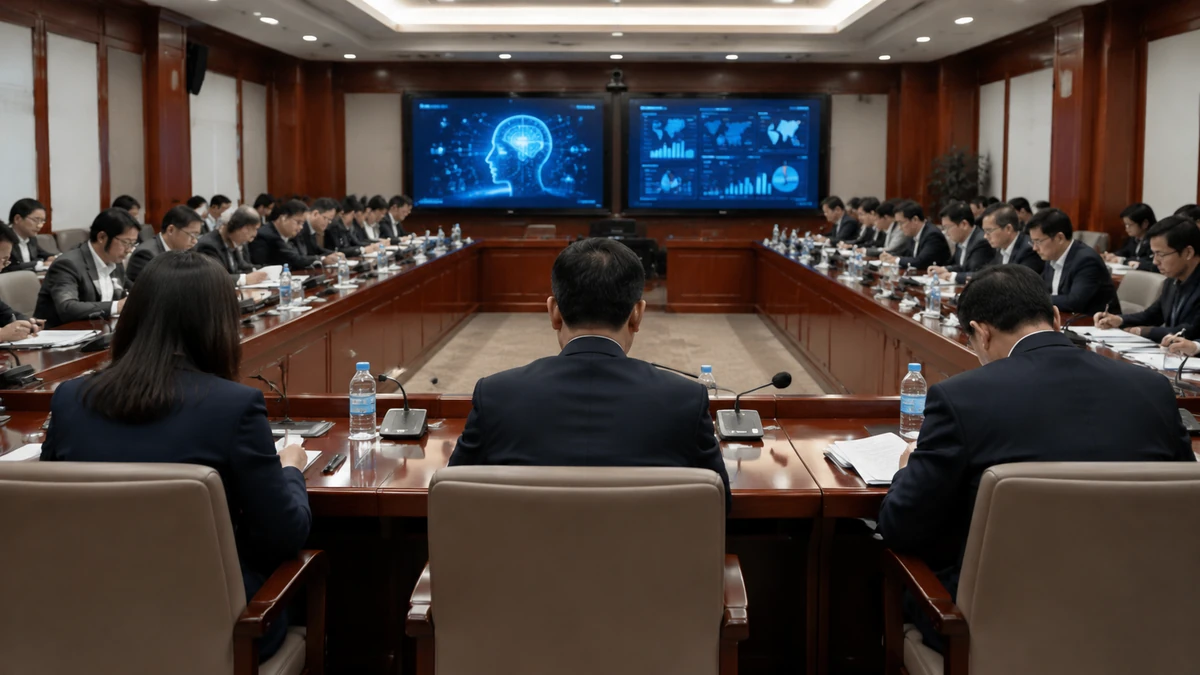
A new consumer protection strategy for a borderless marketplace
South Korea is preparing for a future in which product safety is no longer policed mainly in stores, warehouses and factory inspection lines, but across sprawling digital marketplaces that can deliver a battery-powered toy, beauty device or kitchen gadget from another country to a family’s front door in days. The government this week unveiled a new three-year product safety master plan for 2026 through 2028 that aims to weave data analysis and artificial intelligence into nearly every stage of consumer protection, from screening imported goods to spotting accident patterns and monitoring online sales in real time.
The policy shift reflects a reality familiar to American shoppers as well: e-commerce has changed not only how people buy things, but how risky products move. In South Korea, where online retail is deeply embedded in everyday life and consumers are especially comfortable with mobile commerce, officials say the rapid growth of direct overseas purchases has made it easier for potentially harmful products to enter the domestic market before regulators can catch up.
For readers in the United States, the underlying issue will sound recognizable. American regulators have wrestled with similar challenges as shoppers increasingly buy goods from third-party sellers on global platforms, often without realizing that the item may not have been tested to local safety standards. The Korean government’s answer is to move from a largely reactive model — identifying dangerous products after complaints or accidents emerge — to a more predictive one that uses data to flag risk earlier.
That may sound like a technocratic adjustment, but the stakes are decidedly everyday. Product safety is not just a matter of industrial policy or paperwork. It touches the items people plug in beside their beds, the chargers they leave on kitchen counters, the scooters and e-bikes they store in apartment buildings, and the toys, bottles and household goods used by children and other vulnerable consumers. South Korea’s latest plan is, in effect, an attempt to redesign consumer protection for the age of one-click cross-border shopping.
The announcement also says something broader about the next phase of digital regulation. Governments have spent years celebrating the convenience and efficiency of online retail. Now they are confronting the other side of that transformation: when commerce moves faster than oversight, safety systems built for a slower, more physical marketplace can start to break down.
Why direct overseas buying has regulators worried
At the center of the Korean plan is a sharp increase in inspections tied to direct overseas purchases, known in Korea as “haeoe jikgu,” a term that refers to consumers ordering products straight from foreign platforms or sellers instead of buying them through local importers and retailers. The practice has boomed because it often offers lower prices, wider product selection and faster access to trends that spread online before they show up in domestic stores.
That dynamic is not unique to Korea. American consumers have grown used to buying everything from phone accessories to furniture from sellers they may never have heard of, often routed through giant marketplaces that function more like digital bazaars than traditional retailers. But Korea’s concern is that direct purchasing can create a blind spot in the safety system. Products that bypass conventional distribution channels may reach consumers before authorities have a chance to verify whether they meet domestic standards.
Under the new plan, the government intends to expand safety investigations related to overseas direct purchases from about 1,000 cases last year to more than 2,000 by 2028. The number itself matters because it signals a doubling of enforcement intensity, but the larger meaning is that Seoul is acknowledging a structural shift in consumer behavior. Cross-border e-commerce is no longer a niche corner of the market; it is mainstream enough to require dedicated surveillance at scale.
In practical terms, that means regulators are trying to intervene earlier in the life cycle of a dangerous product. Instead of waiting until a harmful item has already circulated widely and generated injuries, complaints or media attention, they want to identify suspect goods at the point of entry or during early online distribution. That is especially important for products whose hazards are not obvious to consumers, including items with batteries, heating elements, electrical components or materials that could expose children to toxic substances.
South Korea’s approach also reflects a lesson that regulators in many countries have learned the hard way: convenience can obscure accountability. When a shopper buys from a local big-box chain, there is usually a clearer line of responsibility among manufacturer, importer and retailer. When a shopper taps “buy now” on a marketplace listing from overseas, those lines can blur. Who verifies compliance? Who responds to an accident? Who ensures that a recall actually reaches the customer? Those questions become much harder in a fragmented, international e-commerce system.
From after-the-fact enforcement to constant digital monitoring
One of the most significant parts of the Korean plan is the government’s intention to use artificial intelligence for continuous monitoring of the online marketplace. That may sound abstract, but it speaks to a central problem of internet-era regulation: the volume and speed of listings can overwhelm human inspectors. Products appear, disappear, change names, move across platforms and are promoted through streams of user-generated content and targeted advertising. A purely manual system cannot keep pace.
By introducing AI-based monitoring, officials are signaling that they want to treat online retail less like a static catalog and more like a live environment that requires ongoing surveillance. The idea is to scan product listings and transaction information for warning signs — perhaps keywords linked to prior recalls, categories with elevated accident histories, or sellers repeatedly associated with problematic goods. The goal is not merely to punish violations after the fact but to detect risks while they are still emerging.
That represents a major change in the time horizon of product safety enforcement. Traditional regulation often kicks in after an injury report, customs seizure or laboratory finding. Continuous monitoring tries to shorten that lag. In public policy terms, it is a shift from reactive enforcement to risk-based prevention. For governments, that matters because product accidents are expensive in every direction: they can trigger investigations, recalls, insurance claims, medical costs and public distrust, all after the damage is already done.
For American readers, an easy comparison is the way financial institutions use algorithms to flag suspicious credit card activity before a fraudulent purchase spirals. Product safety is obviously a different field, but the logic is similar. In both cases, the system is trying to identify anomalies early enough to prevent larger harm. The Korean government appears to be betting that consumer protection, like fraud detection, increasingly depends on the ability to sift through massive amounts of digital information quickly.
There is also an institutional dimension here. The plan emphasizes cooperation across multiple ministries, a notable detail in South Korea’s bureaucratic culture where interagency coordination is often necessary for issues that cross commerce, customs, technology standards and consumer protection. Product safety rarely fits neatly inside one office. A dangerous toy sold online may involve import rules, chemical regulations, e-commerce oversight, accident reporting and public communication. By presenting the strategy as a joint government effort, officials are acknowledging that fragmented oversight can leave dangerous gaps.
Why accident data matters as much as the products themselves
The Korean government also says it will introduce AI into the collection and analysis of product accident information. That may be the least flashy part of the announcement, but it could prove among the most consequential. The reason is simple: accidents rarely announce themselves as obvious patterns at first. A single complaint may look isolated. Ten complaints spread across different agencies, websites and consumer hotlines may reveal a trend.
In that sense, data is valuable not just because it is abundant, but because it can connect dots that traditional systems miss. If similar incidents are reported across a certain type of charger, smart appliance or children’s household product, those signals can help officials prioritize what to investigate first. The same is true if accidents appear clustered around certain usage conditions, such as overheating during charging, breakage after minor impact, or failures in products marketed for very young children.
That kind of analysis supports a more targeted use of government resources. No regulator can inspect every item sold online with equal intensity, especially in a market flooded with low-cost goods and rapidly changing listings. The Korean plan suggests an explicitly risk-based strategy: identify product categories with higher accident potential or greater likely consumer harm, then concentrate inspections and analysis where they can do the most good.
That is a familiar logic in other fields of regulation, from food safety to aviation. But it carries particular importance in the consumer product world because the universe of goods is so large and so fast-moving. A purely universal inspection regime is unrealistic. A smart one depends on pattern recognition, prioritization and a willingness to refine rules as new evidence comes in.
For ordinary consumers, the value of this approach may only become visible when it works quietly. If AI-assisted analysis helps regulators intervene before a hazardous battery product becomes widespread, the result is not dramatic headlines but the absence of them. No apartment fire. No rush recall. No scramble to explain why warnings arrived too late. Good product safety policy often looks uneventful precisely because it prevents the kind of crises that command attention.
New technology, new standards, new blind spots
Beyond immediate enforcement, the Korean government says it wants to close product safety blind spots created by fast-changing technology and markets. That is especially relevant for a country known for adopting connected devices quickly and for living at the forefront of consumer electronics. Officials said they plan to create systems to analyze risks in AI-converged products in advance and to update safety standards for new categories such as smart home appliances.
That point deserves special attention because the nature of product risk is changing. In the past, regulators could focus mainly on physical design, electrical standards or material safety. Today’s connected devices may also raise questions about automation, software behavior, sensor failure and the ways hardware and software interact in everyday use. A smart appliance is not just a toaster with Wi-Fi. It is a physical object embedded in a digital system, and that combination can create new kinds of failure.
For U.S. audiences, think of the broad category of “smart” consumer devices that promise convenience through app control, connectivity or algorithm-driven features. Americans have already grown accustomed to baby monitors, home cameras, robotic vacuums and connected kitchen devices that collect data and update their functions through software. Regulators everywhere are still catching up to what that means for safety. If a product changes behavior after a software update, or relies on automated responses that users do not fully understand, the old rulebook may not be enough.
South Korea’s move suggests officials want to avoid a common regulatory pattern: waiting until a major incident exposes a weakness in standards that should have been addressed earlier. Instead, they are trying to evaluate potential hazards before they become widespread. That will not eliminate every problem, but it could narrow the gap between innovation speed and regulatory response.
The issue is particularly urgent in markets where consumer electronics turn over rapidly and new product types gain traction fast. Korea is one of those markets. A lag between product innovation and safety standards can leave consumers in a familiar bind: they enjoy the convenience of cutting-edge devices first, while the full safety review catches up later. The new plan is an acknowledgment that in the digital consumer economy, time itself can be a safety risk.
Batteries, children and the politics of everyday risk
The Korean plan also singles out two categories for strengthened oversight: products with built-in batteries and goods used by children and other vulnerable groups. That focus is telling. It shows that the government is not just thinking in terms of abstract technological systems, but also about where harm is most likely to be felt most acutely in daily life.
Battery-powered products have become nearly impossible to avoid. They are in phones, tablets, wearable devices, personal mobility products, toys, home appliances and a growing list of low-cost gadgets sold online. When they fail, the consequences can be severe, including fire, explosion or dangerous overheating. For consumers, battery incidents are especially alarming because the risk feels intimate and immediate: the device is often charging in a bedroom, sitting on a couch armrest, or stored in a small apartment hallway.
Korea’s emphasis on battery products mirrors a broader global anxiety. In the United States, local news coverage of lithium-ion battery fires in e-bikes, scooters and other rechargeable devices has helped push the issue into mainstream public consciousness. Korean officials appear to be making a similar calculation that products associated with high-consequence accidents deserve greater attention even in a crowded regulatory landscape.
The focus on children and vulnerable groups is equally significant. In public policy, vulnerability is not just a moral category; it is a practical one. Children cannot reliably evaluate hazards, read warnings critically or make informed tradeoffs about product quality and safety. Older adults or people with disabilities may face their own distinct risks depending on how products are designed and used. That means a product safety system designed around the hypothetical “average consumer” can still leave the people at greatest risk underprotected.
By calling out those groups directly, the Korean government is framing product safety as part of a broader social protection mission, not merely a technical compliance exercise. That matters politically as well as administratively. Decisions about which products to inspect more closely, which categories to regulate first and which dangers to publicize are ultimately decisions about whose risks count most.
There is a subtle but important message in that prioritization. As consumption becomes more frictionless, public oversight may need to become more selective and more human-centered. It is not enough to say the market offers choice if some of that choice quietly shifts the burden of vetting safety onto parents, caregivers or consumers who lack the tools to assess what they are buying.
What South Korea’s plan says about the future of global e-commerce
For consumers, the Korean announcement is a recognition that overseas direct buying and online shopping are no longer fringe habits. They are central enough to modern life that governments must build safety systems around them rather than treat them as exceptions. That is perhaps the most important message in the plan. Convenience is no longer the side story; it is the main story. Regulation has to catch up to where people actually shop.
For businesses and online platforms, the message is more pointed. The faster products move through digital channels, the greater the expectation that sellers and intermediaries will manage safety information responsibly. Continuous marketplace monitoring implies that the online sales environment should not be treated as less accountable than brick-and-mortar retail. In other words, the digital shelf is still a shelf, and public standards still apply.
That has implications beyond South Korea. Cross-border e-commerce is one of the defining consumer trends of the last decade, and governments from Washington to Brussels to Seoul are wrestling with versions of the same problem. How do you preserve access, choice and innovation without letting a flood of lightly vetted products outpace the capacity to inspect them? How do you enforce local standards in a market where a seller can be half a world away? And how do you use AI to improve public protection without creating new concerns about opacity, fairness or overreach?
South Korea does not appear to have solved all of those questions. No country has. But its new plan offers a clear indication of where regulation is heading: toward data-driven triage, constant digital monitoring, faster interagency coordination and more emphasis on vulnerable consumers. It is a model built for a marketplace where the traditional boundaries between domestic and foreign, physical and digital, and reactive and preventive enforcement have all started to blur.
That makes this more than a Korean domestic policy update. It is a case study in how governments are rethinking the basic mechanics of consumer protection in a global online economy. If the old model assumed that unsafe products could be intercepted through relatively stable supply chains and periodic inspections, the new model assumes they must be tracked across fast-moving networks of listings, shipments, user reviews and accident reports.
For shoppers, the promise of that shift is simple: the ability to buy across borders without shouldering the full burden of figuring out what is safe. For regulators, the challenge is harder. They must prove that data and AI can do more than sound modern — that they can actually reduce harm in the messy, high-volume reality of digital commerce. South Korea is now making that bet in a very public way, and other countries will likely be watching closely.
Comments
Post a Comment