
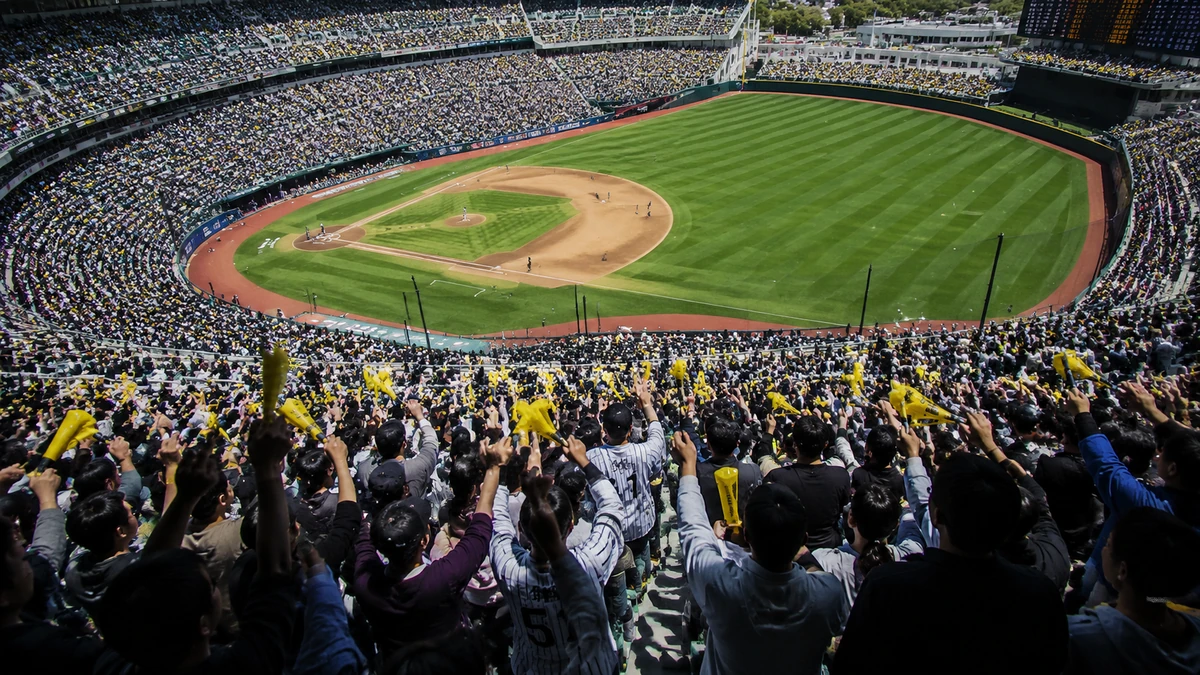
A baseball milestone that says more than just “3 million”
South Korea’s top professional baseball league has crossed a major attendance milestone faster than ever before, underscoring just how central live baseball has become to the country’s sports culture. The Korea Baseball Organization, or KBO, said the league reached a cumulative 3,062,085 fans after 166 games on May 7, the quickest pace in league history to surpass 3 million spectators.
On paper, that may sound like the kind of statistical footnote that matters mainly to league offices, sponsors and die-hard fans. In reality, it is a revealing snapshot of what is happening in South Korean sports right now. Baseball is not merely holding onto its audience. It is accelerating.
The previous record for fastest attendance to 3 million came last year, when the league hit that mark in 175 games. This season beat that pace by nine games, a meaningful jump in a sport where attendance trends are watched closely as a barometer of public interest, family spending and the health of local fan culture. The speed of the increase matters as much as the raw number. It suggests that fans are not waiting until late in the season, a pennant race or a special promotion to show up. They are treating baseball as part of everyday life early in the calendar.
That matters beyond the box score. In the United States, baseball often measures its relevance against football’s television dominance or the NBA’s cultural pull. In South Korea, the conversation is different. KBO baseball has long been one of the country’s most visible spectator sports, but in recent years it has also become a social event, a family outing and a regional ritual wrapped into one. This latest attendance record suggests the league is doing more than surviving in a fragmented entertainment market. It is expanding its grip on in-person audiences.
And this was not a record inflated by one showcase game in the capital. On the day the milestone became official, 78,776 fans turned out across four ballparks nationwide. That broad geographic spread is one reason the number stands out. It points to a league-wide swell of interest rather than a one-city boom or a single superstar effect.
For American readers who may know South Korean baseball primarily from the pandemic era, when KBO games were broadcast on ESPN as live sports disappeared elsewhere, this moment offers a more complete picture. The league is not just a curiosity with lively bat flips and organized cheering sections. It is one of the strongest live sports products in Asia, and at the moment, it appears to be growing stronger.
Why the pace matters in South Korea’s sports economy
The headline number is 3 million, but the more important number may be 166. Getting there in 166 games says something about the rhythm of fan demand. It means the turnstiles are spinning faster, earlier and more consistently than they did a year ago. In any sports market, that is a sign of momentum. In South Korea, it also reflects the enduring value of the ballpark as a destination in an era of streaming, mobile entertainment and fierce competition for leisure time.
South Korean baseball has long occupied a role that may feel familiar to Americans: It offers local loyalty, generational attachment and a summer routine. But it also has its own distinctive identity. Games are highly social. Fans often attend in groups, chants are synchronized, cheerleaders and song leaders help conduct the crowd, and supporters for each team perform elaborate musical routines throughout the game. The atmosphere can feel closer to a college rivalry game mixed with a pop concert than the quieter, more observational style many American fans associate with Major League Baseball.
That atmosphere helps turn attendance into a powerful metric. Ticket sales do not just measure who likes baseball. They measure who is willing to devote an evening, buy food, wear team colors, sing along and participate in a communal experience. The KBO’s record-setting pace indicates that more people are making that choice repeatedly.
There are also business implications. Higher attendance supports concession sales, merchandise, sponsorship activations and the long-term commercial stability of clubs. In-person engagement matters because it makes a league more resilient. Television ratings and online buzz can rise and fall quickly, but fans who reliably fill stadium seats provide a more durable foundation.
This is especially notable because South Korea is not an especially large country by population compared with the United States. Strong attendance figures therefore carry extra weight. When millions of fans move through the gates at this pace, it reflects a deep level of market penetration. The KBO is not drawing from a giant continental-sized audience. It is drawing intensely from a compact, highly connected and sports-savvy one.
Just as important, the current surge suggests that fans’ expectations have shifted. They are not waiting for baseball to prove it still matters. They are acting as if it already does. That difference may sound subtle, but in sports, it can reshape an entire season. Momentum creates momentum. Packed stadiums become their own advertisement.
Four cities, one trend: A nationwide surge, not a local fluke
The record was sealed with strong crowds in multiple cities, which may be the clearest sign that this is a national phenomenon rather than a temporary hot streak concentrated in one market. On May 7, 22,805 fans attended the Doosan Bears-LG Twins game at Jamsil Baseball Stadium in Seoul, one of the most recognizable venues in Korean baseball and home to one of the league’s most intense city rivalries.
In Daegu, Samsung Lions Park drew a sellout crowd of 24,000 for the Samsung Lions against the Kiwoom Heroes. In Incheon, 14,364 fans showed up at SSG Landers Field for the NC Dinos-SSG Landers game. In Gwangju, 17,607 attended at Kia Champions Field for the Hanwha Eagles-KIA Tigers matchup. Together, those numbers tell a broader story: baseball enthusiasm is being distributed across the Seoul metro area, the southeast and the southwest, not pooling in a single urban center.
That distinction matters because one of the recurring questions in many professional sports leagues is whether success is too dependent on a handful of flagship teams or large media markets. In the United States, leagues can become top-heavy in attention, with New York, Los Angeles, Chicago or a short list of glamour franchises dominating the conversation. The KBO’s latest attendance milestone suggests a healthier pattern. Regional fan bases are sustaining the league in their own cities, with their own traditions and their own intensity.
Even the term often used in Korean sports coverage for a sellout crowd carries emotional weight. A “full house” is not just a numerical marker. It is a statement about atmosphere. In a KBO stadium, a sold-out night means coordinated chants echoing from one section to another, inflatable thunder sticks clapping in rhythm, songs tailored to individual players and a crowd dense enough to make every late-inning moment feel amplified. It is not simply that all the seats were purchased. It is that the venue becomes an event in itself.
The nationwide spread also strengthens the argument that 2026 is not being driven by one sensational storyline. No single team, city or celebrity seems solely responsible. The league’s appeal is broad-based, and that is often what separates a good season from a durable trend. When multiple ballparks are thriving at once, it points to structural strength.
For foreign observers, especially those accustomed to viewing Korean sports through a Seoul-first lens, this is a useful reminder. Yes, the capital is crucial. But the KBO’s emotional geography is wider than that. Baseball in South Korea is deeply regional, and this milestone was built by fans across that regional map.
The drama on the field still drives the crowds
Attendance records are built over weeks and months, but they are ultimately powered by nights that feel worth remembering. One of those came at Jamsil on the same day the KBO crossed the 3 million mark. In the top of the eighth inning, with one out and runners on second and third, Doosan infielder Park Ji-hoon lined a go-ahead single to left field, giving his team a 2-1 lead over LG. It was his only hit of the game, but it became the decisive one — and the first game-winning hit of his professional career.
Afterward, Park said he felt keenly that a team can win or lose because of one player’s moment. That kind of quote may sound universal to baseball fans anywhere, and that is precisely the point. The statistical milestone exists because the sport continues to deliver compressed drama that rewards being there in person.
Baseball can sometimes seem ill-suited to modern attention spans, especially in the U.S., where debates over pace of play have shaped rule changes and broadcast strategy. But in South Korea, baseball’s episodic nature often works in its favor. Every at-bat offers a reset point for crowd participation. Every pitching change becomes another chance for coordinated chants. Every late lead feels shared by thousands of people performing the game together, not just watching it.
Park’s hit was not the sole reason the league hit 3 million fans faster than ever. But it serves as a vivid example of what those attendance figures are really measuring. They are measuring appetite for uncertainty. For comeback chances. For the possibility that a little-used player, on a random weeknight, might become the reason a packed stadium goes home hoarse and happy.
That is the enduring pull of live sports, and the KBO has become especially good at packaging it without making it feel manufactured. Some leagues chase spectacle through constant gimmicks. Korean baseball certainly embraces entertainment, but the heart of the product remains the game itself. Tight scores, regional rivalries and emotionally charged innings are still what bring people back.
In that sense, the attendance surge does not just reflect savvy marketing or favorable scheduling. It reflects trust. Fans trust that if they show up, something memorable might happen. Over 166 games, enough of them have believed that to push the league to a new benchmark.
Children’s Day and the family factor behind Korean baseball
To understand why this attendance record arrived now, it helps to look at the holiday calendar as well as the standings. The milestone came just after Children’s Day, one of South Korea’s most family-centered holidays and a major date on the sports schedule. Celebrated each year on May 5, Children’s Day is somewhat akin to a cross between a family holiday and a civic festival, when parents often plan outings built around entertainment, recreation and time together.
Baseball has become one of the most visible ways families mark the occasion. Ballparks on Children’s Day are often filled with parents, grandparents and kids in team jerseys, turning the stadium into a multi-generational public space. In American terms, imagine the cultural place of a Fourth of July ballgame, a Little League memory and a school-holiday outing converging at once. That is part of the emotional ecosystem Korean baseball occupies.
What makes this year’s record more meaningful is that attendance did not fall off once the holiday passed. According to the KBO tally, the 78,776 fans on May 7 showed that strong turnout persisted even after the special holiday window. That suggests the surge cannot be explained simply by a one-day spike or a calendar quirk. Instead, the holiday appears to have fed into an existing wave of fan engagement that was already building.
This family dimension is crucial. In many sports leagues, growth becomes fragile if it depends too heavily on a narrow young demographic, on novelty seekers or on short-lived social media trends. Family attendance provides a different type of foundation. It creates ritual. Parents bring children, children pick favorite players, and ballpark habits get repeated over seasons.
In South Korea, baseball is especially well positioned for that role because it blends sport and leisure so naturally. A KBO game can be intense, but it can also function as an all-evening outing. Fans eat in the stands, sing together, take photos and treat the event as both competition and community. That makes it easier for teams to attract people who are not hardcore followers of advanced metrics or standings tables.
For American readers, one useful comparison may be the way minor league baseball in the United States often thrives as a family experience, except in Korea this model exists at the top professional level, with stronger competitive stakes and broader national attention. The result is a league capable of appealing to serious fans and casual households at the same time.
The 3 million mark, then, is not just the product of a few marquee matchups. It is the cumulative effect of baseball becoming a default answer to a basic question: What should we do together tonight? When a league earns that kind of place in family life, attendance records often follow.
What this says about Korean baseball’s place in the world
To readers outside South Korea, especially those who primarily follow Major League Baseball, a KBO attendance record may seem like a domestic story with limited international relevance. But that would miss the broader point. The KBO is increasingly important as an example of how baseball can thrive as a live entertainment product in the 21st century.
For years, global baseball conversations have often centered on MLB’s efforts to speed up games, widen audiences and compete with other forms of entertainment. South Korea offers a different but instructive case study. The league has not abandoned the core rhythms of baseball. Instead, it has built a surrounding culture — chants, local identity, family rituals and high-energy presentation — that makes the live experience feel urgent and communal.
That is one reason international fans took notice during 2020, when the KBO briefly became one of the few active professional sports leagues available to television audiences around the world. But the current attendance surge suggests the league is not living off novelty or overseas curiosity. It is deepening its roots at home.
There is also significance in the fact that this growth is being expressed through in-person turnout, not just digital metrics. In an age when sports success is often discussed in terms of streaming clips, engagement rates and global brand reach, the KBO’s milestone is a reminder that the old-fashioned test still matters: Are people willing to leave home, buy a ticket and spend several hours in the stands? In South Korea right now, the answer is clearly yes.
The numbers also hint at the league’s commercial strength going forward. Robust attendance can stabilize revenue, encourage venue investment and make teams more attractive to sponsors looking for emotional connection rather than passive brand placement. It can also help baseball defend its place in a competitive entertainment ecosystem that includes e-sports, soccer, streaming platforms and the broader pull of Korean pop culture.
And that may be the most striking part of this story. South Korea is famous globally for K-pop, film, television dramas and digital culture. Yet amid all that modern cultural export power, one of the country’s most resilient mass experiences remains thousands of people gathered in ballparks, singing fight songs and tracking every pitch. The KBO’s latest record suggests that far from being overshadowed by newer forms of entertainment, live baseball has found a way to flourish alongside them.
More than a record, a snapshot of a sports culture in motion
Sports records can sometimes be deceptive. A round number like 3 million may look impressive but reveal little. This one reveals a great deal. It shows a league drawing fans earlier than ever. It shows multiple regions contributing to a common rise. It shows momentum extending beyond holiday crowds. And it shows that the pull of the stadium experience remains powerful in one of the world’s most digitally connected societies.
That does not guarantee the rest of the season will follow a perfect upward line. Attendance can fluctuate with weather, team performance, injuries and the natural ebbs of a long schedule. It is fair to ask whether the current pace represents a temporary burst or the start of a longer boom. Those answers will come with time.
But as of early May, the evidence points to a league with unusual energy. Korean baseball is not just preserving tradition; it is actively converting that tradition into present-tense demand. Fans are not attending out of habit alone. They are attending because the product feels alive, because rivalries matter, because the game-day atmosphere is distinctive and because the sport still delivers moments that reward being in the building.
In American baseball terms, the KBO’s accomplishment is not unlike a league proving that ballpark culture can still be a central civic experience rather than a nostalgic one. That is a meaningful story anywhere baseball is played. It is especially meaningful in South Korea, where the sport continues to knit together local identity, family life and national entertainment in a way few leagues manage.
The milestone of 3,062,085 fans after 166 games is, on one level, simply a number in an attendance ledger. On another, it is a signpost. It points to a season in which Korean professional baseball has become even more effective at pulling people through the gates, city after city, night after night.
For a sport often judged by its staying power, that may be the most important takeaway. In South Korea, baseball is not merely enduring. Right now, it is gaining speed.


0 Comments