Uzbekistan’s Proposal for a Korea-Focused Industrial Park Signals a New Phase in Seoul’s Central Asia Strategy
A new economic signal from Central Asia
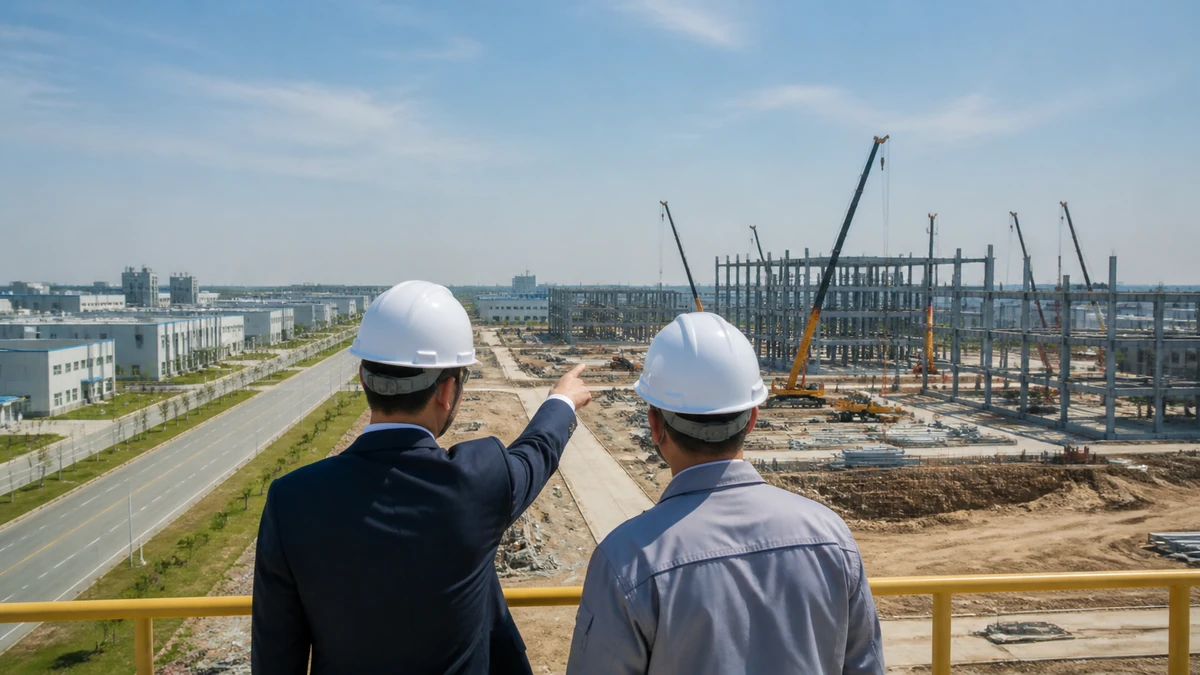
Uzbekistan is exploring the creation of an industrial park dedicated to South Korean companies, a move that would mark a notable escalation in economic cooperation between Seoul and one of Central Asia’s most strategically positioned countries. The proposal, disclosed by Uzbek President Shavkat Mirziyoyev in remarks made public this week, goes beyond the kind of ceremonial language that often surrounds diplomatic meetings. If it advances, it would amount to a concrete invitation for Korean manufacturers, infrastructure firms and technology companies to build a deeper, more permanent foothold in the region.
The idea emerged during a visit by South Korean Deputy Prime Minister and Finance Minister Koo Yun-cheol to Samarkand, where he traveled for the Asian Development Bank’s annual meeting. According to the South Korean Finance Ministry, Mirziyoyev said he wants to expand trade and investment cooperation with South Korea and expressed support for developing an industrial complex specifically for Korean companies.
That distinction matters. Governments frequently talk about stronger investment ties, but a proposal tailored to companies from one country suggests a more deliberate strategy: not simply attracting isolated projects, but building an ecosystem meant to cluster businesses, streamline local operations and potentially anchor supply chains. For American readers, a useful comparison might be the way states in the U.S. compete to attract automakers or semiconductor makers by offering dedicated sites, tax incentives, infrastructure and regulatory support. In this case, Uzbekistan appears to be signaling that it wants to do something similar for Korean firms at a national level.
The development also reflects a broader shift in how South Korea is engaging overseas. For years, Korean business expansion abroad was often discussed in terms of exports — selling cars, electronics, petrochemicals or construction services into foreign markets. What is taking shape here is something more structural: the possibility of creating an operating base, where production, logistics, financing and long-term industrial partnerships can be built on the ground.
For Uzbekistan, the appeal is equally clear. The country has been trying to diversify its economy, modernize infrastructure and attract foreign investment that brings not only capital, but also technical know-how, management systems and global business networks. South Korea, with its strengths in advanced manufacturing, infrastructure development, industrial planning and supply-chain management, fits that ambition neatly.
It is still early. No detailed blueprint, timeline or financing plan has been publicly released. But in diplomacy, especially economic diplomacy, top-level signals can matter almost as much as signed contracts. When a head of state publicly invites a country’s companies to build out a dedicated industrial space, it sends a message both to investors and to the bureaucracy that those projects have political backing.
Why an industrial park matters more than a headline deal
On the surface, the phrase “industrial park for Korean companies” may sound technical, even dry. In practice, it could be one of the most consequential parts of the story.
An industrial park is not just a patch of land with factories. In many emerging markets, it is a policy tool. It can include transportation links, electricity access, warehousing, customs facilitation, local permitting help and space for suppliers to cluster near larger anchor firms. For companies considering entry into a new market, those factors often matter more than a single subsidy. They determine whether a factory can actually operate efficiently, whether components can arrive on time, whether local staff can be recruited and trained, and whether executives can navigate the legal and administrative environment without getting bogged down.
That is especially important for Korean firms, which often work through dense networks of suppliers, contractors and specialized service providers. South Korea’s industrial model — whether in autos, electronics, batteries, shipbuilding or infrastructure — tends to depend on coordination across many companies rather than a single standalone investor. A dedicated industrial zone could make that type of ecosystem easier to replicate abroad.
For Americans, the closest analogy may be the supplier parks that grew around auto plants in places like Alabama, Georgia and Tennessee as foreign investment transformed the U.S. South. When Hyundai, Kia, Mercedes-Benz, Toyota and others expanded in those states, they did not operate in a vacuum. They drew in parts makers, logistics firms, engineering services and workforce training programs. A Korean-focused industrial park in Uzbekistan could serve a similar function, though in a much earlier stage of development and with broader ambitions spanning multiple sectors.
That is one reason this proposal carries more weight than a one-off investment announcement. A single contract can generate headlines and still fade. A cluster strategy, if real, can reshape a regional business relationship for years. It can also lower the entry barrier for midsize companies that might not have the resources to enter Uzbekistan alone, but would consider participating if they could plug into a shared industrial platform backed by both governments.
The symbolism is also significant. Mirziyoyev did not merely say he welcomes Korean investment. He indicated interest in creating a Korean-company-only industrial site. That suggests Uzbekistan sees South Korea as a preferred development partner — one with enough scale, credibility and strategic value to warrant custom-made investment infrastructure.
Why Uzbekistan, and why now?
Uzbekistan does not usually dominate headlines in American business coverage, but its importance has grown steadily over the past decade. It is Central Asia’s most populous country, sits at the heart of regional transport routes and has spent recent years trying to open its economy, modernize governance and attract international capital. For companies looking beyond crowded or politically volatile markets, it offers a combination of labor force, geographic reach and reform potential that is increasingly hard to ignore.
Its location alone makes it relevant. Uzbekistan borders all the other Central Asian states and connects markets stretching toward China, Russia, the Caucasus and, through wider regional corridors, Europe and South Asia. It is landlocked, which creates logistical challenges, but it also sits in a strategic crossroads zone that governments and investors increasingly view through the lens of supply-chain diversification.
That phrase — supply-chain diversification — may sound like corporate jargon, but it has become one of the defining ideas of the post-pandemic global economy. American readers have seen versions of it in conversations about reshoring, “friend-shoring” and reducing overreliance on any one country for critical goods. South Korea has been part of the same global recalibration. Its companies are looking for markets where they can build production capacity, support infrastructure projects and secure more flexible logistics networks.
Uzbekistan, for its part, has been pushing a development agenda aimed at industrial diversification and infrastructure modernization. Those priorities overlap with Korean strengths. South Korea’s economic rise was built on exactly the kinds of capabilities Uzbekistan is now seeking: industrial planning, export-led manufacturing, transportation systems, urban development, energy coordination and, more recently, biotechnology and advanced services.
Timing matters too. The discussions took place on the sidelines of the Asian Development Bank annual meeting, a setting that naturally elevates cross-border investment conversations. Multilateral gatherings like the ADB meetings are not just conference-circuit diplomacy. They are often where countries try to align bilateral ambitions with broader financing ecosystems, development priorities and regional connectivity agendas.
Seen in that context, the Uzbek proposal looks less like an isolated gesture and more like part of a wider effort to position the country as a serious destination for long-term industrial partnerships. And it comes at a moment when middle powers such as South Korea are broadening their overseas economic strategies beyond their traditional hubs in East Asia, Southeast Asia and North America.
What South Korea wants out of the partnership
South Korean officials have made clear that they see Uzbekistan as more than a sales market. During the visit, Koo called for expanded cooperation in biotechnology, infrastructure including railways and airports, supply chains and broader regional collaboration. Those are telling priorities.
Take biotechnology. In the American imagination, South Korea is often associated with Samsung smartphones, Hyundai vehicles, K-pop and Oscar-winning cinema. But its biotech and pharmaceutical ambitions have become a major pillar of its industrial strategy. Korean companies have invested heavily in biomanufacturing, contract development and pharmaceutical innovation. If Uzbekistan is looking to modernize healthcare-related industries and attract higher-value investment, biotech offers one route for moving beyond commodity dependence.
Infrastructure is another obvious fit. Korean companies have long punched above their weight in overseas construction, engineering, airports, rail systems and urban development. From the Middle East to Southeast Asia, they have built reputations for executing large-scale projects that combine financing, design, construction and operations. For Uzbekistan, which wants to upgrade connectivity and modernize public infrastructure, Korean participation offers not just builders, but system integrators.
Supply-chain cooperation may be the most strategically important of all. South Korea’s corporate model is deeply experienced in organizing complex manufacturing networks. That can mean everything from sourcing and component coordination to digital logistics and industrial training. In a country trying to industrialize more broadly, this know-how may be just as valuable as direct investment capital.
Koo also reportedly asked for more opportunities for Korean companies to participate in Uzbekistan’s 2030 development strategy. That is a notable detail because it frames Korean firms not as temporary contractors, but as partners in a longer national transformation process. In diplomatic language, that is a meaningful shift. It suggests South Korea wants a seat not only in individual commercial tenders, but in the larger architecture of how Uzbekistan plans its economic future.
Before meeting Mirziyoyev, Koo also held talks with senior Uzbek officials responsible for economic cooperation, finance, investment, industry, transport and health. That points to another important dimension of the story: this is not just leader-level pageantry. It appears to be part of a broader government-to-government effort to review existing cooperation and identify deliverable projects across multiple ministries.
For businesses, that matters because major overseas ventures often rise or fall on bureaucratic follow-through. A warm presidential statement can open a door, but projects advance only when ministries, regulators and local agencies line up behind them. The breadth of the discussions suggests both sides are trying to build that institutional foundation.
The cultural and political backdrop Americans may miss
For readers in the United States, it may be tempting to see this as just another foreign investment story. But the Korea-Uzbekistan relationship carries layers of historical and cultural meaning that are easy to overlook from afar.
South Korea’s engagement with Central Asia is not new, and it is not purely transactional. There are longstanding people-to-people ties in the region, including communities of ethnic Koreans whose presence dates back to forced Soviet-era relocations from the Russian Far East. In Korea, those communities are often part of the broader story of the Korean diaspora. While they are not the sole reason for modern economic cooperation, they form part of the human context that helps make South Korea’s presence in Central Asia feel less distant than it might appear on a map.
There is also a familiar Korean development narrative in the background. South Korea frequently presents its own transformation — from war-torn poverty in the 1950s to advanced industrial economy in a few generations — as proof that state-led planning, export growth and technology upgrading can work. That story has long been central to how Seoul engages developing partners. In effect, Korea is not only exporting products; it is also exporting a model of industrialization, or at least selected pieces of it.
That does not mean Uzbekistan can or will follow South Korea’s path. The two countries have different political systems, demographics, geography and external pressures. But Korean policymakers and companies often approach overseas cooperation with the confidence that they have practical experience in moving from low-income conditions to high-value industry. That self-image helps explain why infrastructure, industrial parks and supply chains are recurring themes in Korean economic diplomacy.
There is also a domestic Korean political angle worth noting. Successive governments in Seoul, regardless of ideological differences, have treated economic diplomacy as a key tool of national strategy. In a country heavily dependent on trade, overseas markets are not optional; they are essential. That creates strong incentives to cultivate partnerships in regions that can offer new demand, investment opportunities and geopolitical flexibility.
Mirziyoyev’s reported expression of hope that South Korean President Lee Jae-myung will visit Uzbekistan adds another layer. It does not amount to a confirmed trip, and it should not be overstated. But such invitations signal that the Uzbek side wants this relationship recognized at the highest political level, not left solely to working-level officials or private companies.
What it could mean for Korean business — and global competition
If the industrial park concept moves forward, the implications for Korean business could be substantial. It would offer not just a new market entry point, but potentially a platform for regional expansion. Companies based in Uzbekistan could use the country as a manufacturing, logistics or project-management hub for wider Central Asia, depending on trade arrangements, transport improvements and local regulations.
That could be especially attractive for sectors where Korean firms already hold competitive advantages. Infrastructure developers could pursue transport and airport modernization. Medical and biotech companies could explore localized production or healthcare partnerships. Manufacturers could examine whether certain labor-intensive or regionally oriented operations make sense there. Logistics and engineering service providers could follow larger anchor investors into the market.
There is also a competitive dimension. South Korea is hardly the only country seeking influence and opportunity in Central Asia. China has deep economic reach through trade and infrastructure. Russia remains a major regional actor despite its diminished economic appeal in some sectors. Turkey, the Gulf states, Europe, Japan and others have also sought a stronger role. A Korean-specific industrial park would be one way for Seoul to distinguish itself in a crowded strategic field.
That does not mean every project will succeed. Industrial parks can become engines of growth, but they can also underperform if infrastructure is incomplete, demand is overestimated or administrative reforms stall. Investors will want clarity on land, tax treatment, labor availability, currency rules, customs procedures and dispute resolution. Without those details, enthusiasm can remain theoretical.
Still, even at the proposal stage, the concept sends a message to competitors: Uzbekistan is prepared to carve out special space for Korean capital, technology and management. In international business, preferred access — or the perception of it — can influence where companies focus their attention and how rival countries position their own offers.
What comes next
The immediate question is whether the political language now turns into a defined project. Much remains unknown: where the industrial park would be located, what industries it would prioritize, how it would be financed, what incentives would be offered and whether it would be built from scratch or integrated into an existing special economic zone.
Those details will determine whether this becomes a landmark in Korea-Central Asia relations or another ambitious idea that advances slowly. Watch for follow-up talks involving investment authorities, finance ministries, transport planners and trade officials. Watch also for signs that Korean companies themselves are being consulted, since a successful industrial cluster needs private-sector commitment, not just diplomatic enthusiasm.
For American readers, the broader significance is this: South Korea is increasingly acting not only as an exporter of finished goods or pop culture, but as a builder of industrial ecosystems abroad. The Korean Wave, or Hallyu, is best known in the United States through K-pop, Korean dramas and beauty brands. But alongside that soft-power surge is a quieter story of Korean statecraft and corporate expansion — one that involves ports, factories, rail links, biotech facilities and supply chains.
Uzbekistan’s proposal puts that larger story into focus. It suggests that Seoul’s international profile is evolving from seller to systems partner, and that countries seeking modernization are willing to create tailored openings for Korean business to help get there.
Whether the industrial park is ultimately built or not, the underlying message is hard to miss. Central Asia is not just a peripheral arena for South Korea anymore. It is becoming part of a wider map of Korean economic ambition — one where investment platforms, infrastructure partnerships and long-term industrial cooperation matter as much as export numbers. And for Uzbekistan, the outreach reflects a parallel ambition of its own: to move from being seen mainly as a frontier market to being recognized as a place where foreign partners can build, produce and plan for the future.
In that sense, the significance of this week’s announcement lies less in what has already been signed than in what kind of relationship both sides are trying to build. Not a transaction, but a base. Not a shipment, but a strategy. In a global economy increasingly defined by resilience, regionalization and competition for industrial capacity, that is a development worth watching.
Comments
Post a Comment