
A one-point win that felt much larger
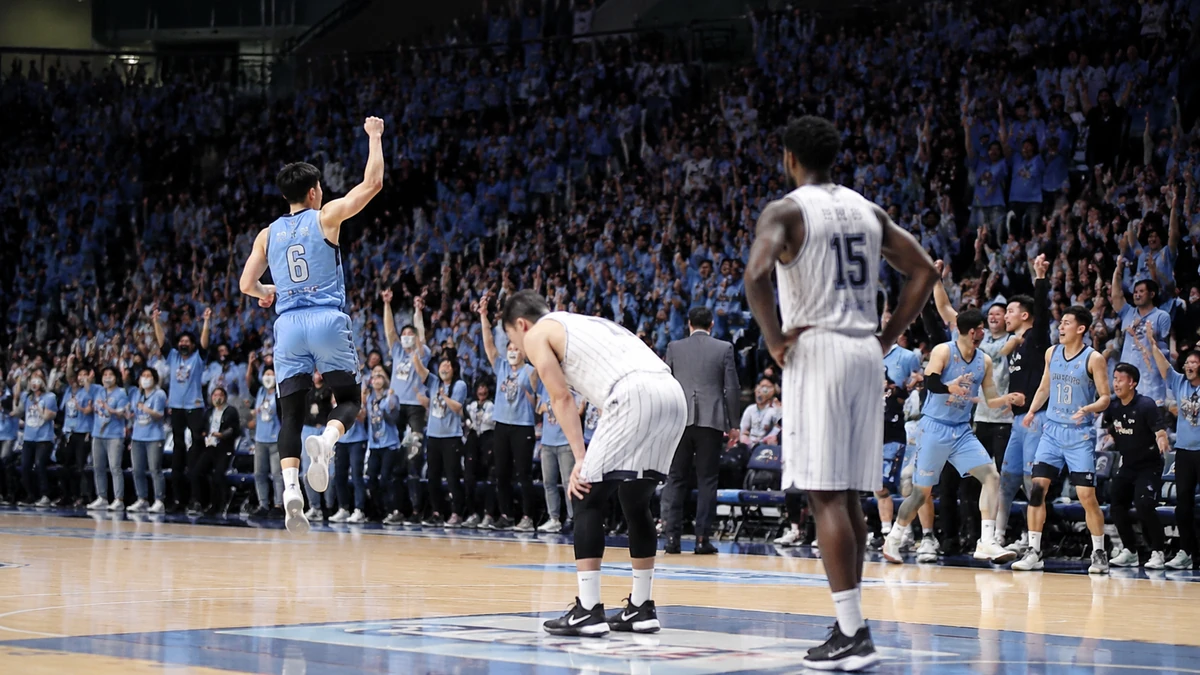
In the United States, sports fans know the feeling: a team staring at elimination, a hostile road arena, a superstar who refuses to let the season end and a game decided in the final heartbeat. Think of the kind of playoff night that becomes part box score, part folklore. That was the scene Friday in Busan, where Goyang Sono escaped with an 81-80 victory over Busan KCC in Game 4 of the Korean Basketball League championship series, keeping its season alive and injecting drama back into a matchup that had seemed all but over.
On paper, the result is simple. Sono, down 3-0 in the best-of-seven series, won by a single point and avoided a sweep. In practice, it was something heavier. Teams trailing 3-0 are not supposed to rediscover their footing this late, especially not in a championship round and especially not on the road. Yet Sono did exactly that, using a late burst from league MVP Lee Jung-hyun to survive a game that came down to the final second.
Lee scored 22 points, including six 3-pointers, but the timing of those points mattered more than the total. With 21.1 seconds left, he drilled a go-ahead 3-pointer to put Sono in front 80-79. Then, with the game tied at 80 and just 0.9 seconds remaining, he drew a foul in the act of shooting and calmly made one of two free throws. That single point became the margin of victory.
For an American audience less familiar with the rhythms of Korean basketball, the KBL championship does not operate on the same global scale as the NBA Finals, but the emotional architecture is recognizable. This was the Korean equivalent of a season teetering on the edge, with every possession carrying the weight of a possible ending. One made free throw did not erase the first three losses. It did, however, change the mood of the series from inevitable to unsettled.
And in playoff sports, mood matters. Sometimes it matters almost as much as talent.
Lee Jung-hyun delivers like a star is supposed to
There are nights when an MVP trophy feels like a regular-season souvenir, and there are nights when it feels like a promise. Lee played as if he understood the difference. He was not just Sono’s leading scorer Friday. He was the player who steadied the team in its worst moments and seized control of the game when the clock shrank and everyone in the arena knew who had to take the shot.
That is the real significance of his 22 points. Plenty of players can fill a scoring column over 40 minutes. Fewer can shape the emotional direction of a game when the pressure is at its highest. Lee did that twice in the closing moments. First came the 3-pointer that flipped a one-point deficit into a one-point lead. Then came the foul drawn with less than a second left, a veteran play that showed poise as much as aggression.
For readers accustomed to the American sports vocabulary of “closers” and “go-to guys,” Lee fit that mold precisely. The best stars do not merely produce; they accept responsibility in the moments when failure is most public. In playoff basketball, defenses tighten, scouting sharpens and individual errors become magnified. The Korean championship round, much like the NBA postseason, can turn even routine possessions into tests of nerve. Lee passed that test in the clearest possible way.
There is also a useful cultural note here for English-speaking readers: in South Korean sports coverage, the phrase “ace” is commonly used to describe the leading player or franchise cornerstone, in much the same way American fans might say “star,” “franchise player” or “go-to scorer.” Lee was every bit the ace Friday. The final possessions did not just feature him. They belonged to him.
After the game, Lee acknowledged the mental and physical strain of the moment. He said the back-to-back schedule had been exhausting and that the burden of trying to stop a three-game slide had weighed heavily. But he also emphasized that the players endured it together. That matters because his performance was brilliant without being framed as a solo act. In Korean team sports culture, postgame comments often lean toward collective credit and shared hardship rather than individual triumphalism. Lee’s remarks fit that pattern, even after a game that he effectively saved by himself.
The pressure inside a Korean championship series
To understand why this victory resonated so strongly in South Korea, it helps to understand the psychology surrounding Korean championship events. Korean sports culture can be intensely momentum-driven, and narratives of pressure, resilience and emotional burden are often discussed more openly than in many American locker rooms. Athletes, coaches and even broadcasters frequently talk about atmosphere, confidence and spirit in ways that may sound dramatic to outsiders but reflect a very real part of how big games are experienced domestically.
That was especially true for Sono entering Game 4. The team had lost the first three games of the series. Another defeat would have ended the season immediately. Lee said that before the game, during a team meeting held before lunch, the players looked drained. That image is revealing. It suggests not just fatigue, but the sort of emotional flatness that can overtake a team when it begins to sense the ending before the final buzzer ever arrives.
Then, once the game started, that mood changed. Lee said the players no longer showed the same lifelessness they had earlier in the day. Sports often produce that kind of reversal. Anxiety can freeze a team before tipoff and sharpen it once the action begins. What looked like dread at midday turned into competitive urgency by evening.
In that sense, Game 4 was not only a tactical correction. It was a psychological recovery. Sono did not suddenly become a different team from the one that had dropped three straight. KCC remains the series leader and, based on the first three games, still the more commanding side. But Sono found a way to resist the emotional spiral that so often accompanies near-elimination.
American readers will recognize the pattern even if the league is less familiar. It is the same dynamic seen when a baseball team avoids a sweep in October or when an underdog in March Madness finally plays loose because there is nothing left to protect. Desperation is not always an advantage. It can just as easily create panic. On Friday, it created clarity.
A coach’s message distilled the stakes
Another detail from the Korean reporting captured the spirit of the night. Ahead of Game 4, Sono coach Son Chang-hwan reportedly told his players that he wanted to keep working on the bus ride home. The line was short, but in context it was powerful: lose, and the season ends; win, and everyone gets to keep doing the job a little longer.
That kind of blunt emotional messaging is not uncommon in Korean sports, where coaches still often function as symbolic leaders in a way that can feel more openly hierarchical than many contemporary American teams. The statement was not about X’s and O’s. It was about survival, obligation and the refusal to let the year end quietly. Son’s message gave shape to the desperation already hanging over the team.
After the win, Son described the night with a phrase that neatly explained the upset: passion beat talent. Whether that is fully true over the course of the entire series remains to be seen, but it captured the dynamic of Game 4. KCC came into the night with the upper hand, a lead in the series and the aura of a team ready to finish the job. Sono answered not by suddenly overwhelming KCC with superior skill, but by hanging in possession after possession and trusting that effort could keep the game within reach long enough for one player to change it.
That theme, too, will sound familiar to American fans. Coaches from every sport, from football to basketball to hockey, often reach for versions of the same idea in playoff moments: talent sets the ceiling, but urgency decides whether a team gets there. Son simply delivered that thought in a more direct and personal way.
And in Korea, those lines can take on a life of their own. Coaching remarks are often widely repeated in the media and by fans, becoming part of the emotional script of a series. If Sono manages to extend this comeback attempt further, Son’s bus-ride comment may be remembered as one of those defining playoff lines that grows larger with each retelling.
The final 21.1 seconds, and then the final 0.9
Every great playoff game eventually gets reduced to its smallest units of time. A baseball game becomes one pitch. A football game becomes one drive. A basketball game becomes one shot, then another, then a foul shot suspended in silence. For Sono, the whole night can be told through two fragments of the clock: 21.1 seconds and 0.9 seconds.
The first was Lee’s go-ahead 3-pointer, which changed the score from 79-77 KCC to 80-79 Sono. It was more than a basket. It was a psychological swing. In championship basketball, a late lead change can alter the air in a building as much as the scoreboard. Suddenly the team that had been counting down to celebration has to confront the possibility of failure, while the desperate team gets a fresh jolt of belief. That one shot changed not just the arithmetic but the emotional ownership of the moment.
The second was even more severe in its tension. With the score tied 80-80 and less than one second left, Lee drew a shooting foul. This is one of those small but telling details that separates stars from merely productive players. In a chaotic endgame, many players rush, force bad looks or lose control of the possession altogether. Lee created the most practical scoring chance available: free throws, clock stopped, game hanging on touch and nerve.
He made one of two. Normally, split free throws invite second-guessing. Here, one was enough. It became the winning point because there was no real time left for KCC to answer. That final sequence also serves as a reminder that championship basketball is often decided by precision rather than dominance. Sono did not need a perfect ending. It needed one clean enough to survive.
For neutral fans, these are the moments that make a series memorable even when one team still trails. A 3-0 finals matchup can feel predetermined; a 3-1 series with a last-second escape suddenly feels alive. It offers the possibility of pressure shifting, of doubt creeping in and of the favorite realizing the finish line is still a little farther away than expected.
Why sold-out fans mattered in a country that loves comeback drama
South Korea has one of the most passionate and organized fan cultures in sports, and while baseball often gets more international attention, basketball crowds can generate a similarly intense atmosphere. Chants, coordinated support and tightly knit club identities are a major part of the experience. In that environment, fan commitment is not treated as decorative. It is often talked about as a living part of the contest.
After the game, Lee said he had heard that tickets for Game 5 in Goyang, scheduled for June 13, were already sold out. That detail struck him because it told him the fans had not given up on the team despite the 3-0 hole. He suggested that faith helped lead to Friday’s result.
To some American readers, that may sound like the kind of postgame sentiment athletes say because they are expected to thank supporters. But in Korea, fan persistence carries real symbolic weight. The notion that supporters stayed invested even when the series looked doomed fits neatly into a broader Korean sports storytelling tradition: endurance rewarded, loyalty vindicated, hope sustained longer than logic might allow.
It is also easy to see why that detail matters beyond Korea. American fans know the civic force of a packed playoff building. They know what it means when a city buys tickets for a game that might not matter because people are choosing belief over probability. There is a familiar echo here of home crowds in Cleveland, Boston, Philadelphia or Oklahoma City willing their teams to extend a season another night.
In that way, this was not just a Korean basketball story. It was a universal sports story told in Korean terms. The fans did not score the points, of course, but they provided the emotional backdrop that made the points resonate. Their refusal to abandon the series mirrored Sono’s refusal to let it end.
What the win changes, and what it does not
It is worth keeping perspective. Sono has not suddenly become the favorite, and Friday’s win does not erase the problems exposed in the first three games. KCC still leads the series 3-1. It still has more margin for error. It still has the opportunity to close out the championship in the next game. The broader balance of power has not fully shifted.
But that does not mean Game 4 was merely a delay. In playoff series, there is a huge difference between postponing the end and altering the emotional equation. Sono did the latter. It reminded KCC that the title will have to be finished under pressure, not simply collected. It reminded its own locker room that the series can still produce new turns. And it reminded the league that even a one-sided finals matchup can be revived by one fearless performance and one thin margin.
This is also why the game mattered beyond the standings. Korean sports fans, like American ones, are drawn to moments that feel bigger than the technical outcome. A desperate team, a star at the center of the last possession, a one-point finish and a fan base hanging on through apparent defeat: that is the architecture of a classic sports drama anywhere in the world.
For American readers trying to locate this story within a familiar frame, the closest comparison is not necessarily an exact game or player but a feeling. It is the feeling of a team refusing to let the confetti come down for someone else. It is the feeling of a crowd realizing, all at once, that the script has changed. And it is the feeling of a star knowing that in the most important seconds of the season, everyone expects the ball to find him.
On Friday in Busan, it did. Lee Jung-hyun took that burden, hit the shots and gave the Korean finals something it desperately needed: uncertainty. For one more game, at least, Sono is alive. And in sports, as every fan knows, alive is sometimes all a team needs to make the next chapter matter.



0 Comments