A South Korean City Offers Free Pneumococcal Shots for Seniors, Highlighting a Bigger Public Health Push
A local notice with global relevance
In the United States, Americans are used to seeing vaccine reminders arrive through a doctor’s office portal, a pharmacy text alert or a Medicare mailing. In South Korea, public health messages often come from city governments, district offices and neighborhood clinics that serve as a first point of contact for residents. That is the context behind a new announcement from Chungju, a midsize city in central South Korea, which says it will provide free pneumococcal vaccinations on June 8 to residents 65 and older.
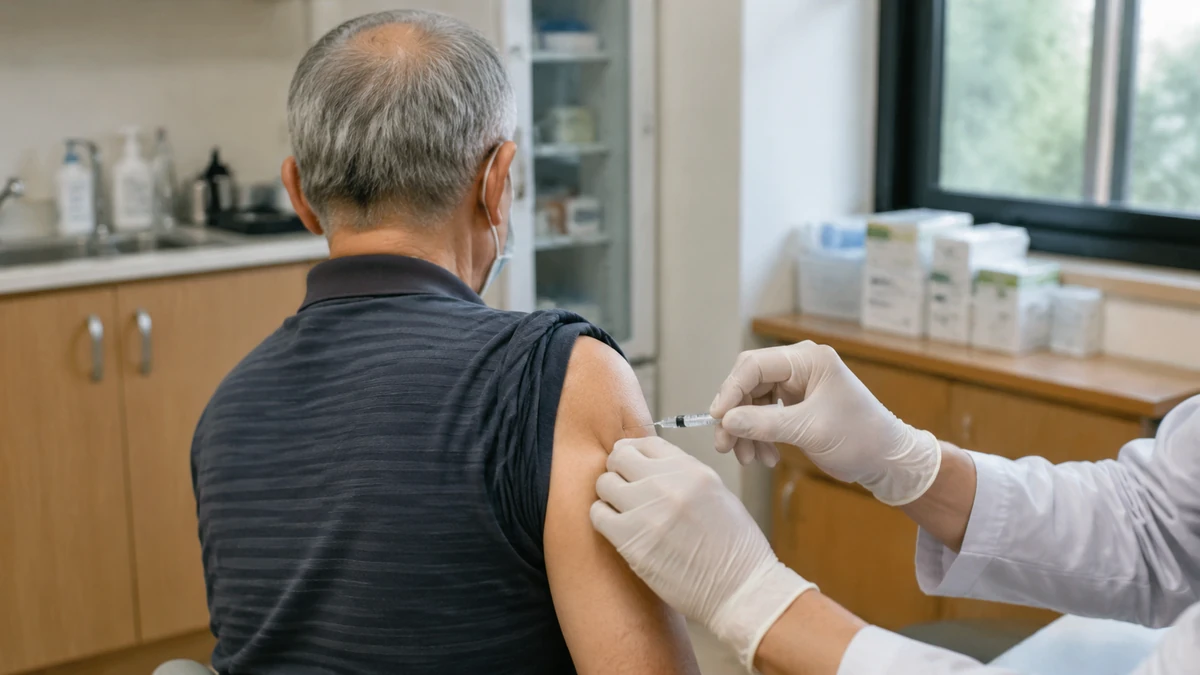
On its face, the notice is straightforward: eligible seniors can receive a free dose of the pneumococcal polysaccharide vaccine, known as PPSV23, at the Chungju public health center or at designated local medical institutions. The city says the benefit is available once in a lifetime, a detail that makes the announcement more than a routine scheduling notice. It turns the message into an action item for older adults and their families: check eligibility, check past records and do not assume the opportunity will come around again in the same form.
For American readers, the story may sound familiar in broad outline but distinct in execution. South Korea has a national health insurance system and a dense local public health network, so municipal governments frequently play a visible role in carrying out preventive care campaigns. What might be handled through a combination of insurers, physician groups and retail pharmacies in the U.S. is often communicated in Korea as a city service, with the mayor’s office or local health center effectively telling residents, in plain language, who should go where and why it matters.
That practical tone is one reason this small local story deserves attention. It is not a grand policy speech or a medical breakthrough. It is a civic notice built around a simple question: How do you get older residents to take preventive care seriously before an infection becomes life-threatening? In an aging society, that is not a small question. It is one many countries, including the United States, are still trying to answer.
Why pneumococcal disease remains a serious threat
The bacterium at the center of Chungju’s notice is pneumococcus, which can cause pneumonia but also far more invasive illness. When infections become severe, they can lead to bacteremia, a bloodstream infection, and meningitis, an infection of the membranes surrounding the brain and spinal cord. Those are especially dangerous outcomes for older adults, whose immune systems often weaken with age and who may already be managing chronic conditions such as diabetes, heart disease or lung disease.
Chungju’s announcement underscores that danger in unusually blunt terms, warning that severe pneumococcal infection can carry a fatality rate of 60% to 80%. Whether a reader focuses on the exact figure or on the broader message, the point is unmistakable: this is not the kind of illness local officials want seniors to think of as just another seasonal cough or chest cold. Public health officials are trying to connect the science of risk with a concrete next step: get vaccinated before trouble starts.
That emphasis mirrors long-standing public health thinking in the U.S., where federal health authorities also urge older adults to stay current on vaccines that reduce the risk of serious respiratory illness. Pneumococcal disease does not always command the same public attention as flu, COVID-19 or RSV, but it has long been a concern in geriatric medicine because it can turn dangerous quickly. A bout of pneumonia in an older patient is not just a temporary inconvenience. It can trigger hospitalization, prolonged recovery, loss of mobility and, in some cases, a decline from which a person never fully returns.
For families, this is often the hidden story behind vaccine campaigns aimed at older adults. Preventing one severe infection is not just about avoiding a few days of sickness. It can mean preserving independence, preventing a long hospital stay and reducing the cascading health problems that often follow. That is why a local government notice about a single vaccine dose can carry outsized importance.
How South Korea delivers public health at the community level
To understand why a city like Chungju is issuing such a notice, it helps to understand how local governance works in South Korea. Municipal governments are deeply involved in day-to-day public health administration. A “bo-geon-so,” or public health center, is a familiar institution for many Koreans, especially older residents. These centers do more than respond to outbreaks. They provide health screenings, maternal care, chronic disease counseling, vaccinations and other preventive services, often at low cost or free of charge.
That system gives local governments a practical way to translate national health priorities into neighborhood-level action. In a U.S. context, the closest comparison might be a county health department teamed with community clinics, except the Korean system is often more centralized and more uniformly integrated into daily civic life. When a city announces a vaccine campaign, residents generally know the institutions involved and the path they are supposed to follow.
Chungju’s guidance reflects that culture of direct administration. Rather than burying readers in medical jargon or bureaucratic detail, the message focuses on the essentials: the eligible age group, the vaccine type, the fact that the shot is free once in a lifetime and the locations where it can be received. That checklist-like structure matters. Health communication tends to be most effective when it tells people not just what is true, but what they should do next.
It also speaks to a larger feature of Korean public life: a strong expectation that local authorities should provide actionable information quickly and in a usable form. In South Korea, where the population is aging rapidly and urban and rural communities alike face growing health care demands, preventive messaging is often designed to be immediately practical. The question is not only whether people are informed, but whether they can act on the information without navigating a maze of institutions.
Who qualifies, and why the one-time free dose matters
According to the Chungju notice, the free vaccination is for adults 65 and older, identified in the article as those born in 1961 or earlier under the reporting 기준, or standard, used in the original notice. The city says the supported vaccine is PPSV23, the 23-valent pneumococcal polysaccharide vaccine, and that eligible residents may receive it free only once in their lifetime.
That last point may sound like boilerplate, but it carries real significance. In public health policy, eligibility rules shape behavior. A service that is offered annually, like a flu shot, invites routine compliance. A benefit that is free only once requires a different kind of awareness. Seniors and their families may need to verify whether the shot was already received, whether the record is available and whether the current visit is the right time to use that one subsidized opportunity.
In practical terms, that makes family involvement important. In both South Korea and the U.S., adult children often play a major role in helping older parents manage appointments, records and medication schedules. In Korea, that family role can be especially visible because older parents may rely on children not only for transportation or scheduling help but also for navigating digital systems and administrative notices. A short public health announcement therefore often speaks to two audiences at once: the older resident and the adult son or daughter who may actually help get the appointment done.
The city’s decision to offer the shots not only at the public health center but also at designated local medical institutions is another important detail. Accessibility often determines whether preventive care works in real life. A free vaccine that requires a difficult trip across town or a confusing enrollment process may fail to reach the people who need it most. By widening the range of locations, Chungju appears to be reducing a common barrier: the gap between being eligible on paper and being vaccinated in reality.
What this says about an aging South Korea
Like the United States, South Korea is getting older. But it is aging much faster. The country has one of the world’s lowest birth rates and a rapidly rising share of older adults, creating new pressure on health systems, caregivers and local governments. That demographic shift shapes why even seemingly small municipal health notices matter. They are part of a broader effort to prepare communities for the realities of longevity: more chronic illness, greater vulnerability to infection and a growing need for preventive services that can keep older adults healthier for longer.
In that respect, Chungju’s vaccine campaign is not an isolated administrative act. It fits a wider Korean policy pattern that increasingly emphasizes early intervention, community-based care and targeted support for older populations. On the same day as the Chungju announcement, other local health news in Korea pointed in a similar direction. One regional government highlighted home-based medical services for long-term care recipients who have difficulty traveling. Another local government focused on public sanitation standards in businesses such as bathhouses and lodging facilities. These are different programs, but they share a common logic: reduce risk before it becomes a crisis.
That preventive approach may resonate with American readers who watched health systems strain during the worst periods of the COVID-19 pandemic. One lesson from those years was that treatment capacity matters, but so does the less dramatic work of making prevention easy, routine and trusted. Vaccines, sanitation, local outreach and access points close to home often look mundane until they are missing.
South Korea’s local health model is not identical to America’s, and it would be a mistake to romanticize it. Korean cities, like U.S. municipalities, face budget pressures, staffing challenges and the difficulties of reaching residents who do not respond to official messaging. But the Chungju case does illustrate a public health philosophy that many experts endorse: identify the high-risk group clearly, remove cost barriers, simplify instructions and put care within reach.
The cultural layer: how Korean families and local government intersect
For readers outside Korea, one cultural dimension is worth noting. Public health messages aimed at seniors often operate within a social world where family ties remain highly consequential. South Korea has modernized rapidly, but expectations around family responsibility, particularly toward elders, remain strong. That does not mean every household functions the same way, and Korea, like the U.S., is experiencing social change, smaller families and more seniors living alone. Still, the idea that adult children should keep an eye on an aging parent’s health remains deeply familiar.
That helps explain the style of reporting around such notices. Korean local health coverage often reads less like debate-driven political journalism and more like a community service bulletin with added medical context. The goal is not to provoke ideological argument. It is to prompt a practical response: Did your parent get this shot yet? Does your grandmother qualify? Do you know where the designated clinic is?
In the American media environment, where stories are often framed through conflict, cost or partisan implication, that style can feel refreshingly plainspoken. But it also reflects a different media expectation. Local health journalism in Korea frequently serves as a transmission belt between public authorities and daily life. That can be especially valuable for older readers who are less likely to seek out health guidance through fragmented digital channels.
There is another cultural angle here, too. Korea’s respect language and social norms around age mean that officials often address seniors with particular courtesy, referring to them as older citizens deserving of care and protection. While the policy mechanics may be clinical, the public messaging tends to carry a tone of social obligation. It is not simply that infection prevention is efficient. It is that helping older residents stay safe is understood as a communal responsibility.
What American readers can take from Chungju’s announcement
For U.S. readers, the Chungju story offers more than a glimpse into Korean municipal administration. It is also a reminder of a universal health care challenge: turning prevention into something people actually do. The science behind vaccines is only one piece of the equation. Cost, convenience, trust and clarity matter just as much. A city can have the right policy and still fall short if eligible residents do not know about it, do not understand it or cannot easily access it.
That is where Chungju’s announcement seems particularly effective. It answers the basic questions that public health communication often overcomplicates. Who is eligible? People 65 and older. What vaccine is being offered? PPSV23. How much does it cost? It is free. How often? Once in a lifetime under the program. Where can people go? The city health center or designated medical institutions. For an older resident, or for an adult child trying to help a parent, that kind of simplicity can be the difference between good intentions and real follow-through.
It is also a reminder that local news still matters. A municipal vaccine notice in central South Korea will not dominate international headlines. Yet it speaks to concerns shared across wealthy aging societies, including the United States: how to keep seniors healthier, how to reduce avoidable hospitalizations and how to build systems that reward prevention rather than waiting for emergency care.
In an era when public discourse often gravitates toward sweeping reforms and culture-war battles, there is something instructive about a story this modest. It shows governance at its most basic and, arguably, at its most meaningful: a local government identifying a vulnerable population, offering a clear service and telling people, in plain terms, why acting now could save lives later.
For families in Chungju, the immediate takeaway is practical. If a parent or grandparent qualifies, this is the time to check records and make a plan. For readers elsewhere, the lesson is broader but no less urgent. As populations age from Seoul to St. Louis, from Busan to Boston, one of the most important public health questions is not what medicine can do after severe illness strikes. It is whether communities can make prevention simple enough, trusted enough and close enough to home that people use it before the danger arrives.
That is the real significance of this South Korean city’s vaccine notice. It is small in scale, local in jurisdiction and highly specific in its target. But it captures a much bigger truth about aging societies: the most effective health interventions are often not the most dramatic ones. They are the ones that reach people early, clearly and at the moment when a preventable risk can still be prevented.
Comments
Post a Comment