A Tiny Dip in Global Food Prices Offers Little Relief for South Korea — or for Consumers Watching Grocery Bills Worldwide
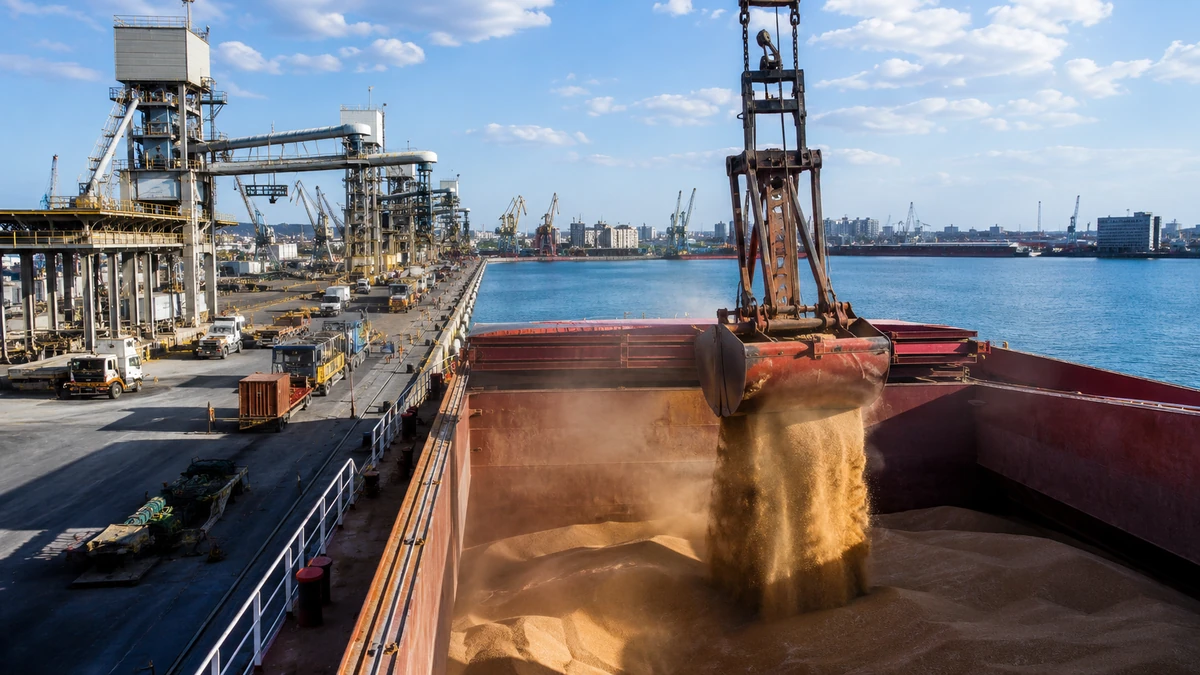
A global benchmark turns lower, but the bigger story is underneath
Global food prices edged down in May, snapping a four-month run of increases, according to the latest United Nations data cited by South Korea’s Agriculture Ministry. On paper, the move was slight: the U.N. Food and Agriculture Organization’s Food Price Index came in at 130.8, down 0.2% from 131.0 a month earlier. In most headlines, that kind of change would barely register.
But in Seoul, where officials closely watch imported inflation and the cost of basic household staples, even a small shift in direction matters. The FAO index is one of the world’s most widely followed gauges of international food commodity prices, tracking broad categories including grains, vegetable oils, meat, dairy and sugar. When it moves, governments, food manufacturers, retailers and investors pay attention — not because it predicts exactly what a shopper will pay next week, but because it can signal where pressure is building or easing in the global supply chain.
That is why South Korea’s response to this latest report is worth watching beyond Korea. The country is a highly open economy, heavily exposed to swings in global commodity and energy markets. What happens to crop prices in exporting nations, or to oil prices that affect transportation and production costs, can ripple quickly into Korean food companies’ input costs, supermarket pricing strategies and public concerns about inflation. For American readers, there is a familiar parallel: think of the way U.S. consumers and policymakers track gasoline prices not just as a line item, but as a barometer of broader economic stress. In South Korea, food prices often carry a similar emotional and political charge.
The catch in this month’s data is that the overall index fell even as several important food categories rose. Grain, meat and sugar prices all moved up, and the rice price index climbed 2.7%. That mixed picture means the latest report is less a story of clear relief than of a market taking a breather while still flashing warning signs. If anything, it underscores how misleading averages can be when key staples are moving in the opposite direction.
For South Korea, that distinction is crucial. A modest decline in the headline number does not necessarily mean the food inflation problem is solved. It may simply mean that one set of global price pressures is cooling while another remains very much alive.
Why a lower overall number can still feel like bad news
At first glance, a drop in the world food price index should be reassuring. Consumers everywhere are still recovering from several years of elevated food costs tied to pandemic-era disruptions, Russia’s war in Ukraine, climate-related crop problems and volatile energy prices. Any sign of easing in a benchmark as influential as the FAO index might suggest that grocery inflation is finally beginning to settle down.
But composite indexes can conceal as much as they reveal. Like the Dow Jones Industrial Average or the Consumer Price Index in the United States, the FAO measure is an aggregate. It offers a big-picture reading, but not every item inside the basket moves in the same direction or by the same amount. A decline in one or two categories can pull down the average even while staple products that matter deeply to households continue rising.
That is essentially what happened here. South Korea’s Agriculture Ministry said the latest FAO data showed higher prices for grains, meat and sugar, with rice standing out in particular. The reasons help explain why broad market calm can coexist with item-level anxiety. Weather concerns in Asian exporting countries have added uncertainty to rice production and supply, while higher oil prices threaten to raise shipping and production costs across the food system. If that sounds abstract, consider the American equivalent: when drought hits California’s produce belt or hurricane threats disrupt Gulf Coast energy infrastructure, the effect is not just local. It can be felt nationwide through higher prices, delayed shipments and changed expectations about future supply.
That same logic applies internationally to rice, wheat, meat and sugar. Food markets are deeply interconnected, and price formation is rarely driven by one factor alone. Weather, energy, shipping, exchange rates, inventory levels and government trade policies all play a role. A single headline index therefore cannot tell consumers whether the staples they buy most often are about to become more affordable. In some cases, it may tell them the opposite.
For policymakers, this is the hardest kind of signal to interpret. A dramatic spike in prices prompts a straightforward response: brace for inflation, consider supply support, reassure the public. A dramatic fall suggests the pressure is easing. But a tiny decline in the overall index paired with notable increases in several food groups creates ambiguity. It tells governments that panic is not warranted, but complacency is not, either.
Why rice matters so much in South Korea
Among the most important details in the latest report was the 2.7% increase in the rice price index. To many American readers, rice may seem like one grain among many, important certainly, but not necessarily freighted with broader meaning. In South Korea, rice occupies a different place — nutritionally, culturally and politically.
Rice is not just a side dish in Korea; it is historically the center of the meal. The Korean phrase “have you eaten?” has long functioned not merely as a literal question, but as a gesture of care, much the way “How are you?” does in English. And when Koreans talk about “bap,” usually translated as cooked rice, the word can also stand in for a meal itself. In practice, that means the price of rice is tied not only to household budgets but to perceptions of daily stability and social well-being.
There is an American analogy, though it is imperfect. Imagine if the price of bread, milk or eggs carried the same broad symbolic weight all at once. In the United States, egg prices have occasionally become a political talking point because they are so familiar and so visible in the weekly grocery run. In Korea, rice can function in a similar way, except with even deeper cultural roots. A movement in global rice prices, especially if linked to weather risks in Asia, is therefore not just another commodity story. It can feed directly into how consumers think about their cost of living.
That sensitivity also helps explain why the South Korean government moved quickly to highlight the FAO data. Seoul closely monitors the global price environment because international markets often provide an early warning of what may eventually filter into domestic shelves. The pass-through is never immediate or one-to-one. Retail prices depend on contracts, inventories, exchange rates, taxes, subsidies and competition among stores. But the international numbers still matter because they shape the expectations of everyone involved — food producers looking at raw material costs, distributors setting purchase plans and families wondering whether their grocery bills are about to climb again.
Rice is especially watched because it bridges economics and identity. In an era when South Korea is globally recognized for K-pop, film, television dramas and beauty brands, it is easy for outsiders to focus on the country’s modern cultural exports. But food remains one of the clearest windows into everyday Korean life, and rice remains fundamental to that story. When global rice prices rise, the issue resonates more powerfully than the average global index might suggest.
The real drivers: weather, oil and a fragmented food market
If there is one lesson in the latest data, it is that global food markets are not moving in lockstep. The headline number turned lower, but the underlying drivers remain messy and uneven. That fragmentation is increasingly the norm in a world shaped by climate volatility, geopolitical stress and energy-market shocks.
South Korean officials pointed to weather concerns in Asian rice-exporting countries as a reason for the increase in rice prices. That matters because agricultural markets are acutely sensitive to uncertainty, not just actual shortages. If traders and buyers believe that heat, drought, excessive rain or storm damage could reduce harvests or slow shipments, prices can move well before the full impact is known. In other words, fear of disruption can affect markets almost as much as disruption itself.
Oil prices add another layer. Food is grown in fields, but it is priced through systems that depend on fuel: tractors, fertilizer production, processing plants, refrigerated transport, container shipping and trucking networks. When oil rises, the cost pressure does not stop at the gas pump. It can travel through the entire food chain. Americans have seen versions of this before, when high fuel costs contributed to more expensive groceries and more expensive restaurant meals. South Korea, which imports much of its energy and many of its raw materials, can feel that effect particularly sharply.
Then there is the basic fact that “global food prices” are not one market. Wheat has its own dynamics. Sugar has its own. Meat prices respond to feed costs, herd conditions, trade rules and disease outbreaks. Dairy markets can turn on weather and demand patterns. Vegetable oils are affected by harvests, biofuel policy and export decisions in major producing countries. An overall downtick in the FAO index, then, should not be confused with broad-based calm. It may simply reflect that weakness in some categories outweighed strength in others for one month.
This is why the latest South Korean reading of the data is strikingly sober. Officials are not treating the decline as a clean bill of health for the world food market. Instead, the message is closer to this: the steady climb has paused, but the instability underneath has not gone away. That is a more nuanced conclusion, and probably the more credible one.
For consumers, the practical takeaway is simple enough. Even if global food inflation is no longer accelerating at the same pace, that does not guarantee cheaper staples in the near term. Some items may ease. Others may rise. In a fragmented market, households often experience inflation not as one number but as a confusing mix of relief and frustration — lower prices on one shelf, higher ones on the next.
Why Seoul watches these numbers so closely
South Korea has particular reasons to parse even small changes in global food benchmarks. As one of the world’s most trade-dependent advanced economies, it is highly exposed to external price shocks. Imported energy, imported feed, imported grains and international shipping costs all influence domestic price formation. In that sense, Korea often serves as a kind of front-line case study in how global volatility reaches consumers in real time.
That makes the country’s response instructive for a broader audience. When South Korean ministries flag a modest shift in the FAO index, they are not simply relaying an international statistic. They are signaling that food price volatility remains a live policy concern — one that touches inflation management, public confidence and the political sensitivity surrounding everyday living costs.
Americans may recognize the logic from recent debates over grocery prices, fast-food costs and the affordability of household basics. Even when official inflation cools, people often do not feel immediate relief if staples remain expensive or if price levels stay well above where they were a few years ago. The same disconnect can happen in South Korea. A headline saying “global food prices down” may sound positive, but families are more likely to care whether rice, meat, sugar and other frequent purchases are getting cheaper, staying high or quietly rising again.
That gap between macro data and kitchen-table reality is one reason governments monitor international indicators so closely. The FAO index does not dictate domestic retail prices, but it offers an early map of the terrain ahead. Food companies use it to think about cost pressure. Retailers use it to adjust sourcing and pricing strategies. Officials use it to judge whether temporary relief is taking hold or whether new vulnerabilities are emerging.
In South Korea’s case, volatility itself may be as important as the direction of prices. Large spikes are obviously disruptive, but whiplash can be difficult too. When prices appear to soften overall even as key staples rise, businesses face a more complicated planning environment and consumers receive conflicting signals. That uncertainty can affect spending behavior, inventory decisions and public sentiment about whether inflation is under control.
Seen that way, the latest report was significant precisely because it was not dramatic. A small decline with important exceptions forces a more careful reading. It tells policymakers that average trends are only part of the story and that item-by-item pressure still matters.
What this means beyond Korea
Although this story is rooted in a South Korean government readout of U.N. data, the implications extend well beyond one country. The latest numbers are a reminder that the global food economy remains vulnerable to overlapping shocks and that stability, when it appears, may be partial and fragile.
That should sound familiar to anyone following the broader world economy. Over the past several years, supply chains have become more resilient in some ways, but they have not become simple. Climate events are more frequent and more costly. Energy prices remain vulnerable to geopolitical tensions. Shipping routes can be disrupted by conflict or bottlenecks. And consumer inflation, once set in motion, has a way of lingering in public consciousness even after official data begin to improve.
South Korea’s close attention to these developments offers a useful window into that reality. The country sits at the intersection of global trade flows, imported commodity dependence and highly sensitive consumer pricing. If Korean officials are emphasizing that a 0.2% dip in the overall FAO index does not equal broad stability, it is because they understand how quickly small shifts in international markets can cascade into domestic concerns.
For English-speaking readers, especially in the United States, the larger lesson is not really about Korea alone. It is about how to read economic signals in an age of fragmentation. One aggregate number can suggest cooling inflation while everyday experience tells a more complicated story. One staple can matter far more than its weight in an index. One region’s weather can affect another region’s dinner table. And one month’s decline can coexist with renewed pressure in categories that carry outsize cultural and political importance.
In short, the latest world food price report is best understood not as a turning point toward comfort, but as a warning against oversimplification. The upward march in the global index has paused. That is real. But grain, meat and sugar prices are still climbing, and rice — a deeply meaningful staple in Korea and a crucial food source across much of Asia — has become more expensive. For governments, that means vigilance. For businesses, it means careful cost management. For consumers, it means the era of food-price anxiety is not over just because the average moved slightly lower.
The number to remember may be 130.8, but the more important point is what sits behind it: a global market still pulled in opposite directions at once. That is the message Seoul appears to be sending, and it is one with relevance far beyond the Korean Peninsula.
Comments
Post a Comment