BTS tops Japan’s midyear album sales, underscoring how K-pop has become a permanent force in Asia’s biggest music markets
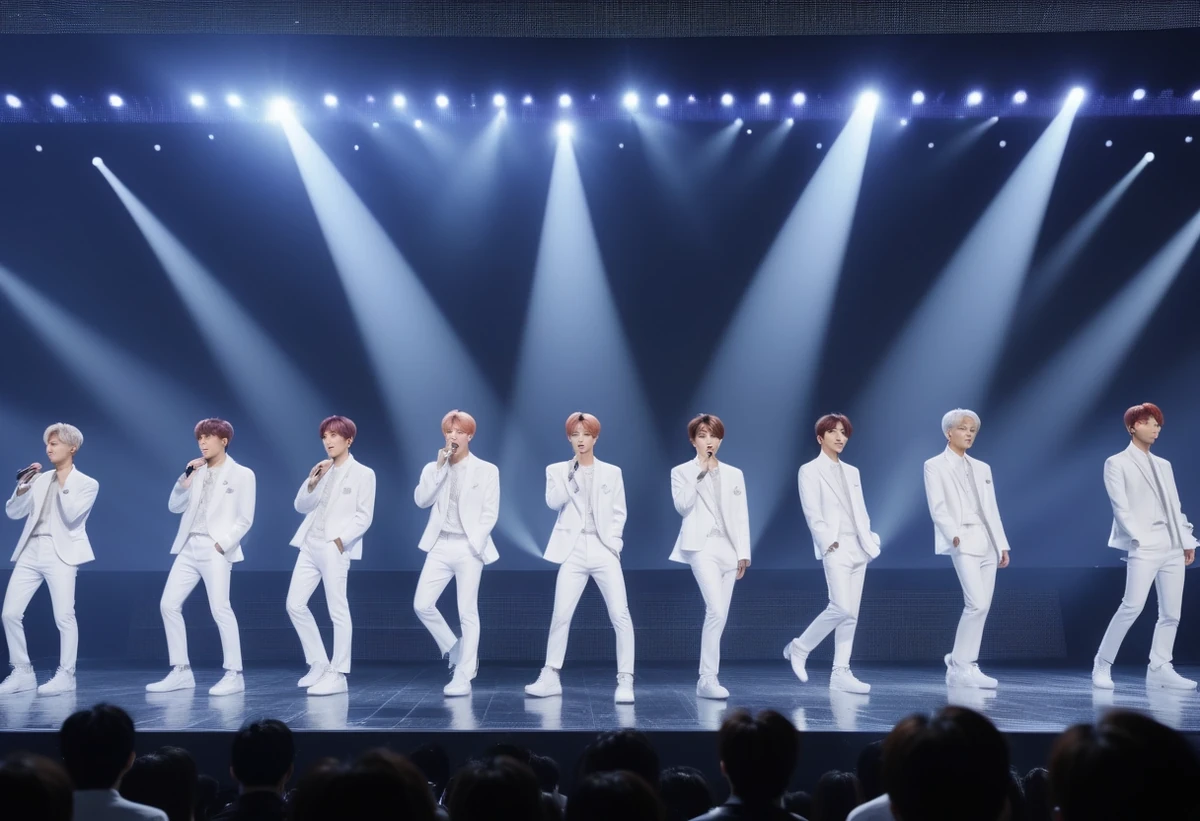
BTS leads a chart that says more than one superstar story
BTS has landed at No. 1 on Billboard Japan’s midyear Top Album Sales chart, a result that would have been notable on its own. What makes the ranking more significant is what sits behind it: not just another victory for the biggest name in K-pop, but fresh evidence that Korean pop music has moved beyond a niche import in Japan and into something closer to a durable part of the mainstream music economy.
According to the midyear tally released by Billboard Japan, BTS’ fifth full-length album, “Arirang,” sold 706,961 copies to top the chart for the first half of the year. For American readers, the easiest comparison may be this: imagine a foreign-language act not only posting a strong streaming week in the United States, but outselling many of the country’s biggest domestic stars in actual album purchases over a six-month period. In a music business shaped increasingly by streaming, that kind of sustained buying power still means something.
The result also stands out because BTS was not the only K-pop-related act near the top. Six K-pop acts or K-pop-linked groups made the top 20 in Japan’s midyear album sales ranking, including &TEAM at No. 2, ENHYPEN at No. 4, TXT at No. 7 and TWS at No. 10. Taken together, those placements suggest this is no longer a story about one breakout group carrying an entire genre overseas. It is a story about market depth, repeat customers and a fan ecosystem broad enough to support multiple acts at once.
For years, K-pop’s expansion in the United States and Europe has often been framed through headline-making milestones — a Coachella set, a Billboard Hot 100 debut, a sold-out arena tour, a late-night TV appearance. Those moments matter, and they help American audiences understand how Korean acts break into global pop culture. But the chart from Japan points to a different measure of power: not just attention, but habit. Not just virality, but long-term consumer behavior.
And that may be the most important takeaway from this latest ranking. Japan is not simply another export destination for K-pop. It is the world’s second-largest music market after the United States, with a long-established physical album culture and a discerning domestic industry. Performing well there has long been a benchmark for whether an artist has true regional staying power. In that context, BTS topping the midyear sales chart is big news. Six K-pop acts in the top 20 is a sign of something larger.
Why Japan still matters so much in the global music business
For readers more familiar with the American market, where streaming dominates and CD sales have largely become a specialty item, Japan can seem like an outlier. Physical albums still carry unusual weight there. Fans often buy CDs not only for the music itself but for collectible packaging, photo books, bonus content and fan-event tie-ins. That makes album sales in Japan a particularly useful way to measure the intensity and loyalty of a fandom.
In other words, these numbers do not simply reflect passive listening. They reflect people choosing to spend money repeatedly and deliberately. Midyear rankings are especially revealing because they smooth out the effects of a one-week splash. A strong debut can make headlines, but a six-month sales chart captures something harder to manufacture: accumulated demand. It shows which artists can keep fans engaged over time, not just for a viral moment.
This is part of why BTS’ figure of more than 706,000 copies matters. The number is not just large; it signals durable purchasing power in one of the most competitive music markets in the world. Japan has its own massive pop infrastructure, including idol groups, singer-songwriters, anime-linked acts and legacy artists with deep fan loyalty. For a Korean group to finish atop that field in a midyear sales tally means the band is not merely participating in the market — it is helping define it.
That is also why the broader presence of K-pop acts in the top 20 is so telling. If BTS were alone at No. 1, observers could still interpret the result as the exceptional performance of an exceptional act. But when multiple groups are spread throughout the ranking, from No. 2 to No. 10 and beyond, the argument changes. K-pop begins to look less like a foreign novelty and more like a stable category of consumption within Japan’s music landscape.
For Americans, a useful point of reference might be the way Latin music has evolved in the U.S. market over the past decade. Once treated by some gatekeepers as a separate lane, it is now deeply embedded in the mainstream, with artists crossing over in different styles and finding different audiences. K-pop in Japan is not the same story, and the historical and cultural dynamics are very different. Still, the shift from isolated breakout to sustained multi-artist presence follows a somewhat familiar pattern.
The significance of BTS’ No. 1 finish
BTS has long been the group that made K-pop impossible for many American institutions to ignore. The band filled stadiums, broke chart records and built a fan base that could mobilize online and offline with unusual speed and discipline. In the United States, BTS helped open the door for later acts to be covered seriously by mainstream media, booked by major festivals and measured against pop’s biggest names rather than against the smaller category of “international acts.”
Its latest sales milestone in Japan reinforces another part of the group’s identity: longevity. Pop is full of artists who generate noise for a season. Far fewer remain a reliable commercial force across multiple territories over time. That is especially true in a cross-border environment, where language, local tastes and industry structures can all work as barriers.
The album “Arirang” reaching No. 1 in Japan’s midyear sales chart shows that BTS still commands not only global recognition but also enough trust among consumers to convert attention into purchases. In music terms, that can reflect several things at once: confidence in the group’s artistic direction, belief in the value of the full album as a package and continued attachment to the band’s larger story.
That larger story matters in K-pop perhaps more than it does in some corners of American pop. K-pop groups are often built around narratives of growth, teamwork and evolving concepts, with each comeback treated as a chapter rather than a disconnected release. Fans do not just buy songs; they buy into eras, imagery and the emotional arc of a group’s career. That is one reason physical albums remain so powerful in the genre. They serve as merchandise, narrative object and community badge all at once.
The Japanese chart result is also notable because it lines up with the band’s strength elsewhere. The summary of the Korean reporting noted that BTS’ album has remained on Britain’s Official Albums Chart Top 100 for 11 consecutive weeks and climbed to No. 33, up five places from the prior week. It also said the album logged an eighth No. 1 on Spotify’s Weekly Top Albums Global chart, making it the title with the most chart-topping weeks this year.
Those are very different indicators. One reflects physical purchasing in Japan. Another measures staying power in Britain. Another captures worldwide streaming behavior across Spotify. They do not all tell the same story, but together they suggest something important: BTS’ audience is not confined to a single region or platform. The group’s success is not compartmentalized. It travels, and it translates.
Six K-pop acts in the top 20 points to a broader shift
If BTS’ No. 1 finish is the headline, the supporting data may be the bigger industry story. The appearance of six K-pop acts or K-pop-linked groups in Japan’s top 20 midyear album sales ranking suggests the market has become diversified. Fans are not clustering around only one marquee name. They are choosing among multiple groups with different sounds, concepts and demographics.
&TEAM, a Japan-based boy group under HYBE Labels Japan, placed second with its third mini album, “We on Fire.” ENHYPEN came in fourth with its seventh mini album, “The X: Vanish.” TXT placed seventh with its eighth mini album, and TWS landed at No. 10 with “No Tragedy.” Those rankings matter because they show range. Different groups are occupying different positions, but all are finding enough commercial traction to register in one of the world’s biggest music markets.
For Americans less familiar with K-pop’s internal landscape, it helps to know that the genre is not one monolithic sound. Under the broad K-pop banner, groups can target different emotional registers and age groups, lean into polished performance or softer storytelling, and cultivate fan communities that overlap only partially. The result resembles the wider U.S. pop market more than outsiders sometimes assume. Just as Taylor Swift, Bad Bunny, Olivia Rodrigo and Stray Kids may all attract large audiences for different reasons, K-pop acts can coexist without simply cannibalizing one another’s fan base.
The spread of these rankings also signals that Japanese consumers are not treating K-pop as a one-artist phenomenon. There is enough familiarity in the market for listeners and collectors to distinguish between groups, compare concepts and follow several acts at once. That is a hallmark of a mature market. It means the category has enough internal complexity to sustain multiple careers.
There is another point worth stressing. In the American press, stories about K-pop can sometimes center so heavily on fandom intensity that they understate the role of routine music consumption. Fans certainly matter here — and in a major way. But repeated chart success across multiple groups suggests a broader normalization process. K-pop is not just being “supported” by organized fandoms; it is increasingly being integrated into regular patterns of listening, collecting and pop-cultural participation.
This does not mean Japanese domestic artists are disappearing or losing their centrality. Japan remains one of the strongest home markets in the world, and local acts continue to command enormous loyalty. What the chart does show is that Korean and K-pop-linked acts no longer have to sit at the margins of that system. They can compete within it and, at least in this period, lead it.
HYBE’s model and the rise of localized K-pop
One of the most intriguing aspects of the ranking is what it says about the K-pop business model itself. Several of the charting acts — including BTS, ENHYPEN, TXT, TWS and &TEAM — are connected to HYBE, the South Korean entertainment company that has become one of the dominant players in global pop. Their simultaneous presence on the chart suggests not only artist popularity but also the growing influence of a production system.
That system, often described broadly as the “K-pop model,” includes intensive training, carefully coordinated release cycles, transmedia storytelling, high-value visuals, strong fan engagement and a sophisticated approach to global marketing. In the U.S., entertainment companies certainly build stars. But the Korean idol system is unusually structured, with a degree of long-term planning that often makes it feel closer to a blend of artist development, serialized entertainment and luxury branding.
&TEAM is the clearest example in this chart of how that model is evolving. The group is local to Japan, but it has been framed by its company as a team that applies the K-pop production system to a Japanese context. That means this is no longer simply a case of Korean acts exporting their music abroad. It is also a case of Korean-style entertainment infrastructure being adapted for local audiences in other countries.
That distinction matters. In global pop, the next phase of expansion is often not just export but localization. Hollywood does this. Streaming platforms do this. So do global consumer brands. They take a proven model and adapt it to local tastes, languages and cultural cues. In the case of &TEAM, the idea is that a group can reflect Japanese sensibilities while benefiting from the training, packaging and fan-management strategies that made K-pop globally competitive in the first place.
Seen that way, &TEAM’s No. 2 ranking may be one of the most consequential results on the chart. It hints that K-pop has become more than a national genre. It now functions as a portable production framework — one that can travel across borders, change form and still retain its commercial advantages. That should get the attention of anyone watching how entertainment industries globalize.
For American readers, there is a rough parallel in the way reality competition shows, talent incubators and franchise storytelling have long been adapted for local markets. But K-pop’s version extends beyond television format. It reaches into artist training, fan communication platforms, merchandise strategy, performance design and global release timing. That makes it one of the more distinctive cultural business exports to emerge from Asia in the 21st century.
What fandom means in this story — and why album sales still matter
Behind the chart numbers is a fan culture that can be difficult to understand if you are used to measuring music success mainly through streams or radio play. In K-pop, albums often function as total packages. They can include not only songs but photo cards, concept images, collectible editions and other elements that make the purchase feel more like buying a piece of an artist’s world than merely acquiring audio files.
That does not make the sales any less real. If anything, it highlights how K-pop has built a different kind of relationship between artist and audience. American pop stars sell vinyl variants, deluxe editions and concert merchandise, too. K-pop simply integrated those practices earlier and more systematically into the core business model. The result is an album economy in which physical purchases remain emotionally and socially meaningful.
Japan is especially fertile ground for that kind of market because collectors there have long supported physical media at higher rates than consumers in many Western countries. So when K-pop groups perform strongly in Japanese album charts, they are succeeding in an environment that rewards consistency, packaging and fan commitment — all areas where the industry has become exceptionally adept.
It is also important not to reduce everything to fan mobilization alone. The common stereotype is that K-pop fans buy in bulk purely to influence charts. While coordinated fan action is part of the ecosystem, that explanation can be too simplistic. Fans also collect because the objects matter to them, because group narratives matter to them and because participation in the fandom itself has cultural value. In a fragmented digital age, that sense of belonging is powerful.
The midyear chart captures this accumulated support better than a single release-week ranking would. It rewards staying power. It suggests fans kept showing up, and in enough volume, to maintain multiple groups inside the top 20 over months. That is not a fluke. It is infrastructure — social, emotional and commercial.
For newsrooms in the United States, where K-pop coverage can still swing between hype and condescension, this kind of chart offers a useful corrective. It shows that the phenomenon is not reducible to internet enthusiasm or youth trendiness. There is a disciplined industry behind it, yes, but also a mature consumer base willing to spend money across a portfolio of artists. That is the kind of behavior analysts usually associate with durable genres, not temporary crazes.
What this moment says about the next chapter of the Korean Wave
The Korean Wave, or “Hallyu,” refers to the international rise of South Korean popular culture — from television dramas and films to beauty products, fashion and music. American audiences have seen this most visibly through hits like “Parasite,” “Squid Game” and BTS. But Hallyu is not just a sequence of breakout sensations. It is an ecosystem, strengthened by companies that learned how to build content, circulate it internationally and keep fans engaged between major moments.
This latest chart from Japan suggests the Korean Wave is entering a more mature phase in music. The question is no longer whether K-pop can produce a global superstar. It clearly can. The question is whether it can build a lasting, multi-artist, cross-border system that remains influential even as trends change. Japan’s midyear album sales ranking points toward yes.
BTS remains the center of gravity in this story, and for good reason. A No. 1 finish with more than 706,000 copies sold is a reminder that the group still occupies rarefied air. But the broader result matters just as much. Six K-pop acts in the top 20 means the industry around BTS has substance. There are second acts, third acts and next acts. There is succession planning. There is segmentation. There is scale.
That is the kind of development American entertainment companies pay close attention to, even when they do not say it out loud. Pop culture is full of booms that burn out when they rely too heavily on one franchise, one star or one demographic. The stronger systems create pipelines. They develop talent, open adjacent markets and localize without losing their core identity. K-pop, at least as reflected in Japan’s album market, increasingly looks like one of those systems.
For English-speaking readers, the news is interesting not simply because BTS won another chart race. It is interesting because a chart in Japan now tells a global story. It shows Korean pop functioning simultaneously as art, brand, export and industrial model. It shows fans choosing among multiple acts rather than fixating on just one. And it shows a regional music phenomenon continuing to shape the global pop order in ways that are becoming harder for any major market — including the United States — to dismiss.
In that sense, the headline is bigger than a sales number. It is about a shift in assumptions. K-pop in Japan is no longer surprising. That may be the clearest sign yet of how far the Korean Wave has traveled.
Comments
Post a Comment