A Wyoming Reactor Site and a $350 Billion Question: Why South Korea Could Become a Key Partner in America’s Next Nuclear Bet
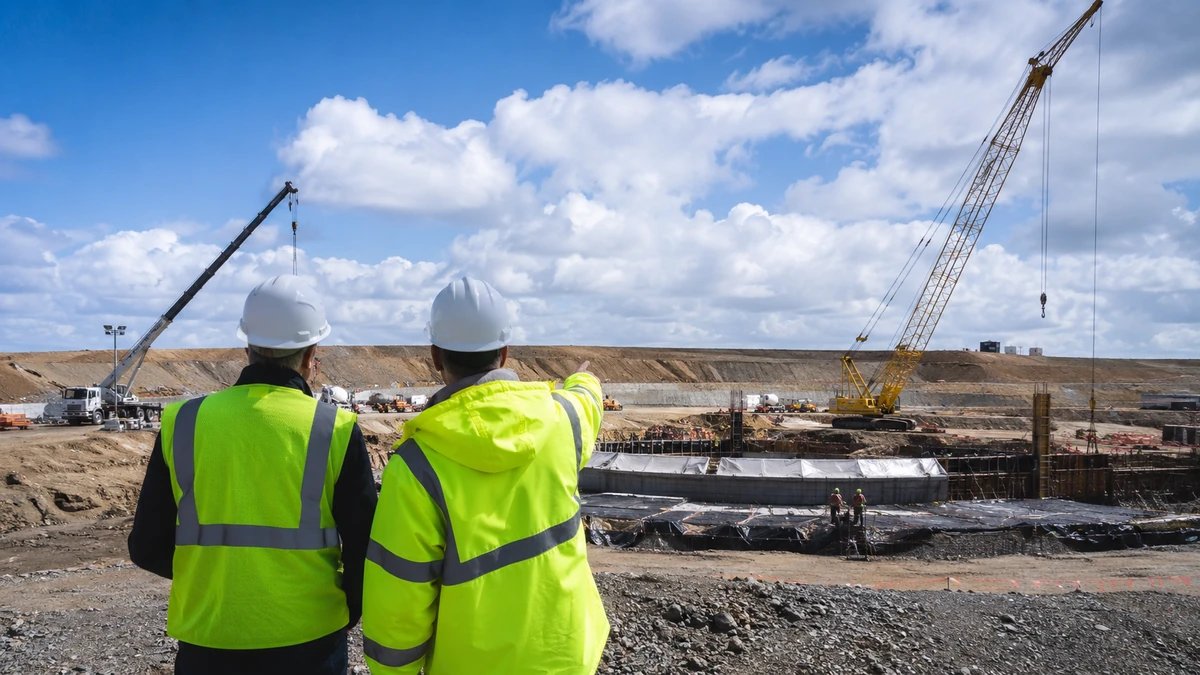
A Korean investment push meets an American nuclear ambition
A comment made at a remote construction site in southwestern Wyoming is drawing attention far beyond the state line — and far beyond the usual circle of energy insiders. The CEO of TerraPower, the advanced nuclear company backed by Bill Gates, said he hopes small modular reactors, or SMRs, will be included in a proposed South Korean investment package tied to a broader U.S.-South Korea trade understanding. The figure being discussed — $350 billion in potential Korean investment in the United States — is large enough to turn what might otherwise sound like a passing wish into a serious signal about where the two allies may be headed next.
That does not mean a deal has been signed, a project has been funded or a Korean company has formally joined TerraPower’s Wyoming reactor effort. None of that has been established. What is real, based on the reported remarks and the surrounding facts, is that an American advanced nuclear firm is openly identifying South Korean capital as a desirable partner at a moment when both countries are trying to define the next phase of their economic relationship.
For American readers, it helps to put this in familiar terms. South Korea is already deeply embedded in U.S. industrial policy conversations through semiconductors, electric-vehicle batteries, autos and heavy manufacturing. Korean companies have announced major U.S. investments in states including Georgia, Tennessee and Texas, becoming central players in the American push to rebuild supply chains and reduce dependence on geopolitical rivals. What makes this latest development different is that it points toward nuclear energy — one of the most politically sensitive, technologically demanding and strategically consequential industries in the world.
It also comes at a time when Washington is wrestling with a problem that has gone from theoretical to urgent: how to produce far more electricity, reliably and at scale, as artificial intelligence, data centers, electrified manufacturing and domestic reshoring all drive up power demand. In that environment, nuclear power has re-entered the policy mainstream in a way that would have been hard to imagine a decade ago. An investment conversation that links Korean capital and American next-generation reactor technology is therefore about more than money. It is about whether two allies can align industrial strength, energy security and climate-era infrastructure in one project.
Seen from Seoul, the issue carries its own significance. South Korea is one of the world’s most capable industrial economies, with a track record in large-scale engineering, export manufacturing and nuclear know-how through companies that have built and operated reactors at home and abroad. Seen from Washington, South Korea is increasingly not just a treaty ally or a consumer market, but a strategic co-builder. The TerraPower remarks matter because they suggest advanced nuclear could become the next arena where that relationship deepens.
Why small modular reactors have become such a powerful buzzword
To understand why TerraPower’s comments landed with such force, it helps to understand what an SMR is — and what it is not. In broad terms, small modular reactors are nuclear reactors designed to be smaller than traditional large-scale plants and, in many cases, built using modular components that can be manufactured and assembled more efficiently. Advocates argue that this approach could reduce construction risk, improve deployment flexibility and make nuclear power more suitable for communities or industrial sites that do not need a giant conventional plant.
In American energy debates, SMRs are often described as a possible answer to several long-running nuclear problems at once: cost overruns, long build timelines and the mismatch between very large reactors and modern grid needs. Supporters say smaller units could be deployed closer to where electricity is needed, paired with retiring coal infrastructure or used to power energy-hungry facilities such as data centers. Skeptics counter that many of these advantages remain more promise than proof, and that advanced reactors must still demonstrate they can be built on budget and operated safely at commercial scale.
TerraPower’s Wyoming project is especially notable because it is not simply a scaled-down version of the reactors most Americans have heard about. According to the Korean report, the project under construction in Kemmerer is a 345-megawatt-electric advanced small modular reactor using a sodium-cooled fast reactor design rather than the light-water technology that dominates today’s commercial nuclear fleet. That distinction matters. In plain English, this is not just “a smaller reactor.” It is part of a broader effort to develop a new generation of nuclear technology with different engineering assumptions and, backers hope, different performance possibilities.
That makes the Wyoming site a test not only of TerraPower as a company, but of whether the United States can translate years of advanced-reactor research, federal support and private-sector enthusiasm into something tangible. In recent years, SMRs have become a favorite talking point in policy speeches and corporate presentations, but many projects globally remain stuck at the stage of design, licensing or investor courting. A reactor under construction carries a different kind of weight. It says the conversation is moving, however cautiously, from futuristic branding to industrial reality.
This is also why South Korean involvement would matter. Korea is not just another source of capital. It is a country with real experience in nuclear supply chains, reactor construction and long-horizon infrastructure planning. If Korean investment were eventually to flow into American SMR efforts, that would be read not simply as a financial endorsement, but as a vote of confidence from an industrial economy that knows the nuclear business firsthand.
Why a windswept Wyoming town has become part of a global story
Kemmerer, Wyoming, is not the sort of place most people would expect to sit near the center of a global technology story. It is a small town in a sparsely populated state better known to many Americans for ranching, open land, fossil fuels and national parks than for cutting-edge nuclear development. But that contrast is precisely what gives the site its symbolism.
The Korean account noted that Bill Gates visited Kemmerer in 2023 and has invested heavily in TerraPower. That juxtaposition — a Microsoft co-founder associated with the digital revolution standing in an isolated Rocky Mountain town discussing nuclear energy — captures one of the defining industrial tensions of this decade. The industries shaping the future, especially artificial intelligence and cloud computing, require extraordinary amounts of electricity. Yet the places where that electricity is generated are often far removed from Silicon Valley, Seattle or Manhattan. The glamour of software increasingly depends on the hard realities of steel, concrete, transmission lines and cooling systems.
Kemmerer illustrates that dynamic vividly. It is a reminder that the energy transition in the United States is not just about rooftop solar panels or electric cars in affluent suburbs. It is also about whether former coal communities, rural states and industrial regions can become hosts to the infrastructure of the next era. Wyoming, with its long history in coal and mining, has become a fitting stage for this experiment. If advanced nuclear is going to work in America, it will likely need to make sense not only in policy white papers, but in communities that have powered the country for generations through older forms of energy.
That is one reason the site resonates internationally. The story is not simply that a Korean investment idea may touch an American company. It is that South Korean capital could potentially intersect with a project located in the American interior, in a state whose economy has long been tied to legacy energy. For U.S. policymakers, that kind of alliance is appealing: foreign investment that supports domestic infrastructure, advanced manufacturing and regional economic transition rather than just financial markets.
For Americans unfamiliar with South Korea’s place in global industry, this is an important point of context. In the United States, Korea is often popularly associated with K-pop, Korean dramas, beauty products and consumer electronics — all real pieces of the country’s global image. But in boardrooms and industrial policy circles, South Korea is also known for shipbuilding, petrochemicals, steel, autos, batteries, semiconductors and large engineering projects. In other words, this is a country that can export both culture and concrete. That dual identity helps explain why a Wyoming reactor site might see Seoul not merely as an investor, but as a potentially serious strategic partner.
What South Korea brings to the table — and why Americans should pay attention
If Americans hear “Korean investment” and think first of Hyundai cars, Samsung chips or battery plants in the South, they are not wrong. South Korean companies have become some of the most visible foreign investors in the United States at a time when Washington wants to rebuild domestic manufacturing capacity. But the nuclear angle broadens that picture in a meaningful way.
South Korea has long maintained one of the world’s more robust civilian nuclear sectors. It has operated a significant domestic reactor fleet and has experience exporting nuclear technology, most notably through projects in the Middle East. Its firms have built reputations for engineering discipline, cost competitiveness and large-scale project execution. That does not mean Korean participation in any U.S. advanced reactor venture would be simple. Nuclear cooperation raises difficult questions involving regulation, financing structures, national security, export controls and the division of commercial roles. Still, Korea enters the conversation with more credibility than a newcomer would.
That helps explain why even an expression of hope from TerraPower’s CEO is noteworthy. It suggests American advanced nuclear firms are not thinking only about federal grants, U.S. utilities or domestic private equity. They are also looking outward, toward allied industrial capital that can potentially support commercialization. In a period when policymakers increasingly talk about “friend-shoring” — building strategic supply chains among trusted partner nations — South Korea fits the logic neatly.
There is also a political dimension. In the United States, foreign investment can be celebrated when it creates jobs and strengthens supply chains, but it can also attract scrutiny if it touches sensitive sectors. Nuclear is certainly one of those sectors. South Korea, however, is not just another overseas investor from Washington’s point of view. It is a treaty ally with a long, deeply institutionalized security relationship with the United States. That does not erase the need for review and regulatory oversight, but it changes the baseline level of trust.
For American readers, another cultural point is worth explaining. In South Korea, large overseas investment initiatives are often discussed not only as business decisions but as national industrial strategy. The Korean state, major corporations and policy institutions often move in close dialogue when it comes to sectors considered strategic. That does not mean every investment is government-directed, nor does it imply a lack of market logic. It means that when Korean capital is discussed in areas like semiconductors, batteries or nuclear energy, observers often read it as part of a broader national effort to secure technological relevance and long-term economic positioning. That strategic lens is important for understanding why the possibility of SMRs being included in a large Korea-to-U.S. investment package is being watched so closely.
The AI electricity boom is changing the nuclear conversation
Part of what makes this story more than a niche energy item is timing. The global economy is entering a period of surging electricity demand driven by forces that are easy for Americans to recognize: AI data centers, domestic chipmaking, electric vehicles, industrial electrification and efforts to bring manufacturing back to the United States. Utilities and regulators across the country are confronting forecasts that would have seemed aggressive only a few years ago.
That shift has scrambled old assumptions. For much of the 2010s, the dominant U.S. energy conversation centered on the rise of cheap natural gas, the growth of wind and solar, and the decline of coal. Nuclear, though still crucial in supplying carbon-free baseload power, often felt like an industry managing stagnation. Plants were aging. New large reactors struggled with cost and delay. Public enthusiasm was limited.
Now the conversation is changing. Technology companies want reliable, round-the-clock electricity. Governments want cleaner grids without sacrificing energy security. Communities facing the closure of coal plants want replacement industries that preserve tax bases and high-skilled jobs. Nuclear, especially advanced nuclear, has re-emerged as one answer to all three needs at once — at least in theory.
That is why the TerraPower comments intersect with a much larger economic story. If AI is the glamorous front end of the new economy, then power generation is the industrial backend. Every political leader talking about winning the AI race eventually runs into the same question: Where will the electricity come from? In that sense, the Wyoming construction site and the Korean investment discussion belong to the same story as the boom in semiconductor fabs and cloud infrastructure. They are all part of the physical build-out required to sustain a high-compute economy.
South Korea has reason to pay attention here as well. It is home to some of the world’s biggest semiconductor and battery players, industries that themselves depend on vast and stable electricity supplies. If Korean capital increasingly moves into overseas energy infrastructure, especially in the United States, that would reflect a broader trend in which industrial powers seek not only factory access but ecosystem access — meaning the full network of energy, logistics and technology needed to support future growth.
What is confirmed, what is not, and what comes next
At a moment when industrial policy stories can quickly outpace the facts, it is important to separate confirmed developments from speculation. What appears clear from the reporting is this: TerraPower’s CEO said he hopes South Korea’s proposed U.S. investment portfolio will include SMRs; the remarks were made at the company’s advanced reactor construction site in Kemmerer; and U.S. regulators have already approved commercial construction of TerraPower’s advanced reactor project. Those are meaningful data points.
What is not established is equally important. There is no confirmed announcement that South Korea has committed funds to TerraPower. There is no publicly confirmed indication, based on the summary provided, that a specific Korean company, bank or public institution has signed onto this reactor project. There is also no confirmed final structure for how any SMR-related investment, if it materializes, would be organized. The gap between interest and implementation in nuclear energy is often wide.
That gap matters because nuclear projects are not like ordinary manufacturing investments. They require years of licensing, long-term financing, highly specialized supply chains, political buy-in and public trust. Even when governments and companies agree on the strategic logic, execution can be slow and uncertain. In the United States especially, advanced nuclear companies must prove not only technological viability but the ability to navigate a complicated commercial environment.
Still, the symbolism of this moment should not be underestimated. When the head of a prominent U.S. advanced nuclear firm publicly links his company’s hopes to a major South Korean investment framework, he is effectively saying that America’s next-generation energy build-out may depend on allied partnerships as much as on domestic innovation. That is a notable message in a country where industrial self-sufficiency is often discussed in political slogans. In practice, the future may look less like pure self-reliance and more like a network of trusted partners building strategically important systems together.
The next things to watch are straightforward. First, details of South Korea’s broader U.S. investment package will matter enormously. If energy infrastructure or advanced nuclear appears in that portfolio, even indirectly, it will signal that both governments see the field as ripe for deeper cooperation. Second, TerraPower’s progress in Wyoming will remain a key barometer. A project under construction can attract attention, but only sustained execution will persuade investors and governments that advanced reactors are becoming commercially real. Third, the question of which Korean players — if any — might ultimately participate will be critical. In Korea, major industrial moves often take shape through large conglomerates, state-linked financial institutions or consortium models. If such names begin to emerge, the conversation will move from possibility to strategy.
A bigger story about alliances, industry and the future of power
In one sense, this is a highly specific story about a CEO’s remarks, a Wyoming project and a possible role for South Korean investment. In another, broader sense, it is a preview of how the 21st-century alliance economy may function. The United States brings frontier technology, a giant market and the political urgency to expand power supply. South Korea brings capital, industrial capability and a proven record of competing in sophisticated manufacturing sectors. The overlap is where things get interesting.
For years, the U.S.-South Korea relationship has been understood primarily through security — North Korea, military deterrence, regional stability. That framework remains fundamental. But in recent years the alliance has taken on a more economic and technological character. Chips, batteries, electric vehicles and clean energy have become just as central to the relationship as traditional defense issues. Nuclear cooperation would fit naturally into that newer model, especially because it touches energy security, climate goals, industrial competitiveness and geopolitical resilience all at once.
It also carries a certain historical irony. Nuclear power in the United States has long been associated with an older era of big public works, Cold War statecraft and 20th-century engineering ambition. South Korea, by contrast, is often imagined in the American public mind through the lens of modern pop culture — K-pop groups, Oscar-winning films, hit streaming dramas and skincare aisles. Yet beneath those surface impressions lies a hard-edged industrial economy that has spent decades mastering exactly the kind of large, complicated systems that advanced energy projects require.
That is what makes this emerging story compelling to a global audience. It suggests that the next chapter of the Korean Wave, at least in economic and geopolitical terms, may have less to do with entertainment and more to do with infrastructure. Not instead of culture, but alongside it. The same country that exports globally dominant music and television may also become more deeply involved in exporting industrial partnership to help power the AI age.
Whether that happens in Wyoming remains to be seen. But the possibility alone says something important about where the world is going. The race to shape the future is no longer just about who designs the smartest software or manufactures the most advanced chips. It is also about who can build the reactors, grids, factories and supply chains that make the digital economy physically possible. On that front, South Korea is no longer just a participant. It is increasingly being treated as a partner the United States may not want to build without.
Comments
Post a Comment