An Early-Summer Heat Spike in Central South Korea Brings Dual Warnings on Heat Illness and Food Safety
A hot day becomes a public health story
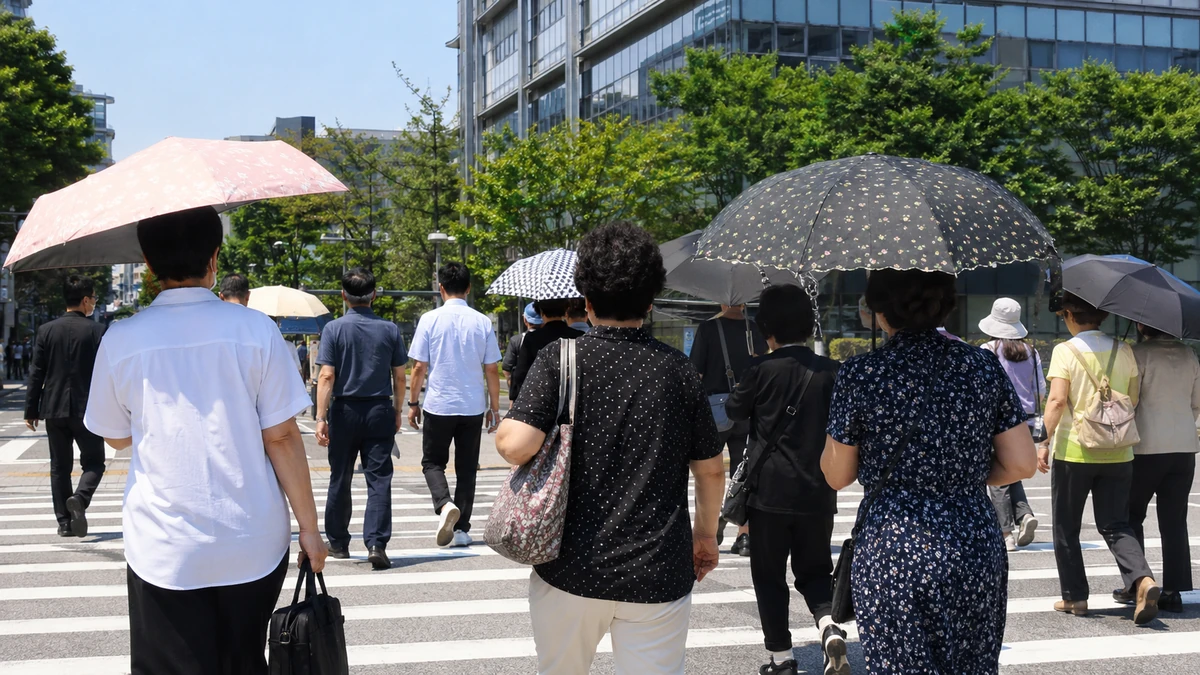
For many Americans, a forecast of temperatures hovering around 86 to 88 degrees Fahrenheit might sound less like a health emergency than a routine June afternoon. In parts of the United States, that kind of weather barely qualifies as noteworthy. But in central South Korea on Wednesday, the sudden rise to roughly 30 to 31 degrees Celsius — about 86 to 88 Fahrenheit — prompted officials to issue a pointed warning that went beyond ordinary small talk about the weather.
Authorities in the Daejeon, Sejong and South Chungcheong regions, a broad swath of central South Korea, cautioned residents about two risks at once: heat-related illness and food poisoning. According to the Daejeon Regional Meteorological Administration, daytime highs were expected to reach about 30 degrees Celsius in Hongseong and 31 degrees Celsius in Daejeon and Sejong, with much of the surrounding region also climbing into the upper 20s and low 30s Celsius.
That pairing of warnings matters. It signals that officials are treating the day’s conditions not simply as uncomfortably warm but as an early test of how quickly seasonal heat can disrupt everyday life. The message was straightforward: cut back on outdoor activity if possible, avoid unnecessary trips outside, and be especially careful about how food is stored and handled.
In the United States, weather alerts often focus on a single threat at a time — heat advisories, air quality alerts, flood watches. But South Korean officials’ emphasis on both heat illness and food safety reflects a practical reality of early summer: when temperatures rise quickly, risks do not arrive one by one. They overlap. The body is under more stress, daily routines shift, commutes and errands become more taxing, and food left out too long can become unsafe faster than people expect.
What makes this moment especially notable is that the warning came before the kind of brutal midsummer heat that many people associate with real danger. This was not a story about record-shattering temperatures. It was a story about how the first stretch of serious warmth can catch people off guard — and why public health officials increasingly see that transition itself as hazardous.
Why 30 degrees Celsius can still be dangerous
In weather coverage, numbers can be deceptive. A temperature near 30 degrees Celsius may not sound extreme, especially to readers in places like Texas, Arizona or Florida. But public health experts often stress that danger is not determined by one number alone. What matters is how suddenly temperatures rise, how prepared people are, how long they are outside, and whether daily schedules force them into the hottest part of the day.
That is part of the context behind the Korean warning. Early-season heat can be especially punishing because people have not yet adjusted physically or mentally. They may still be dressing for milder spring conditions, planning outdoor errands without much thought, or underestimating how draining a few hours in the midday sun can be. In that sense, an early-June spike can sometimes feel more disruptive than a hotter day later in the summer, when people are already in a heat-management routine.
Heat-related illness is a broad category that includes dehydration, heat exhaustion and, in more severe cases, heat stroke. Even without a detailed list of symptoms in the original Korean report, the official guidance itself makes clear that authorities see the risk as significant enough to justify prevention first. That is often how public health messaging works when officials want to stop a problem before emergency rooms begin to fill.
There is also a social dimension. Not everyone experiences the same temperature the same way. Older adults, young children, outdoor workers and people with chronic medical conditions are generally more vulnerable. So are people who have long commutes, limited access to air conditioning, or jobs that require long periods outside. A weather forecast can look uniform on paper while its health burden lands very unevenly in real life.
For American readers, there is a useful comparison here. Think about the first major heat wave in a northern U.S. city such as Chicago, Philadelphia or Boston after a cool spring. The thermometer may not reach the punishing levels seen in the Deep South, but hospitals, city agencies and weather offices still take it seriously because people are not acclimated. That same logic helps explain why officials in central South Korea treated Wednesday’s forecast as a health story, not just a climate footnote.
An election day complication: Heat on a day people have to go out
The weather warning also landed on a day with unusually high stakes for movement and outdoor activity. Wednesday was the day of South Korea’s ninth nationwide local elections, a major civic event that sends large numbers of voters out of their homes and into polling places over a fixed period of time.
That matters because heat is more difficult to manage on days when people cannot simply decide to stay inside. Elections compress activity. People travel at similar times, stand in line, walk to neighborhood polling stations and organize their schedules around a public obligation. Even a short trip can become more taxing when it is squeezed into the hottest window of the day.
In South Korea, local elections are a significant nationwide event, somewhat comparable to a broad state and municipal election day in the United States, but conducted across the country at once. Voters are choosing local leaders and officials, and turnout involves a dense rhythm of neighborhood movement. On an already warm day, that turns a routine act of civic participation into something requiring a bit more planning.
Officials did not issue a lengthy step-by-step manual in the summary provided, but their message points in a clear direction: reduce exposure when possible, reconsider the timing of trips, and treat even ordinary daytime activity with more caution than usual. That kind of advice may sound simple, yet it reflects a broader shift in health communication. Increasingly, the emphasis is not only on what to do after someone gets sick but on how to rearrange the day so illness is less likely to happen in the first place.
For U.S. audiences, there is a familiar parallel. Americans regularly hear reminders to vote early, bring water or avoid midday heat during summer elections, outdoor festivals or holiday events. The Korean warning fits that same public-service model. It recognizes that risk changes when the day’s schedule is not entirely voluntary.
And that is one reason this weather alert resonated beyond its region. It was not merely telling residents that Wednesday would be hot. It was telling them that a hot day intersects differently with real life when errands, obligations and public events cannot easily be postponed.
Why food poisoning enters the same conversation
One of the most revealing parts of the warning was that it did not stop at heat illness. Officials also urged residents to take extra care with food to prevent foodborne illness. That may seem like a separate issue, but in practice it is tightly connected to the same early-summer conditions.
Warmer weather accelerates bacterial growth in food, especially when meals are left out too long, transported without proper cooling, or stored carelessly after shopping or cooking. The first hot stretches of the year can be risky because people have not fully switched into summer habits. They may carry food longer during errands, leave dishes on the table, or underestimate how quickly something perishable can turn unsafe.
In the United States, public health agencies routinely remind people about mayonnaise-based salads at cookouts, meat left too long on picnic tables, or groceries sitting in a hot car. South Korea’s warning reflects the same basic concern, even if the food culture differs. The point is not about one cuisine being safer than another. It is about heat changing the safety margin for everyday eating.
That distinction is important for English-speaking readers who may not be used to seeing heat illness and food poisoning discussed in the same breath. In this case, officials are treating them as twin symptoms of the same seasonal shift. When the air gets hotter quickly, people’s bodies are under greater strain and the systems around daily life — transport, meal timing, food storage and attention to hygiene — can become less reliable at the same time.
There is also an indirect link. Hot weather can throw off routines. People delay meals, eat at odd hours, carry snacks longer than intended, or grab prepared food while moving between obligations. Fatigue also affects judgment. A person who is tired and overheated may be less careful about whether food was refrigerated properly or how long it sat out. That is why the Korean meteorological office’s message reads less like two separate advisories than one warning about a wider breakdown in normal safety buffers.
Seen this way, the food-safety component is not a side note. It is central to the story. It broadens the meaning of a heat alert from personal comfort to the hidden systems of everyday health — what people eat, how they store it and whether the routines of ordinary life are adapting fast enough to the season.
A glimpse of South Korea’s preventive public health culture
This episode also offers a window into how South Korean public agencies increasingly frame health risk. The warning out of the Daejeon region was preventive in tone. Rather than waiting for confirmed cases or dramatic incidents, officials used the forecast itself as a trigger for behavioral advice.
That approach has become more common in modern public health systems around the world. The goal is not only to treat harm but to identify the moment just before everyday conditions become meaningfully riskier. In practical terms, that means telling people to adjust before they feel sick, before spoiled food leads to stomach illness, and before a normal outing turns into a medical problem.
The broader Korean news environment on the same day underscored that emphasis on prevention. Other public-health-related updates, though unrelated in substance, reportedly included warnings about nicotine found in some unlabeled liquid e-cigarette products and the launch of a consultative body tied to pet disease surveillance and diagnosis. Taken together, those stories suggest a wider pattern: Korean authorities are paying close attention to risks embedded in ordinary life, from consumer products to animals to weather-driven health threats.
For an American audience, that may sound familiar after years in which local and federal agencies have expanded guidance on heat, air quality, food handling and consumer safety. But the Korean case is still notable because of how quickly weather, public behavior and health communication are linked. A temperature forecast turns almost immediately into a civic instruction: change your plans, reduce exposure, handle food carefully.
That kind of messaging can feel modest, but it is consequential. Heat does not need to become catastrophic before it becomes disruptive. Public trust in forecasting and health agencies often depends on whether officials can explain that middle ground clearly — the zone where the danger is real even if it does not yet look dramatic on television.
In that sense, Wednesday’s advisory in central South Korea was as much about communication as climate. It showed a government trying to teach residents to read early-summer warmth not as background scenery but as a cue for immediate, practical decisions.
What this says about daily life in a warming world
At a broader level, the story from Daejeon, Sejong and South Chungcheong is part of a global shift in how communities experience heat. Around the world, hotter seasons are starting earlier, temperature swings can feel sharper, and public agencies are under pressure to warn residents before conditions become deadly. The result is that more days once considered merely uncomfortable are now treated as requiring health precautions.
That does not mean every warm day is a crisis. It means the threshold for concern is changing because the consequences of being unprepared are easier to recognize. A few hours outdoors can be enough to cause dehydration or exhaustion, especially for vulnerable groups. A few lapses in food handling can be enough to trigger illness. And the burden often falls hardest on those with the least flexibility: workers, older adults, caregivers and people whose schedules are shaped by obligations rather than choice.
The Korean warning is also a reminder that climate stories are often local stories first. Readers may be tempted to see a regional forecast in central South Korea as distant or niche. But the underlying pattern is widely recognizable: authorities trying to persuade the public that the first hot days of the year deserve more respect than people tend to give them.
Americans have seen similar conversations unfold from the Pacific Northwest to the Northeast, where communities not historically associated with punishing heat have had to rethink what counts as dangerous. Schools change outdoor schedules. Cities open cooling centers. Transit agencies worry about infrastructure stress. Health officials talk not only about survival but about routine behavior — when to travel, what to drink, how to check on neighbors.
That is what makes this Korean weather advisory feel larger than a local brief. It captures a transition point, when public institutions begin translating seasonal change into everyday rules of conduct. The message is not alarmist. It is practical: the weather has crossed a line where habits should change, even if the sky looks ordinary.
The practical takeaway for readers
If there is a single lesson in the warning issued Wednesday in central South Korea, it is that early-summer heat should not be dismissed simply because it does not yet look like the height of July or August. Temperatures around 30 degrees Celsius can still alter how people should move, eat and plan their day — especially when the heat arrives quickly and coincides with events that pull people outdoors.
For residents of the affected Korean regions, that meant being careful about midday exposure, reconsidering unnecessary outdoor activity, and paying closer attention to food storage and meal safety. For readers elsewhere, including in the United States, the lesson is broadly transferable. The first serious hot spell of the season is often when caution matters most, precisely because people are not yet acting as though summer has fully arrived.
Stories like this one rarely produce dramatic images. There may be no shattered records, no wildfire smoke and no sensational footage. But they are often among the most useful forms of public-interest reporting because they sit at the point where weather becomes health, and health becomes behavior.
That may be the most important thing to understand about the warning from Daejeon, Sejong and South Chungcheong. It was not just a report that the temperature would rise. It was a public signal that ordinary routines — going out, standing in line, carrying food, planning errands — had entered a different risk category for the day.
In a warming world, that kind of message is becoming more common and more necessary. The challenge for governments, meteorologists and journalists alike is to make clear that prevention is not overreaction. Sometimes the smartest response to a not-quite-extreme day is simply to treat it with more respect than the number on the thermometer seems to demand.
Comments
Post a Comment