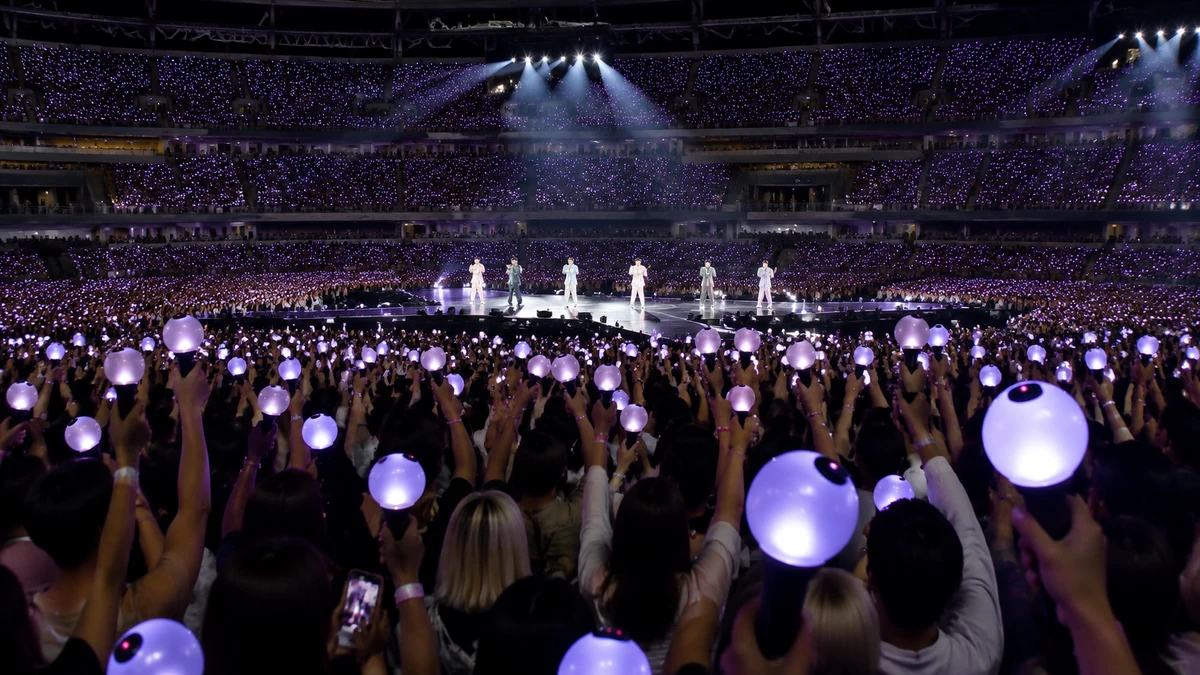
A record that says more than ‘big hit’
BTS has added another milestone to its global résumé, but this one stands out for what it says about the long-term place of Korean pop music in one of the world’s toughest music markets. According to BigHit Music, the group’s 2020 smash “Dynamite” has surpassed 900 million cumulative streams on Japan’s Oricon charts, reaching 900.95 million as of this week. That makes it the first song by a non-Japanese act ever to cross that threshold in Oricon history.
On paper, the number is straightforward: 900 million plays is a huge streaming total anywhere. In context, though, it is more significant than a typical chart update. Japan has the world’s second-largest music market after the United States, and it has long been known for a strong domestic industry that does not always bend easily to outside trends. American readers might think of it as a market with the commercial scale of the U.S., but with a much stronger habit of sustaining homegrown stars and homegrown listening culture. Breaking through there is one thing. Becoming part of the everyday music diet is another.
That is why the Oricon benchmark matters. Oricon is one of Japan’s best-known music rankings organizations, broadly comparable in public recognition to Billboard in the U.S., though shaped by Japan’s own industry structure and audience habits. To become only the eighth song in Oricon history to reach 900 million streams is rare enough. To do it as the first overseas artist underscores just how deeply BTS has moved beyond being a novelty, a visiting phenomenon or a fandom-only success story.
For years, international coverage of K-pop in the West often framed the genre through explosive moments: a viral video, a sold-out arena tour, a chart debut, a fan campaign powerful enough to shake social media. Those moments were real, but they sometimes obscured another question: Does the music stay? Does it settle into people’s routines the way enduring pop hits do, the way songs become gym staples, commute soundtracks or background music for daily life?
“Dynamite” crossing 900 million in Japan suggests the answer is yes. This is not simply evidence that BTS fans pressed play a lot in one concentrated burst. A number that large, sustained over several years, points to repeated listening over time. In other words, the song appears to have secured something more valuable than short-term excitement: habit.
Why Japan matters so much in the K-pop story
To understand why this record is drawing attention, it helps to understand Japan’s place in the regional and global music business. For decades, Japan has been one of the most lucrative music markets in the world, with a consumer base large enough to support major careers almost entirely within its own borders. Unlike smaller markets that routinely import a heavy share of foreign pop culture, Japan’s entertainment industry has often been able to generate megastars domestically, from J-pop idols to rock bands to singer-songwriters with enormous staying power.
That matters because success there is not automatic, even for globally recognized acts. Plenty of artists who dominate playlists in the U.S. or Europe do well in Japan, but only some become woven into the country’s broader mainstream listening culture. The Korean Wave, known in Korean as “Hallyu,” has had a powerful presence in Japan for years through television dramas, films, beauty products and music. But even within that broader wave, there is a difference between popularity and permanence.
BTS appears to have reached the latter. The report places the group among artists who have registered 900 million-stream songs in Japan, alongside major Japanese names including Yoasobi, Yuuri, Official Hige Dandism and Mrs. Green Apple. For American readers unfamiliar with those acts, the important point is not just the names themselves, but what they represent: artists strongly associated with the Japanese mainstream, not fringe or imported categories. BTS is being measured on that field, by that standard.
That may be one of the clearest signs yet of how K-pop has evolved internationally. An earlier phase of the genre’s global rise often depended on concentrated fan mobilization. Fans bought albums in bulk, streamed aggressively during release windows and organized online in ways that impressed — and at times puzzled — outside observers. That activism remains part of K-pop culture. But the 900 million figure suggests something broader. Songs do not usually reach these heights through fandom discipline alone. They get there when casual listeners keep coming back.
In that sense, Japan is offering a kind of stress test. If a Korean act can maintain repeated, long-term streaming performance in a market so rich in domestic competition, then K-pop is no longer just exporting hype. It is exporting catalog music — songs with enough durability to live for years on playlists, at parties, in stores, in taxis and in people’s headphones on the way to work.
What made ‘Dynamite’ such a durable song
There are musical reasons “Dynamite” has held on. Released in 2020, the track leaned into disco-pop brightness at a moment when much of the world was exhausted, isolated and hungry for relief. It was BTS’ first all-English single, a strategic move that clearly helped the song travel across borders. But language alone does not explain its longevity. Many songs achieve instant accessibility; far fewer stay useful to listeners once the initial excitement wears off.
“Dynamite” was built to be replayable. It is upbeat without being abrasive, polished without feeling cold and nostalgic without sounding trapped in retro imitation. For American audiences, it arrived in a lane that felt legible right away: think of the broad, feel-good pop tradition that channels disco sparkle and uncomplicated joy, the kind of song that works as easily at a backyard barbecue as it does in a retail playlist or a school dance set. It did not require deep familiarity with Korean idol culture to enjoy.
The thematic message helped too. BigHit and Korean coverage have often described the song as celebrating the value of everyday life and the small but vivid energy that can make ordinary moments feel special. That may sound simple, but simplicity can be an asset in global pop. A song does not need conceptual complexity to become meaningful. Sometimes it needs emotional clarity. “Dynamite” offered that in a period when clarity was in short supply.
It is also worth remembering the context of the pandemic. During COVID-19, entertainment took on an unusually intimate role. Songs were not just consumed; they were leaned on. Viewers stuck at home found comfort in familiar tracks, optimistic choruses and artists who projected warmth across digital space. “Dynamite” fit that emotional need almost perfectly. It was bright, kinetic and easy to revisit without draining the listener. That is one reason the song may have moved from event status to routine status.
Its commercial record in the United States reinforces the point. “Dynamite” topped the Billboard Hot 100, a breakthrough that carried major symbolic weight for BTS and for K-pop. But the Japanese streaming milestone shows a different dimension of the song’s power. In the U.S., chart peaks often dominate headlines. In Japan, this latest achievement tells a story about endurance. One is about reaching the summit. The other is about still being on the mountain years later.
BTS is not doing this with just one song
The broader significance of the Oricon update is that “Dynamite” is not an isolated case. BTS’ “Permission to Dance” has also surpassed 500 million cumulative streams in Japan, giving the group yet another major long-tail streaming achievement in the market. Along with “Butter,” which has also posted strong results under the same chart system, the new milestone shows that BTS is not relying on one magical crossover track. The group has built a multi-song presence with sustained replay value.
That distinction matters. In pop music, especially for overseas acts entering another country’s market, one giant hit can sometimes distort the picture. A breakout single may dominate for a season without proving that the artist has truly crossed over. Multiple songs with major cumulative totals tell a different story: listeners are not just sampling one catchy import; they are returning to an artist’s broader catalog.
According to the Korean summary, BTS is also the only foreign act to have multiple songs pass the 500 million-stream mark in Japan. That is a substantial marker of breadth. It suggests the group’s appeal rests on both the scale of its fandom — known as ARMY, one of the most organized and visible fan communities in global pop — and on songs that have enough mainstream appeal to travel outside that fan base.
“Permission to Dance” helps illustrate how BTS managed that balance. Like “Dynamite,” it carries an uplifting message, inviting listeners to move freely and embrace joy even after difficult days. In Korean pop, messaging of this kind often functions as more than a lyrical theme; it becomes part of an artist’s relationship with fans and with the public. BTS has spent years cultivating an image that combines blockbuster performance with emotional reassurance, a combination that proved especially potent during the pandemic era.
For American audiences, the easiest comparison may be to artists whose songs straddle the line between fan devotion and broad pop comfort — songs that are played by diehard followers, but also by families, casual radio listeners and people who may not know much about the artists themselves. That kind of crossover is hard to manufacture. BTS has managed it repeatedly, and Japan’s streaming numbers are offering a particularly clean data point.
From fan phenomenon to everyday soundtrack
One of the recurring debates around K-pop outside Asia has been whether its biggest achievements come primarily from fandom intensity or from mass public adoption. The truth has usually been some combination of both. K-pop fandoms are famously effective at mobilizing attention, but they also often become the entry point for music that later reaches much wider audiences.
The 900 million-stream benchmark speaks directly to that debate. A total this large is hard to explain as a one-time campaign or a burst of dedicated streaming alone. It implies that “Dynamite” has become part of ordinary listening behavior in Japan. In industry terms, that is the difference between activation and integration. The song was not just launched successfully; it was absorbed.
That shift is important for the future of K-pop as a global business. In the past, international success was often measured through physical album sales, concert attendance or YouTube virality. Those metrics still matter, but streaming totals can reveal something more intimate: how often a song is actually lived with. A billion-ish number is impressive because of its scale, but also because of what it implies about repetition. Listeners have to choose the track again and again, over months and years.
In Japan, where local artists enjoy strong loyalty and domestic catalogs are powerful, that kind of repetition can be especially telling. It means BTS is not merely visible in the market. The group is sonically present in it. That is a more profound form of success than being a headline act from abroad. It suggests K-pop is participating in the core listening ecosystem, not circling around its edges.
This is one reason the latest record may resonate beyond BTS itself. The group remains an outlier in many respects, and no single act should be used as a shortcut for an entire genre. Still, milestones like this can reset industry assumptions. They show that Korean pop can build not just touring demand or social buzz overseas, but catalog depth and daily utility. That opens a larger conversation about what long-term international success for K-pop now looks like.
The pandemic echo and the emotional memory of these songs
Another reason “Dynamite” and “Permission to Dance” continue to register so strongly may be that they are attached to a distinct emotional chapter in recent history. Both songs were released during the COVID-19 period, when audiences across the world were navigating fear, isolation and uncertainty. In moments like that, pop songs can function almost like emotional timestamps. They remind listeners not just of the artist, but of how they got through a particular stretch of life.
That may help explain why these tracks have lasted beyond the usual promotional cycle. They were not simply attached to an album release or a one-off media moment. They became associated with comfort. “Dynamite,” with its buoyant disco-pop sheen, arrived when joy itself felt like a scarce resource. “Permission to Dance,” with its invitation to let go and move freely, translated resilience into a pop format simple enough to travel globally.
American audiences have seen versions of this before. Certain songs become inseparable from national or generational moments — not necessarily because they are the most musically complex, but because they capture the emotional atmosphere people needed. Those songs often outlast trendier, flashier releases. They stay in circulation because replaying them means revisiting a feeling of relief, connection or survival.
For BTS, that emotional utility aligned with an already formidable international platform. The group’s fans were primed to amplify new music, but the songs’ messages and moods allowed them to reach beyond that core. That dual engine — committed fandom plus broad emotional access — helps explain why the group could top the Billboard Hot 100 in the U.S. while also embedding itself deeply in Japanese streaming culture. Different markets responded through different pathways, but the songs landed.
Years later, the afterglow remains measurable. The latest Oricon milestone is not just about what happened in 2020. It is about what listeners kept doing afterward.
The cultural ripple effect goes beyond streaming
The Korean coverage accompanying the streaming news also points to something the raw numbers cannot capture on their own: BTS’ influence extends far beyond digital platforms. Reports from Busan described international ARMY members filling spaces such as Gimhae International Airport and Busan Station, with fans arriving from overseas and turning ordinary transit hubs into visible sites of pop-cultural pilgrimage.
One anecdote in particular stood out: a couple from Indonesia reportedly wore matching shirts reading, “My wife followed BTS to Busan, and I followed my wife.” It is a funny, human detail, but it also says something serious about what BTS has become. The group does not just move units or rack up streams. It motivates travel, shapes city atmospheres and generates real-world cultural traffic. In American terms, this is closer to the ecosystem around a major franchise or sports event than to a conventional pop release.
That matters because the streaming milestone and the fan travel stories are not separate phenomena. They are connected parts of the same global cultural engine. On one side are the invisible numbers: repeat plays, playlist additions, years of accumulated listening. On the other side are the visible effects: airport crowds, tourism, merchandise, fan gatherings and a city momentarily altered by the presence of people who crossed borders for a shared cultural experience.
K-pop has become particularly adept at linking those worlds. It thrives in digital spaces, but its biggest stars also generate intense offline participation. Fans do not only consume the content; they organize around it. They build travel itineraries, social rituals and local communities from it. BTS remains the most prominent example of that model working at a global scale.
Seen that way, “Dynamite” passing 900 million streams in Japan is not just another line in a discography update. It is evidence of a much larger transformation in how Korean pop circulates internationally. The genre is no longer defined solely by novelty, export ambition or online fervor. At its highest level, it now operates as durable mainstream culture in multiple major markets at once.
For BTS, the immediate takeaway is simple: a song released nearly five years ago still commands everyday attention in one of the most important music economies in the world. For the industry, the lesson is broader. K-pop is not merely crossing borders; in some places, it is settling in for the long haul.
Comments
Post a Comment