From Big-Box Store to Police Station: A Closed Korean Hypermarket Becomes a Window Into How Cities Reuse Empty Space
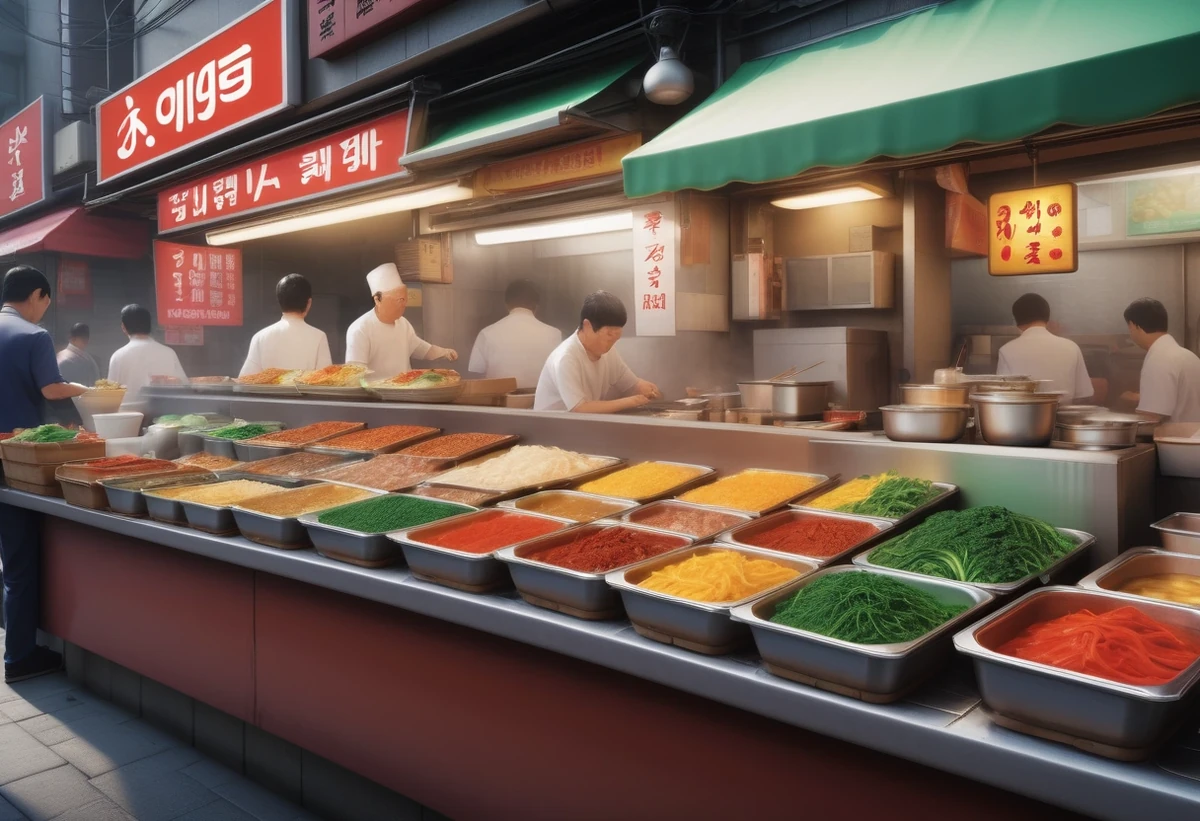
A Former Shopping Destination Will Soon House a Police Station
In Suwon, a large city just south of Seoul, a building that once drew shoppers looking for groceries, household goods and weekend errands is about to take on a very different role. The Yeongtong Police Station said it plans to move in November to a temporary headquarters inside a former Homeplus store in the Woncheon neighborhood while its current station in Maetan is redeveloped.
On its face, that may sound like a straightforward real estate or government logistics story: a public agency needs temporary space during construction, finds an empty building and signs a lease. But in South Korea, where dense urban development, changing retail habits and highly practical local administration often collide in visible ways, the decision says something larger about how cities are adapting to economic change.
The police said they recently signed a lease with the building owner and will use the entire basement level and part of the first floor of the former hypermarket. That level of specificity matters. This is no abstract proposal or long-range planning document. It is an implementation plan with a date, an address and defined square footage.
For American readers, the closest analogy might be a suburban police department moving temporary operations into a shuttered Walmart, Kmart or Sears while its main building is rebuilt. The image is striking because those spaces were designed for consumption, not civic authority. They were built to welcome carts, bargain hunters and family traffic, not crime reports, administrative counters and official procedures. Yet that contrast is exactly what gives the Suwon story its broader meaning.
The development also highlights a pattern seen in cities around the world: large retail spaces that once anchored local routines are increasingly vulnerable to vacancy, and governments, nonprofits and developers are under pressure to find new uses for them quickly. In South Korea, where land is scarce, traffic patterns are intense and neighborhood convenience matters, leaving a major building empty for too long is rarely an attractive option.
So while this is a local news story about one police station’s temporary relocation, it also offers a snapshot of a society repurposing the physical leftovers of one era to meet the practical needs of another.
Why This Story Resonates Beyond a Routine Government Move
The basic facts are simple. The current Yeongtong Police Station building in Maetan will be affected by new construction plans, and police need a place to continue operating during that period. The former Homeplus building in Woncheon, vacant since the store closed on Dec. 28 of last year, will serve as the temporary site.
But simple facts do not always produce simple meaning. This story has drawn attention because it captures, in one unusually vivid example, how urban space is being rearranged in modern South Korea. A site once associated with foot traffic, consumption and private commerce is being converted into a place where one of the most basic functions of the state — public safety administration — will continue uninterrupted.
That distinction is important. The real significance here is not only that a building is changing hands or changing uses. It is that police services, among the most immediate points of contact between citizens and government, must remain stable even when the physical setting changes dramatically. People still need to file reports, seek help, ask questions, access records and navigate in-person procedures. In other words, the headquarters may be temporary, but public trust cannot be.
That is a familiar issue in the United States as well. Americans may be used to hearing about city halls moving into leased offices during renovation or schools holding classes in modular buildings during construction. But a police station operating out of a former big-box store makes the continuity problem more visible. Residents are reminded that government is not merely an institution; it is also a place people must physically reach, enter and use.
In South Korea, that practical dimension often carries extra weight because of how closely daily life is organized around neighborhood-based access. Whether it is a district office, a health clinic, a subway stop or a police station, proximity matters. Dense cities work because services are not too far away, and disruptions are managed with attention to daily routines.
That is part of why this move has become more than a minor facilities update. It raises a broader question with which many developed societies are now grappling: when traditional commercial anchors go dark, what kinds of institutions step in, and what does that reveal about the changing shape of urban life?
What Homeplus Means in South Korea — and Why the Building Matters
To understand why the former store itself is central to the story, it helps to know what Homeplus represents. Homeplus is one of South Korea’s major big-box retail chains, comparable in function — though not identical in atmosphere — to a cross between Target, Walmart and a regional supermarket operator. These stores are more than places to buy groceries. They often serve as neighborhood anchors where residents shop for food, clothes, appliances and household items, sometimes in buildings that include restaurants, service counters or adjacent commercial spaces.
In many Korean cities, a hypermarket is woven into everyday life. Families stop by after work. Seniors browse household supplies. Drivers use the parking garage as part of a predictable shopping circuit. The building is legible to the community: people know where it is, how to enter, where to park and how to navigate the space.
That familiarity is one reason the site may work well, at least in practical terms, as a temporary civic facility. Large retail buildings are built for volume. They are designed around visibility, accessibility and circulation. Wide entrances, open floor plans, elevators, escalators and vehicle access all make them adaptable. What makes a building effective for high customer turnover can, under the right circumstances, also make it useful for handling public-facing government functions.
Officials have not framed the decision in symbolic terms, and the confirmed details remain limited to the relocation timeline, the lease and the portion of the building to be used. But even without speculation, the logic is easy to see. If a police station needs a temporary headquarters, a large, vacant and easily identifiable building already integrated into local traffic patterns has obvious advantages.
There is also a cultural contrast at work. A hypermarket is fundamentally an open commercial environment, structured to encourage browsing and spending. A police station, by contrast, is a procedural space. It is about order, documentation, reporting, waiting, guidance and authority. Putting those two functions in the same shell does not erase that difference; it heightens it.
For residents, the building may therefore feel both familiar and altered. The physical setting remains recognizable, but the social meaning changes. What used to be a place of checkout lines and shopping baskets becomes a site for public administration and security-related services. That change can be disorienting, but it also offers a vivid example of how cities do not simply expand outward. They also reinterpret what they already have.
The Bigger Trend: Empty Retail Space and New Civic Uses
The Suwon case is also part of a wider urban story that extends far beyond Korea. Across advanced economies, oversized retail properties have become increasingly unstable assets. E-commerce has altered shopping patterns. Population movement has reshaped local demand. Competition among chains has intensified. And once a large-format store closes, the question quickly becomes what to do with an enormous, conspicuous, highly specialized building.
In the United States, dead malls and empty anchor stores have become shorthand for economic transition. Former retail sites have been turned into medical offices, churches, call centers, self-storage complexes, schools, municipal offices and even mixed-use housing projects. In that sense, the image of a closed store becoming a police station may feel less exotic to Americans than it first appears. The difference is that in South Korea, the density of urban life often makes such transitions feel more compressed and more immediate.
Korean cities tend to move at a fast operational tempo. Buildings are repurposed quickly, neighborhoods evolve rapidly and local governments often work with a highly pragmatic mindset. If a private commercial site is vacant and a public institution needs temporary space, the match can make practical sense without requiring a grand ideological explanation.
That pragmatism is one of the most notable features of this story. The former Homeplus building reportedly sat empty after the store closed late last year. Rather than waiting indefinitely for a new commercial tenant, the property has now entered another phase as temporary public infrastructure. In a short period, the site has moved from retail destination to vacant property to administrative facility.
That trajectory is revealing. It suggests that the boundary between private and public urban uses is not fixed. A building’s identity is not permanent. Instead, it can be recalibrated according to what a neighborhood, institution or city most urgently needs at a given moment.
For urban planners, local officials and residents alike, that can be a useful lesson. The question is no longer simply whether a closed retail building can be reused, but how quickly and effectively it can be folded back into public life. In Suwon, at least for now, the answer is through policing and administrative continuity.
What Residents Are Likely to Notice Most
For the public, changes like this are experienced less as policy than as routine disruption. The most important questions are often the least glamorous ones: Where do I go now? Which entrance should I use? Is parking easier or harder? Will there be clear signage? Can I still access the same services without confusion?
Those questions matter because a temporary relocation can feel permanent when it affects daily habits. A person reporting a theft, handling a document request or seeking in-person assistance is not primarily thinking about urban land use theory. That person wants a functioning office, understandable directions and uninterrupted service.
The police station’s announcement, by providing a target month and clear destination, appears aimed at exactly that concern. It signals that while the building in Maetan is entering a new construction phase, the administrative work of policing will not pause. The station may be moving, but the expectation of service remains intact.
That focus on continuity is especially significant in South Korea, where public-facing institutions are often judged by their speed, clarity and organizational reliability. Korean bureaucracy can be formal, but it is also widely expected to be functional. A successful temporary move is therefore not merely about occupying substitute real estate. It is about preserving confidence that the system still works.
And confidence, in a context like this, is built through execution. Clear communication, easy access and minimal interruption will likely determine whether residents see the move as smooth adaptation or inconvenient dislocation.
There is also a subtle social dimension to this kind of reuse. When a familiar shopping site becomes a police facility, the neighborhood’s emotional map changes. Places carry memory. Residents may associate the old Homeplus not just with buying groceries, but with family errands, everyday convenience and the rhythms of ordinary life. Its conversion to a police headquarters changes that emotional reference point. The building remains part of local life, but in a new register — less commercial, more institutional.
That does not necessarily make the change negative. In fact, the continued use of a recognizable building may preserve a sense of relevance better than prolonged vacancy would. Empty structures can become symbols of decline or uncertainty. Reused structures, even when repurposed in unexpected ways, suggest adaptation instead of abandonment.
A Small Story That Says Something Larger About Korea
For international readers, one reason this story stands out is that it illustrates how South Korea often handles social and administrative challenges: not with sweeping declarations, but with practical adjustments that keep systems moving. A building project creates a temporary problem. An empty private-sector site presents an available solution. A lease is signed, floor space is assigned and services continue.
That may not sound dramatic, but it is a revealing kind of administrative competence. The story is not about futuristic smart cities or abstract government reform. It is about the mundane but essential work of maintaining continuity in a fast-changing urban environment.
It also reflects a broader reality in Korea today. The country is famous internationally for K-pop, film, beauty products and cutting-edge consumer culture — the outward face of the Korean Wave. But beneath that global image is a highly organized, intensely local society that is constantly managing questions of density, infrastructure and adaptation. How do you keep cities functioning when retail patterns change, construction disrupts routine and major buildings suddenly lose their original purpose?
In Suwon, one answer is to treat an empty hypermarket not as a monument to retail decline, but as usable civic space.
That approach may resonate in many American communities facing similar transitions. Across the U.S., local governments are struggling with underused commercial corridors, changing tax bases and large vacant properties that no longer fit the economy that produced them. The Korean example does not offer a one-size-fits-all solution, but it does demonstrate a mindset: empty space is not merely a problem to document. It is a resource to reorganize.
In the end, the juxtaposition at the center of this story — a closed store and a police station — is what makes it memorable. One represents a fading model of neighborhood commerce; the other represents the enduring obligation of the state to remain accessible. When those two meet inside the same building, the result is more than an unusual relocation plan. It is a compact portrait of a city, and a country, reshuffling its physical landscape in real time.
That is why this local item has broader social meaning. It shows how urban Korea handles transition not as a theory, but as a practical task. The shopping carts are gone. The fluorescent aisles are about to serve another purpose. And in that transformation, a former retail box becomes something else entirely: proof that in modern cities, buildings may close, but public life does not stop.
Comments
Post a Comment